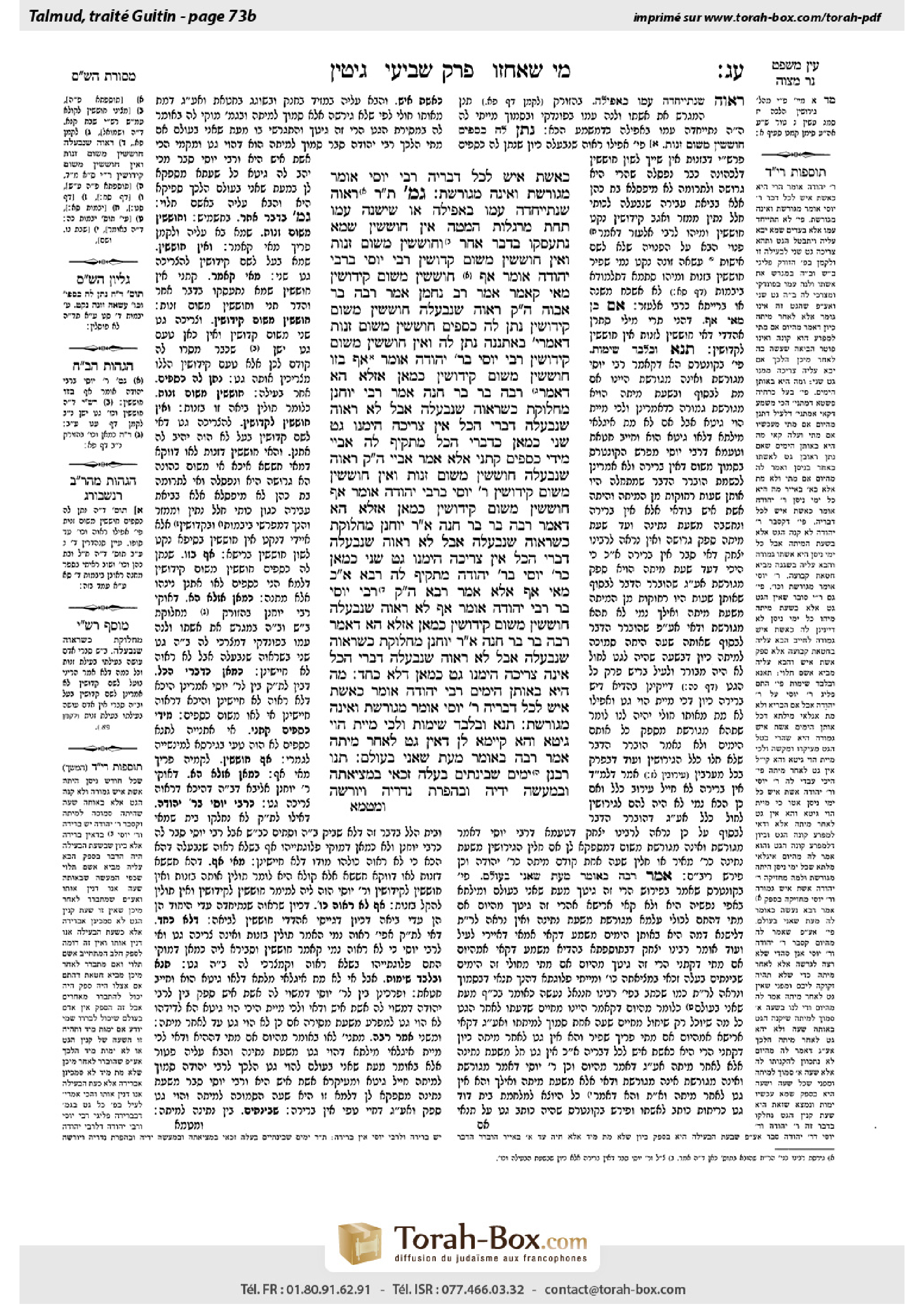
Gittin 73b: Talmud study for Daf Yomi
Study the Talmud for Daf Yomi with scanned pages, Hebrew text, English translations from Sefaria and AI-generated French translations.
Passage selection and English or AI-generated French translation are available where the scan has annotations. Daf Study is independent of Torah-Box and Sefaria.
Browse Gittin · גיטין · All tractatesGittin 73b text and translations
This page of Gittin includes the Aramaic text, an English translation and an AI-generated French translation, alongside the scan above.
גיטין ע״ג ב · Aramaic and Hebrew text
כְּאֵשֶׁת אִישׁ לְכׇל דְּבָרֶיהָ. רַבִּי יוֹסֵי אוֹמֵר: מְגוֹרֶשֶׁת וְאֵינָהּ מְגוֹרֶשֶׁת.
גְּמָ׳ תָּנוּ רַבָּנַן: רָאוּהָ שֶׁנִּתְיַיחֲדָה עִמּוֹ בַּאֲפֵילָה, אוֹ שֶׁיָּשְׁנָה עִמּוֹ תַּחַת מַרְגְּלוֹת הַמִּטָּה – אֵין חוֹשְׁשִׁין שֶׁמָּא נִתְעַסְּקוּ בְּדָבָר אַחֵר; וְחוֹשְׁשִׁין מִשּׁוּם זְנוּת וְאֵין חוֹשְׁשִׁין מִשּׁוּם קִדּוּשִׁין. רַבִּי יוֹסֵי בְּרַבִּי יְהוּדָה אוֹמֵר: אַף חוֹשְׁשִׁין מִשּׁוּם קִידּוּשִׁין.
מַאי קָאָמַר? אָמַר רַב נַחְמָן אָמַר רַבָּה בַּר אֲבוּהּ, הָכִי קָאָמַר: רָאוּהָ שֶׁנִּבְעֲלָה – חוֹשְׁשִׁין מִשּׁוּם קִידּוּשִׁין. נָתַן לָהּ כְּסָפִים – חוֹשְׁשִׁין מִשּׁוּם זְנוּת, דְּאָמְרִינַן: בְּאֶתְנַנָּהּ נָתַן לָהּ; וְאֵין חוֹשְׁשִׁין מִשּׁוּם קִידּוּשִׁין. רַבִּי יוֹסֵי בְּרַבִּי יְהוּדָה אוֹמֵר: אַף בְּזוֹ חוֹשְׁשִׁין מִשּׁוּם קִידּוּשִׁין.
כְּמַאן אָזְלָא הָא דְּאָמַר רַבָּה בַּר בַּר חָנָה אָמַר רַבִּי יוֹחָנָן: מַחֲלוֹקֶת – כְּשֶׁרָאוּהָ שֶׁנִּבְעֲלָה, אֲבָל לֹא רָאוּהָ שֶׁנִּבְעֲלָה – דִּבְרֵי הַכֹּל אֵין צְרִיכָה הֵימֶנּוּ גֵּט שֵׁנִי? כְּמַאן –
כְּדִבְרֵי הַכֹּל.
מַתְקֵיף לַהּ אַבָּיֵי: מִידֵּי כְּסָפִים קָתָנֵי?!
אֶלָּא אָמַר אַבָּיֵי, הָכִי קָאָמַר: רָאוּהָ שֶׁנִּבְעֲלָה – חוֹשְׁשִׁין מִשּׁוּם זְנוּת, וְאֵין חוֹשְׁשִׁין מִשּׁוּם קִידּוּשִׁין. רַבִּי יוֹסֵי בְּרַבִּי יְהוּדָה אוֹמֵר: אַף חוֹשְׁשִׁין מִשּׁוּם קִידּוּשִׁין.
כְּמַאן אָזְלָא הָא דְּאָמַר רַבָּה בַּר בַּר חָנָה אָמַר רַבִּי יוֹחָנָן: מַחֲלוֹקֶת – כְּשֶׁרָאוּהָ שֶׁנִּבְעֲלָה, אֲבָל לֹא רָאוּהָ שֶׁנִּבְעֲלָה – דִּבְרֵי הַכֹּל אֵין צְרִיכָה הֵימֶנּוּ גֵּט שֵׁנִי? כְּמַאן –
כְּרַבִּי יוֹסֵי בְּרַבִּי יְהוּדָה.
מַתְקֵיף לַהּ רָבָא: אִם כֵּן, מַאי ״אַף״?
אֶלָּא אָמַר רָבָא: הָכִי קָאָמַר, רַבִּי יוֹסֵי בַּר רַבִּי יְהוּדָה אוֹמֵר: אַף לֹא רָאוּהָ שֶׁנִּבְעֲלָה – חוֹשְׁשִׁין מִשּׁוּם קִידּוּשִׁין.
כְּמַאן אָזְלָא הָא דְּאָמַר רַבָּה בַּר בַּר חָנָה אָמַר רַבִּי יוֹחָנָן: מַחֲלוֹקֶת – כְּשֶׁרָאוּהָ שֶׁנִּבְעֲלָה, אֲבָל לֹא רָאוּהָ שֶׁנִּבְעֲלָה – דִּבְרֵי הַכֹּל אֵינָהּ צְרִיכָה הֵימֶנּוּ גֵּט? כְּמַאן –
דְּלָא כְּחַד.
מָה הִיא בְּאוֹתָן הַיָּמִים? רַבִּי יְהוּדָה אוֹמֵר: כְּאֵשֶׁת אִישׁ לְכׇל דְּבָרֶיהָ, רַבִּי יוֹסֵי אוֹמֵר: מְגוֹרֶשֶׁת וְאֵינָהּ מְגוֹרֶשֶׁת:
תָּנָא: וּבִלְבַד שֶׁיָּמוּת. וּלְכִי מָיֵית הָוֵי גִּיטָּא?! וְהָא קַיְימָא לַן דְּאֵין גֵּט לְאַחַר מִיתָה! אָמַר רַבָּה: בְּאוֹמֵר ״מֵעֵת שֶׁאֲנִי בָּעוֹלָם״.
תָּנוּ רַבָּנַן: יָמִים שֶׁבֵּינָתַיִם – בַּעְלָהּ זַכַּאי בִּמְצִיאָתָהּ, וּבְמַעֲשֵׂה יָדֶיהָ, וּבַהֲפָרַת נְדָרֶיהָ; וְיוֹרְשָׁהּ,
Gittin 73b · English translation
like a married woman with regard to all of her matters, and she remains forbidden to other men. Rabbi Yosei says: It is uncertain whether she is divorced or whether she is not divorced.
GEMARA: The Sages taught in a baraita (Tosefta 7:4): If, after the giving of this bill of divorce witnesses saw that she secluded herself with her husband in the dark, or that she slept with him under the foot of the bed, one is not concerned that perhaps they were engaged in another matter, i.e., sexual intercourse. And one is concerned due to their action of licentiousness but one is not concerned that due to their actions they performed a betrothal. Rabbi Yosei, son of Rabbi Yehuda, says: One is also concerned that due to their actions they performed a betrothal.
The Gemara asks: What is the baraita saying? Rav Naḥman said that Rabba bar Avuh said: This is what the baraita is saying: If they saw that she engaged in sexual intercourse with her husband, then there one is concerned that due to their actions there was a betrothal and perhaps through this act he intended to remarry her. If he gave her money immediately following the sexual intercourse one is concerned due to licentiousness, wherein we say: He gave this money as hire for a prostitute, but one is not concerned that due to their actions they performed a betrothal. Rabbi Yosei, son of Rabbi Yehuda, says: Even in this case one is concerned that due to their actions they performed a betrothal, i.e., one is concerned that he gave her the money as betrothal.
Based on this explanation of the baraita, in accordance with whose opinion is that which Rabba bar bar Ḥana says that Rabbi Yoḥanan says, that the dispute between Beit Shammai and Beit Hillel (81a) is relevant only when they saw that she engaged in sexual intercourse with her husband, but if they did not see that she engaged in sexual intercourse with him, everyone agrees that she does not require a second bill of divorce from him? In the case of a divorced woman who was secluded with her husband after the divorce, Beit Shammai are of the opinion that she does not require a second bill of divorce, while Beit Hillel are of the opinion that she does. In accordance with whose opinion mentioned in the baraita is this?
The Gemara explains: It is in accordance with everyone. It is in accordance with the opinion of both the first tanna and Rabbi Yosei, son of Rabbi Yehuda, who hold that when they did not see that she engaged in sexual intercourse one is not concerned that they are betrothed, and she does not need a second bill of divorce.
Abaye objects to this understanding of the baraita, according to which the first tanna and Rabbi Yosei, son of Rabbi Yehuda, disagree about a case where he gave her money after they engaged in sexual intercourse: Is anything with regard to money taught in the baraita?
Rather, Abaye said: This is what the baraita is saying: If they saw that she engaged in sexual intercourse one is concerned due to licentiousness, but one is not concerned that due to their actions there was a betrothal. Rabbi Yosei, son of Rabbi Yehuda, says: One is also concerned that due to their actions there was a betrothal.
If so, in accordance with whose opinion is that which Rabba bar bar Ḥana says that Rabbi Yoḥanan says: The dispute between Beit Shammai and Beit Hillel applies only when they saw that she engaged in sexual intercourse with him. But if they did not see that she engaged in sexual intercourse with him then everyone agrees that she does not require a second bill of divorce from him. In accordance with whose opinion is this statement?
It is in accordance with the opinion of Rabbi Yosei, son of Rabbi Yehuda, as he holds in accordance with Beit Hillel, that if they saw that she engaged in sexual intercourse one is concerned that she may be betrothed to him and she requires a second bill of divorce. By contrast, according to the first tanna, even when they saw that she engaged in sexual intercourse one is not concerned that she may be betrothed.
Rava objects to this: If so, what is the meaning of the expression used by Rabbi Yosei, son of Rabbi Yehuda: There is also concern that due to their actions they performed a betrothal? If there is concern about betrothal there should be no concern with regard to licentiousness.
Rather, Rava said that this is what the baraita is saying: Rabbi Yosei, son of Rabbi Yehuda, says: Even if they did not see that she engaged in sexual intercourse, one is concerned that due to their actions they performed a betrothal.
And if so, in accordance with whose opinion is that which Rabba bar bar Ḥana says that Rabbi Yoḥanan says: The dispute between Beit Shammai and Beit Hillel applies only where they saw that she engaged in sexual intercourse with him. But if they did not see that she engaged in intercourse with him, then everyone agrees that she does not require a second bill of divorce from him. In accordance with whose opinion is this statement?
This is not in accordance with any one of the tanna’im, for according to Rava the first tanna is not concerned about betrothal even when they saw that she engaged in sexual intercourse, and Rabbi Yosei, son of Rabbi Yehuda, is concerned even when they did not witness that she engaged in sexual intercourse.
§ The mishna teaches: What is her status during these days? Rabbi Yehuda says: She is like a married woman with regard to all of her matters. Rabbi Yosei says: It is uncertain whether she is divorced or whether she is not divorced.
The Sages taught in reference to the opinions of Rabbi Yehuda and Rabbi Yosei stated in the baraita: Their dispute with regard to her status in the interim is stated provided that he dies. The Gemara clarifies: And when he dies, is this a valid bill of divorce? Do they hold that the bill of divorce takes effect after the husband’s death? But don’t we maintain that there is no bill of divorce after death? Rabba says that this is referring to a case where the husband says: This should be a valid bill of divorce from the last moment that I am in the world, meaning that it should take effect a moment before he dies.
The Sages taught (Tosefta 7:4): In a case where the husband said: This is your bill of divorce from now if I die from this illness, during the days between, before he dies, her husband is entitled to anything that she finds, i.e., any lost item that cannot be returned to its owner, in accordance with the rabbinic principle that any lost item found by a wife belongs to her husband. And he is entitled to the profits from her earnings, and he is entitled to annul her vows (see Numbers 30:7–9), and he inherits from her if she predeceases him,
Gittin 73b · Traduction française (IA)
comme une femme mariée concernant toutes ses affaires, et elle reste interdite aux autres hommes. Rabbi Yosei dit : On ne sait pas si elle est divorcée ou si elle ne l'est pas.
GUEMARA : Les Sages ont enseigné dans une baraïta (Tosefta 7:4) : Si, après la remise de ce document de divorce, des témoins ont vu qu'elle s'était isolée avec son mari dans l'obscurité, ou qu'elle avait dormi avec lui sous le pied du lit, on ne s'inquiète pas du fait qu'ils pussent être engagés dans une autre affaire, c'est-à-dire une relation sexuelle. On s'inquiète en revanche à cause de leur action de luxure, mais on ne s'inquiète pas du fait qu'à cause de leur action ils aient conclu un mariage. Rabbi Yosei, fils de Rabbi Yehuda, dit : On s'inquiète également du fait qu'à cause de leur action ils aient conclu un mariage.
La Guemara pose la question : De quoi la baraïta parle-t-elle ? Rav Naḥman a dit que Rabba bar Avuh a dit : C'est ce que la baraïta dit : Si ils ont vu qu'elle avait des relations sexuelles avec son mari, alors là on s'inquiète du fait qu'à cause de leur action il y ait eu un mariage et peut-être qu'il avait l'intention de la remettre à son époux. Si il lui a donné de l'argent immédiatement après les relations sexuelles, on s'inquiète à cause de la luxure, où nous disons : Il a donné cet argent comme rétribution pour une prostituée, mais on ne s'inquiète pas du fait qu'à cause de leur action il y ait eu un mariage. Rabbi Yosei, fils de Rabbi Yehuda, dit : Même dans ce cas-là, on s'inquiète du fait qu'à cause de leur action il y ait eu un mariage, c'est-à-dire qu'on s'inquiète qu'il ait donné cet argent comme fiancailles.
En se basant sur cette explication de la baraïta, selon quel avis Rabba bar bar Ḥana dit que Rabbi Yoḥanan dit, que le débat entre Beit Shammai et Beit Hillel (81a) est pertinent uniquement lorsqu'ils ont vu qu'elle avait des relations sexuelles avec son mari, mais si ils n'ont pas vu qu'elle avait des relations sexuelles avec lui, tout le monde est d'accord sur le fait qu'elle n'a pas besoin d'un deuxième document de divorce de sa part ? Dans le cas d'une femme divorcée qui s'est isolée avec son mari après le divorce, Beit Shammai est d'avis qu'elle n'a pas besoin d'un deuxième document de divorce, tandis que Beit Hillel est d'avis qu'elle en a besoin. Selon quel avis mentionné dans la baraïta est-ce que cela est ainsi ?
La Guemara explique : C'est selon l'avis de tous. C'est selon l'avis des deux premiers tannaïm et de Rabbi Yosei, fils de Rabbi Yehuda, qui pensent que lorsqu'ils n'ont pas vu qu'elle avait des relations sexuelles, on ne s'inquiète pas du fait qu'ils soient fiancés et elle n'a pas besoin d'un deuxième document de divorce.
Abaye s'oppose à cette compréhension de la baraïta, selon laquelle les premiers tannaïm et Rabbi Yosei, fils de Rabbi Yehuda, s'opposent sur un cas où il lui a donné de l'argent après qu'ils aient eu des relations sexuelles : Quel enseignement concernant l'argent est mentionné dans la baraïta ?
Plutôt, Abaye a dit : C'est ce que la baraïta dit : Si on a vu qu'elle avait des relations sexuelles, on s'inquiète à cause de la luxure, mais on ne s'inquiète pas du fait qu'à cause de leur action il y ait eu un mariage. Rabbi Yosei, fils de Rabbi Yehuda, dit : On s'inquiète également du fait qu'à cause de leur action il y ait eu un mariage.
Si c'est ainsi, selon quel avis est-ce que Rabba bar bar Ḥana dit que Rabbi Yoḥanan dit : Le débat entre Beit Shammai et Beit Hillel s'applique uniquement lorsqu'ils ont vu qu'elle avait des relations sexuelles avec lui. Mais si ils n'ont pas vu qu'elle avait des relations sexuelles avec lui, alors tout le monde est d'accord sur le fait qu'elle n'a pas besoin d'un deuxième document de divorce de sa part. Selon quel avis est-ce que cette déclaration ?
C'est selon l'avis de Rabbi Yosei, fils de Rabbi Yehuda, car il adopte l'opinion de Beit Hillel, qu'en cas qu'ils aient vu qu'elle avait des relations sexuelles, on s'inquiète qu'elle puisse être fiancée à lui et qu'elle ait besoin d'un deuxième document de divorce. À l'inverse, selon l'avis du premier tanna, même lorsqu'ils ont vu qu'elle avait des relations sexuelles, on ne s'inquiète pas qu'elle puisse être fiancée.
Rava s'oppose à cela : Si c'est ainsi, quelle est la signification de l'expression utilisée par Rabbi Yosei, fils de Rabbi Yehuda : Il y a aussi une inquiétude du fait qu'à cause de leur action ils aient accompli un mariage ? Si on s'inquiète du mariage, on ne devrait pas s'inquiéter de la luxure.
Plutôt, Rava a dit que c'est ce que la baraïta dit : Rabbi Yosei, fils de Rabbi Yehuda, dit : Même s'ils n'ont pas vu qu'elle avait des relations sexuelles, on s'inquiète du fait qu'à cause de leur action ils aient accompli un mariage.
Et si c'est ainsi, selon quel avis est-ce que Rabba bar bar Ḥana dit que Rabbi Yoḥanan dit : Le débat entre Beit Shammai et Beit Hillel s'applique uniquement là où ils ont vu qu'elle avait des relations sexuelles avec lui. Mais si ils n'ont pas vu qu'elle avait des relations sexuelles avec lui, alors tout le monde est d'accord sur le fait qu'elle n'a pas besoin d'un deuxième document de divorce de sa part. Selon quel avis est-ce que cette déclaration ?
Cela ne correspond pas à aucun des tannaïm, car selon Rava, le premier tanna ne s'occupe pas du mariage même lorsqu'ils ont vu qu'elle avait des relations sexuelles, et Rabbi Yosei, fils de Rabbi Yehuda, s'occupe même lorsqu'ils n'ont pas vu qu'elle avait des relations sexuelles.
§ La mitsva enseigne : Quel est son statut pendant ces jours ? Rabbi Yehuda dit : Elle est comme une femme mariée concernant toutes ses affaires. Rabbi Yosei dit : On ne sait pas si elle est divorcée ou si elle ne l'est pas.
Les Sages ont enseigné en référence aux opinions du Rabbi Yéhuda et du Rabbi Yosei, comme indiqué dans la baraïta : Leur débat concernant son statut pendant l'intervalle est établi à la condition qu'il meure. La Guemara clarifie : Et lorsqu'il meurt, est-ce un billet de divorce valide ? Ils considèrent-ils que le billet de divorce prend effet après la mort du mari ? Mais ne maintenons-nous pas que le billet de divorce n'est pas valide après la mort ? Rabba dit que cela fait référence à un cas où le mari dit : Cela doit être un billet de divorce valide à partir du dernier moment où je suis dans le monde, c'est-à-dire qu'il doit prendre effet un instant avant sa mort.
Les Sages ont enseigné (Tosefta 7:4) : Dans un cas où le mari dit : Cela est ton billet de divorce à partir de maintenant si je meurs de cette maladie, pendant les jours entre, avant sa mort, son épouse a le droit à tout ce qu'elle trouve, c'est-à-dire tout objet perdu qui ne peut être rendu à son propriétaire, conformément au principe rabbinique selon lequel tout objet perdu trouvé par une épouse appartient à son mari. Il a le droit aux profits de ses revenus, il a le droit d'annuler ses vœux (cf. Nombres 30:7–9), et il hérite d'elle si elle meurt avant lui,
Traduction française générée par IA à partir de l’édition anglaise de Sefaria. Vérifie toujours un passage avec le texte source.
Text from Sefaria: William Davidson Edition - Vocalized Aramaic (CC BY NC); William Davidson Edition - English (CC BY NC).