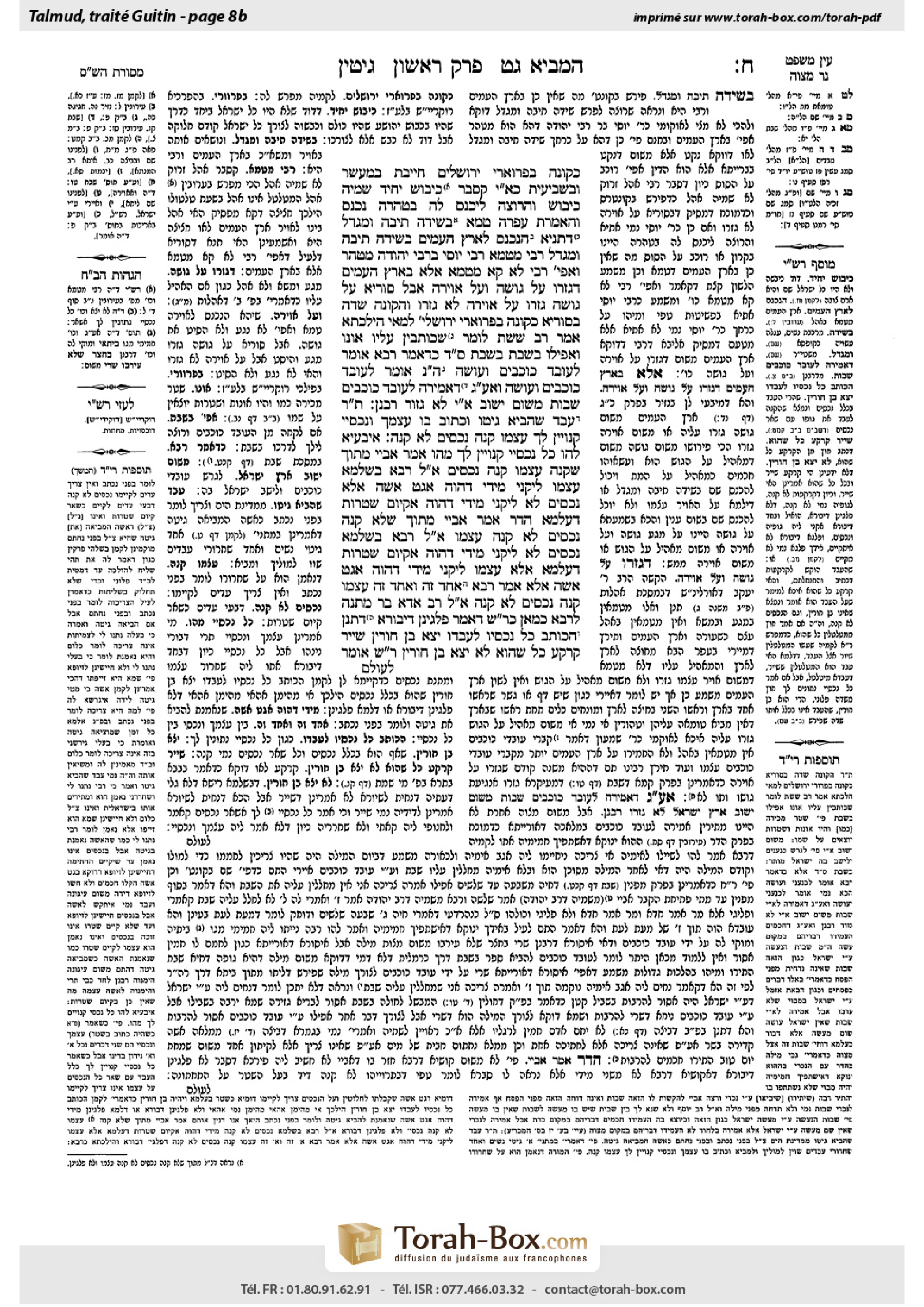
Gittin 8b: Talmud study for Daf Yomi
Study the Talmud for Daf Yomi with scanned pages, Hebrew text, English translations from Sefaria and AI-generated French translations.
Passage selection and English or AI-generated French translation are available where the scan has annotations. Daf Study is independent of Torah-Box and Sefaria.
Browse Gittin · גיטין · All tractatesGittin 8b text and translations
This page of Gittin includes the Aramaic text, an English translation and an AI-generated French translation, alongside the scan above.
גיטין ח׳ ב · Aramaic and Hebrew text
כְּקוֹנָהּ בְּפַרְוָארֵי יְרוּשָׁלַיִם. חַיֶּיבֶת בְּמַעֲשֵׂר וּבִשְׁבִיעִית כְּאֶרֶץ יִשְׂרָאֵל – קָסָבַר כִּיבּוּשׁ יָחִיד שְׁמֵיהּ כִּיבּוּשׁ.
וְהָרוֹצֶה לִיכָּנֵס לָהּ בְּטׇהֳרָה נִכְנָס – וְהָאָמְרַתְּ עֲפָרָהּ טָמֵא? בְּשִׁידָּה, תֵּיבָה וּמִגְדָּל.
דְּתַנְיָא: הַנִּכְנָס לְאֶרֶץ הָעַמִּים בְּשִׁידָּה תֵּיבָה וּמִגְדָּל – רַבִּי מְטַמֵּא, רַבִּי יוֹסֵי בְּרַבִּי יְהוּדָה מְטַהֵר. וַאֲפִילּוּ רַבִּי לָא קָא מְטַמֵּא אֶלָּא בְּאֶרֶץ הָעַמִּים, דְּגָזְרוּ עַל גּוּשָׁהּ וְעַל אֲוִירָהּ, אֲבָל סוּרְיָא, עַל גּוּשָׁהּ גָּזְרוּ, עַל אֲוִירָהּ לֹא גָּזְרוּ.
וְהַקּוֹנֶה שָׂדֶה בְּסוּרְיָא כְּקוֹנָהּ בְּפַרְוָארֵי יְרוּשָׁלַיִם – לְמַאי הִילְכְתָא? אָמַר רַב שֵׁשֶׁת: לוֹמַר שֶׁכּוֹתְבִין עָלָיו אוֹנוֹ, וַאֲפִילּוּ בְּשַׁבָּת.
בְּשַׁבָּת סָלְקָא דַעְתָּךְ?! כִּדְאָמַר רָבָא: אוֹמֵר לְגוֹי וְעוֹשֶׂה; הָכָא נָמֵי אוֹמֵר לְגוֹי וְעוֹשֶׂה. וְאַף עַל גַּב דַּאֲמִירָה לְגוֹי שְׁבוּת, מִשּׁוּם יִשּׁוּב אֶרֶץ יִשְׂרָאֵל – לָא גְּזוּר רַבָּנַן.
תָּנוּ רַבָּנַן: עֶבֶד שֶׁהֵבִיא גִּיטּוֹ, וְכָתוּב בּוֹ: ״עַצְמְךָ וּנְכָסַיי קְנוּיִין לָךְ״, עַצְמוֹ – קָנָה, נְכָסִים – לֹא קָנָה.
אִיבַּעְיָא לְהוּ: ״כֹּל נְכָסַיי קְנוּיִין לָךְ״, מַהוּ? אָמַר אַבָּיֵי: מִתּוֹךְ שֶׁקָּנָה עַצְמוֹ, קָנָה נְכָסִים.
אֲמַר לֵיהּ רָבָא: בִּשְׁלָמָא עַצְמוֹ לִיקְנֵי, מִידֵּי דְּהָוֵה אַגֵּט אִשָּׁה, אֶלָּא נְכָסִים לָא לִיקְנֵי, מִידֵּי דְּהָוֵה אַקִּיּוּם שְׁטָרוֹת דְּעָלְמָא!
הֲדַר אָמַר אַבָּיֵי: מִתּוֹךְ שֶׁלֹּא קָנָה נְכָסִים – לֹא קָנָה עַצְמוֹ. אֲמַר לֵיהּ רָבָא: בִּשְׁלָמָא נְכָסִים לָא לִיקְנֵי, מִידֵּי דְּהָוֵה אַקִּיּוּם שְׁטָרוֹת דְּעָלְמָא, אֶלָּא עַצְמוֹ לִיקְנֵי, מִידֵּי דְּהָוֵה אַגֵּט אִשָּׁה!
אֶלָּא אָמַר רָבָא: אֶחָד זֶה וְאֶחָד זֶה, עַצְמוֹ – קָנָה, נְכָסִים – לֹא קָנָה. אֲמַר לֵיהּ רַב אַדָּא בַּר מַתְנָה לְרָבָא: כְּמַאן – כְּרַבִּי שִׁמְעוֹן, דְּאָמַר פָּלְגִינַן דִּיבּוּרָא;
דִּתְנַן: הַכּוֹתֵב כׇּל נְכָסָיו לְעַבְדּוֹ – יָצָא בֶּן חוֹרִין. שִׁיֵּיר קַרְקַע כָּל שֶׁהוּא, לֹא יָצָא בֶּן חוֹרִין. רַבִּי שִׁמְעוֹן אוֹמֵר:
Gittin 8b · English translation
is like one who purchases a field in the outskirts [parvarei] of Jerusalem. The Gemara clarifies: The tanna who says Syria is obligated in tithe and the mitzvot of the Sabbatical Year like Eretz Yisrael holds that the conquest of an individual is called a conquest. Once Syria was conquered by King David, who is considered an individual in this regard, the sanctity of Eretz Yisrael applied to it and its residents became obligated in the mitzvot of Eretz Yisrael.
The baraita teaches: And one who wishes to enter it and remain in a state of ritual purity may so enter. The Gemara asks: But didn’t you say that its soil is ritually impure? How then is it possible for one to enter it in a state of ritual purity? The Gemara answers: The baraita means that one enters it in a chest, a box, or a cabinet. In this case he remains pure, as he did not come into contact with the ground itself.
As it is taught in a baraita: With regard to one who enters the land of the nations, i.e., any territory outside of Eretz Yisrael, in a chest, a box, or a cabinet, Rabbi Yehuda HaNasi deems him ritually impure, and Rabbi Yosei, son of Rabbi Yehuda, deems him pure. And even Rabbi Yehuda HaNasi deems one who did not touch the ground itself impure only in the land of the nations, concerning which they decreed impurity upon both its clumps of soil and upon its air. However, with regard to Syria, everyone agrees that they decreed impurity upon its clumps of soil, but they did not decree impurity upon its air. Therefore, it is possible to enter Syria and remain in a state of ritual purity if one does not touch the ground itself.
The baraita further teaches: And one who purchases a field in Syria is like one who purchases a field in the outskirts of Jerusalem. The Gemara asks: With regard to which halakha was this stated? What practical ruling is taught by this statement? Rav Sheshet says: This serves to say that one writes a bill of sale [ono] for this purchase, and one may write a bill of sale even on Shabbat.
The Gemara asks: Can it enter your mind that one may write this bill of sale on Shabbat? Writing on Shabbat is a prohibited labor for which one is liable to receive court-imposed capital punishment. The Gemara explains: This is as Rava says with regard to a similar issue, that one tells a gentile that he should do it, and he does so. Here too, it is referring to a situation where one tells a gentile that he should write a bill of sale, and he does so. And even though the halakha generally is that telling a gentile to perform an action that is prohibited for a Jew on Shabbat violates a rabbinic decree, since the Sages prohibited instructing a gentile to perform prohibited labor on behalf of a Jew on Shabbat, here the Sages did not impose this decree, due to the mitzva of settling Eretz Yisrael.
§ The Sages taught: With regard to a slave who brought his bill of manumission to a court, and it is written in it: You and my property are transferred to you, he acquires himself via this document, and he is emancipated. However, he does not acquire the property unless the document is confirmed in court through its witnesses, like other documents.
A dilemma was raised before the Sages: If the bill of manumission stated: All of my property is transferred to you, what is the halakha? Abaye said: Since he acquired himself as a freeman, as he is included in the property mentioned in the document, he acquires the rest of the property as well.
Rava said to Abaye: Granted, he should acquire himself, just as it is in the case of a bill of divorce of a woman, who is divorced when she brings the document herself. However, he should not acquire the property, just as it is in the case of the ratification of typical legal documents. If someone brings a typical document that deals with monetary matters that has not been ratified, the court will not rely on that document. So too here, as the bill of manumission, which includes a transfer of property, has not been ratified, he should not acquire the property.
After hearing Rava’s objection, Abaye then said the opposite: Since he did not acquire the property, he does not acquire himself either. Rava said to him: Granted, he does not acquire the property, just as it is in the case of the ratification of typical legal documents; however, he should acquire himself, just as it is in the case of a bill of divorce of a woman, who can bring her own bill of divorce and testify about it.
Rather, Rava says: With regard to both this and that, both in the case when the bill of manumission states: You and my property, and when it says: All of my property, he acquires himself but he does not acquire the property. Rav Adda bar Mattana said to Rava: In accordance with whose opinion do you say this? In accordance with the opinion of Rabbi Shimon, who said that we divide the statement. In other words, even if there is only one document or a single testimony, containing one general statement, it can be divided so that the court accepts it in part and rejects the rest.
As we learned in a mishna (Pe’a 3:8): One who writes, i.e., gives via a document, all of his property to his slave, the slave has been emancipated, but if he reserved for himself even any amount of land, then he has not been emancipated, as perhaps he reserved the slave for himself as well. Rabbi Shimon says:
Gittin 8b · Traduction française (IA)
est comme celui qui achète un champ aux abords de Jérusalem. La Guemara explique : Le tanna qui affirme que la Syrie est tenue de dîme et des commandements de l'année sainte comme la Terre d'Israël considère que la conquête d'un individu est appelée une conquête. Une fois que la Syrie a été conquise par le roi David, qui est considéré comme un individu à cet égard, la sanctité de la Terre d'Israël s'est appliquée à elle et ses habitants sont devenus tenus des commandements de la Terre d'Israël.
La baraïta enseigne : Et celui qui veut entrer et rester dans un état de pureté rituelle peut ainsi entrer. La Guemara demande : Mais n'avez-vous pas dit que son sol est impur rituellement ? Comment alors peut-on entrer dans un état de pureté rituelle ? La Guemara répond : La baraïta signifie que l'on entre dans un coffre, une boîte ou un tiroir. Dans ce cas, il reste pur, car il n'a pas été en contact avec le sol lui-même.
Comme il est enseigné dans une baraïta : Concernant celui qui entre dans la terre des nations, c'est-à-dire tout territoire en dehors de la Terre d'Israël, dans un coffre, une boîte ou un tiroir, Rabbi Yehuda HaNasi considère qu'il est impur rituellement, et Rabbi Yosei, fils de Rabbi Yehuda, considère qu'il est pur. Et même Rabbi Yehuda HaNasi considère qu'un homme qui n'a pas touché le sol lui-même est impur uniquement dans la terre des nations, concernant laquelle ils ont décrété l'impureté sur ses morceaux de sol et sur son air. Cependant, concernant la Syrie, tout le monde convient qu'ils ont décrété l'impureté sur ses morceaux de sol, mais ils n'ont pas décrété l'impureté sur son air. Par conséquent, il est possible d'entrer en Syrie et de rester dans un état de pureté rituelle si l'on ne touche pas le sol lui-même.
La baraïta enseigne de plus : Et celui qui achète un champ en Syrie est comme celui qui achète un champ aux abords de Jérusalem. La Guemara demande : Concernant quelle halakha a-t-on dit cela ? Quel règlement pratique enseigne cette déclaration ? Rav Sheshet dit : Cela sert à dire qu'on écrit un acte de vente [ono] pour cette acquisition, et on peut écrire un acte de vente même le sabbat.
La Guemara demande : Pourriez-vous penser qu'on peut écrire cet acte de vente le sabbat ? L'écriture le sabbat est un travail interdit pour lequel on est tenu de recevoir une peine de mort imposée par la cour. La Guemara explique : C'est comme Rava dit concernant une question similaire, que l'on dit à un non-Juif qu'il le fasse, et il le fait. Ici aussi, il s'agit d'une situation où l'on dit à un non-Juif qu'il écrive un acte de vente, et il le fait. Et même si la halakha générale est que dire à un non-Juif d'accomplir une action interdite pour un Juif le sabbat viole un décret rabbinique, ici les Sages n'ont pas imposé ce décret, en raison de la mitsva de peupler la Terre d'Israël.
§ Les Sages enseignent : Concernant un esclave qui apporte son acte de manumission à la cour, et qui est écrit : Tu et ma propriété sont transférés à toi, il acquiert lui-même via ce document, et il est libéré. Cependant, il ne peut acquérir la propriété à moins que le document ne soit confirmé par la cour grâce à ses témoins, comme les autres documents.
Un dilemme a été soulevé devant les Sages : Si l'acte de manumission disait : Toute ma propriété est transférée à toi, quelle est la halakha ? Abaye a dit : Puisque il a acquis lui-même comme un homme libre, car il est inclus dans la propriété mentionnée dans le document, il acquiert aussi le reste de la propriété.
Rava a dit à Abaye : C'est vrai, il devrait acquérir lui-même, comme c'est le cas d'un acte de divorce d'une femme, qui est divorcée lorsqu'elle apporte elle-même le document. Cependant, il ne devrait pas acquérir la propriété, comme c'est le cas de la ratification des documents juridiques ordinaires. Si quelqu'un apporte un document ordinaire qui traite de questions monétaires et qui n'a pas été ratifié, la cour ne comptera pas sur ce document. De même ici, comme l'acte de manumission, qui inclut un transfert de propriété, n'a pas été ratifié, il ne devrait pas acquérir la propriété.
Après avoir entendu l'objection de Rava, Abaye a alors dit l'inverse : Puisque il n'a pas acquis la propriété, il ne devrait pas acquérir lui-même non plus. Rava a dit à lui : C'est vrai, il ne devrait pas acquérir la propriété, comme c'est le cas de la ratification des documents juridiques ordinaires ; cependant, il devrait acquérir lui-même, comme c'est le cas d'un acte de divorce d'une femme, qui peut apporter elle-même son acte de divorce et témoigner à son sujet.
Plutôt, Rava dit : Concernant les deux, à la fois dans le cas où l'acte de manumission dit : Tu et ma propriété, et dans le cas où il dit : Toute ma propriété, il acquiert lui-même mais il ne peut acquérir la propriété. Rav Adda bar Mattana a dit à Rava : Selon l'opinion de qui dites-vous cela ? Selon l'opinion de Rabbi Shimon, qui dit que nous divisons l'affirmation. En d'autres termes, même s'il y a un seul document ou un seul témoignage, contenant une seule affirmation générale, il peut être divisé de sorte que la cour l'accepte en partie et rejette le reste.
Comme nous avons appris dans une mitsva (Pe’a 3:8) : Celui qui écrit, c'est-à-dire donne via un document, toute sa propriété à son esclave, l'esclave est libéré, mais si il réserve même une quantité de terre, alors il n'est pas libéré, car peut-être il a réservé l'esclave à lui-même. Rabbi Shimon dit :
Traduction française générée par IA à partir de l’édition anglaise de Sefaria. Vérifie toujours un passage avec le texte source.
Text from Sefaria: William Davidson Edition - Vocalized Aramaic (CC BY NC); William Davidson Edition - English (CC BY NC).