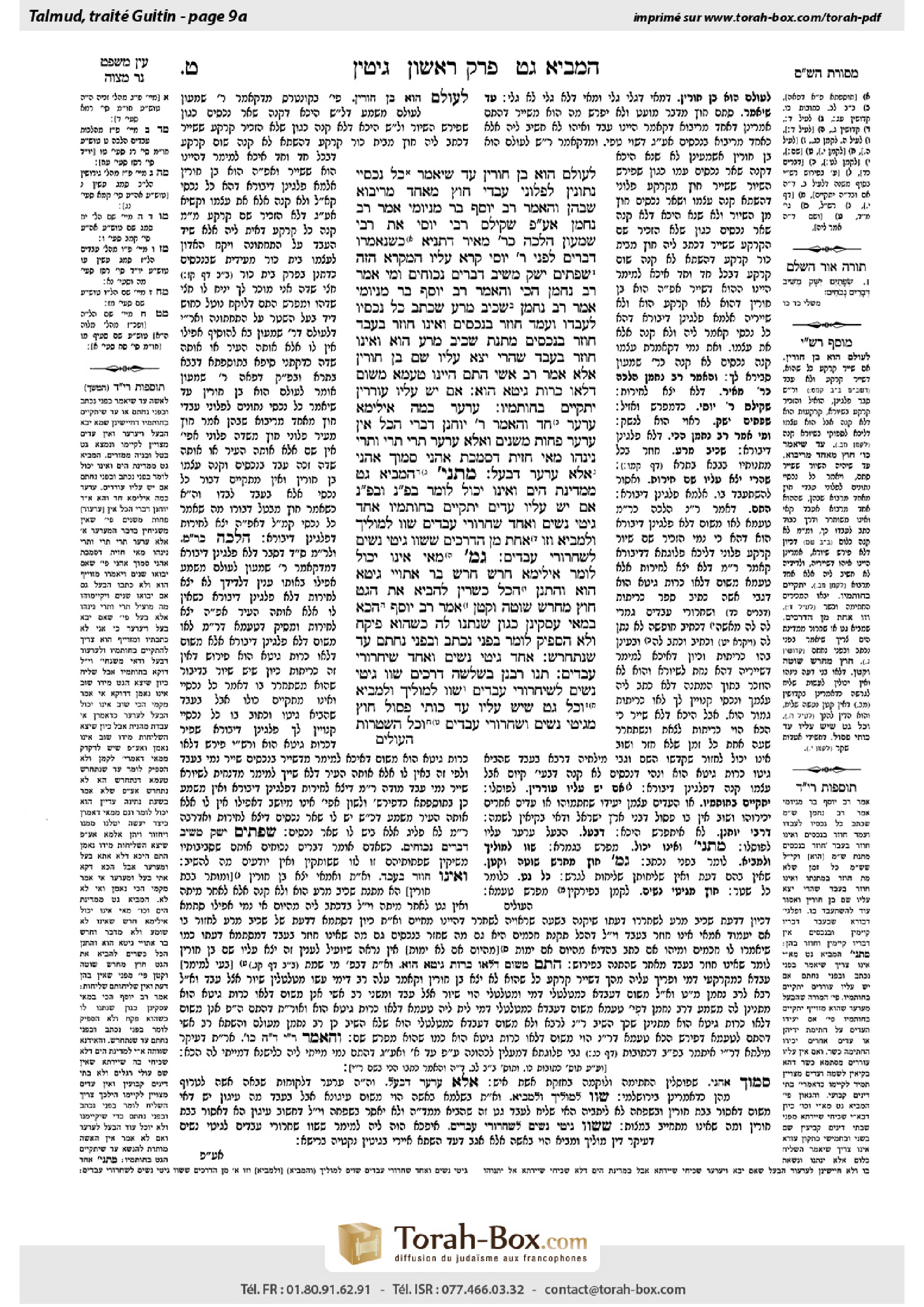
Gittin 9a: Talmud study for Daf Yomi
Study the Talmud for Daf Yomi with scanned pages, Hebrew text, English translations from Sefaria and AI-generated French translations.
Passage selection and English or AI-generated French translation are available where the scan has annotations. Daf Study is independent of Torah-Box and Sefaria.
Browse Gittin · גיטין · All tractatesGittin 9a text and translations
This page of Gittin includes the Aramaic text, an English translation and an AI-generated French translation, alongside the scan above.
גיטין ט׳ א · Aramaic and Hebrew text
לְעוֹלָם הוּא בֶּן חוֹרִין, עַד שֶׁיֹּאמַר ״כֹּל נְכָסַיי נְתוּנִין לִפְלוֹנִי עַבְדִּי חוּץ מֵאֶחָד מֵרִיבּוֹא שֶׁבָּהֶן״.
וְהָאָמַר רַב יוֹסֵף בַּר מִנְיוֹמֵי אָמַר רַב נַחְמָן: אַף עַל פִּי שֶׁקִּילֵּס רַבִּי יוֹסֵי אֶת רַבִּי שִׁמְעוֹן – הֲלָכָה כְּרַבִּי מֵאִיר, דְּתַנְיָא: כְּשֶׁנֶּאְמְרוּ דְּבָרִים לִפְנֵי רַבִּי יוֹסֵי, קָרָא עָלָיו הַמִּקְרָא הַזֶּה: ״שְׂפָתַיִם יִשָּׁק מֵשִׁיב דְּבָרִים נְכוֹחִים״!
וּמִי אָמַר רַב נַחְמָן הָכִי? וְהָאָמַר רַב יוֹסֵף בַּר מִנְיוֹמֵי אָמַר רַב נַחְמָן: שְׁכִיב מְרַע שֶׁכָּתַב כׇּל נְכָסָיו לְעַבְדּוֹ, וְעָמַד – חוֹזֵר בַּנְּכָסִים, וְאֵינוֹ חוֹזֵר בָּעֶבֶד.
חוֹזֵר בַּנְּכָסִים – מַתְּנַת שְׁכִיב מְרַע הוּא, וְאֵינוֹ חוֹזֵר בָּעֶבֶד – שֶׁהֲרֵי יָצָא עָלָיו שֵׁם בֶּן חוֹרִין!
אֶלָּא אָמַר רַב אָשֵׁי: הָתָם הַיְינוּ טַעְמָא, מִשּׁוּם דְּלָאו כְּרוּת גִּיטָּא הוּא.
אִם יֵשׁ עָלָיו עוֹרְרִין, יִתְקַיֵּים בְּחוֹתְמָיו: עַרְעָר כַּמָּה? אִילֵימָא עַרְעָר חַד, וְהָאָמַר רַבִּי יוֹחָנָן: דִּבְרֵי הַכֹּל אֵין עַרְעָר פָּחוֹת מִשְּׁנַיִם!
וְאֶלָּא עַרְעָר תְּרֵי? תְּרֵי וּתְרֵי נִינְהוּ, מַאי חָזֵית דְּסָמְכַתְּ אַהָנֵי, סְמוֹךְ אַהָנֵי! אֶלָּא עַרְעָר דְּבַעַל.
מַתְנִי׳ הַמֵּבִיא גֵּט מִמְּדִינַת הַיָּם, וְאֵינוֹ יָכוֹל לוֹמַר ״בְּפָנַי נִכְתַּב וּבְפָנַי נֶחְתַּם״, אִם יֵשׁ עָלָיו עֵדִים – יִתְקַיֵּים בְּחוֹתְמָיו.
אֶחָד גִּיטֵּי נָשִׁים וְאֶחָד שִׁחְרוּרֵי עֲבָדִים, שָׁווּ לַמּוֹלִיךְ וְלַמֵּבִיא, וְזוֹ אַחַת מִן הַדְּרָכִים שֶׁשָּׁווּ גִּיטֵּי נָשִׁים לְשִׁחְרוּרֵי עֲבָדִים.
גְּמָ׳ מַאי ״אֵינוֹ יָכוֹל לוֹמַר״? אִילֵימָא חֵרֵשׁ, חֵרֵשׁ בַּר אֵתוֹיֵי גִּיטָּא הוּא?! וְהָתְנַן: הַכֹּל כְּשֵׁרִין לְהָבִיא אֶת הַגֵּט, חוּץ מֵחֵרֵשׁ שׁוֹטֶה וְקָטָן!
אָמַר רַב יוֹסֵף: הָכָא בְּמַאי עָסְקִינַן – כְּגוֹן שֶׁנְּתָנוֹ לָהּ כְּשֶׁהוּא פִּיקֵּחַ, וְלֹא הִסְפִּיק לוֹמַר ״בְּפָנַי נִכְתַּב וּבְפָנַי נֶחְתַּם״ עַד שֶׁנִּתְחָרֵשׁ.
אֶחָד גִּיטֵּי נָשִׁים וְאֶחָד שִׁיחְרוּרֵי עֲבָדִים: תָּנוּ רַבָּנַן: בִּשְׁלֹשָׁה דְּרָכִים שָׁווּ גִּיטֵּי נָשִׁים לְשִׁיחְרוּרֵי עֲבָדִים: שָׁווּ לַמּוֹלִיךְ וְלַמֵּבִיא; וְכׇל גֵּט שֶׁיֵּשׁ עָלָיו עֵד כּוּתִי – פָּסוּל, חוּץ מִגִּיטֵּי נָשִׁים וְשִׁחְרוּרֵי עֲבָדִים; וְכׇל הַשְּׁטָרוֹת
Gittin 9a · English translation
He always becomes a freeman regardless of the wording of the document, even if the owner reserved land for himself, unless it says in the document: All of my property is given to so-and-so my slave, except for one ten-thousandth of it, as in that case it is possible that the master meant to include the slave in the portion that he is not giving. Consequently, the slave is not emancipated. In any case, according to the opinion of Rabbi Shimon, when the document states: All my property, a distinction is drawn between the emancipated slave and the property, as claimed by Rava.
The Gemara asks: But didn’t Rav Yosef bar Minyumi say that Rav Naḥman said: Even though Rabbi Yosei praised the ruling of Rabbi Shimon with regard to this issue, the halakha is in accordance with the opinion of Rabbi Meir, the first tanna in that mishna. The Gemara elaborates how Rabbi Yosei bestowed praise. As it is taught in the Tosefta (Pe’a 1:13): When these matters were said by the Sages before Rabbi Yosei, he recited this verse about him: “He kisses the lips that give the right answer” (Proverbs 24:26). Despite this praise, the halakha is not in accordance with the opinion of Rabbi Shimon.
With regard to Rav Adda bar Mattana’s proof, the Gemara asks: And did Rav Naḥman actually say this, that we do not divide the statement? But didn’t Rav Yosef bar Minyumi say that Rav Naḥman said: With regard to a person on his deathbed who wrote all of his property to his slave, and afterward he recuperated and arose from his illness, he can retract his transfer of property with regard to the gift of the property to the slave, but he cannot retract his transfer with regard to the emancipation of the slave.
The Gemara clarifies: He can retract the transfer of the property, as it is the gift of a person on his deathbed. By rabbinic decree, no formal act of acquisition is required for a gift of this kind, as it was given based on the assumption that the owner is about to die. If he does survive, the gift is canceled. But he cannot retract the transfer with regard to the emancipation of the slave, as it has been publicized about the slave that he has the status of a freeman. This shows that Rav Naḥman accepts the principle that we divide the statement, as one portion of this document is accepted while the other part is rejected.
Rather, Rav Ashi said: There, where Rav Naḥman ruled in accordance with the opinion of Rabbi Meir, he did not do so because he holds that we do not divide the statement, as this is not the issue in dispute. Instead, this is the reason: Because it is not a document that fully severs the ownership of the slave. A bill of manumission must fully sever the bond between slave and master. Since the master left over some property, which may include the slave, for himself, the bill of manumission does not fully sever their relationship. However, with regard to the basic issue of whether or not we divide a single statement, Rav Naḥman agrees with Rava that we do divide a statement.
§ The mishna teaches that if there are those who contest a bill of divorce that was brought within Eretz Yisrael, where it is not necessary to state the declaration: It was written in my presence and it was signed in my presence, it should be ratified through its signatories. The Gemara asks: How many people raise this contestation? If we say that this contestation is by one person, who claims that the bill of divorce is a forgery, but didn’t Rabbi Yoḥanan say: Everyone agrees that a contestation to a document may be brought by no fewer than two people?
But rather, you will say that the contestation involves two people claiming that the bill of divorce is a forgery, who are subsequently countered by two others who ratify it. If so, they are two and two. What did you see that you relied on these witnesses? Rely instead on these. Why does the court accept the testimony of the witnesses who ratify the bill of divorce rather than those who contest its validity? The Gemara therefore concludes that this is referring to a case in which one person contests, however, the contestation is raised by the husband himself, who claims that the bill of divorce is a forgery.
MISHNA: With regard to one who brings a bill of divorce from a country overseas and is unable to say: It was written in my presence and it was signed in my presence, if the bill of divorce has witnesses signed on it, it should be ratified through its signatories. The witnesses themselves or someone who recognizes their signatures should ratify it, in the manner of typical documents.
Both bills of divorce and bills of manumission are the same with regard to the halakhot of delivering the document from Eretz Yisrael to a country overseas and with regard to bringing it from a country overseas to Eretz Yisrael, i.e., the agents for both types of documents must declare that it was written and signed in their presence, and their statement is accepted. And this is one of the ways in which the halakhot of bills of divorce are equal to the halakhot of bills of manumission.
GEMARA: The Gemara asks: What is the meaning of the statement: He is unable to say? If we say that this is referring to a deaf-mute, is a deaf-mute fit to bring a bill of divorce? But didn’t we learn in a mishna (23a): Anyone is fit to serve as an agent to bring a bill of divorce to a woman except for a deaf-mute, an imbecile, and a minor, all of whom may not be appointed as agents at all, as they are not intellectually competent according to halakha?
Rav Yosef said: With what are we dealing here? This is a case where the agent gave the bill of divorce to her when he was halakhically competent, but he did not manage to say: It was written in my presence and it was signed in my presence, before he became a deaf-mute. In other words, although at the time he was appointed he was fit to be appointed as an agent, he is currently unable to say anything.
§ The mishna teaches that both bills of divorce and bills of manumission are the same in that the agent who brings them is required to say: It was written in my presence and it was signed in my presence. The Sages taught: In three ways the halakhot of bills of divorce are equal to the halakhot of bills of manumission: They are equal with regard to one who delivers and one who brings, i.e., if one takes a bill of divorce or a bill of manumission to a country overseas from Eretz Yisrael, or if he brings it from there, he is required to testify that it was written and signed in his presence. And any document that has a Samaritan witness signed on it is invalid, except for bills of divorce and bills of manumission, as Samaritan witnesses are permitted to serve as witnesses for these documents. And with regard to all documents
Gittin 9a · Traduction française (IA)
Il devient toujours libre, indépendamment du contenu du document, même si l'owner a réservé une terre pour lui-même, à moins que le document ne stipule : Toute ma propriété est donnée à tel ou tel mon esclave, sauf un dix-millième d'elle, comme dans ce cas, il est possible que le maître ait voulu inclure l'esclave dans la part qu'il ne donne pas. Ainsi, l'esclave n'est pas emancipé. En tout cas, selon l'opinion de Rabbi Shimon, lorsqu'un document stipule : Toute ma propriété, une distinction est faite entre l'esclave libéré et la propriété, comme l'affirme Rava.
La Guemara pose la question : Mais n'a-t-il pas dit Rav Yosef bar Minyumi que Rav Naḥman a dit : Même si Rabbi Yosei a loué la décision de Rabbi Shimon concernant cette question, la halakha suit l'opinion de Rabbi Meir, le premier tanna de cette mitsva. La Guemara explique comment Rabbi Yosei a loué cette décision. Comme il est enseigné dans la Tosefta (Pe’a 1:13) : Lorsque ces questions ont été dites par les Sages devant Rabbi Yosei, il a récité cette verset à son sujet : « Il baisse les lèvres qui donnent la bonne réponse » (Proverbes 24:26). Malgré cette louange, la halakha ne suit pas l'opinion de Rabbi Shimon.
Concernant la preuve de Rav Adda bar Mattana, la Guemara pose la question : Et Rav Naḥman a-t-il vraiment dit cela, c'est-à-dire que nous ne divisons pas l'expression ? Mais n'a-t-il pas dit Rav Yosef bar Minyumi que Rav Naḥman a dit : Concernant une personne sur son lit de mort qui a écrit toute sa propriété à son esclave, et ensuite il s'est rétabli et est sorti de son maladie, il peut rétracter le transfert de propriété concernant la donation de la propriété à l'esclave, mais il ne peut pas rétracter le transfert concernant l'émancipation de l'esclave.
La Guemara clarifie : Il peut rétracter la donation de la propriété, car c'est une donation faite par une personne sur son lit de mort. Par décision rabbinique, aucun acte formel d'acquisition n'est requis pour ce type de donation, car elle a été faite sur l'hypothèse que l'propriétaire allait mourir. Si il survit, la donation est annulée. Mais il ne peut pas rétracter le transfert concernant l'émancipation de l'esclave, car il a été rendu public que l'esclave a le statut de libre. Cela montre que Rav Naḥman accepte le principe que nous divisons l'expression, car une partie de ce document est acceptée tandis que l'autre partie est rejetée.
Plutôt, Rav Ashi a dit : Là où Rav Naḥman a rendu un jugement selon l'opinion de Rabbi Meir, il ne l'a pas fait parce qu'il considère que nous ne divisons pas l'expression, car ce n'est pas le point en débat. Au contraire, c'est la raison : Parce que ce n'est pas un document qui coupe entièrement la propriété de l'esclave. Un acte de manumission doit couper entièrement le lien entre l'esclave et son maître. Puisque le maître a laissé une partie de la propriété, qui peut inclure l'esclave, pour lui-même, l'acte de manumission ne coupe pas entièrement leur relation. Cependant, concernant le point principal de savoir si nous divisons une seule expression, Rav Naḥman est d'accord avec Rava que nous divisons une expression.
§ La mitsva enseigne que si des personnes contestent un acte de divorce apporté en Eretz Yisrael, où il n'est pas nécessaire de déclarer : Il a été écrit en ma présence et il a été signé en ma présence, il doit être ratifié par ses signataires. La Guemara pose la question : Combien de personnes soulevent cette contestation ? Si nous disons que cette contestation est faite par une seule personne, qui affirme que l'acte de divorce est un faux, mais n'a-t-il pas dit Rabbi Yoḥanan : Tout le monde est d'accord sur le fait qu'une contestation d'un document peut être soulevée par au moins deux personnes ?
Mais plutôt, vous direz que la contestation implique deux personnes affirmant que l'acte de divorce est un faux, qui sont ensuite contredits par deux autres personnes qui le ratifient. Si c'est le cas, ce sont deux et deux. Qu'avez-vous vu qui vous a fait confier à ces témoins ? Fiez-vous plutôt à ceux-ci. Pourquoi la cour accepte-t-elle le témoignage des témoins qui ratifient l'acte de divorce plutôt que ceux qui contestent sa validité ? La Guemara conclut donc que cela fait référence à un cas où une seule personne conteste, cependant, la contestation est soulevée par le mari lui-même, qui affirme que l'acte de divorce est un faux.
MICHNA : Concernant une personne qui apporte un acte de divorce d'un pays étranger et qui ne peut pas dire : Il a été écrit en ma présence et il a été signé en ma présence, si l'acte de divorce a des témoins signataires, il doit être ratifié par ses signataires. Les témoins eux-mêmes ou une personne qui reconnaît leurs signatures doivent le ratifier, dans le mode habituel des documents.
Les actes de divorce et les actes de manumission sont les mêmes concernant les halakhot de l'apport du document d'Eretz Yisrael vers un pays étranger et concernant l'apport d'un pays étranger vers Eretz Yisrael, c'est-à-dire que les agents pour les deux types de documents doivent déclarer qu'il a été écrit et signé en leur présence, et leur déclaration est acceptée. Et cela est l'une des manières où les halakhot des actes de divorce sont égales aux halakhot des actes de manumission.
GUEMARA : La Guemara pose la question : Quelle est la signification de la déclaration : Il ne peut pas dire ? Si nous disons que cela fait référence à un sourd-muet, est-ce que le sourd-muet est digne d'apporter un acte de divorce ? Mais n'avons-nous pas appris dans une mitsva (23a) : Tout le monde est digne de servir d'agent pour apporter un acte de divorce à une femme, sauf le sourd-muet, l'imbécile et l'enfant, tous lesquels ne peuvent pas être désignés comme agents du tout, car ils ne sont pas intellectuellement compétents selon la halakha ?
Rav Yosef a dit : Avec quoi sommes-nous en train de nous occuper ? C'est un cas où l'agent a donné l'acte de divorce à elle lorsqu'il était compétent halakhiquement, mais il n'a pas réussi à dire : Il a été écrit en ma présence et il a été signé en ma présence avant qu'il ne devienne sourd-muet. En d'autres termes, bien que lorsqu'il a été désigné il soit digne d'être désigné comme agent, il est actuellement incapable de dire quelque chose.
§ La Michna enseigne que les deux actes de divorce et les actes de manumission sont identiques dans le sens où l'agent qui les apporte est tenu de dire : « Il a été écrit devant moi et il a été signé devant moi. » Les Sages ont enseigné : dans trois cas les halakhot des actes de divorce sont égales aux halakhot des actes de manumission : elles sont égales concernant celui qui livre et celui qui apporte, c'est-à-dire si l'on apporte un acte de divorce ou un acte de manumission dans un pays étranger à la Terre d'Israël, ou si l'on en apporte un depuis là-bas, il est tenu de témoigner qu'il a été écrit et signé devant lui. Et tout document qui porte la signature d'un témoin samaritain est invalide, sauf pour les actes de divorce et les actes de manumission, car les témoins samaritains sont autorisés à servir de témoins pour ces documents. Et concernant tous les documents
Traduction française générée par IA à partir de l’édition anglaise de Sefaria. Vérifie toujours un passage avec le texte source.
Text from Sefaria: William Davidson Edition - Vocalized Aramaic (CC BY NC); William Davidson Edition - English (CC BY NC).