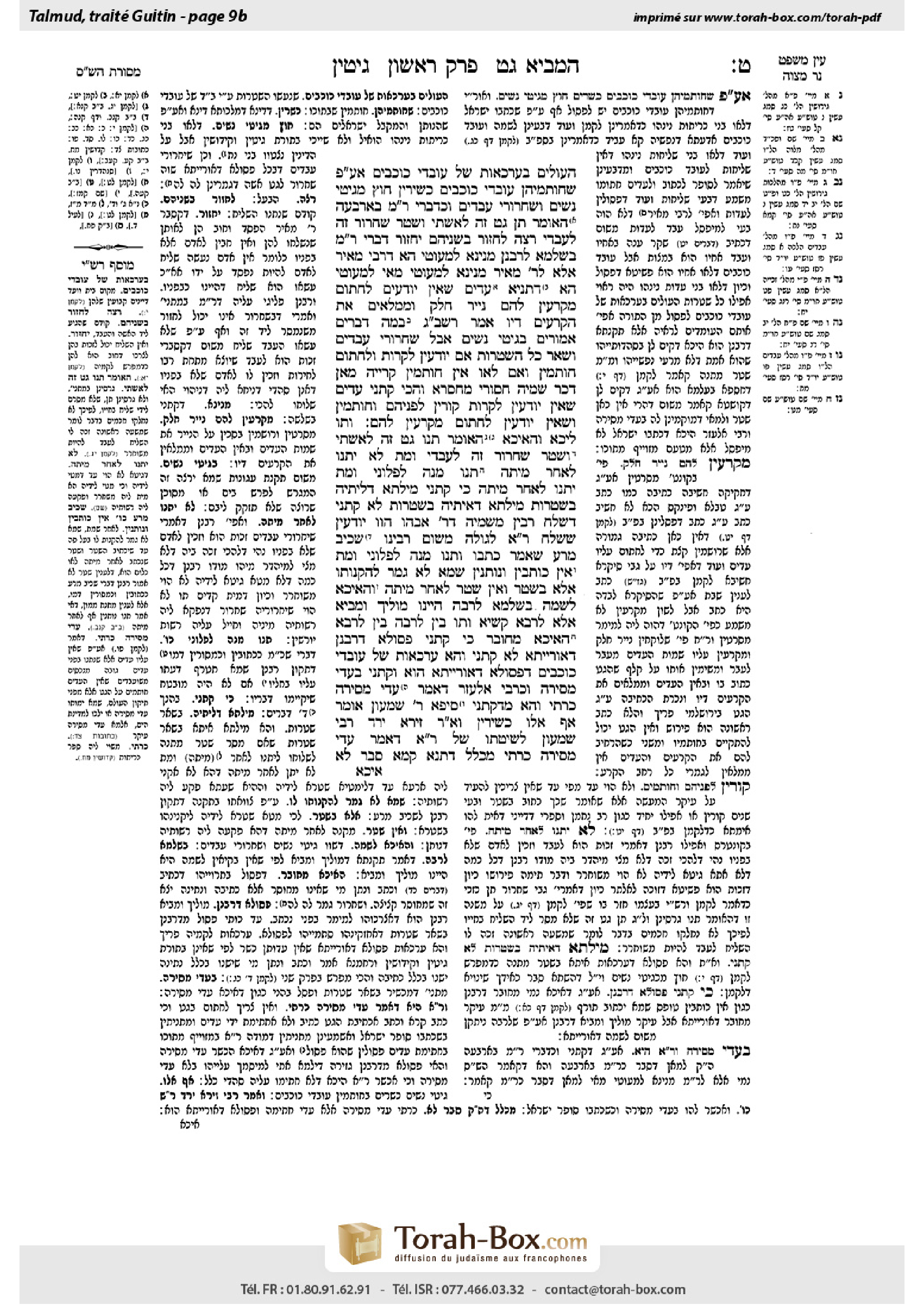
Gittin 9b: Talmud study for Daf Yomi
Study the Talmud for Daf Yomi with scanned pages, Hebrew text, English translations from Sefaria and AI-generated French translations.
Passage selection and English or AI-generated French translation are available where the scan has annotations. Daf Study is independent of Torah-Box and Sefaria.
Browse Gittin · גיטין · All tractatesGittin 9b text and translations
This page of Gittin includes the Aramaic text, an English translation and an AI-generated French translation, alongside the scan above.
גיטין ט׳ ב · Aramaic and Hebrew text
הָעוֹלִים בְּעַרְכָּאוֹת שֶׁל גּוֹיִם, אַף עַל פִּי שֶׁחוֹתְמֵיהֶן גּוֹיִם – כְּשֵׁירִין, חוּץ מִגִּיטֵּי נָשִׁים וְשִׁחְרוּרֵי עֲבָדִים. וּכְדִבְרֵי רַבִּי מֵאִיר – בְּאַרְבָּעָה: הָאוֹמֵר ״תֵּן גֵּט זֶה לְאִשְׁתִּי, וּשְׁטַר שִׁחְרוּר זֶה לְעַבְדִּי״, רָצָה לַחֲזוֹר בִּשְׁנֵיהֶם – יַחְזוֹר, דִּבְרֵי רַבִּי מֵאִיר.
בִּשְׁלָמָא לְרַבָּנַן, מִנְיָנָא לְמַעוֹטֵי הָא דְּרַבִּי מֵאִיר. אֶלָּא לְרַבִּי מֵאִיר, מִנְיָנָא לְמַעוֹטֵי מַאי?
לְמַעוֹטֵי הָא דְּתַנְיָא: עֵדִים שֶׁאֵין יוֹדְעִים לַחְתּוֹם, מְקָרְעִין לָהֶם נְיָיר חָלָק, וּמְמַלְּאִים אֶת הַקְּרָעִים דְּיוֹ.
אָמַר רַבָּן שִׁמְעוֹן בֶּן גַּמְלִיאֵל: בַּמֶּה דְּבָרִים אֲמוּרִים – בְּגִיטֵּי נָשִׁים, אֲבָל שִׁחְרוּרֵי עֲבָדִים וּשְׁאָר כׇּל הַשְּׁטָרוֹת, אִם יוֹדְעִין לִקְרוֹת וְלַחְתּוֹם – חוֹתְמִין, וְאִם לָאו – אֵין חוֹתְמִין.
קְרִיָּיה מַאן דְּכַר שְׁמַיהּ? חַסּוֹרֵי מְחַסְּרָא וְהָכִי קָתָנֵי: עֵדִים שֶׁאֵין יוֹדְעִין לִקְרוֹת – קוֹרִין לִפְנֵיהֶם וְחוֹתְמִין, וְשֶׁאֵין יוֹדְעִין לַחְתּוֹם – מְקָרְעִין לָהֶם.
וְתוּ לֵיכָּא?! וְהָאִיכָּא: הָאוֹמֵר ״תְּנוּ גֵּט זֶה לְאִשְׁתִּי, וּשְׁטַר שִׁחְרוּר זֶה לְעַבְדִּי״, וּמֵת – לֹא יִתְּנוּ לְאַחַר מִיתָה, ״תְּנוּ מָנֶה לִפְלוֹנִי״, וּמֵת – יִתְּנוּ לְאַחַר מִיתָה.
כִּי קָתָנֵי, מִילְּתָא דְּלֵיתַיהּ בִּשְׁטָרוֹת, מִילְּתָא דְּאִיתַיהּ בִּשְׁטָרוֹת לָא קָתָנֵי.
דִּשְׁלַח רָבִין מִשְּׁמֵיהּ דְּרַבִּי אֲבָהוּ: הֱווּ יוֹדְעִין, שֶׁשָּׁלַח רַבִּי אֶלְעָזָר לַגּוֹלָה מִשּׁוּם רַבֵּינוּ: שְׁכִיב מְרַע שֶׁאָמַר ״כִּתְבוּ וּתְנוּ מָנֶה לִפְלוֹנִי״, וּמֵת – אֵין כּוֹתְבִין וְנוֹתְנִין,
שֶׁמָּא לֹא גָּמַר לְהַקְנוֹתוֹ אֶלָּא בִּשְׁטָר, וְאֵין שְׁטָר לְאַחַר מִיתָה.
וְהָאִיכָּא לִשְׁמָהּ?
בִּשְׁלָמָא לְרַבָּה, הַיְינוּ מוֹלִיךְ וּמֵבִיא. אֶלָּא לְרָבָא, קַשְׁיָא!
וְתוּ: בֵּין לְרַבָּה בֵּין לְרָבָא, הָאִיכָּא מְחוּבָּר! כִּי קָתָנֵי פְּסוּלָא דְרַבָּנַן, דְּאוֹרָיְיתָא לָא קָתָנֵי.
וְהָא עַרְכָּאוֹת שֶׁל גּוֹיִם, דִּפְסוּלָא דְאוֹרָיְיתָא הוּא, וְקָתָנֵי! בְּעֵדֵי מְסִירָה, וּכְרַבִּי אֶלְעָזָר דְּאָמַר: עֵדֵי מְסִירָה כָּרְתִי.
וְהָא מִדְּקָתָנֵי סֵיפָא, רַבִּי שִׁמְעוֹן אוֹמֵר: אַף אֵלּוּ כְּשֵׁירִין, וְאָמַר רַבִּי זֵירָא: יָרַד רַבִּי שִׁמְעוֹן לְשִׁיטָתוֹ שֶׁל רַבִּי אֶלְעָזָר, דְּאָמַר עֵדֵי מְסִירָה כָּרְתִי; מִכְּלָל דְּתַנָּא קַמָּא סָבַר – לָא!
Gittin 9b · English translation
that are produced in gentile courts [arkaot], even though their signatories are gentiles, they are valid, except for bills of divorce and bills of manumission. These documents are not valid when prepared by gentiles. And according to the statement of Rabbi Meir, bills of divorce and manumission are equal in four ways, the three aforementioned halakhot and also with regard to a man who says: Give this bill of divorce to my wife, or: Give this bill of manumission to my slave. They are equal in that if he desires to retract his instruction with regard to both of these documents, before they have reached the woman or slave, he can retract. This is the statement of Rabbi Meir.
The Gemara asks: Granted, according to the opinion of the Rabbis, they state the number three to exclude this opinion of Rabbi Meir, by emphasizing that there are only three ways, not four. However, according to the opinion of Rabbi Meir, what does the number four serve to exclude? Wouldn’t it have been enough to say that Rabbi Meir adds another case?
The Gemara answers: The Sages mention this number to exclude that which is taught in a baraita: With regard to witnesses who do not know how to sign, i.e., they do not know how to write their names, one tears blank paper for them, meaning that a stencil of their names is fashioned from blank paper and placed on the bill of divorce. And the witnesses fill in the gaps with ink so that their names appear on the document.
Rabban Shimon ben Gamliel said: In what case is this statement said? It is said with regard to bills of divorce. However, with regard to bills of manumission and all other documents, if the witnesses know how to read and sign, they sign, and if not, they do not sign. Rabbi Meir agrees with the opinion of Rabban Shimon ben Gamliel that bills of divorce and bills of manumission are different with regard to this issue, and he mentioned the number to exclude the possibility that the halakha stated by the first tanna of this baraita applies to both types of documents.
With regard to Rabban Shimon ben Gamliel’s statement, the Gemara asks: Reading, who mentioned anything about it? Why does Rabban Shimon ben Gamliel mention a need for the witnesses to be able to read when the discussion is about a witness who does not know how to sign? The Gemara answers: The baraita is incomplete, and this is what it is teaching: If witnesses do not know how to read, then one reads in their presence and they sign. And if they do not know how to sign, then one tears paper for them and they sign. Once the baraita is emended, it is clear that Rabban Shimon ben Gamliel was responding to the statement of the previous tanna.
The Gemara asks: And is there nothing else that can be added to the list of ways in which bills of divorce and bills of manumission are equal? But isn’t there a case taught in the mishna (13a): If a person on his deathbed says: Give this bill of divorce to my wife, or this bill of manumission to my slave, and he dies, they should not give the bill after his death. However, if he said: Give one hundred dinars to so-and-so, and he dies, they should give it after his death. Apparently, this is another halakha in which bills of divorce and bills of manumission share equal status.
The Gemara answers: When the baraita teaches the ways in which bills of divorce and bills of manumission are equal, it is referring only to a matter that does not apply to typical documents and it does not teach any matter that is equally applicable to typical documents.
The Gemara explains: As Ravin sent from Eretz Yisrael in the name of Rabbi Abbahu: You should know that Rabbi Elazar sent this teaching to the Diaspora, i.e., Babylonia, in the name of our teacher, Rabbi Yoḥanan: With regard to the case of a person on his deathbed who says: Write a deed of transfer and give with it one hundred dinars to so-and-so, and then dies before they had the opportunity to write the document, one does not write and give the document. Why not?
The Gemara explains: Perhaps he resolved to transfer these one hundred dinars to him only with a deed of transfer, and a deed of transfer of property is not written after the death of the owner. This shows that other documents are also not written after one’s death, which means that this halakha is not specific to bills of divorce and bills of manumission. Therefore, it is not listed among the ways in which these two documents are similar.
The Gemara raises another difficulty: But isn’t there the halakha that both bills of divorce and bills of manumission must be written for her sake, i.e., for the sake of the particular woman or slave to whom they are given? Why isn’t this halakha included in the list?
The Gemara comments: Granted, according to the opinion of Rabba, this is included in the statement: The two documents are similar with regard to the halakhot of delivering and bringing, as he maintains that this requirement to write the document for the sake of the recipient is the primary reason why the agents must state that it was written and signed in their presence. However, according to the opinion of Rava, who holds that the reason for this statement is to ratify the bill of divorce, this is difficult.
And furthermore, both according to the opinion of Rabba and according to the opinion of Rava, there is the case of bills which were written and signed while they were attached to the ground, e.g., on a leaf attached to a tree, which invalidates both bills of divorce and bills of manumission. The Gemara explains: When the baraita teaches its list it is referring solely to issues that cause the documents to be rendered invalid by rabbinic law. It does not teach cases involving invalidation by Torah law. Since these two cases, i.e., documents not written for the recipient’s sake or when they are attached to the ground, are not valid by Torah law, the baraita did not mention these cases.
The Gemara challenges this response: But there is the example of documents written in gentile courts, which is an invalidation of documents that applies by Torah law, and yet the baraita teaches this halakha. The Gemara answers: This is referring to a bill of divorce that was given with valid witnesses who observe the transmission of a legal document, and this is in accordance with the opinion of Rabbi Elazar, who says in a mishna (10b): Witnesses of the transmission of a bill of divorce effect the divorce. In his opinion, the effectiveness of the document depends on the witnesses who observe its transmission, not those who sign the bill of divorce. Consequently, a bill of divorce that was signed in a gentile court is rendered invalid by rabbinic law.
The Gemara raises a difficulty: But from the fact that it teaches in the latter clause of that mishna that Rabbi Shimon says: Even these, bills of divorce and bills of manumission, are valid, and Rabbi Zeira said: Rabbi Shimon accepted the opinion of Rabbi Elazar, who said that witnesses of the transmission of the bill of divorce effect the divorce, one can learn by inference that the first tanna does not hold in accordance with the opinion of Rabbi Elazar. Instead, he holds that the witnesses who sign effect a divorce. Yet even so, this tanna listed the cases where bills of divorce from gentile courts are invalidated, despite the fact that they are invalid by Torah law.
Gittin 9b · Traduction française (IA)
celles qui sont produites dans les tribunaux païens [arkaot], même si leurs signataires sont païens, sont valides, à l'exception des certificats de divorce et des certificats de manumission. Ces documents ne sont pas valides lorsqu'ils sont rédigés par des païens. Selon la déclaration du Rabbi Meïr, les certificats de divorce et de manumission sont égaux en quatre points, les trois halakhot mentionnées précédemment, ainsi qu'en ce qui concerne un homme qui dit : Donne ce certificat de divorce à ma femme, ou : Donne ce certificat de manumission à mon esclave. Ils sont égaux dans le sens où, si l'homme souhaite rétracter son instruction concernant ces deux documents avant qu'ils n'atteignent la femme ou l'esclave, il peut le faire. C'est la déclaration du Rabbi Meïr.
Le Guemara demande : Cela est admis selon l'opinion des Sages, qui mentionnent le nombre trois pour exclure cette opinion du Rabbi Meïr, en soulignant qu'il n'y a que trois façons, pas quatre. Cependant, selon l'opinion du Rabbi Meïr, à quoi sert le nombre quatre pour exclure quelque chose ? N'aurait-il pas suffi de dire que le Rabbi Meïr ajoute un autre cas ?
Le Guemara répond : Les Sages mentionnent ce nombre pour exclure ce qui est enseigné dans une baraïta : En ce qui concerne des témoins qui ne savent pas signer, c'est-à-dire qui ne savent pas écrire leur nom, on leur prépare un papier vide, c'est-à-dire qu'on fait un masque de leurs noms à partir d'un papier vide et on le place sur le certificat de divorce. Et les témoins remplissent les lacunes avec de l'encre de sorte que leurs noms apparaissent sur le document.
Rabban Shimon ben Gamliel a dit : Dans quel cas cette déclaration est-elle dite ? Elle est dite concernant les certificats de divorce. Cependant, concernant les certificats de manumission et tous les autres documents, si les témoins savent lire et signer, ils signent, et si ce n'est pas le cas, ils ne signent pas. Rabbi Meïr est d'accord avec l'opinion de Rabban Shimon ben Gamliel selon laquelle les certificats de divorce et de manumission sont différents concernant ce point, et il mentionne le nombre pour exclure la possibilité que la halakha énoncée par le premier tanna de cette baraïta s'applique aux deux types de documents.
Concernant la déclaration de Rabban Shimon ben Gamliel, le Guemara demande : La lecture, qui a mentionné quelque chose à ce sujet ? Pourquoi Rabban Shimon ben Gamliel mentionne-t-il la nécessité que les témoins sachent lire alors que la discussion porte sur un témoin qui ne sait pas signer ? Le Guemara répond : La baraïta est incomplète, et c'est ce qu'elle enseigne : Si les témoins ne savent pas lire, on lit devant eux et ils signent. Et si ils ne savent pas signer, on leur fait un papier vide et ils signent. Une fois que la baraïta est corrigée, il est clair que Rabban Shimon ben Gamliel répondait à la déclaration du tanna précédent.
Le Guemara demande : Et n'y a-t-il pas autre chose qui pourrait être ajouté à la liste des façons selon lesquelles les certificats de divorce et de manumission sont égaux ? Mais n'y a-t-il pas un cas enseigné dans la mishna (13a) : Si une personne, sur son lit de mort, dit : Donne ce certificat de divorce à ma femme, ou ce certificat de manumission à mon esclave, et qu'il meurt, ils ne devraient pas donner le certificat après sa mort. Cependant, s'il a dit : Donne cent dinars à tel et tel, et qu'il meurt, ils devraient donner cela après sa mort. Apparemment, c'est une autre halakha dans laquelle les certificats de divorce et de manumission partagent un statut équivalent.
Le Guemara répond : Lorsque la baraïta enseigne les manières selon lesquelles les certificats de divorce et de manumission sont égaux, elle fait référence uniquement à une question qui ne s'applique pas aux documents ordinaires et ne traite pas d'une question applicable aux documents ordinaires.
Le Guemara explique : Ravin a envoyé de la Terre d'Israël en nom du Rabbi Abbahu : Vous devez savoir que le Rabbi Elazar a envoyé cette enseignement à la Diaspora, c'est-à-dire en Babylonie, en nom de notre maître, le Rabbi Yoḥanan : En ce qui concerne le cas d'une personne sur son lit de mort qui dit : Écris un acte de transfert et donne avec cela cent dinars à tel et tel, et qu'il meurt avant qu'ils n'aient eu l'occasion d'écrire le document, on n'écrit pas et on ne donne pas le document. Pourquoi pas ?
Le Guemara explique : Peut-être qu'il a résolu de transférer ces cent dinars à lui uniquement avec un acte de transfert, et un acte de transfert de propriété n'est pas écrit après la mort du propriétaire. Cela montre que d'autres documents ne sont pas non plus écrits après la mort d'une personne, ce qui signifie que cette halakha n'est pas spécifique aux certificats de divorce et de manumission. Par conséquent, elle n'est pas mentionnée parmi les manières selon lesquelles ces deux documents sont similaires.
Le Guemara soulève une autre difficulté : Mais n'y a-t-il pas la halakha selon laquelle les certificats de divorce et de manumission doivent être rédigés à son intention, c'est-à-dire à l'intention de la femme ou de l'esclave à qui ils sont donnés ? Pourquoi cette halakha n'est-elle pas incluse dans la liste ?
Le Guemara commente : Cela est admis selon l'opinion de Rabba, cette inclusion est dans la déclaration : les deux documents sont similaires concernant les halakhot de livraison et d'apport, car il affirme que cette exigence de rédiger le document à l'intention du destinataire est la raison principale pour laquelle les agents doivent déclarer qu'il a été rédigé et signé en leur présence. Cependant, selon l'opinion de Rava, qui considère que la raison de cette déclaration est de valider le certificat de divorce, cela est difficile.
Et de plus, selon l'opinion de Rabba et selon celle de Rava, il y a le cas des certificats qui ont été rédigés et signés alors qu'ils étaient attachés au sol, par exemple sur une feuille accrochée à un arbre, ce qui invalidate à la fois les certificats de divorce et de manumission. Le Guemara explique : Lorsque la baraïta enseigne sa liste, elle fait référence uniquement aux questions qui rendent les documents invalides selon la loi rabbinique. Elle ne parle pas des cas d'invalidation selon la loi divine. Puisque ces deux cas, c'est-à-dire les documents non rédigés à l'intention du destinataire ou ceux attachés au sol, ne sont pas valides selon la loi divine, la baraïta n'a pas mentionné ces cas.
La Guemara soulève un défi à cette réponse : Mais il y a l'exemple des documents rédigés devant les tribunaux païens, qui invalident les documents, et cela s'applique selon la loi torah, et pourtant la baraïta enseigne cette halakha. La Guemara répond : Il s'agit d'un acte de divorce rédigé avec des témoins valides qui observent la transmission d'un document légal, et cela correspond à l'opinion du Rabbi Elazar, qui dit dans un mitsva (10b) : Les témoins de la transmission d'un acte de divorce accomplissent le divorce. Selon son avis, l'efficacité du document dépend des témoins qui observent sa transmission, et non pas de ceux qui signent l'acte de divorce. Ainsi, un acte de divorce signé devant un tribunal païen est rendu invalide selon la loi rabbinique.
La Guemara soulève une difficulté : Mais à partir du fait qu'elle enseigne dans la dernière partie de ce mitsva que le Rabbi Shimon dit : Même ces actes de divorce et d'émancipation sont valides, et le Rabbi Zéira a dit : Le Rabbi Shimon a accepté l'opinion du Rabbi Elazar, qui disait que les témoins de la transmission de l'acte de divorce accomplissent le divorce, on peut en déduire que le premier tanna ne suit pas l'opinion du Rabbi Elazar. Au contraire, il considère que les témoins qui signent accomplissent le divorce. Cependant, même ainsi, ce tanna a listé les cas où les actes de divorce des tribunaux païens sont invalidés, malgré le fait qu'ils sont invalidés selon la loi torah.
Traduction française générée par IA à partir de l’édition anglaise de Sefaria. Vérifie toujours un passage avec le texte source.
Text from Sefaria: William Davidson Edition - Vocalized Aramaic (CC BY NC); William Davidson Edition - English (CC BY NC).