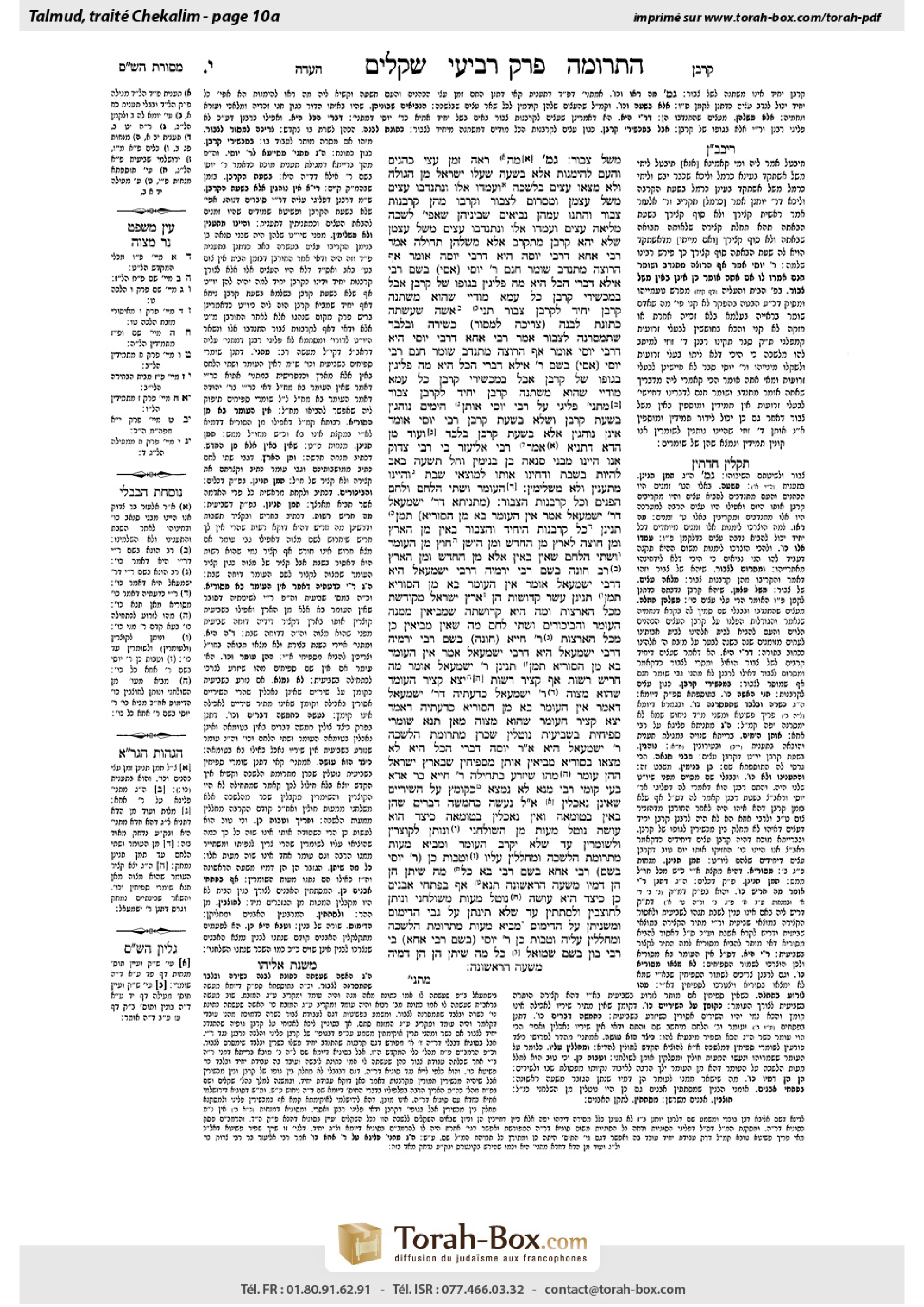
Shekalim 10a: Talmud study for Daf Yomi
Study the Talmud for Daf Yomi with scanned pages, Hebrew text, English translations from Sefaria and AI-generated French translations.
Passage selection and English or AI-generated French translation are available where the scan has annotations. Daf Study is independent of Torah-Box and Sefaria.
Browse Shekalim · שקלים · All tractatesShekalim 10a text and translations
This page of Shekalim includes the Aramaic text and an English translation, alongside the scan above.
שקלים י׳ א · Aramaic and Hebrew text
משנה: הַתְּרוּמָה מֶה הָיוּ עוֹשִׂין בָּהּ. לוֹקְחִין בָּהּ תְּמִידִין וּמוּסָפִין וְנִסְכֵּיהֶם הָעֹמֶר וּשְׁתֵּי הַלֶּחֶם וְלֶחֶם הַפָּנִים וְכָל קָרְבְּנוֹת הַצִּיבּוּר. שׁוֹמְרֵי סְפִחִים בַּשְּׁבִיעִית נוֹטְלִין שְׂכָרָן מִתְּרוּמַת הַלִּשְׁכָּה. רִבִּי יוֹסֵה אוֹמֵר אַף הָרוֹצֶה מִתְנַדֵּב שׁוֹמֵר חִנָּם. אָמְרוּ לוֹ אַף אַתָּה אוֹמֵר שֶׁאֵין בָּאִין אֶלָּא מִשֶּׁל צִיבּוּר:
הלכה: הַתְּרוּמָה מֶה הָיוּ עוֹשִׂין בָּהּ כול׳. מָה רָאָה זְמַן עֲצֵי כֹהֲנִים וְהָעָם לְהִימָּנוֹת. אֶלָּא בְשָׁעָה שֶׁעָלוּ יִשְׂרָאֵל מִן הַגּוֹלָה וְלֹא מָצְאוּ עֵצִים בַּלִּישְׁכָּה וְעָמְדוּ אֵילּוּ וְנִתְנַדְּבוּ עֵצִים מִשֶּׁלְעַצְמָן וּמְסָרוּם לַצִּיבּוּר וְקָרְבוּ מֵהֶן קָרְבְּנוֹת צִיבּוּר. וְהִתְנוּ עִמָּהֶן הַנְּבִיאים שֶׁבֵּינֵיהֶן שֶׁאֲפִילוּ לִשְׁכָּה מְלֵיאָה עֵצִים וְעָמְדוּ אֵילּוּ וְנִתְנַדְּבוּ עֵצִים מִשֶּׁלְעַצְמָן שֶׁלֹּא יִהֵא קָרְבָּן מִתְקָרֵב אֶלָּא מִשֶּׁלָּהֶן תְּחִילָּה. אָמַר רִבִּי אָחָא. דְּרִבִּי יוֹסֵה הִיא. דְּרִבִּי יוֹסֵה אָמַר. אַף הָרוֹצֶה מִתְנַדֵּב שׁוֹמֵר חִנָּם. רִבִּי יוֹסֵי בְשֵׁם רִבִּי אִילָא. דִּבְרֵי הַכֹּל הִיא. מַה פְלִיגִין. בְּגוּפוֹ שֶׁלְקָרְבָּן. אֲבָל בְּמַכְשִׁירֵי קָרְבָּן כָּל עַמָּא מוֹדֵיי שֶׁהוּא מִשְׁתַּנֶּה קָרְבָּן יָחִיד לְקָרְבָּן צִיבּוּר. תַּנֵּי. [אִ]שָּׁה שֶׁעָשָׂת כֻּתּוֹנֶת לִבְנָהּ צְרִיכָה לִמְסוֹר לְצִיבּוּר. אָמַר רִבִּי אָחָא. דְּרִבִּי יוֹסֵי הִיא. דְּרִבִּי יוֹסֵי אָמַר. אַף הָרוֹצֶה מִתְנַדֵּב שׁוֹמֵר חִנָּם. רִבִּי יוֹסֵה בְשֵׁם רִבִּי אִילָא. דִּבְרֵי הַכֹּל הִיא. מַה פְלִיגִין. בְּגוּפוֹ שֶׁלְקָרְבָּן. אֲבָל בְּמַכְשִׁירֵי קָרְבָּן כָּל עַמָּא מוֹדֵיי שֶׁהוּא מִשְׁתַּנֶּה קָרְבָּן יָחִיד לְקָרְבָּן צִיבּוּר. מַתְנִיתָא פְלִיגָא עַל רִבִּי יוֹסֵי. אוֹתָן הַיָּמִים נוֹהֲגִין בִּשְׁעַת קָרְבָּן וְשֶׁלֹּא בִּשְׁעַת קָרְבָּן. רִבִּי יוֹסֵה אוֹמֵר. אֵינָן נוֹהֲגִין אֶלָּא בִּשְׁעַת קָרְבָּן. וְעוֹד מִן הָדָא דְתַנֵּי. אָמַר רִבִּי אֶלְעָזָר בֵּירִבִּי צָדוֹק. אָנוּ הָיִינוּ מִבְּנֵי סְנָאָה בֶן בִּנְיָמִן וְחָל תִּשְׁעָה בְאָב לִהְיוֹת בַּשַּׁבָּת וְדָחִינוּ אוֹתוֹ לְמוֹצָאֵי שַׁבָּת וְהָיִינוּ מִתְעַנִּין וְלֻא מַשְׁלִימִין.
הָעוֹמֶר וּשְׁתֵּי הַלֶּחֶם וְלֶחֶם הַפָּנִים. מַתְנִיתָא דְרִבִּי יִשְׁמָעֵאל. דְרִבִּי יִשְׁמָעֵאל אָמַר . אֵין הָעוֹמֶר בָּא מִן הַסּוּרִיָּא. תַּמָּן תַּנִּינָן. כָּל קָרְבְּנוֹת הַיָּחִיד וְהַצִּיבּוּר בָּאִין מִן הָאָרֶץ וּמִחוּצָה לָאָרֶץ. מִן הֶחָדָשׁ וּמִן הַיָּשָׁן. חוּץ מִן הָעוֹמֶר וּשְׁתֵּי הַלֶּחֶם. שֶׁאֵין בָּאִין אֶלָּא מִן הֶחָדָשׁ וּמִן הָאָרֶץ. רִבִּי חוּנָה בְשֵׁם רִבִּי יִרְמְיָה. דְרִבִּי יִשְׁמָעֵאל הִיא. דְרִבִּי יִשְׁמָעֵאל אָמַר. אֵין הָעוֹמֶר בָּא מִן הַסּוּרִיָּא. תַּמָּן תַּנִּינָן. עֶשֶׂר קְדוּשּׁוֹת הֵן. אֶרֶץ יִשְׂרָאֵל מְקוּדֶּשֶׁת מִכָּל הָאֲרָצוֹת. וּמַה הִיא קְדוּשָּׁתָהּ. שֶׁמְּבִיאִין מִמֶּנָּה הָעוֹמֶר וְהַבִּיכּוּרִים וּשְׁתֵּי הַלֶּחֶם. מַה שֶּׁאֵין מְבִיאִין כֵּן מִכָּל הָאֲרָצוֹת. רִבִּי חוּנָה בְשֵׁם רִבִּי יִרְמְיָה. דְּרִבִּי יִשְׁמָעֵאל הִיא. דְרִבִּי יִשְׁמָעֵאל אָמַר. אֵין הָעוֹמֶר בָּא מִן הַסּוּרִיָּא. תַּמָּן תַּנִּינָן. רַבִּי יִשְׁמָעֵאל אוֹמֵר. מֶה חָרִישׁ רְשׁוּת אַף קָצִיר רְשׁוּת. יָצָא קְצִיר הָעֹמֶר. שֶׁהוּא מִצְוָה. הֲוֵי מָאן תַּנָּא שׁוֹמְרֵי סְפִחִים בַּשְּׁבִיעִית נוֹטְלִין שְׂכָרָן מִתְּרוּמַת הַלִּשְׁכָּה. רִבִּי יִשְׁמָעֵאל. אָמַר רִבִּי יוֹסֵה. דִּבְרֵי הַכֹּל הִיא. לֹא מָצָאוּ בְסוּרִיָּא מְבִיאִין אוֹתוֹ מִסְּפִחִין שֶׁבְּאֶרֶץ יִשְׂרָאֵל. הָהֵן עוֹמֶר מָהוּ שֶׁיִּזָּרַע לָכֵן מִתְּחִילָּה. רִבִּי חִיָיה בַּר אָדָא בְעָא קוֹמֵי רִבִּי מָנָא. לֹא נִמְצָא כְקוֹמֵץ עַל הַשְּׁיֵרִיים שֶׁאֵינָן נֶאֱכָלִין. אָמַר לֵיהּ. נַעֲשֶׂה כַחֲמִשָּׁה דְבָרִים שֶׁהֵן בָּאִין בְּטוּמְאָה וְאֵינָן נֶאֱכָלִין בְּטוּמְאָה.
כֵּיצַד הוּא עוֹשֶׂה. נוֹטֵל מָעוֹת מִן הָשּׁוּלְחָנִי וְנוֹתֵן לַקּוֹצְרִין וּלְשׁוֹמְרִין עַד שֶׁלֹּא יַקְרִב הָעוֹמֶר. מֵבִיא מָעוֹת מִתְּרוּמַת הִַלִּשְׁכָּה וּמְחַלְלָן עָלָיו. וְטָבוּ כֵן. רִבִּי אָחָא בְשֵׁם רִבִּי בָּא. כָּל מַה שֶׁיִּתֵּן הֵן הֵן דָּמֶיהָ מִשָּׁעָה הָרִאשׁוֹנָה. תַּנֵּי. אַף בְּפַתָּחֵי אֲבָנִים כֵּן. כֵּיצַד הוּא עוֹשֶׂה. נוֹטֵל מָעוֹת מִשּׁוּלְחָנִי וְנוֹתֵן לַחוֹצְבִין וּלְסַתָּתִין עַד שֶׁלֹּא תִינָּתֵן עַל גַּבֵּי הַדֹּימוֹס. [אַחַר כָּךְ] מֵבִיא מָעוֹת מִתְּרוּמַת הִַלִּשְׁכָּה וּמְחַלְלָן עָלֶיהָ. וְטָבָא הִיא כֵן. רִבִּי יוֹסֵה בֵּירִבִּי בּוּן בְּשֵׁם שְׁמוּאֵל. כָּל מַה שֶׁיִּתֵּן הֵן הֵן דָּמָיו מִשָּׁעָה הָרִאשׁוֹנָה.
משנה: פָּרָה וְשָׂעִיר הַמִּשְׁתַּלֵּחַ וְלָשׁוֹן שֶׁל זְהוֹרִית בָּאִין מִתְּרוּמַת הַלִשְׁכָּה. כֶּבֶשׁ פָּרָה וְכֶבֶשׁ שָׂעִיר הַמִּשְׁתַּלֵּחַ וְלָשׁוֹן שֶׁבֵּין קַרְנָיו וְאַמַּת הַמַּיִם וְחוֹמַת הָעִיר וּמִגְדְּלוֹתֶיהָ וְכָל צָרְכֵי הָעִיר בָּאִין מִשְּׁיֵרֵי הַלִּשְׁכָּה. אַבָּא שָׁאוּל אוֹמֵר כֶּבֶשׁ פָּרָה כֹּהֲנִים גְּדוֹלִים עוֹשִׂין אוֹתוֹ מִשֶּׁל עַצְמָן: מוֹתַר שְׁיֵרֵי לִשְׁכָּה מֶה הָיוּ עוֹשִׂין בָּהֶן. לוֹקְחִין בָּהֶן יֵינוֹת שְׁמָנִים וּסְלָתוֹת וְהַשָּׂכָר לַהֶקְדֵּשׁ דִּבְרֵי רִבִּי יִשְׁמָעֵאל רִבִּי עֲקִיבָה אוֹמֵר אִין מִשְׁתַּכְּרִין בְּשֶּׁל הֶקְדֵּשׁ אַף לֹא מִשֶּׁל עֲנִיִּים: מוֹתַר הַתְּרוּמָה מֶה הָיוּ עוֹשִׂין בָּהּ. רִקּוּעֵי זָהָב צִיפּוּי לְבֵית קָדְשֵׁי הַקֳּדָשִׁים. רִבִּי יִשְׁמָעֵאל אוֹמֵר מוֹתַר הַפֵּירוֹת קַיָיץ הַמִּזְבֵּחַ. מוֹתַר תְּרוּמָה לִכְלֵי שָׁרֵת. רִבִּי עֲקִיבָה אוֹמֵר מוֹתַר תְּרוּמָה קַיָיץ הַמִּזְבֵּחַ. מוֹתַר נְסָכִים לִכְלֵי שָׁרֵת. רִבִּי חֲנַנְיָה סְגַן הַכֹּהֲנִים אוֹמֵר מוֹתַר נְסָכִים קַיָיץ הַמִּזְבֵּחַ מוֹתַר תְּרוּמָה לִכְלֵי שָׁרֵת. זֶה וָזֶה לֹא הָיוּ מוֹדִין בַּפֵּירוֹת:
Shekalim 10a · English translation
MISHNAH: For what was the disbursement used? One buys from it daily and musaf sacrifices and their libations, the `omer 23:9–14., and the Two Breads 23:17., and the shew-bread 24:5–9., and all public offerings 4:13–21.). The watchmen for aftergrowth in the sabbatical year and the Two Breads have to be produce of the Land, and no sowing is permitted in a Sabbatical, the grains have to be harvested from spontaneous aftergrowth. Fields from which such a yield is expected have to be watched lest the plants be eaten by animals or the grains be taken by humans. In this case the watch is an essential precondition for the possibility of the offering and therefore the expenses have to be borne by the Temple. take their wages from the disbursement from the lodge. Rebbi Yose says, he also may volunteer as unpaid trustee. They told him, would you not also say that they only come from the public?
HALAKHAH: “For what was the disbursement used,” etc. For what reason were the times of wood by the priests and the people to be counted4:6 (ת), also in Megillah1:2 (70c l. 1 ff.; מ). In fact, ג simply notes: “one repeats from Ta`aniot up to ‘and were fasting but not completing.’ ”? Only that at the time when Israel returned from the Diaspora and did not find wood in the chamber, those came forward and volunteered wood from their own, donated it to the public, and used it to offer public sacrifices. The prophets among them stipulated that even if the chamber was full of wood and those came and offered and volunteered wood from their own, that the sacrifice should only be brought first from theirs28a.. Rebbi Aḥa said, this is Rebbi Yose’s, since Rebbi Yose said, also he may volunteer as unpaid trustee. Rebbi Yose in the name of Rebbi Ila, it is the opinion of everybody. Where do they disagree? About the body of the offering. But for enablers of the offering everybody agrees that a private offering can be turned into public offering 6:5)to be paid for from the public purse.. It was stated, a woman who made a coat for her son has to surrender it to the public 28:40–43), they must be public property. Babli Yoma35b.. Rebbi Aḥa said, this is Rebbi Yose’s, since Rebbi Yose said, also he may volunteer as unpaid trustee. Rebbi Yose in the name of Rebbi Ila, it is the opinion of everybody. Where do they disagree? About the body of the offering. But for enablers of the offering everybody agrees that a private offering can be turned into public offering.. A baraita disagrees with Rebbi Yose: 3:6.“Those days are observed at the time of sacrifices and not at the time of sacrifices; Rebbi Yose says, they are observed only at the time of sacrifices.” Also from the following3:6.: “Rebbi Eleazar ben Rebbi Ṣadoq said, we were of the descendants of Senaah ben Benjamin. When the Ninth of Av fell on a Sabbath, we postponed it to the end of the Sabbath and were fasting but not completing.”
“The `omer 23:9–14., and the Two Breads 23:17.., and the shew-bread.” The Mishnah are paid from public funds. If it were possible to import the grain during a sabbatical year, the expense would be unnecessary and therefore forbidden. is Rebbi Ismael’s, since Rebbi Ismael said, the `omer is not brought from Syria. There, we have stated:8:1. The sacrifices referred to are offerings of flour and wine. “All private and public sacrifices come from the Land and from outside the Land, from new or old [grain], except for `omer and the Two Breads, which only come from new grain permits the profane use of new grain also from outside the Land and the Two Breads permit the use of new wheat in the Tabernacle which according to the Mishnah includes wheat imported from Syria. While the Mishnah states that grain is acceptable from outside the Land, this refers to grain from outside the Land on both sides of the Jordan and Syria only if it remained impervious to the impurity of Gentile lands (i. e., if it was guarded from any contact with water or fluids whose status is like water in this respect.) and from the Land.” Rebbi Ḥuna in the name of Rebbi Jeremiah, this is Rebbi Ismael’s, since Rebbi Ismael said, the `omer is not brought from Syria. There, we have stated1:6.: “There are ten levels of holiness. The Land of Israel is holier than other lands; and what is its holiness? That one brings from it the `omer, first fruits, and the Two Breads, which cannot be from other lands.” Rebbi Ḥuna in the name of Rebbi Jeremiah, this is Rebbi Ismael’s, since Rebbi Ismael said, the `omer is not brought from Syria. There, we have stated1:5.: “Rebbi Ismael says, since sowing is a voluntary act, also harvesting is a voluntary act. This excludes harvesting the `omer, which is a commandment 34:21: Six days you may work but on the Seventh Day you must rest, from ploughing and harvesting you must rest. According to R. Ismael while this forbids any optional harvesting on the Sabbath, it implies that harvesting required by a religious commandment must be performed on the Sabbath. (Cf. Ševi`it Chapter 1, Notes 43 and 2.)
ג adds here the one-sentence Halakhah Ševi`it1:5 (Note 44)..” Who is the Tanna of “the watchmen for aftergrowth in the sabbatical year take their wages from the disbursement from the lodge”? Rebbi Ismael. Rebbi Yose said, it is everybody’s opinion. If one would not find in Syria,.one would bring from the aftergrowth in the Land of Israel. Could one sow from the start for the `omer 25:3 introducing the Sabbatical year combines sowing and harvesting, one could make the point that only voluntary sowing in a Sabbatical is forbidden, therefore obligatory sowing leading to obligatory harvesting is permitted.? Rebbi Ḥiyya bar Ada asked before Rebbi Mana, would he not take the fistful for leftovers than cannot be eaten(a tenth of an ephah, about 3.8 l) is burned on the altar, the leftover has to be consumed by the priests in the Sanctuary. But produce sown in a Sabbatical is forbidden; the leftover of the flour could not be consumed.? He said to him, it has a status like the five kinds which can be brought in impurity but may not be eaten in impurity7:4..
How does he do it are Temple property which can only be used to buy sacrifices. If the Temple administrator would pay workers with these monies, he would be guilty of me`ilah, larceny of sacred property.? He takes coins from the money changer and gives them to the harvesters and the watchmen before the `omer is presented. He brings coins from the disbursement from the lodge and redeems them for it is presented as flour. Therefore the value of the grain and the cost of all labor used in the preparation of the offering can be added and the sheqalim coins redeemed on the total value of the sacrifice. The redeemed coins can then be used to liquidate the debt incurred at the banker’s.; then it is in order, seems to be a grotesque misreading.. Rebbi Aḥa in the name of Rebbi Abba: Any which he gives are its coins from the start. 19.. It was stated: The same is the case with the stone-masons. He takes coins from the money changer and gives them to the quarry workers and the stone-cutters before it is fixed in the row. 19:6.. Then he brings coins from the disbursement from the lodge and redeems them for it; then it is in order. Rebbi Yose ben Rebbi Abun in the name of Samuel: Any which he gives are its coins from the start.
MISHNAH: The Cow. 19., the he-goat which is sent away, and the shiny strip. 19:6. come from the money disbursed from the lodge. The ramp for the Cow, the ramp for the he-goat which is sent away6:4., the strip bound on its horns4:2, 6:6., the water canal, the city wall and its towers, and all needs of the city, come from the leftovers in the lodge. Abba Shaul says, the High Priests build the ramp for the Cow at their own expense.
What did one do with the leftover in the lodge? One buys with it wine, oil, and fine flour, and the gain is the Temple’s, the words of Rebbi Ismael. Rebbi Aqiba says, one gains neither for the Temple nor funds for the poor.
What did they use the leftover of the disbursement for? Gold sheets coating for the Holiest of Holies. Rebbi Ismael said, the leftover of produce is for adornment of the altar, the leftover of the disbursement is for Service vessels. Rebbi Aqiba says, the leftover of the disbursement is for adornment of the altar, the leftover of the libations is for Service vessels. Rebbi Ḥanania the executive officer of the Cohanim says, the leftover of the libations is for adornment of the altar, the leftover of the disbursement is for Service vessels. Neither of them did agree about produce.
Text from Sefaria: The Jerusalem Talmud, edition by Heinrich W. Guggenheimer. Berlin, De Gruyter, 1999-2015 (CC BY); The Jerusalem Talmud, translation and commentary by Heinrich W. Guggenheimer. Berlin, De Gruyter, 1999-2015 (CC BY).