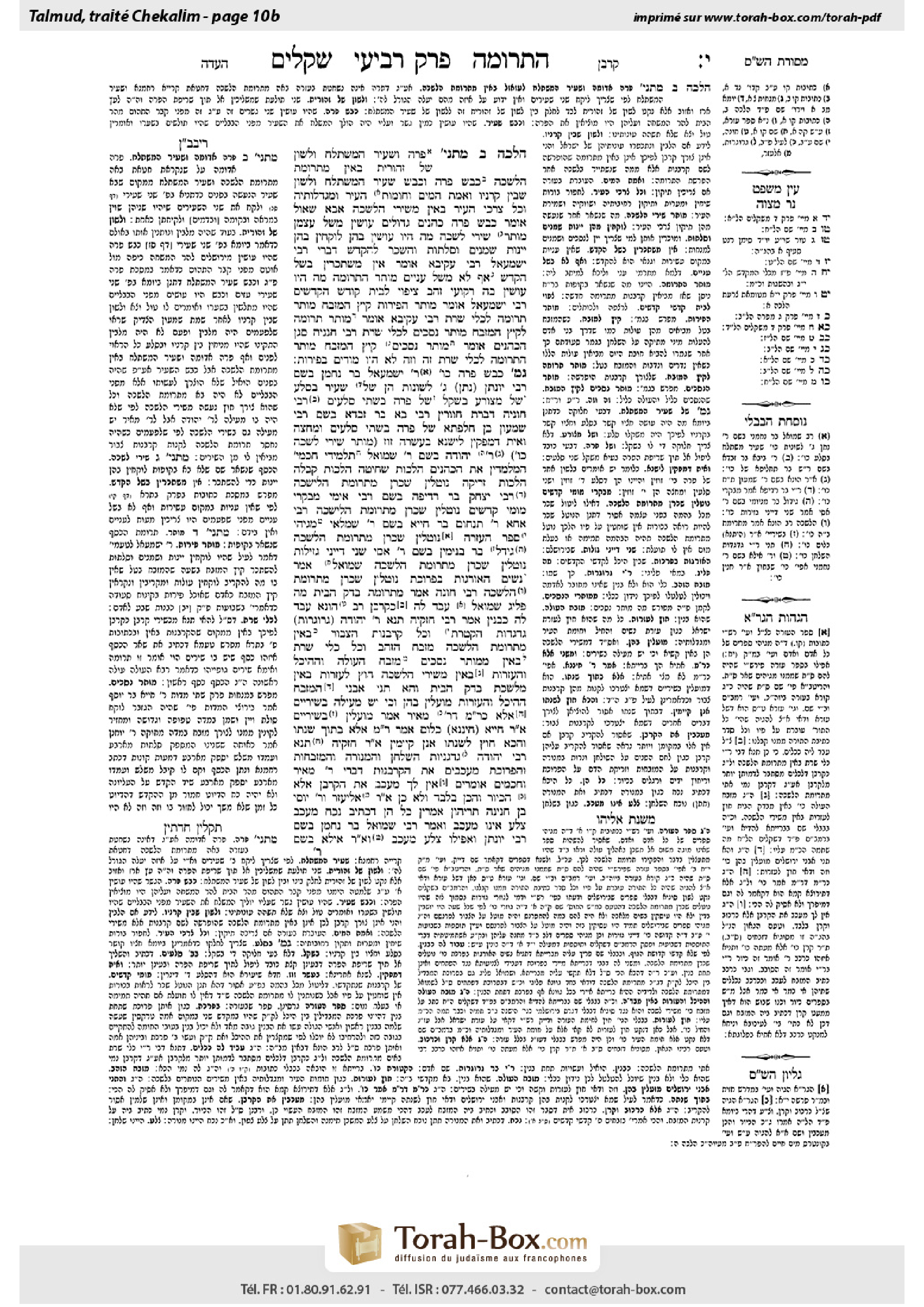
Shekalim 10b: Talmud study for Daf Yomi
Study the Talmud for Daf Yomi with scanned pages, Hebrew text, English translations from Sefaria and AI-generated French translations.
Passage selection and English or AI-generated French translation are available where the scan has annotations. Daf Study is independent of Torah-Box and Sefaria.
Browse Shekalim · שקלים · All tractatesShekalim 10b text and translations
This page of Shekalim includes the Aramaic text and an English translation, alongside the scan above.
שקלים י׳ ב · Aramaic and Hebrew text
משנה: פָּרָה וְשָׂעִיר הַמִּשְׁתַּלֵּחַ וְלָשׁוֹן שֶׁל זְהוֹרִית בָּאִין מִתְּרוּמַת הַלִשְׁכָּה. כֶּבֶשׁ פָּרָה וְכֶבֶשׁ שָׂעִיר הַמִּשְׁתַּלֵּחַ וְלָשׁוֹן שֶׁבֵּין קַרְנָיו וְאַמַּת הַמַּיִם וְחוֹמַת הָעִיר וּמִגְדְּלוֹתֶיהָ וְכָל צָרְכֵי הָעִיר בָּאִין מִשְּׁיֵרֵי הַלִּשְׁכָּה. אַבָּא שָׁאוּל אוֹמֵר כֶּבֶשׁ פָּרָה כֹּהֲנִים גְּדוֹלִים עוֹשִׂין אוֹתוֹ מִשֶּׁל עַצְמָן: מוֹתַר שְׁיֵרֵי לִשְׁכָּה מֶה הָיוּ עוֹשִׂין בָּהֶן. לוֹקְחִין בָּהֶן יֵינוֹת שְׁמָנִים וּסְלָתוֹת וְהַשָּׂכָר לַהֶקְדֵּשׁ דִּבְרֵי רִבִּי יִשְׁמָעֵאל רִבִּי עֲקִיבָה אוֹמֵר אִין מִשְׁתַּכְּרִין בְּשֶּׁל הֶקְדֵּשׁ אַף לֹא מִשֶּׁל עֲנִיִּים: מוֹתַר הַתְּרוּמָה מֶה הָיוּ עוֹשִׂין בָּהּ. רִקּוּעֵי זָהָב צִיפּוּי לְבֵית קָדְשֵׁי הַקֳּדָשִׁים. רִבִּי יִשְׁמָעֵאל אוֹמֵר מוֹתַר הַפֵּירוֹת קַיָיץ הַמִּזְבֵּחַ. מוֹתַר תְּרוּמָה לִכְלֵי שָׁרֵת. רִבִּי עֲקִיבָה אוֹמֵר מוֹתַר תְּרוּמָה קַיָיץ הַמִּזְבֵּחַ. מוֹתַר נְסָכִים לִכְלֵי שָׁרֵת. רִבִּי חֲנַנְיָה סְגַן הַכֹּהֲנִים אוֹמֵר מוֹתַר נְסָכִים קַיָיץ הַמִּזְבֵּחַ מוֹתַר תְּרוּמָה לִכְלֵי שָׁרֵת. זֶה וָזֶה לֹא הָיוּ מוֹדִין בַּפֵּירוֹת:
הלכה: פָּרָה וְשָׂעִיר כול׳. רִבִּי שְׁמוּאֵל בַּר נַחְמָן בְּשֵׁם רִבִּי יוֹנָתָן. שְׁלֹשָׁה לְשׁוֹנוֹת הֵן. שֶׁלְשָׂעִיר בְּסֶלַע. שֶׁלְמְצוֹרָע בְּשֶׁקֶל. שֶׁלְפָּרָה בִּשְׁתֵּי סְלָעִים. רִבִּי חוֹנִיָיה דִבְרַת חַוְורָן רִבִּי בָּא בַּר זַבְדָּא בְּשֵׁם רִבִּי שִׁמְעוֹן בֶּן חַלְפוּתָא. שֶׁלְפָּרָה בִּשְׁתֵּי סְלָעִים וּמֶחֱצָה. וְאִית דְּמַפְקִין לִישְׁנָא . בָּעֲשָׂרָה (זִין) [זוּז] .
רַב יְהוּדָה בְשֵׁם שְׁמוּאֵל. תַּלְמִידֵי חֲכָמִים הַמְלַמְּדִין אֶת הַכֹּהֲנִים הִילְכוֹת שְׁחִיטָה הִילְכוֹת קַבָּלָה הִילְכוֹת זְרִיקָה נוֹטְלִין שְׂכָרָן מִתְּרוּמַת הַלִּשְׁכָּה. רִבִּי יִצְחָק בַּר רְדִיפָה בְשֵׁם אִימִּי. מְבַקְּרֵי מוּמֵי קֳדָשִׁים נוֹטְלִין שְׂכָרָן מִתְּרוּמַת הַלִּשְׁכָּה. רִבִּי אָחָא רִבִּי תַנְחוּם בַּר חִיָיה בְשֵׁם רִבִּי שִׂמְלַאי. מַגִּיהֵי סֵפֶר הֶעֲזָרָה נוֹטְלִין שְׂכָרָן מִתְּרוּמַת הַלִּשְׁכָּה. גִּידּוּל בַּר בִּנְיָמִן בְּשֵׂם אַסִּי. שְׁנֵי דַיָינֵי גְזֵילוֹת נוֹטְלִין שְׂכָרָן מִתְּרוּמַת הַלִּשְׁכָּה. שְׁמוּאֵל אַמַר. נָשִׁים הָאוֹרְגוֹת בַּפְּרָכוֹת נוֹטְלוֹת שְׂכָרָן מִתְּרוּמַת הַלִּשְׁכָּה. רַב חוּנָה אָמַר. מִתְּרוּמַת בֶּדֶק הַבַּיִת. מַה וּפְלִיג. שְׁמוּאֵל עֲבֲד לָהּ כְּקָרְבָּן. רַב חוּנָה עֲבֲד לָהּ כְּבִּינְיָין. אָמַר רִבִּי חִזְקִיָּה. תַּנָּא רִבִּי יְהוּדָה גְרוֹגְרוֹת. הַקְּטוֹרֶת וְכָל קָרְבְּנוֹת הַצִּיבּוּר בָּאִין מִתְּרוּמַת הַלִּשְׁכָּה. מִזְבַּח הַזָּהָב וְכָל כְּלֵי שָׁרֵת בָּאִין מִמּוֹתָרֵי נְסָכִים. מִזְבַּח הָעוֹלָה וְהַהֵיכָל וְהָעֲזָרוֹת בְּאִין מִשְּׁיֵּרֵי לִשְׁכָּה. חוּץ לָעֲזָרוֹת בָּאִין מִלִּשְׁכַּת בֶּדֶק הַבַּיִת. וְהָא תַנֵּי. אַבְנֵי הַמִּזְבֵּחַ הַהֵיכָל וְהָעֲזָרוֹת מוֹעֲלִין בָּהֶן. וְכִי יֵשׁ מְעִילָה בִּשְׁיֵרִים. אֶלָּא כְרִבִּי מֵאִיר. דְּרִבִּי מֵאִיר אָמַר. מוֹעֲלִין בִּשְׁיֵרִיִים. אָמַר רִבִּי חִינְנָא. כְּלוּם אָמַר רִבִּי מֵאִיר אֶלָּא בְתוֹךְ שְׁנָתוֹ. וְהָכָא חוּץ לִשְׁנָתוֹ אֲנָן קַיָימִין.
אָמַר רִבִּי חִזְקִיָּה. תַּנָּא רִבִּי יְהוּדָה גְרוֹגְרוֹת. הַשֻּׁלְחָן וְהַמְּנוֹרָה וְהַמִּזְבְּחוֹת וְהַפְּרָכוֹת מְעַכְּבִין אֶת הַקָּרְבָּן. דִּבְרֵי רִבִּי מֵאִיר. וַחֲכָמִים אוֹמְְרִין אֵין לָךְ מְעַכֵּב אֶת הַקָּרְבָּן אֶלָּא הַכֵּיּוֹר וְהַכָּן בִּלְבַד. וְלֹא אָמַר כֵּן. רִבִּי אֶלְעָזָר וְרִבִּי יוֹסֵי בֵּן חֲנִינָה תְּרֵיהוֹן אָמְרִין. כָּל הֵן דִּכְתִיב נֹכַח מְעַכֵּב. צֶלַע אֵינוֹ מְעַכֵּב. וְאָמַר רִבִּי שְׁמוּאֵל בַּר נַחְמָן בְּשֵׁם רִבִּי יוֹנָתָן. וַאֲפִילוּ צֶלַע מְעַכֵּב. וְאָמַר רִבִּי אִילָא בְשֵׁם שְׁמוּאֵל בַּר נַחְמָן. וַאֲפִילוּ שִׂימָה מְעַכֶּבֶת. אָמַר רִבִּי חֲנַנְיָה. כָּאן בָּעֲבוֹדוֹת שֶׁבִּפְנִים וְכָאן בָּעֲבוֹדוֹת שֶׁבַּחוּץ.
Shekalim 10b · English translation
MISHNAH: The Cow. 19., the he-goat which is sent away, and the shiny strip. 19:6. come from the money disbursed from the lodge. The ramp for the Cow, the ramp for the he-goat which is sent away6:4., the strip bound on its horns4:2, 6:6., the water canal, the city wall and its towers, and all needs of the city, come from the leftovers in the lodge. Abba Shaul says, the High Priests build the ramp for the Cow at their own expense.
What did one do with the leftover in the lodge? One buys with it wine, oil, and fine flour, and the gain is the Temple’s, the words of Rebbi Ismael. Rebbi Aqiba says, one gains neither for the Temple nor funds for the poor.
What did they use the leftover of the disbursement for? Gold sheets coating for the Holiest of Holies. Rebbi Ismael said, the leftover of produce is for adornment of the altar, the leftover of the disbursement is for Service vessels. Rebbi Aqiba says, the leftover of the disbursement is for adornment of the altar, the leftover of the libations is for Service vessels. Rebbi Ḥanania the executive officer of the Cohanim says, the leftover of the libations is for adornment of the altar, the leftover of the disbursement is for Service vessels. Neither of them did agree about produce.
HALAKHAH: Halakhah 4:2 (י). Rebbi Samuel bar Naḥman in the name of Rebbi Jonathan: There are three strips. The one for the he-goat for a tetradrachma, for the sufferer from skin disease for a sheqel 14:4,6)., for the Cow for two tetradrachmas. Rebbi Onias from Berat-Hauran in the name of Rebbi Abba bar Zavda in the name of Rebbi Simeon ben Ḥalaphta, for the Cow for two tetradrachmas and a half; but some express it in the formulation ten (zin)10:7 (Note 80) as 1/100 of a (probably Roman) pound. 2.5 tetradrachma are 10 denarii. Since an Augustean denar was 1/96 of a Roman pound (silver), 10 zin are 9.6 denarii.
The corrector’s reading zuz(denar) is from B. [zuz].
Rav Jehudah in the name of Samuel. But since it is the impossible “Rav Huna in the name of Rebbi Samuel”, it has to be disregarded. ג is defective at this place. In the Babli Ketubot106a the statement is attributed to Rav Giddul in the name of Rav.: The scholars who teach the priests the rules of slaughter, rules of receiving, rules of sprinkling, take their wages from the disbursement from the lodge106a.. Rebbi Isaac bar Redifa in the name of Immi: The inspectors of defects of sancta28:3), there have to be competent daily inspections. Babli Ketubot106a. take their wages from the disbursement from the lodge. Rebbi Aḥa, Rebbi Tanḥum bar Ḥiyya in the name of Rebbi Simlai: Those who correct the scroll of the Temple courtyard106a. take their wages from the disbursement from the lodge. Giddul bar Benjamin in the name of Assi: The two judges of robberies13:1. But it seems that the meaning of the term is that of the reading of ג and most Babylonian sources here and in Ketubot13, דַּיָנֵי גְזֵירוֹת “judges of decisions,” i. e., appeals judges. The reading here is the result of an exchange of liquids. The legal principles attributed to these judges in Ketubot Chapter 13 all refer to matters of civil, mostly matrimonial, law. Babli Ketubot105a. take their wages from the disbursement from the lodge. Samuel said, women who are weaving the gobelins take their wages from the disbursement from the lodge; Rav Ḥuna said, from disbursements for repair of the House. How do they disagree? Samuel makes it a sacrifice, Rav Huna makes it part of the building. Rebbi Ḥizqiah said that Rebbi Jehudah Dried Figs stated: The incense and all public sacrifices come from the disbursement from the lodge. The golden altar and vessels for the Service come from the excess of libations. The altar for elevation sacrifices, the building, and the courtyards come from the leftover in the lodge. The outside of the courtyards come from the lodge for maintenance of the House. But was it not stated: One commits me`ilah with stones of the Temple or the courtyards is defined (Lev. 5:15) as “larceny committed on the Eternal’s sancta”, where the usual interpretation is that sancta are only sacrifices and their appurtenances; cf. Halakhah 3:4, Note 66.. How can one commit me`ilah with leftovers? But it must follow Rebbi Meïr, for Rebbi Meïr said, one commits me`ilah with leftovers. Rebbi Ḥinena said, Rebbi Meïr said this only during its year. But here we are after its year whose misuse is me`ilah only if there is the possibility that it will be used to buy sacrifices. As explained earlier, any leftovers after disbursement still must be kept together since they might be needed if the money disbursed later was not sufficient for the Temple’s needs. But once a new year started, the old sheqalim cannot be used to buy sacrifices of any kind; they cannot cause me`ilah. The baraita is rejected. Babli Qiddušin54a..
Rebbi Ḥizqiah said that Rebbi Jehudah Dried Figs stated: The table, the candelabrum, the altars62a., and the gobelins obstruct the sacrifice, the words of Rebbi Meïr. But the Sages say, the sacrifice is only obstructed by the wash basin and its base 30:17–21, 40:30–32.. Otherwise, Rebbi Eleazar and Rebbi Yose ben Ḥanina both say, everywhere “opposite 26:32–37; 40:1–16) and the report how this was executed ((Ex. 40:1–17–33.) The candelabrum was put “opposite the table”. (Ex. 40:24).” is written it is obstructive, “on the side 26:35).” is not obstructive, but Rebbi Samuel bar Naḥman in the name of Rebbi Jonathan said, even “on the side” is obstructive, and Rebbi Ila in the name of Rebbi Jonathan said, even “putting 40:18 ff.)” is obstructive. Rebbi Ḥananiah said, here for service inside, there for service outside8:6), for any offering on the large altar one only needs the wash basin and its base. But for any offering inside the Sanctuary, e. g., the daily incense burning, all pieces have to be available at the correct places..
Text from Sefaria: The Jerusalem Talmud, edition by Heinrich W. Guggenheimer. Berlin, De Gruyter, 1999-2015 (CC BY); The Jerusalem Talmud, translation and commentary by Heinrich W. Guggenheimer. Berlin, De Gruyter, 1999-2015 (CC BY).