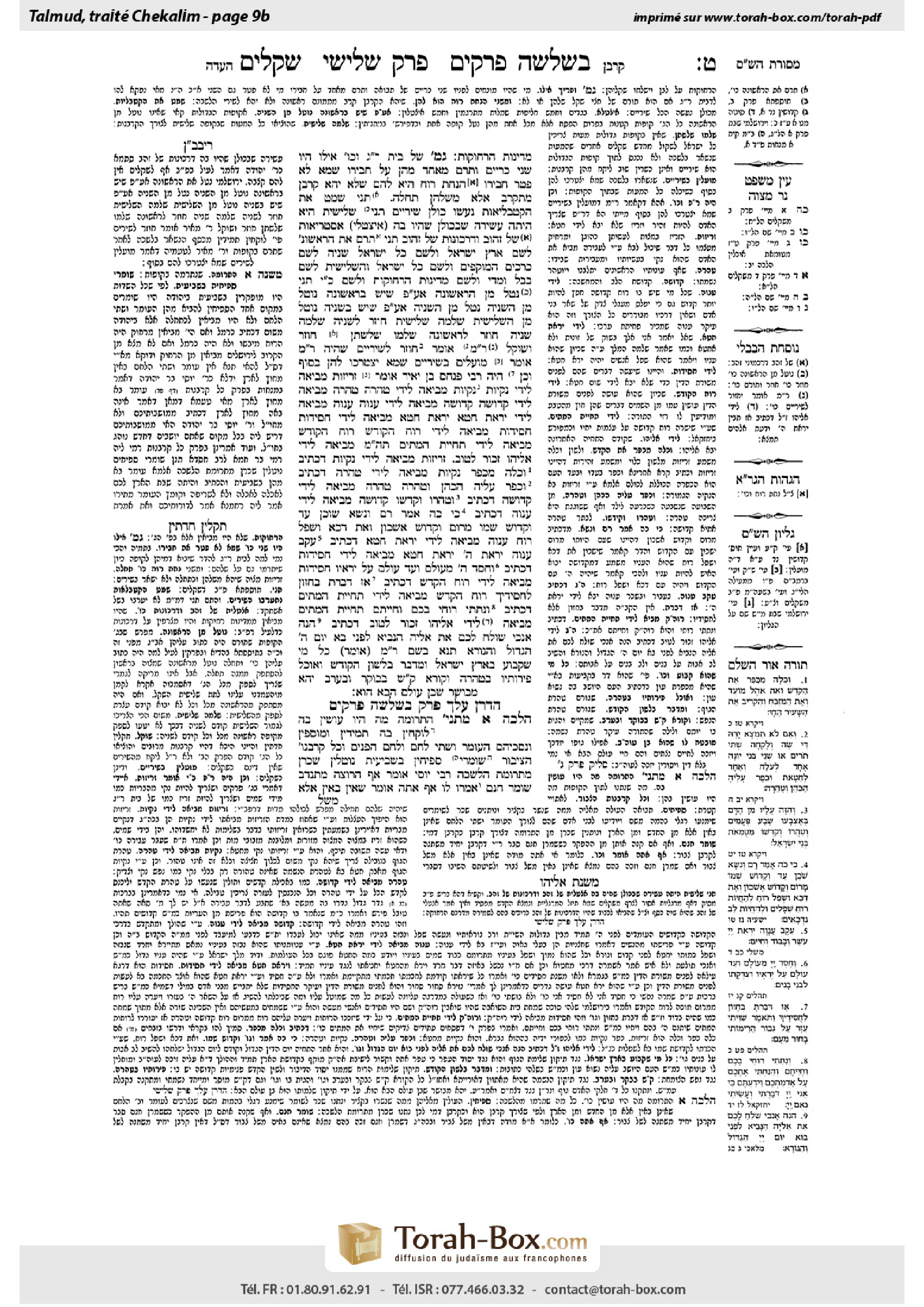
Shekalim 9b: Talmud study for Daf Yomi
Study the Talmud for Daf Yomi with scanned pages, Hebrew text, English translations from Sefaria and AI-generated French translations.
Passage selection and English or AI-generated French translation are available where the scan has annotations. Daf Study is independent of Torah-Box and Sefaria.
Browse Shekalim · שקלים · All tractatesShekalim 9b text and translations
This page of Shekalim includes the Aramaic text and an English translation, alongside the scan above.
שקלים ט׳ ב · Aramaic and Hebrew text
משנה: שֶׁל בֵּית רַבָּן גַּמְלִיאֵל הָיָה נִכְנָס וְשִׁקְלוֹ בֵּין אֶצְבְּעוֹתָיו וְזוֹרְקוֹ לִפְנֵי הַתּוֹרֵם וְהַתּוֹרֵם מִתְכַּוֵּין וְדוֹחֲקוֹ לַקּוּפָּה. אֵין הַתּוֹרֵם תּוֹרֵם עַד שֶׁיֹּאמַר לָהֶן אֶתְרוֹם. וְהֵן אוֹמְרִים לוֹ תְּרוֹם, תְּרוֹם, תְּרוֹם, שָׁלֹֹֹש פְּעָמִים: תָּרַם אֶת הָרִאשׁוֹנָה וְחִיפָּה בִּקְטַבֳלִיּוֹת הַשְּׁנִיָיה וְחִיפָּה בִּקְטַבֳלִיּוֹת. הַשְּׁלִישִׁית לֹא הָיָה מְחַפֶּה. וְלָמָּה הָיָה מְחַפֶּה שֶׁמָּא יִשְׁכַּח וְיִתְרוֹם מִן הַדָּבָר הַתָּרוּם. תָּרַם אֶת הָרִאשׁוֹנָה לְשֵׁם אֶרֶץ יִשְׂרָאֵל הַשְּׁנִיָיה לְשֵׁם כְּרַכִים הַמּוּקָּפִין לָהּ וְהַשְּׁלִישִׁית לְשֵׁם בָּבֶל וּלְשֵׁם מָדַי וּלְשֵׁם מְדִינוֹת הָרְחוֹקוֹת:
הלכה: שֶׁל בֵּית רַבָּן גַּמְלִיאֵל הָיָה כול׳. אִילּוּ שְׁנֵי כְרִיִים וְתָרַם מֵאֶחָד מֵהֶן עַל חֲבֵירוֹ שֶׁמָּא לֹא פָטַר חֲבֵירוֹ. הַנַַּחַת רוּחַ הִיא לָהֶם שֶׁלֹּא יְהֵא קָרְבָּן מִתְקָרֵב אֶלָּא מִשֶּׁלָּהֶן תְּחִילָּה.
תָּרַם אֶת הָרִאשׁוֹנָה כול׳. תַּנֵּי שָׁמַט אֶת הַקַּטָבֳלִיּוֹת נַעֲשׂוּ כוּלָּן שְׁיֵרִיים. תַּנֵּי. שְׁלִישִׁית הִיא הָיְתָה עֲשִׁירָה שֶׁבְּכוּלָּן. שֶׁהָיוּ בָהּ אִיצְטְלֵי שֶׁלְזָהָב וְדַרְכוֹנוֹת שֶׁלְזָהָב.
תַּנֵּי. תָּרַם אֶת הָרִאשׁוֹנָה לְשֵׁם אֶרֶץ יִשְׂרָאֵל וּלְשֵׁם כָּל יִשְׂרָאֵל. שְׁנִיָיה לְשֵׁם כַּרַכִין הַמּוּקָּפִין וּלְשֵׁם כָּל יִשְׂרָאֵל. וְהַשְּׁלִישִׁית לְשֵׁם בָּבֶל וּלְשֵׁם מָדַיי וּלְשֵׁם מְדִינוּת הָרְחוֹקוֹת וּלְשֵׁם כָּל יִשְׂרָאֵל. תַּנֵּי. נָטַל מִן הָרִאשׁוֹנָה אַף עַל פִּי שֶׁיֵּשׁ בָּרִאשׁוֹנָה נוֹטֵל מִן הַשְּׁנִיָיה. נָטַל מִן הַשְּׁנִיָיה אַף עַל פִּי שֶׁיֵּשׁ בָּשְּׁנִיָיה נוֹטֵל מִן הַשְּׁלִישִׁית. שָׁלְמָה שְׁלִישִׁית חוֹזֵר לַשְּׁנִיָיה. שָׁלְמָה שְׁנִיָיה חוֹזֵר לְרִאשׁוֹנָה. שָׁלְמוּ שְׁלָשְׁתָּן חוֹזֵר וְשׁוֹקֵל. רִבִּי מֵאִיר אוֹמֵר. חוֹזֵר לִשְׁיֵרִיים. שֶׁהָיָה רִבִּי מֵאִיר אוֹמֵר. מוֹעֲלִין בִּשְׁיֵרִיִים שֶׁמָּא יִצְרְכוּ לָהֶן בַּסּוֹף.
[וְכֵן הָיָה רִבִּי פִינְחָס בֶּן יָאִיר אוֹמֵר. זְרִיזוּת מְבִיאָה לִידֵי נְקִיּוּת. נְקִיּוּת מְבִיאָה לִידֵי טַהֳרָה. טַהֳרָה מְבִיאָה לִידֵי קְדוּשָּׁה. קְדוּשָּׁה מְבִיאָה לִידֵי עֲנָוָה. עֲנָוָה מְבִיאָה לִידֵי יִרְאַת חֵטְא. יִרְאַת חֵטְא מְבִיאָה לִידֵי חֲסִידוּת. חֲסִידוּת מְבִיאָה לִידֵי רוּחַ הַקֹּדֶשׁ. רוּחַ הַקֹּדֶשׁ מֵבִיא לִידֵי תְחִיַית הַמֵּתִים. תְּחִיַית הַמֵּתִים מְבִיאָה לִידֵי אֵלִיָּהוּ זָכוּר לַטּוֹב. זְרִיזוּת מְבִיאָה לִידֵי נְקִיּוּת. דִּכְתִיב וְכִלָּה מִכַּפֵּר. נְקִיּוּת מְבִיאָה לִידֵי טַהֳרָה. דִּכְתִיב וְכִפֶּר עָלֶיהָ הַכֹּהֵן וְטָהֵרָה. טַהֳרָה מְבִיאָה לִידֵי קְדוּשָּׁה. דִּכְתִיב וְטִהֲרָהּ וְקִידְּשָׁהּ. קְדוּשָּׁה מְבִיאָה לִידֵי עֲנָוָה. דִּכְתִיב כִּי כֹה אמַר רָם וְנִשָּׂא שׁוֹכֵן עַד וְקָדוֹשׁ שְׁמוֹ מָרוֹם… וְאֶת דַּכָּא וּשְׁפַל רוּחַ. עֲנָוָה מְבִיאָה לִידֵי יִרְאַת חֵטְא. דִּכְתִיב עֲנָוָה יִרְאַת ה׳. יִרְאַת חֵטְא מְבִיאָה לִידֵי חֲסִידוּת. דִּכְתִיב וְחֶסֶד ה׳ מֵעוֹלָם וְעַד עוֹלָם עַל יְרֵיאָיו. חֲסִידוּת מְבִיאָה לִידֵי רוּחַ הַקֹּדֶשׁ. דִּכְתִיב אָז דִּבַּרְתָּ בְחָזוֹן לַחֲסִידֶיךָ. רוּחַ הַקֹּדֶשׁ מֵבִיא לִידֵי תְחִיַית הַמֵּתִים. דִּכְתִיב וְנָתַתִּי רוּחִי בָכֶם וִחְיִיתֶם. תְּחִיַית הַמֵּתִים מְבִיאָה לִידֵי אֵלִיָּהוּ זָכוּר לַטּוֹב. דִּכְתֵיב אָז תָּבִין יִרְאַת ה׳ וְדַעַת עֶלְיוֹן תִּמְצָא. תַּאנָא בְשֵׁם רִבִּי מֵאִיר. כָּל מִי שֶׁקָּבוּעַ בְּאֶרֶץ יִשְׂרָאֵל וּמְדַבֵּר לְשׁוֹן הַקֹּדֶשׁ וְאוֹכֵל פֵּירוֹתָיו בְּטָהֳרָה וְקוֹרֵא קִרְיַת שְׁמַע בַּבֹּקֶר וּבָעֶרֶב יְהֵא מְבוּשָּׂר שֶׁבֶּן הָעוֹלָם הַבָּא הוּא.]
משנה: הַתְּרוּמָה מֶה הָיוּ עוֹשִׂין בָּהּ. לוֹקְחִין בָּהּ תְּמִידִין וּמוּסָפִין וְנִסְכֵּיהֶם הָעֹמֶר וּשְׁתֵּי הַלֶּחֶם וְלֶחֶם הַפָּנִים וְכָל קָרְבְּנוֹת הַצִּיבּוּר. שׁוֹמְרֵי סְפִחִים בַּשְּׁבִיעִית נוֹטְלִין שְׂכָרָן מִתְּרוּמַת הַלִּשְׁכָּה. רִבִּי יוֹסֵה אוֹמֵר אַף הָרוֹצֶה מִתְנַדֵּב שׁוֹמֵר חִנָּם. אָמְרוּ לוֹ אַף אַתָּה אוֹמֵר שֶׁאֵין בָּאִין אֶלָּא מִשֶּׁל צִיבּוּר:
Shekalim 9b · English translation
MISHNAH: A member of the household of Rabban Gamliel was entering with his sheqel between his fingers and threw it before the disburser. The disburser was directing it and threw it into the box. The disburser only starts disbursing after he asked, “shall I disburse”? And they answer him, “disburse, disburse, disburse,” three times.
He disburses the first time and covers it with cushions, the second time and covers it with cushions. The third time he was not covering are kept. As explained in the Mishnah, the monies taken on the first of Nisan are from the contributions of the Land of Israel, those taken before Pentecost are from neighboring countries and those at the end of Elul from Babylonia, Persia, and other far countries. Monies not used for sacrifices are used for other expenses as explained in the next Chapter. In order to give due credit, the monies should not be mixed even though in an emergency one can have regress on those already labelled as surplus.. Why did he cover? That he should not forget and disburse from anything which already had been disbursed. The first time he disbursed in the name of the Land of Israel, the second time in the name of nearby walled cities, and the third time in the name of Babylonia, in the name of Media, and in the name of distant countries.
HALAKHAH: “A member of the household of Rabban Gamliel was,” etc. If there were two heaps and he gave heave from one for the other, would that not remove the liability from the other are interchangeable; there is no reason why the House of Rabban Gamliel should be interested in controlling in which box their sheqel ends up.? It gave them satisfaction that the sacrifice should be brought first from their money becomes Temple property and is no longer their own, they derive satisfaction from knowing that their contribution will be used for sacrifices rather than for any of the ancillary uses spelled out later for which the sheqel also could be used..
“He disburses the first time,” etc. It was stated: If he removed the covers, all was made remainder. The monies should be given to the gift account.. It was stated: The third was the richest since it contained golden stateres and golden darics.
It was stated: He disburses the first time in the name of the Land of Israel and in the name of all of Israel. The second time in the name of fortified cities with them. Therefore one has to be inclusive in the declaration. and in the name of all of Israel. The third time in the name of Babylonia and the name of Media and in the name of all of Israel. It was stated: If he took from the first box, even if there was in the first box he shall take from the second. If he took from the second box, even if there was in the second box he shall take from the third. If the third was used up, he returns to the second; if the second was used up he returns to the first. If all three are emptied, one collects new sheqalim; Rebbi Meïr says, he has regress on the remainder, since Rebbi Meïr says, one commits me`ilah with the remainder, perhaps one needs them at the end.
1, Notes 274–286, based on the Babylonian version of the last Mishnah in Soṭah.[“And so did Rebbi Phineas ben Yair say, promptitude brings to cleanliness, cleanliness brings to purity, purity brings to holiness, holiness brings to meekness, meekness brings to fear of sin, fear of sin brings to piety, piety brings to the Holy Spirit, the Holy Spirit to the Resurrection of the Dead, the Resurrection of the Dead brings to Elijah, may his remembrance be a blessing.” “Promptitude brings to cleanliness,” as it is written 16:20., he finishes, and he atones. “Cleanliness brings to purity,” as it is written 12:8., the Cohen shall atone for her, then she will be pure. “Purity brings to holiness,” as it is written 16:19., he shall purify it and sanctify it. “Holiness brings to meekness,” as it is written 57:15., for so says the High and Elevated One, Who thrones eternally, His name is Holy, in sublimity … and the oppressed and of meek spirit.“Meekness brings to fear of sin,” as it is written22:4., the consequence of meekness is fear of the Eternal. “Fear of sin brings to piety,” as it is written 103:17., the Eternal’s piety is eternally on those who fear Him. “Piety brings to the Holy Spirit,” as it is written 89:20., then You spoke in a vision to Your pious ones. “The Holy Spirit brings to the Resurrection of the Dead,” as it is written. 37:14., I shall give My Spirit into you and you will live. “The Resurrection of the Dead brings to Elijah, may his remembrance be a blessing,” as it is written. 2:5., then you will understand the fear of the Eternal, and the knowledge of God you will find. It was stated in the name of Rebbi Meïr: Anybody permanently in the Land of Israel who speaks the holy language, eats its produce in purity, and recites the Shema` mornings and evenings is assured of his place in the World to Come.]
MISHNAH: For what was the disbursement used? One buys from it daily and musaf sacrifices and their libations, the `omer 23:9–14., and the Two Breads 23:17., and the shew-bread 24:5–9., and all public offerings 4:13–21.). The watchmen for aftergrowth in the sabbatical year and the Two Breads have to be produce of the Land, and no sowing is permitted in a Sabbatical, the grains have to be harvested from spontaneous aftergrowth. Fields from which such a yield is expected have to be watched lest the plants be eaten by animals or the grains be taken by humans. In this case the watch is an essential precondition for the possibility of the offering and therefore the expenses have to be borne by the Temple. take their wages from the disbursement from the lodge. Rebbi Yose says, he also may volunteer as unpaid trustee. They told him, would you not also say that they only come from the public?
Text from Sefaria: The Jerusalem Talmud, edition by Heinrich W. Guggenheimer. Berlin, De Gruyter, 1999-2015 (CC BY); The Jerusalem Talmud, translation and commentary by Heinrich W. Guggenheimer. Berlin, De Gruyter, 1999-2015 (CC BY).