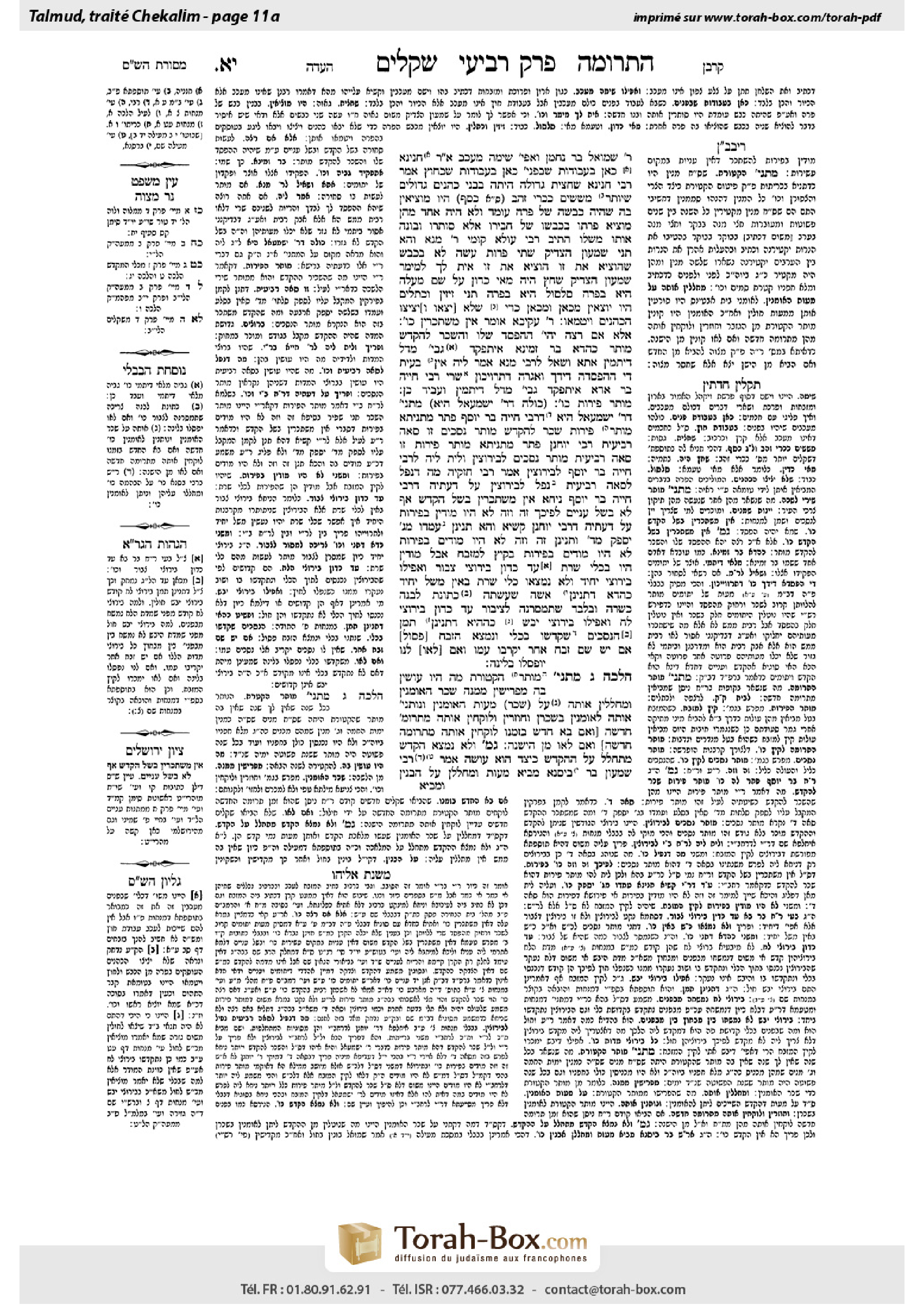
Shekalim 11a: Talmud study for Daf Yomi
Study the Talmud for Daf Yomi with scanned pages, Hebrew text, English translations from Sefaria and AI-generated French translations.
Passage selection and English or AI-generated French translation are available where the scan has annotations. Daf Study is independent of Torah-Box and Sefaria.
Browse Shekalim · שקלים · All tractatesShekalim 11a text and translations
This page of Shekalim includes the Aramaic text and an English translation, alongside the scan above.
שקלים י״א א · Aramaic and Hebrew text
אָמַר רִבִּי חִזְקִיָּה. תַּנָּא רִבִּי יְהוּדָה גְרוֹגְרוֹת. הַשֻּׁלְחָן וְהַמְּנוֹרָה וְהַמִּזְבְּחוֹת וְהַפְּרָכוֹת מְעַכְּבִין אֶת הַקָּרְבָּן. דִּבְרֵי רִבִּי מֵאִיר. וַחֲכָמִים אוֹמְְרִין אֵין לָךְ מְעַכֵּב אֶת הַקָּרְבָּן אֶלָּא הַכֵּיּוֹר וְהַכָּן בִּלְבַד. וְלֹא אָמַר כֵּן. רִבִּי אֶלְעָזָר וְרִבִּי יוֹסֵי בֵּן חֲנִינָה תְּרֵיהוֹן אָמְרִין. כָּל הֵן דִּכְתִיב נֹכַח מְעַכֵּב. צֶלַע אֵינוֹ מְעַכֵּב. וְאָמַר רִבִּי שְׁמוּאֵל בַּר נַחְמָן בְּשֵׁם רִבִּי יוֹנָתָן. וַאֲפִילוּ צֶלַע מְעַכֵּב. וְאָמַר רִבִּי אִילָא בְשֵׁם שְׁמוּאֵל בַּר נַחְמָן. וַאֲפִילוּ שִׂימָה מְעַכֶּבֶת. אָמַר רִבִּי חֲנַנְיָה. כָּאן בָּעֲבוֹדוֹת שֶׁבִּפְנִים וְכָאן בָּעֲבוֹדוֹת שֶׁבַּחוּץ.
אָמַר רִבִּי חֲנִינָה. שַׁחַצִית גְּדוֹלָה הָיְתָה בִּבְנֵי כֹהֲנִים גְּדוֹלִים. שֶׁיּוֹתֵר מִשִּׁשִּׁים כִּכְּרֵי זָהָב [הָיוּ מוֹצִיאִין בָּהּ.] הָיָה כִבְשָׁהּ שֶׁלְפָּרָה עוֹמֵד וְלֹא הָיָה אֶחָד מֵהֶן מוֹצִיא פָּרָתוֹ בְכִבְשׁוֹ שֶׁלְחֲבֵירוֹ אֶלָּא סוֹתְרוֹ וּבוֹנֶה אוֹתוֹ מִשֶׁלּוֹ. הָתִיב רִבִּי עוּלָּא קוֹמֵי רִבִּי מָנָא. וְהָא תַנֵּי. שִׁמְעוֹן הַצַּדִּיק שְׁתֵּי פָרוֹת עָשָׂה. לֹא בְכֶבֶשׁ שֶׁהוֹצִיא אֶת זוֹ הוֹצִיא אֶת זוֹ. אִית לָךְ מֵימַר. שִׁמְעוֹן הַצַּדִּיק שִׁיחֵץ הָיָה. מַיי כְדוֹן. עַל שֶׁם מַעֲלָה הִיא בְפָרָה סִילְסוּל הוּא בְפָרָה. תַּנֵּי. זִיזִין וּכְתָלִין הָיוּ יוֹצְאִין מִיכָּן וּמִיכָּן כְּדֵי שֶׁלֹּא יָצִיצוּ הַכֹּהֲנִים וְיִטַּמּוּ.
אֶלָּא אִם רָצָה יְהֵא הַהֶפְסֵד שֶׁלּוֹ. וְהַשָּׂכָר לְהֶקְדֵּשׁ מוּתָּר. כְּהָדָא בַּר זְמִינָא אִת פְקִיד גַּבֵּיהּ מֵדַל דְּיַתְמִין. אֲתַא וּשְׁאַל לְרִבִּי מָנָא. אֲמַר לֵיהּ. אִין בְּעִית דִּי הֶפְסֵדְה דִידָךְ וְאַגְרָה דִתְּרַוֵיכוֹן שָׁרֵי. רִבִּי חִיָיה בַּר אָדָא אִתְפְקִיד גַּבֵּיהּ מֵדַל דְּיַתְמִין וַעֲבַד כֵּן.
כּוּלָּהּ דְּרִבִּי יִשְׁמָעֵאל [הִיא]. רִבִּי חִיָיה בַּר יוֹסֵף פָּתַר מַתְנִיתָא. מוֹתַר פֵּירוֹת שָׂכָר לְהֶקְדֵּשׁ. מוֹתַר נְסָכִים זוֹ סְאָה רְבִיעִית. רִבִּי יוֹחָנָן פָּתַר מַתְנִיתָא. מוֹתַר פֵּירוֹת זוֹ סְאָה רְבִיעית. מוֹתַר נְסָכִים לְבֵירוּצִים. וְלֵית לֵיהּ לְרִבִּי חִיָיה בַּר יוֹסֵף לְבֵירוּצִים. אָמַר רִבִּי חִזְקִיָּה. מַה דִנְפַל לְסְאָה רְבִיעִית נְפַל לְבֵירוּצִים. עַל דַּעְתִֵּיהּ דְּרִבִּי חִיָיה בַּר יוֹסֵף נִיחָא. אֵין מִשְׂתַּכְּרִין מִשֶּׁלְהֶקְדֵּשׁ אַף לֹא מִשֶּׁלְעֲנִיִּים. לְפִיכָךְ זֶה וָזֶה לֹא הָיוּ מוֹדִין בַּפֵּירוֹת. עַל דַּעְתִֵּיהּ דְּרִבִּי יוֹחָנָן קַשְׁיָא. תַּנִּינָן עָמְדוּ מִשָּׁלֹשׁ יְסַפֵּק מֵאַרְבַּע. וְתַנִּינָן. וְזֶה וָזֶה לֹא הָיוּ מוֹדִין בַּפֵּירוֹת לֹא הָיוּ מוֹדִין בַפֵּירוֹת בְּקַיִיץ לַמִּזְבֵּחַ. אֲבָל מוֹדִין הָיוּ בִכְלֵי שָׁרֵת. עַד כְּדוֹן בֵּירוּצֵי צִיבּוּר. וַאֲפִילוּ בֵירוּצֵי יָחִיד. וְלֹא נִמְצְאוּ כְלֵי שָׁרֵת בָּאִין מִשֶּׁל יָחִיד. כְּהָדָא דְתַנֵּי. אִשָּׁה שֶׁעָשָׂת כֻּתּוֹנֶת לִבְנָהּ צְרִיכָה לִמְסוֹר לְצִיבּוּר. עַד כְּדוֹן בֵּירוּצֵי לַח. וַאֲפִילוּ בֵירוּצֵי יָבֵשׁ. כַּהִיא דְתַנִּינָן תַּמָּן. הַנְּסָכִים שֶׁקָּדְשׁוּ בַכֶּלִי וְנִמְצָא הַזֶּבַח פָּסוּל. אִם יֵשׁ שָׁם זֶבַח אַחֵר יִקְרְבוּ עִמּוֹ. וְאִם לָאו יִיפָּסְלוּ בְלִינָה.
משנה: מוֹתַר הַקְּטוֹרֶת מֶה הָיוּ עוֹשִׂין בָּהּ מַפְרִישִׁין מִמֶּנָּה שְׂכַר הָאוּמָּנִין וּמְחַלְּלִין אוֹתָהּ עַל מָעוֹת הָאוּמָּנִין וְנוֹתְנִין אוֹתָהּ לָאוּמָּנִין בִּשְׁכָרָן וְחוֹזְרִין וְלוֹקְחִין אוֹתָהּ מִתְּרוּמָה חֲדָשָׁה. וְאִם בָּא חָדָשׁ בִּזְמַנּוֹ לוֹקְחִין אוֹתָהּ מִתְּרוּמָה חֲדָשָׁה וְאִם לָאו מִן הַיְּשָׁנָה:
הלכה: וְלֹא נִמְצָא הַהקֲדֵּשׁ מִתָחַלֵּל עַל הַהֶקְדֵּשׁ. כֵּיצַד הוּא עוֹשֶׂה. אָמַר רִבִּי שִׁמְעוֹן בַּר כַּרְסָנָה. מֵבִיא מָעוֹת וּמְחַלְלָן עַל הַבִּנְיָין וּמֵבִיא קְטוֹרֶת וּמְחַלְלָן עֲלֵיהֶן וְנוֹתְנִין אוֹתָן לָאוּמָנִין בִּשְׂכָרָן. אוֹתָן הַמָּעוֹת מַה יֵעָשֶׂה בָהֶן. רִבִּי אוֹמֵר. אוֹמֵר אֲנִי. יִינָתְנוּ לְבֵית גַרְמוּ וּלְבֵית אַבְטִינָס שֶׁהָיוּ בְקִיאִין בְּפִיטּוּם הַקְּטוֹרֶת וּבְמַעֲשֶׂה לֶחֶם הַפָּנִים. אָמַר רִבִּי שְׁמוּאֵל בַּר רַב. וְהֵן שֶׁיְּהוּ חַיָיבִין לָהֶן מָעוֹת מִשָּׁעָה רִאשׁוֹנָה. רִבִּי חִיָיה בַּר בָּא בָעֵי. לֹא הָיוּ חַיָיבִין לָהֶן מָעוֹת מִשָּׁעָה הָרִאשׁוֹנָה. אָתָא רִבִּי בָּא בְשֵׁם רִבִּי חִיָיה בְשֵׁם רִבִּי יוֹחְנָן. מְקַיְּיצִין בָּהֶן אֶת הַמִּזְבֵּחַ . רִבִּי בָּא בַּר כֹּהֶן בְּעָא קוֹמֵי רִבִּי יוֹסֶה. מִחְלְפָא שִׁיטָּתֵיהּ דְּרִבִּי חִיָיא בַּר בָּא. תַּמָּן צְרִיכָה לֵיהּ וְהָכָא פְשִׁיטָא לֵיהּ. הֵן דִּצְרִיכָה לֵיהּ. בִּכְלֵי שָׂרֵת. הֵן דִּפְשִׁיטָא לֵיהּ. בְּקַיָיץ לַמִּזְבֵּחַ.
Shekalim 11a · English translation
Rebbi Ḥizqiah said that Rebbi Jehudah Dried Figs stated: The table, the candelabrum, the altars62a., and the gobelins obstruct the sacrifice, the words of Rebbi Meïr. But the Sages say, the sacrifice is only obstructed by the wash basin and its base 30:17–21, 40:30–32.. Otherwise, Rebbi Eleazar and Rebbi Yose ben Ḥanina both say, everywhere “opposite 26:32–37; 40:1–16) and the report how this was executed ((Ex. 40:1–17–33.) The candelabrum was put “opposite the table”. (Ex. 40:24).” is written it is obstructive, “on the side 26:35).” is not obstructive, but Rebbi Samuel bar Naḥman in the name of Rebbi Jonathan said, even “on the side” is obstructive, and Rebbi Ila in the name of Rebbi Jonathan said, even “putting 40:18 ff.)” is obstructive. Rebbi Ḥananiah said, here for service inside, there for service outside8:6), for any offering on the large altar one only needs the wash basin and its base. But for any offering inside the Sanctuary, e. g., the daily incense burning, all pieces have to be available at the correct places..
Rebbi Ḥanina said, there was much arrogance among the sons of the High Priests, for more than is defined (Lev. 5:15) as “larceny committed on the Eternal’s sancta”, where the usual interpretation is that sancta are only sacrifices and their appurtenances; cf. Halakhah 3:4, Note 66. talents of gold or 360’000 denar. One should take note of the reading of B, “silver” instead of “gold”. [did they spend on it.] If the ramp for the Cow was still standing, no one was leading out his cow on the other’s ramp, but he tore it down and was building it anew. Rebbi Ulla objected before Rebbi Mana: Was it not stated that Simeon the Just made two Cows; on the ramp on which he took out one he did not take out the other. Could you say that Simeon the Just was arrogant? What about it? Because they gave eminence to the Cow, ornaments they made for the Cow. It was stated: Ledges and walls were on both sides so that the priests could not look down and become impure3:7..
Only if he wants that the loss be his and the gain for the endowment it is permitted 70a.. As the following: Bar Zemina was appointed for property of orphans. He came and asked Rebbi Mana, who told him, if you want that the loss be yours and the gain be split among you it is permitted. Rebbi Ḥiyya bar Ada was appointed for property of orphans and acted in this way.
It is all Rebbi Ismael’s. Rebbi Ḥiyya bar Joseph explains the Mishnah: The leftover of produce is the gain of the Temple; the leftover of libations is the fourth seah per tetradrachma and at the time of delivery it was 4 seah per tetradrachma, the provider has to deliver 4. But if the contract was for 4 and the price went up and now stands at 3 for a tetradrachma, the provider has to deliver 4 while the Temple will sell at the going rate.. Rebbi Joḥanan explains the Mishnah, The leftover of produce is the fourth seah; the leftover of libations is the overflow, the suppliers of produce of all kinds to the Temple have to deliver slightly more than the measure which was contracted for, while the Temple will distribute this product for private libations and flour offerings at the exact measure. The small differences will add up to a considerable amount during a full year; this kind of gain is approved also by the opponents of R. Ismael.. Does Rebbi Ḥiyya bar Joseph not have overflow? Rebbi Ḥizqiah said, what is counted for the fourth seah is overflow infractions; both kinds of additions have the same status.. The opinion of Rebbi Ḥiyya bar Joseph is understandable. “one does not gain neither for the Temple nor funds for the poor,” therefore “neither of them did agree about produce.” The opinion of Rebbi Joḥanan is difficult. We have stated per tetradrachma and at the time of delivery it was 4 seah per tetradrachma, the provider has to deliver 4. But if the contract was for 4 and the price went up and now stands at 3 for a tetradrachma, the provider has to deliver 4 while the Temple will sell at the going rate.: “if the going rate was three, he has to deliver for four” and we have stated, “neither of them did agree about produce.” They did not agree about produce to adorn the altar; they did agree for Service vessels. So far overflow of public {sacrifices}. Even overflow for private {sacrifices}. Would then not Service vessels come from private donations? It is as it was stated, “a woman who made a coat for her son has to surrender it to the public.” So far the overflow of fluids; even the overflow of dry goods; as that which we stated7:4. This is not directly overflow but a third way in which the Temple accumulates a surplus. If a sacrifice was brought and the offerer bought the libations including the flour offering from the Temple, if then these flour offerings could not be used because the sacrifice was disqualified, the priests in charge may use the flour, etc., for the next sacrifice. In this case the Temple is paid twice for the same produce; Tosephta Menaḥot10:8 states that the money accumulated in this way is given to the gift account to buy elevation offerings for the idle altar., “in case libations were sanctified in a vessel when the sacrifice was found disqualified, if there is another sacrifice they should be brought with it; otherwise they will become disqualified by staying overnight.”
MISHNAH: What did one do with the excess of incense? One sets apart the artisans’ wages and redeems them on the artisan’s money; one gives them to the artisans as their wages and then buys them back from them from the new disbursement of that year, one cannot simply take the leftover as incense for the next year. On the other hand, since profane use of incense prepared in the proportions prescribed for Temple service is a deadly sin (Ex. 30:38), the incense cannot be used outside of the Temple. One takes money from the sheqalim to pay the artisans who prepare the next year’s batch of incense, then uses this money in order to redeem the incense and make it profane, a possible object of trade. Then one pays the artisans in kind with the incense, and since they could do nothing with it one buys the incense back from them with the money earmarked to this effect. Then the artisans are paid at the same time the incense for the new year is paid with money from the new Temple year starting at Nisan 1.. If the new money is available at its time one takes them from the new disbursement, otherwise from the old.
HALAKHAH: Would not Temple property be redeemed by Temple property? What does he do? Rebbi Simeon bar Carsana said, he brings coins and redeems them for the building14a), once it is sacred it cannot be redeemed. If the money is legitimately paid for a sacrificial animal, it belongs to the owner of the animal and is no longer available for Temple use. Tosephta Me`ilah1:23 reads: “A worker who did work for the Temple for a mina or two may not say, give me this cow for a mina or this garment for 50 {denar} since Temple property cannot be redeemed for work but only for coins. What does one do? One takes the wages of the artisans {from the sheqalim} and redeems them on the artisans’ money, gives them to the artisans as their wages; then buys them back from the disbursement of the lodge to pay back the workers for the coins they earlier gave to the Temple.” A similar text seems to be intended here.; brings incense and redeems it for them, and gives it to the artisans as their wages. What should be done with those coins? Rebbi says, I am saying that they should be given to the family Garmu and the family Eutinos who were experts in compounding the incense and in making the shew-bread3:11.. Rebbi Samuel bar Rav <isaac< said, only if they were due to them beforehand. Rebbi Ḥiyya bar Abba asked, what if they were not due beforehand? There came Rebbi Abba in the name of Rebbi Ḥiyya in the name of Rebbi Joḥanan: One uses them to adorn the altar. Rebbi Abba bar Cohen asked before Rebbi Yose: The opinion of Rebbi Ḥiyya bar Abba seems inverted. Here it is questionable for him; there it is obvious for him. He told him, where it is questionable for him, for Service vessels; where it is obvious for him, to adorn the altar.
Text from Sefaria: The Jerusalem Talmud, edition by Heinrich W. Guggenheimer. Berlin, De Gruyter, 1999-2015 (CC BY); The Jerusalem Talmud, translation and commentary by Heinrich W. Guggenheimer. Berlin, De Gruyter, 1999-2015 (CC BY).