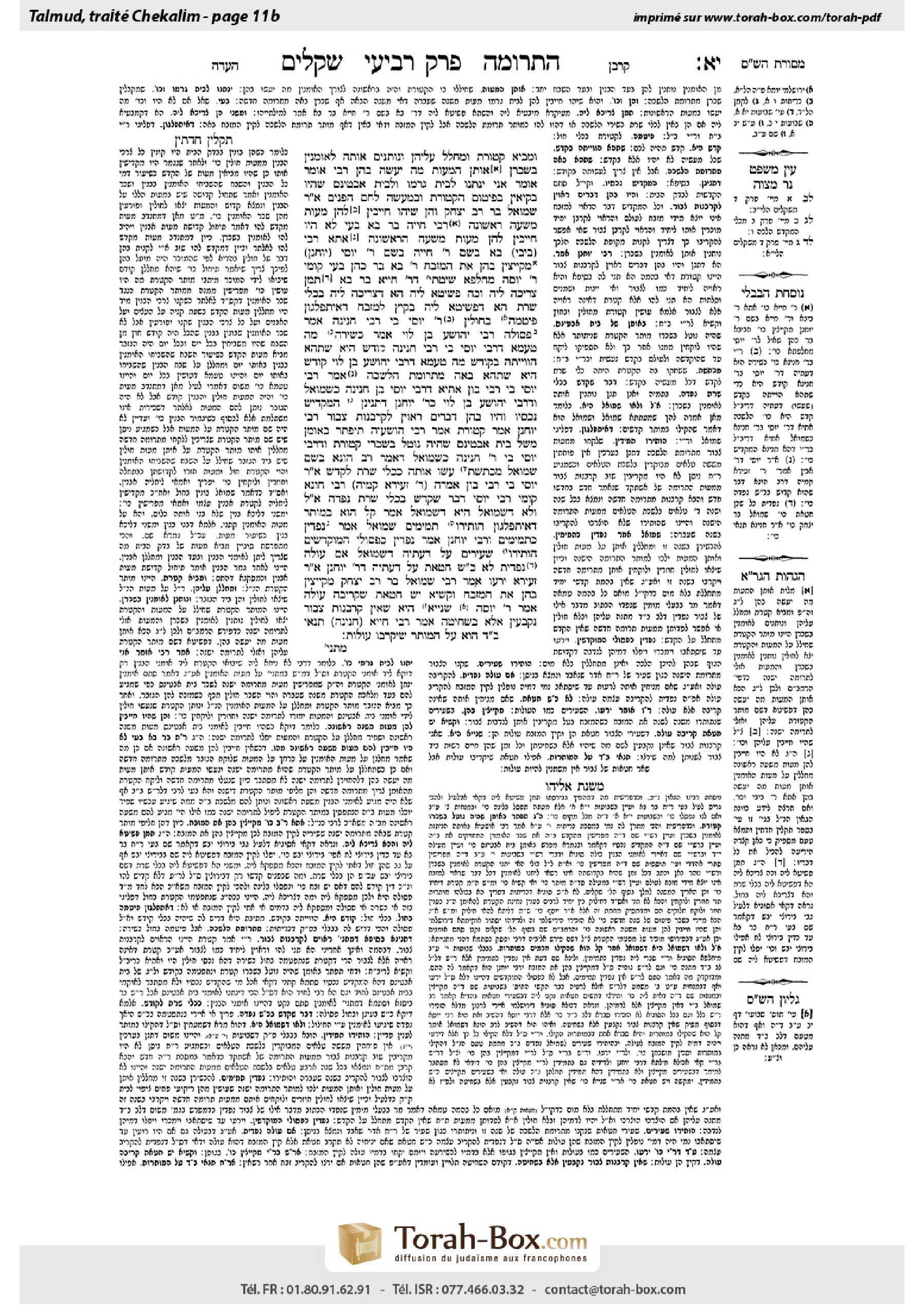
Shekalim 11b: Talmud study for Daf Yomi
Study the Talmud for Daf Yomi with scanned pages, Hebrew text, English translations from Sefaria and AI-generated French translations.
Passage selection and English or AI-generated French translation are available where the scan has annotations. Daf Study is independent of Torah-Box and Sefaria.
Browse Shekalim · שקלים · All tractatesShekalim 11b text and translations
This page of Shekalim includes the Aramaic text and an English translation, alongside the scan above.
שקלים י״א ב · Aramaic and Hebrew text
הלכה: וְלֹא נִמְצָא הַהקֲדֵּשׁ מִתָחַלֵּל עַל הַהֶקְדֵּשׁ. כֵּיצַד הוּא עוֹשֶׂה. אָמַר רִבִּי שִׁמְעוֹן בַּר כַּרְסָנָה. מֵבִיא מָעוֹת וּמְחַלְלָן עַל הַבִּנְיָין וּמֵבִיא קְטוֹרֶת וּמְחַלְלָן עֲלֵיהֶן וְנוֹתְנִין אוֹתָן לָאוּמָנִין בִּשְׂכָרָן. אוֹתָן הַמָּעוֹת מַה יֵעָשֶׂה בָהֶן. רִבִּי אוֹמֵר. אוֹמֵר אֲנִי. יִינָתְנוּ לְבֵית גַרְמוּ וּלְבֵית אַבְטִינָס שֶׁהָיוּ בְקִיאִין בְּפִיטּוּם הַקְּטוֹרֶת וּבְמַעֲשֶׂה לֶחֶם הַפָּנִים. אָמַר רִבִּי שְׁמוּאֵל בַּר רַב. וְהֵן שֶׁיְּהוּ חַיָיבִין לָהֶן מָעוֹת מִשָּׁעָה רִאשׁוֹנָה. רִבִּי חִיָיה בַּר בָּא בָעֵי. לֹא הָיוּ חַיָיבִין לָהֶן מָעוֹת מִשָּׁעָה הָרִאשׁוֹנָה. אָתָא רִבִּי בָּא בְשֵׁם רִבִּי חִיָיה בְשֵׁם רִבִּי יוֹחְנָן. מְקַיְּיצִין בָּהֶן אֶת הַמִּזְבֵּחַ . רִבִּי בָּא בַּר כֹּהֶן בְּעָא קוֹמֵי רִבִּי יוֹסֶה. מִחְלְפָא שִׁיטָּתֵיהּ דְּרִבִּי חִיָיא בַּר בָּא. תַּמָּן צְרִיכָה לֵיהּ וְהָכָא פְשִׁיטָא לֵיהּ. הֵן דִּצְרִיכָה לֵיהּ. בִּכְלֵי שָׂרֵת. הֵן דִּפְשִׁיטָא לֵיהּ. בְּקַיָיץ לַמִּזְבֵּחַ.
דְּאִיתְפַּלְּגוֹן. פִיטְּמָהּ בַחוּלִין. רִבִּי יוֹסֶה בֵּירִבִּי חֲנִינָה אָמַר. פְּסוּלָה. רִבִּי יְהוֹשֻׁעַ בֶּן לִֵוי אָמַר. כְּשֵׁירָה. מַה טַעֲמָא דְרִבִּי יוֹסֵי בֵּירִבִּי חֲנִינָה. קוֹדֶשׁ הִיא. שֶׁתְּהֵא הֲוָיָיתָהּ בַּקוֹדֶשׁ. מַה טַעֲמָא דְרִבִּי יְהוֹשֻׁעַ בֶּן לֵוִי. קוֹדֶשׁ הִיא. שֶׁתְּהֵא בָאָה מִתְּרוּמַת הַלִּישְׁכָּה. אָמַר רִבִּי יוֹסֵי בֵּירִבִּי בּוּן. אַתְיָא דְרִבִּי יוֹסֵי בֶּן חֲנִינָה כִשְׁמוּאֵל וּדְרִבִּי יְהוֹשֻׁעַ בֶּן לֵוִי כְרִבִּי יוֹחָנָן. דְּתַנִּינָן. הַמַּקְדִּישׁ נְכָסָיו וְהָיוּ בָּהֶן דְּבָרִים רְאוּיִין לְכָל קָרְבְּנוֹת צִיבּוּר. רִבִּי יוֹחָנָן אָמַר. קְטוֹרֶת. אָמַר רִבִּי הוֹשַׁעְיָה. תִּיפְתָּר בְּאוֹמָּן מִשֶּׁלְבֵּית אֶבְטִינָס שֶׁהָיָה נוֹטֵל בִּשְׂכָרוֹ קְטוֹרֶת. וּדְרִבִּי יוֹסֵי בֵּיּרִבִּי חֲנִינָא כִשְׁמוּאֵל. דְּאָמַר רַב הוּנָא בְשֵׁם שְׂמוּאֵל. מַכְתֶּשֶׁת עָשׂוּ אוֹתָהּ כִּכְלִי שָׁרֵת לְקַדֵּשׁ. אָמַר רִבִּי יוֹסֶי בֵּירִבִּי בּוּן. אָמְרָהּ רַב חוּנָה קוֹמֵי רִבִּי יוֹסֵי. דָּבָר שֶׁקָּדַשׁ בְּכֶלִי שָׁרֵת נִפְדֶּה. אָמַר לֵיהּ. וְלֹא דִשְׁמוּאֵל הִיא. דִשְׁמוּאֵל אָמַר. קַל הוּא בְמוֹתָר. דְּאִיתְפַּלְּגוֹן. הוֹתִירוּ תְמִימִים. שְׁמוּאֵל אָמַר. נִפְדִּים כִתְמִימִים. וְרִבִּי יוֹחָנָן אָמַר. נִפְדִּין כִפְסוּלֵי הַמּוּקְדָּשִׁין. הוֹתִירוּ שְׂעִירִים. עַל דַּעְתֵּיהּ דִּשְׁמוּאֵל. אִם עוֹלָה נִפְדִּית לֹא כָּל שֶׁכֵּן חַטָּאת. עַל דַּעְתֵּיהּ דִּרִבִּי יוֹחָנָן. אָמַר רִבִּי זְעוּרָא. יִרְעוּ. אָמַר רִבִּי שְׁמוּאֵל בַּר רַב יִצְחָק. מְקַיְיצִין בָּהֶן אֶת הַמִּזְבֵּחַ. וְקַשְׁיָא. יֵשׁ חַטָּאת קְרֵיבָה עוֹלָה. אָמַר רִבִּי יוֹסֵה. שַׁנְיָיא הִיא. שֶׁאֶין קָרְבְּנוֹת צִיבּוּר נִקְבָּעִין אָלָּא בִשְׁחִיטָה. אָמַר רִבִּי חֲנַנְיָה. תְּנַיי בֵית דִּין הוּא עַל הַמּוֹתָרוֹת שֶׁיָּקְרְבוּ עוֹלוֹת.
משנה: הַמַּקְדִּישׁ נְכָסָיו וְהָיוּ בָּהֶן דְּבָרִים רְאוּיִין לְקָרְבְּנוֹת הַצִּיבּוּר יִנָּתְנוּ לָאוּמָּנִין בִּשְׂכָרָן דִּבְרֵי רַבִּי עֲקִיבָה. אָמַר לוֹ בֶּן עֲזַאי אֵינָהּ הִיא הַמִּידָּה אֶלָּא מַפְרִישִׁין מֵהֶן שְׂכַר הָאוּמָּנִין וּמְחַלְּלִין אוֹתָן עַל מָעוֹת הָאוּמָּנִין וְנוֹתְנִין אוֹתָן לָאוּמָּנִין בִּשְׂכָרָן וְחוֹזְרִין וְלוֹקְחִין אוֹתָן מִתְּרוּמָה חֲדָשָׁה: הַמַּקְדִּישׁ נְכָסָיו וְהָיְתָה בָּהֶן בְּהֵמָה רְאוּיָה עַל גַּבֵּי הַמִּזְבֵּחַ זְכָרִים וּנְקֵבוֹת. רִבִּי אֱלִיעֶזֶר אוֹמֵר זְכָרִים יִמָּכְרוּ לִצְרִיכֵי עוֹלוֹת וּנְקֵיבוֹת יִמָּכְרוּ לִצְרִיכֵי זִבְחֵי שְׁלָמִים וּדְמֵיהֶן יִפְּלוּ עִם שְׁאָר נְכָסִים לְבֶדֶק הַבָּיִת. רִבִּי יְהוֹשֻׁעַ אוֹמֵר. זְכָרִים עַצְמָן יִקָּרְבוּ עוֹלוֹת וּנְקֵבוֹת יִמָּכְרוּ לִצְרִיכֵי זִבְחֵי שְׁלָמִים וְיָבִיא בִּדְמֵיהֶן עוֹלוֹת. וּשְׁאָר נְכָסִים יִפְּלוּ לְבֶדֶק הַבָּיִת. אָמַר רִבִּי עֲקִיבָה רוֹאֶה אֲנִי אֶת דִּבְרֵי רִבִּי אֱלִיעֶזֶר מִדִּבְרֵי רִבִּי יְהוֹשֻׁעַ שֶׁרִבִּי אֱלִיעֶזֶר הִשְׁוָה אֶת מִדּוֹתָיו וְרִבִּי יְהוֹשֻׁעַ חָלַק. אָמַר רַבִּי פַּפָּיָס שָׁמַעְתִּי אֶת דִּבְרֵי שְׁנֵיהֶן הַמַּקְדִּישׁ בְּפֵרוּשׁ כְּדִבְרֵי רִבִּי אֱלִיעֶזֶר וְהַמַּקְדִּישׁ סְתָם כְּדִבְרֵי רִבִּי יְהוֹשֻׁעַ: הַמַּקְדִּישׁ נְכָסָיו וְהָיוּ בָּהֶן דְּבָרִים רְאוּיִין לְגַבֵּי מִזְבֵּחַ יֵינוֹת וּשְׁמָנִים וְעוֹפוֹת. רִבִּי לָעְזָר אוֹמֵר יִימָּכְרוּ לִצְרִיכֵי אוֹתוֹ הַמִּין וְיָבִיא בִּדְמֵיהֶן עוֹלוֹת וּשְׁאָר נְכָסִים יִפְּלוּ לְבֶדֶק הַבָּיִת:
Shekalim 11b · English translation
HALAKHAH: Would not Temple property be redeemed by Temple property? What does he do? Rebbi Simeon bar Carsana said, he brings coins and redeems them for the building14a), once it is sacred it cannot be redeemed. If the money is legitimately paid for a sacrificial animal, it belongs to the owner of the animal and is no longer available for Temple use. Tosephta Me`ilah1:23 reads: “A worker who did work for the Temple for a mina or two may not say, give me this cow for a mina or this garment for 50 {denar} since Temple property cannot be redeemed for work but only for coins. What does one do? One takes the wages of the artisans {from the sheqalim} and redeems them on the artisans’ money, gives them to the artisans as their wages; then buys them back from the disbursement of the lodge to pay back the workers for the coins they earlier gave to the Temple.” A similar text seems to be intended here.; brings incense and redeems it for them, and gives it to the artisans as their wages. What should be done with those coins? Rebbi says, I am saying that they should be given to the family Garmu and the family Eutinos who were experts in compounding the incense and in making the shew-bread3:11.. Rebbi Samuel bar Rav <isaac< said, only if they were due to them beforehand. Rebbi Ḥiyya bar Abba asked, what if they were not due beforehand? There came Rebbi Abba in the name of Rebbi Ḥiyya in the name of Rebbi Joḥanan: One uses them to adorn the altar. Rebbi Abba bar Cohen asked before Rebbi Yose: The opinion of Rebbi Ḥiyya bar Abba seems inverted. Here it is questionable for him; there it is obvious for him. He told him, where it is questionable for him, for Service vessels; where it is obvious for him, to adorn the altar.
5:1, explained there in Notes 12-30. The introductory sentence is missing, but is partially present in B. The question is, why does the Mishnah prescribe that leftover incense should be redeemed and used as payment of the artisans. Since it is a biblical decree (Lev. 27:10) that unblemished animals dedicated as sacrifices cannot be redeemed, would it not be reasonable to assume that sacrificial objects sanctified in a Service vessel cannot be redeemed? If one accepts this, a second question arises. Was the incense prepared in a Service vessel and therefore is sanctified from the start, or does only the daily portion become sanctified when it is filled into a Service vessel, and the leftovers are intrinsically redeemable as Temple property? As they disagreed: If it was compounded as profane, Rebbi Yose ben Ḥanina said, it is disqualified; Rebbi Joshua ben Levi said, it is qualified. What is Rebbi Yose ben Ḥanina’s reason? It is holy30:36, most holy it shall be for you, Ex. 30:37, holy it shall be for you. Babli Keritut 6a., that it shall be brought into the Sanctuary. What is Rebbi Joshua ben Levi’s reason? It is holy, that it shall be brought from the disbursement from the lodge. Rebbi Yose ben Rebbi Bun said, Rebbi Yose ben Ḥanina’s parallels Samuel and Rebbi Joshua ben Levi’s Rebbi Joḥanan, as we have stated, “if one dedicated his property to the Temple and there were objects appropriate as public offerings.” Rebbi Joḥanan said, incense. Rebbi Hoshaia said, explain it about an artisan of the family Eutinos who took incense as his wages. And Rebbi Joshua ben Levi’s is like Samuel, as Rav Ḥuna said in the name of Samuel, they made the mortar a vessel to sanctify. Rebbi Yose ben Rebbi Abun said, Rebbi Ḥuna said this before Rebbi Yose: something sanctified in a vessel may be redeemed. He said to him, is that not Samuel’s? Since Samuel said, one is lenient in the case of leftovers. As they disagreed: If unblemished animals were left over, Samuel says, they are redeemed unblemished. Rebbi Joḥanan said, they are redeemed as disqualified sancta. Leftover he-goats, in Samuel’s opinion if elevation sacrifices are redeemed, a purification sacrifice so much more. In Rebbi Joḥanan’s opinion? Rebbi Ze`ira said, they shall graze. Rebbi Samuel bar Rav Isaac said, one uses them to adorn the altar. This is difficult. May a purification sacrifice be brought as elevation sacrifice? Rebbi Yose said, there is a difference, for public sacrifices are determined only by slaughter. Rebbi Ḥananiah said, it is a stipulation of the Court that all leftovers should be brought as elevation sacrifices.
MISHNAH: If somebody gives his property to the Temple. and in it there were items usable for public sacrifices, they shall be given to the artisans as their wages, the words of Rebbi Aqiba. Ben Azzai said to him, this is not they way1:23, Note 95. One has to apply the rules of Mishnah 5 in their entirety., but from it one sets apart the artisans’ wages and redeems it on the artisan’s money; one gives it to the artisans as their wages and then buys it back from them from the new disbursement of that year, one cannot simply take the leftover as incense for the next year. On the other hand, since profane use of incense prepared in the proportions prescribed for Temple service is a deadly sin (Ex. 30:38), the incense cannot be used outside of the Temple. One takes money from the sheqalim to pay the artisans who prepare the next year’s batch of incense, then uses this money in order to redeem the incense and make it profane, a possible object of trade. Then one pays the artisans in kind with the incense, and since they could do nothing with it one buys the incense back from them with the money earmarked to this effect. Then the artisans are paid at the same time the incense for the new year is paid with money from the new Temple year starting at Nisan 1..
If somebody gives his property to the Temple. and in it there was an animal fit for the altar 27:10. Since they were given to the Temple to be sold, the easiest way to satisfy the will of the donor and the rules is to sell the animals as sacrifices to those who have vowed a sacrifice., males or females. Rebbi Eliezer says, males should be sold to those who need an elevation offering 1:3,10)., and females be sold to those who need well-being offerings, and the revenue together with the remainder be for upkeep of the Temple.
Rebbi Joshua says, the males themselves should be brought as elevation sacrifices, and the females be sold to those who need well-being offerings, and the remaining property be used for upkeep of the Temple.
Rebbi Aqiba says, I agree with the words of Rebbi Eliezer against the words of Rebbi Joshua, since Rebbi Eliezer is uniform in his rules but Rebbi Joshua splits. Rebbi Pappaeus said, I heard according to the words of both of them. If somebody dedicates explicitly, following the words of Rebbi Eliezer; if the dedication is unspecified, following the words of Rebbi Joshua.
If somebody gives his property to the Temple. and in it there were things fit for the altar, wines, oils, or birds. Rebbi Eleazar says, they shall be sold to people needing these kinds and from the proceeds one shall bring elevation sacrifices 1:14–17), only four-legged animals can be brought “to adorn the altar.”; but the remainder of the property shall be used for the upkeep of the Temple.
Text from Sefaria: The Jerusalem Talmud, edition by Heinrich W. Guggenheimer. Berlin, De Gruyter, 1999-2015 (CC BY); The Jerusalem Talmud, translation and commentary by Heinrich W. Guggenheimer. Berlin, De Gruyter, 1999-2015 (CC BY).