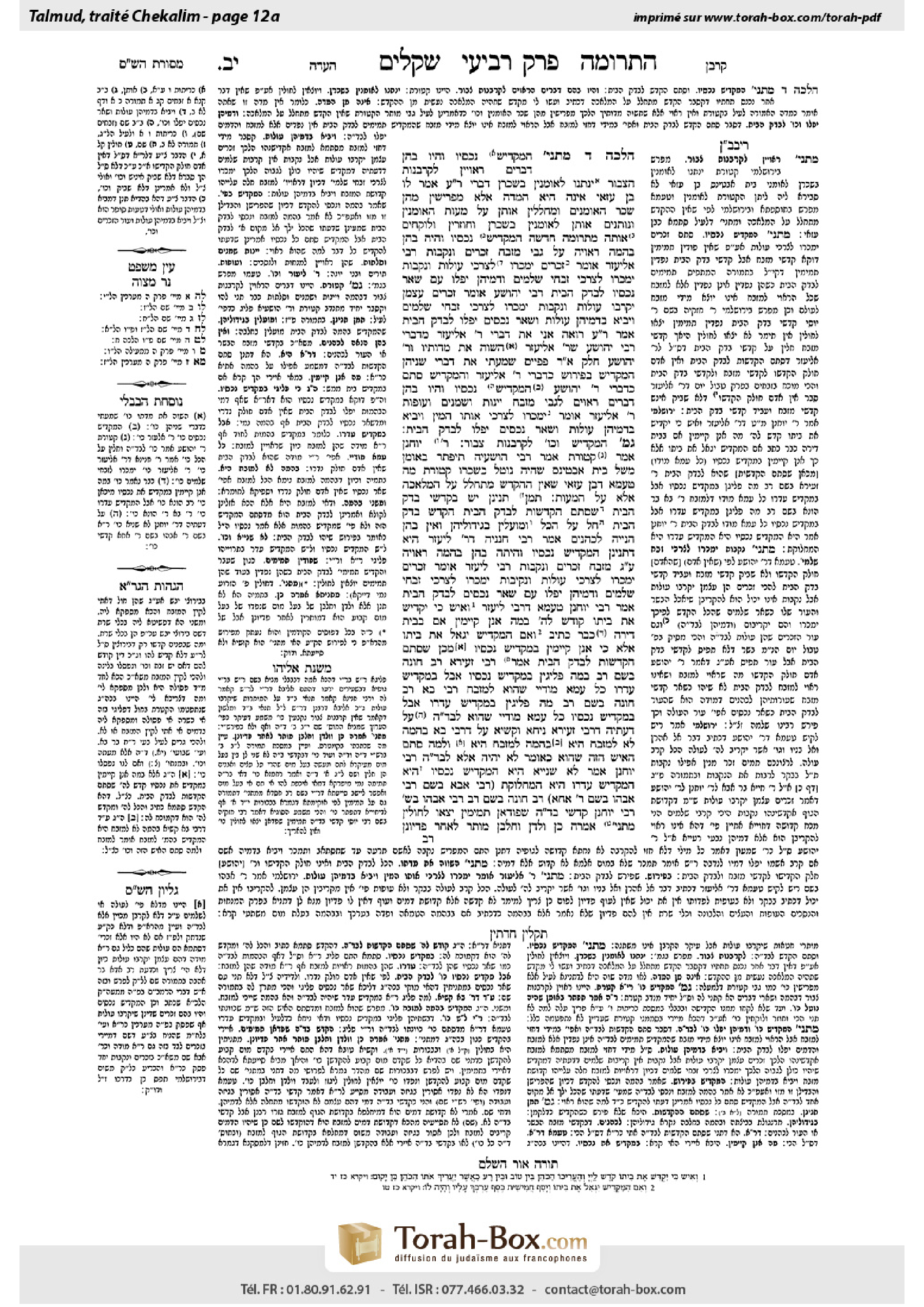
Shekalim 12a: Talmud study for Daf Yomi
Study the Talmud for Daf Yomi with scanned pages, Hebrew text, English translations from Sefaria and AI-generated French translations.
Passage selection and English or AI-generated French translation are available where the scan has annotations. Daf Study is independent of Torah-Box and Sefaria.
Browse Shekalim · שקלים · All tractatesShekalim 12a text and translations
This page of Shekalim includes the Aramaic text and an English translation, alongside the scan above.
שקלים י״ב א · Aramaic and Hebrew text
משנה: הַמַּקְדִּישׁ נְכָסָיו וְהָיוּ בָּהֶן דְּבָרִים רְאוּיִין לְקָרְבְּנוֹת הַצִּיבּוּר יִנָּתְנוּ לָאוּמָּנִין בִּשְׂכָרָן דִּבְרֵי רַבִּי עֲקִיבָה. אָמַר לוֹ בֶּן עֲזַאי אֵינָהּ הִיא הַמִּידָּה אֶלָּא מַפְרִישִׁין מֵהֶן שְׂכַר הָאוּמָּנִין וּמְחַלְּלִין אוֹתָן עַל מָעוֹת הָאוּמָּנִין וְנוֹתְנִין אוֹתָן לָאוּמָּנִין בִּשְׂכָרָן וְחוֹזְרִין וְלוֹקְחִין אוֹתָן מִתְּרוּמָה חֲדָשָׁה: הַמַּקְדִּישׁ נְכָסָיו וְהָיְתָה בָּהֶן בְּהֵמָה רְאוּיָה עַל גַּבֵּי הַמִּזְבֵּחַ זְכָרִים וּנְקֵבוֹת. רִבִּי אֱלִיעֶזֶר אוֹמֵר זְכָרִים יִמָּכְרוּ לִצְרִיכֵי עוֹלוֹת וּנְקֵיבוֹת יִמָּכְרוּ לִצְרִיכֵי זִבְחֵי שְׁלָמִים וּדְמֵיהֶן יִפְּלוּ עִם שְׁאָר נְכָסִים לְבֶדֶק הַבָּיִת. רִבִּי יְהוֹשֻׁעַ אוֹמֵר. זְכָרִים עַצְמָן יִקָּרְבוּ עוֹלוֹת וּנְקֵבוֹת יִמָּכְרוּ לִצְרִיכֵי זִבְחֵי שְׁלָמִים וְיָבִיא בִּדְמֵיהֶן עוֹלוֹת. וּשְׁאָר נְכָסִים יִפְּלוּ לְבֶדֶק הַבָּיִת. אָמַר רִבִּי עֲקִיבָה רוֹאֶה אֲנִי אֶת דִּבְרֵי רִבִּי אֱלִיעֶזֶר מִדִּבְרֵי רִבִּי יְהוֹשֻׁעַ שֶׁרִבִּי אֱלִיעֶזֶר הִשְׁוָה אֶת מִדּוֹתָיו וְרִבִּי יְהוֹשֻׁעַ חָלַק. אָמַר רַבִּי פַּפָּיָס שָׁמַעְתִּי אֶת דִּבְרֵי שְׁנֵיהֶן הַמַּקְדִּישׁ בְּפֵרוּשׁ כְּדִבְרֵי רִבִּי אֱלִיעֶזֶר וְהַמַּקְדִּישׁ סְתָם כְּדִבְרֵי רִבִּי יְהוֹשֻׁעַ: הַמַּקְדִּישׁ נְכָסָיו וְהָיוּ בָּהֶן דְּבָרִים רְאוּיִין לְגַבֵּי מִזְבֵּחַ יֵינוֹת וּשְׁמָנִים וְעוֹפוֹת. רִבִּי לָעְזָר אוֹמֵר יִימָּכְרוּ לִצְרִיכֵי אוֹתוֹ הַמִּין וְיָבִיא בִּדְמֵיהֶן עוֹלוֹת וּשְׁאָר נְכָסִים יִפְּלוּ לְבֶדֶק הַבָּיִת:
הלכה: הַמַּקְדִּישׁ נְכָסָיו וְהָיוּ בָּהֶן דְּבָרִים רְאוּיִין לְכָל קָרְבְּנוֹת צִיבּוּר. רִבִּי יוֹחָנָן אָמַר. קְטוֹרֶת. אָמַר רַב הוֹשַׁעְיָה. תִּיפְתָּר בְּאוֹמָּן מִשֶּׁלְבֵּית אֶבְטִינָס שֶׁהָיָה נוֹטֵל בִּשְׂכָרוֹ קְטוֹרֶת. מַה טַעֲמֵיהּ דָּבֶן עַזַּאי. שָׁאֵין הַהֶקְדֵּשׁ מִתְחַלֵּל עַל הַמְּלָאכָה אֶלֵּא עַל הַמָּעוֹת.
תַּמָּן תַּנִּינָן. יֵשׁ בְּקָדְשֵׁי בֶדֶק הַבַּיִת שֶׁסְּתָם הֶקְדֵּישׁוֹת לְבֶדֶק הַבַּיִת. הֶקְדֵּשׁ בֶּדֶק הַבַּיִת חָל עַל הַכֹּל וּמוֹעֲלִין בְּגִידּוּלֵיהֶן וְאֵין בָּהֶן הֲנָיָיה לַכֹּהֲנִים. אָמַר רִבִּי חֲנַנְיָה. דְּרִבִּי לִיעֶזֶר הִיא. דְּתַנִּינָן. הַמַּקְדִּישׁ נְכָסָיו וְהָיְתָה בָּהֶן בְּהֵמָה רְאוּיָה עַל גַּבֵּי הַמִּזְבֵּחַ זְכָרִים וּנְקֵיבוֹת. רִבִּי לִיעֶזֶר אוֹמֵר. זְכָרִים יִימָּכְרוּ לִצְרִיכֵי עוֹלוֹת וּנְקֵיבוֹת יִימָּכְרוּ לִצְרִיכֵי זִבְחֵי שְׁלָמִים וּדְמֵיהֶן יִפְּלוּ עִם שְׁאָר נְכָסִים לְבֶדֶק הַבָּיִת. אָמַר רִבִּי יוֹחָנָן. טַעֲמֵיהּ דְּרִבִּי לִעֶזֶר. וְאִישׁ כִּי יַקְדִּשׁ אֶת בֵּיתוֹ קוֹדֶשׁ לַיי. מַה אֲנָן קַיָימִין. אִם בְּבֵית דִּירָה. כְּבַר כָּתוּב אִם הַמַּקְדִּישׁ יִגְאַל אֶת בֵּיתָוֹ. אֶלָּא כֵן אֲנָן קַיָימִין. בְּמַקְדִּישׁ נְכָסָיו. מִיכָּן שֶׁסְּתָם הֶקְדֵּישׁוֹת לְבֶדֶק הַבַּיִת.
רִבִּי זְעוּרָה רַב חוּנָה בְשֵׁם רַב. פְּלִיגִין בַּמַּקְדִּישׁ נְכָסָיו. אֲבָל בַּמַּקְדִּישׁ עֶדְרוֹ כָּל עַמָּא מוֹדֵיי שֶׁהוּא לַמִּזְבֵּחַ. רִבִּי בָּא רַב חוּנָה בְשֵׁם רַב. מַה פְלִיגִין. בַּמַּקְדִּישׁ עֶדְרוֹ. אֲבָל בַּמַּקְדִּישׁ נְכָסָיו כָּל עַמָּא מוֹדֵיי שֶׁהוּא לְבֶדֶק הַבַּיִת. עַל דַּעְתֵּיהּ דְּרִבִּי זְעוּרָא נִיחָא. וְקַשְׁיָא עַל דְּרִבִּי בָּא. בְּהֵמָה לֹא לַמִּזְבֵּחַ הִיא. בְּהֵמָה לַמִּזְבֵּחַ הִיא. וְלָמָּה סָתַם הָאִישׁ הַזֶּה. שֶׁהוּא כָאוֹמֵר. לֹא יְהוּ אֶלָּא לְבֶדֶק הַבַּיִת. רִבִּי יוֹחָנָן אָמַר. לֹא שַׁנְיָיא. הִיא הַמַּקְדִּישׁ נְכָסָיו הִיא הַמַּקְדִּישׁ עֶדְרוֹ. הִיא הַמַּחֲלוֹקֶת.
רַב חוּנָה בְשֵׁם רַב רִבִּי אַבָּהוּ בְשֵׁם רִבִּי יוֹחָנָן. קָדְשֵׁי בֶדֶק הַבַּיִת שֶׁפּוֹדִין תְּמִימִין יָצְאוּ לְחוּלִין. מַתְנִיתַא אָמְרָה כֵן. וּוְלָדָן וַחֲלָבָן מוּתָּר לְאַחַר פִּדְיוֹנָם. רִבִּי חִזְקִיָּה בְשֵׁם רַב חִסְדָּא. תִּיפְתָּר שֶׁפּוֹדִין תְּמִימִין וְהוּמְמוּ. רִבִּי יּוֹסֵה בְשֵׁם רַב חִסְדָּא. מַתְנִיתַא אָמְרָה כֵן. וּוְלָדָן וַחֲלָבָן אָסוּר לְאַחַר פִּדְיוֹנָן. רִבִּי חִזְקִיָּה בְשֵׁם רִבִּי יּוֹסֵה. קָדְשֵׁי בֶדֶק הַבַּיִת שֶׁפָּדְיָין תְּמִימִים יָצְאוּ לְחוּלִין. אִין תֵּימַר. לֹא יָצְאוּ לְחוּלִין. הֵיאַךְ קָדְשֵׁי הַמִּזְבֵּחַ חָלִין עַל קָדְשֵׁי בֶדֶק הַבַּיִת.
Shekalim 12a · English translation
MISHNAH: If somebody gives his property to the Temple. and in it there were items usable for public sacrifices, they shall be given to the artisans as their wages, the words of Rebbi Aqiba. Ben Azzai said to him, this is not they way1:23, Note 95. One has to apply the rules of Mishnah 5 in their entirety., but from it one sets apart the artisans’ wages and redeems it on the artisan’s money; one gives it to the artisans as their wages and then buys it back from them from the new disbursement of that year, one cannot simply take the leftover as incense for the next year. On the other hand, since profane use of incense prepared in the proportions prescribed for Temple service is a deadly sin (Ex. 30:38), the incense cannot be used outside of the Temple. One takes money from the sheqalim to pay the artisans who prepare the next year’s batch of incense, then uses this money in order to redeem the incense and make it profane, a possible object of trade. Then one pays the artisans in kind with the incense, and since they could do nothing with it one buys the incense back from them with the money earmarked to this effect. Then the artisans are paid at the same time the incense for the new year is paid with money from the new Temple year starting at Nisan 1..
If somebody gives his property to the Temple. and in it there was an animal fit for the altar 27:10. Since they were given to the Temple to be sold, the easiest way to satisfy the will of the donor and the rules is to sell the animals as sacrifices to those who have vowed a sacrifice., males or females. Rebbi Eliezer says, males should be sold to those who need an elevation offering 1:3,10)., and females be sold to those who need well-being offerings, and the revenue together with the remainder be for upkeep of the Temple.
Rebbi Joshua says, the males themselves should be brought as elevation sacrifices, and the females be sold to those who need well-being offerings, and the remaining property be used for upkeep of the Temple.
Rebbi Aqiba says, I agree with the words of Rebbi Eliezer against the words of Rebbi Joshua, since Rebbi Eliezer is uniform in his rules but Rebbi Joshua splits. Rebbi Pappaeus said, I heard according to the words of both of them. If somebody dedicates explicitly, following the words of Rebbi Eliezer; if the dedication is unspecified, following the words of Rebbi Joshua.
If somebody gives his property to the Temple. and in it there were things fit for the altar, wines, oils, or birds. Rebbi Eleazar says, they shall be sold to people needing these kinds and from the proceeds one shall bring elevation sacrifices 1:14–17), only four-legged animals can be brought “to adorn the altar.”; but the remainder of the property shall be used for the upkeep of the Temple.
HALAKHAH: “If somebody gives his property to the Temple and in it there were items usable for any public sacrifices.” Rebbi Joḥanan said, incense. Rebbi Hoshaia said, explain it about an artisan of the family Eutinos who took incense as his wages. What is Ben Azzai’s reason? For Temple property cannot be redeemed by work, only by coins.
There we have stated7:2.: “There is about gifts for the upkeep of the Temple that unspecified gifts to the Temple are for the upkeep of the Temple. Sanctification for the upkeep of the Temple falls on everything, and me`ilah applies to what grows from it laws as is the original donation., and priests have no usufruct from it.” Rebbi Ḥanania said, this is Rebbi Eliezer’s, as we have stated: “If somebody gives his property to the Temple and in it there was an animal fit for the altar, males or females. Rebbi Eliezer says, males should be sold to those who need an elevation offering, and females be sold to those who need well-being offerings, and the revenue together with the remainder be for upkeep of the Temple.” Rebbi Joḥanan said, the reason of Rebbi Eliezer : If a man dedicate his house holy to the Eternal 27:14.. How do we hold? If for a dwelling, it already is written, if the dedicator redeem his house 27:15.. Therefore we hold that he dedicates his property. From here that unspecified dedications to the Temple are for the upkeep of the Temple.
Rebbi Ze`ira, Rav Huna in the name of Rav: They disagree about one who gives his property to the Temple. But if he gives his flock to the Temple, everybody agrees that it is for the altar. Rebbi Abba, Rav Huna in the name of Rav: Where do they disagree? About one who gives his flock to the Temple, but if he gave his property to the Temple, everybody agrees that it is for the upkeep of the Temple. The opinion of Rebbi Ze`ira can be understood as Temple property, are not sacrifices and Lev.27:9–10 does not apply to them. The disagreement between RR. Eliezer and Joshua is purely about rabbinic rules and these apply equally to both cases.. It is difficult for Rebbi Abba. Is an animal not for the altar? An animal is for the altar. But why did this man not specify? It is as if he said, it only should be for the upkeep of the Temple. Rebbi Joḥanan said, there is no difference. The disagreement is both about one who gives his property to the Temple as about one who gives his flock to the Temple as Temple property, are not sacrifices and Lev.27:9–10 does not apply to them. The disagreement between RR. Eliezer and Joshua is purely about rabbinic rules and these apply equally to both cases..
Rav Ḥuna in the name of Rav, Rebbi Abbahu in the name of Rebbi Joḥanan: Sancta given for the upkeep of the Temple which were redeemed unblemished become profane. A Mishnah says so10:2. The Mishnah states that blemished animals which were dedicated as sacrifices never become intrinsically holy; if they are redeemed they are fully profane, their offspring and their milk is profane (first quote). If they were validly dedicated and later developed a blemish, they have to be redeemed and used as profane food, but cannot totally lose their sacred status; they cannot be used for work nor are their offspring and their milk permitted (second quote, also Temurah7:1.), “their offspring and their milk are permitted after their redemption.” Rebbi Ḥizqiah in the name of Rav Ḥisda: Explain it if they were redeemed unblemished and then became defective. Rebbi Yose in the name of Rav Ḥisda: Does the Mishnah say so10:2. The Mishnah states that blemished animals which were dedicated as sacrifices never become intrinsically holy; if they are redeemed they are fully profane, their offspring and their milk is profane (first quote). If they were validly dedicated and later developed a blemish, they have to be redeemed and used as profane food, but cannot totally lose their sacred status; they cannot be used for work nor are their offspring and their milk permitted (second quote, also Temurah7:1.)? “Their offspring and their milk are forbidden after their redemption.” Rebbi Ḥizqiah in the name of Rebbi Yose: Sancta given for the upkeep of the Temple which were redeemed unblemished become profane. If you are saying they did not become profane, how could the sanctity of the altar fall on sancta given for the upkeep of the Temple cannot be changed to another, both R. Eliezer and R. Joshua must agree that the sale of the animal by the Temple makes it profane; the dedication of the buyer is the valid dedication of a profane animal.?
Text from Sefaria: The Jerusalem Talmud, edition by Heinrich W. Guggenheimer. Berlin, De Gruyter, 1999-2015 (CC BY); The Jerusalem Talmud, translation and commentary by Heinrich W. Guggenheimer. Berlin, De Gruyter, 1999-2015 (CC BY).