Shekalim 12b: Talmud study for Daf Yomi
Study the Talmud for Daf Yomi with scanned pages, Hebrew text, English translations from Sefaria and AI-generated French translations.
Passage selection and English or AI-generated French translation are available where the scan has annotations. Daf Study is independent of Torah-Box and Sefaria.
Browse Shekalim · שקלים · All tractatesShekalim 12b text and translations
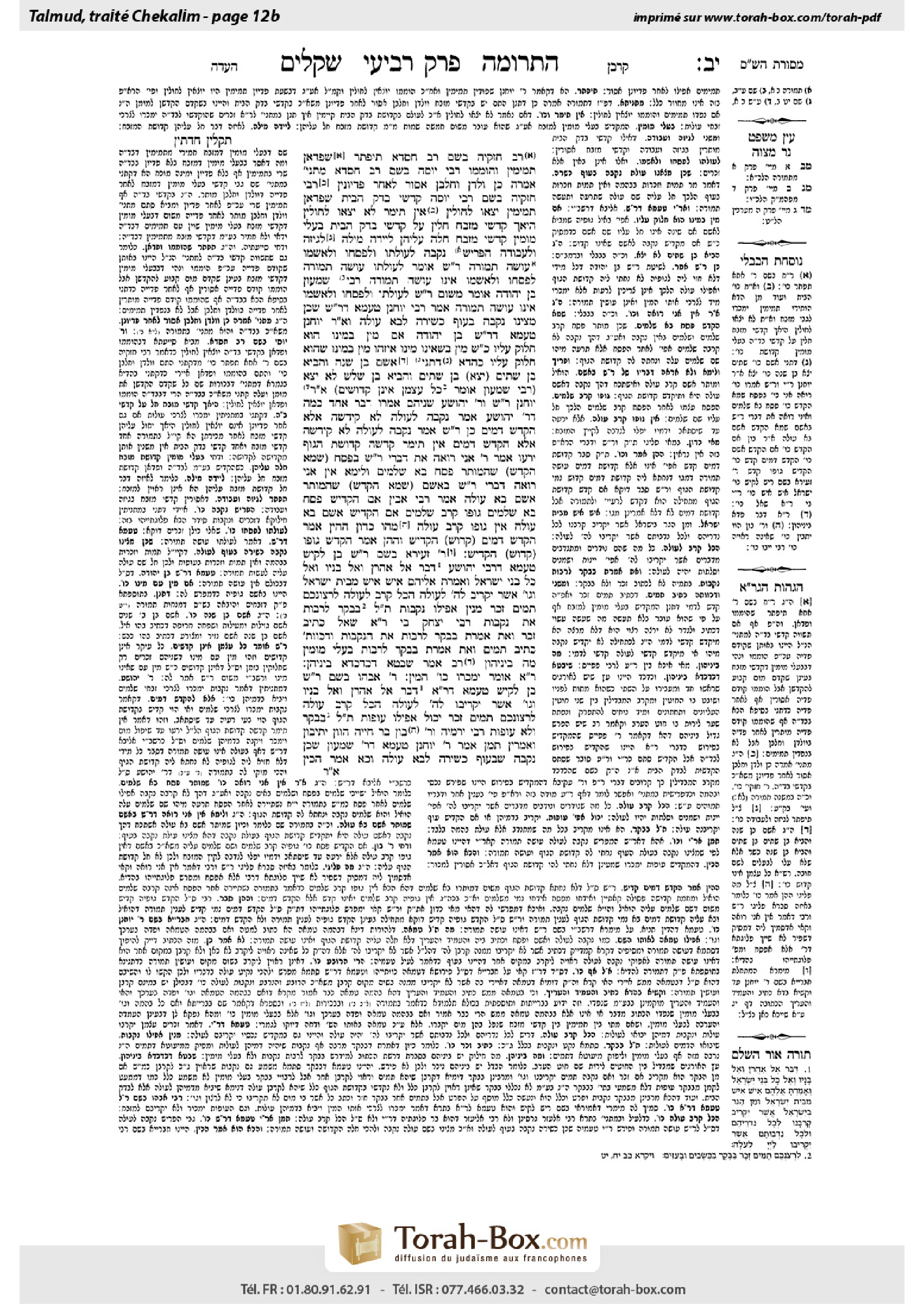
This page of Shekalim includes the Aramaic text and an English translation, alongside the scan above.
שקלים י״ב ב · Aramaic and Hebrew text
רַב חוּנָה בְשֵׁם רַב רִבִּי אַבָּהוּ בְשֵׁם רִבִּי יוֹחָנָן. קָדְשֵׁי בֶדֶק הַבַּיִת שֶׁפּוֹדִין תְּמִימִין יָצְאוּ לְחוּלִין. מַתְנִיתַא אָמְרָה כֵן. וּוְלָדָן וַחֲלָבָן מוּתָּר לְאַחַר פִּדְיוֹנָם. רִבִּי חִזְקִיָּה בְשֵׁם רַב חִסְדָּא. תִּיפְתָּר שֶׁפּוֹדִין תְּמִימִין וְהוּמְמוּ. רִבִּי יּוֹסֵה בְשֵׁם רַב חִסְדָּא. מַתְנִיתַא אָמְרָה כֵן. וּוְלָדָן וַחֲלָבָן אָסוּר לְאַחַר פִּדְיוֹנָן. רִבִּי חִזְקִיָּה בְשֵׁם רִבִּי יּוֹסֵה. קָדְשֵׁי בֶדֶק הַבַּיִת שֶׁפָּדְיָין תְּמִימִים יָצְאוּ לְחוּלִין. אִין תֵּימַר. לֹא יָצְאוּ לְחוּלִין. הֵיאַךְ קָדְשֵׁי הַמִּזְבֵּחַ חָלִין עַל קָדְשֵׁי בֶדֶק הַבַּיִת.
בַּעֲלֵי מוּמִין קְדוּשַׁת הַמִּזְבֵּחַ חָלָה עֲלֵיהֶן. לֵיְידְא מִילָּה. לַגִּיזָה וְלָעֲבוֹדָה. הִפְרִישׁ נְקֵיבָה לְעוֹלָתוֹ וּלְפִּסְחוֹ וּלְאֲשָׁמוֹ עוֹשֶׂה תְמוּרָה. רִבִּי שִׁמְעוֹן אוֹמֵר. לְעוֹלָתוֹ עוֹשֶׂה תְמוּרָה. לְפִסְחוֹ וּלְאֲשָׁמוֹ אֵינוֹ עוֹשֶׂה תְמוּרָה. רִבִּי שִׁמְעוֹן בֶּן יְהוּדָה אוֹמֵר מִשּׁוּם רִבִּי שִׁמְעוֹן. לְעוֹלָתוֹ. וּלְפִּסְחוֹ וּלְאֲשָׁמוֹ אֵינוֹ עוֹשֶׂה תְמוּרָה. אָמַר רִבִּי יוֹחָנָן. טַעֲמֵיהּ דְּרִבִּי שִׁמְעוֹן. שֶׁכֵּן מָצָאנוּ נְקֵיבָה בָעוֹף כְשֵׁירָה לָבוֹא עוֹלָה. [וְ]אָמַר רִבִּי יוֹחָנָן. טַעֲמֵיהּ דְּרִבִּי שִׁמְעוֹן. אִם מִין בְּמִינוֹ הוּא חָלוּק עָלָיו לֹא כָל שֶׁכֵּן מִין בְּשֶׁאֵינוֹ מִינוֹ. אֵי זֶהוּ מִין בְּמִינוֹ שֶׁהוּא חָלוּק עָלָיו. כְּהָדָא דְתַנֵּי. אָשָׁם בֶּן שָׁנָה הֵבִיא בֶּן שְׁתַּיִם יָצָא. בֶּן שְׁתַּיִם וְהֵבִיא בֶּן שָׁלֹשׁ לֹא יָצָא. אָמַר רִבִּי יוֹחָנָן. רִבִּי שִׁמְעוֹן וְרִבִּי יְהוֹשֻׁעַ שְׁנֵיהֶן אָמְרוּ דָבָר אֶחָד. כְּמַה דְרִבִּי יְהוֹשֻׁעַ אָמַר. נְקֵיבָה לְעוֹלָה לֹא קָדְשָׁה אֶלָּא הֶקְדֵּשׁ דָּמִים. כֵּן רִבִּי שִׁמְעוֹן אָמַר. נְקֵיבָה לְעוֹלָה לֹא קָדְשָׁה אֶלָּא הֶקְדֵּשׁ דָּמִים. אִין תֵּימַר. קָדְשָׁה הֶקְדֵּשׁ גּוּף יִרְעוּ. אָמַר רִבִּי. אֲנִי רוֹאֶה אֶת דִּבְרֵי רִבִּי שִׁמְעוֹן בְּפֶסַח שֶׁמָּא הֶקְדֵּשׁ פֶּסַח בָּא שְׁלָמִים. וְלֹא אֶרְאֶה אֶת דִּבְרֵי רִבִּי שִׁמְעוֹן בָּאָשָׁם שֶׁמָּא הֶקְדֵּשׁ אָשָׁם בָּא עוֹלָה. אָמַר רִבִּי אַבִּין. אִם הֶקְדֵּישׁ פֶּסַח בָּא שְׁלָמִים גּוּפוֹ קָרֵב שְׁלָמִים. אִם הֶקְדֵּשׁ אָשָׁם בָּא עוֹלָה אֵין גּוּפוֹ קָרֵב עוֹלָה. מַאי כְדוֹן. הָהֵין אָמַר. הֶקְדֵּשׁ דָּמִים קָדַשׁ. וְהָהֵין אָמַר. הֶקְדֵּשׁ גּוּף קָדַשׁ.
רִבִּי זְעוּרָה בְשֵׁם רִבִּי שִׁמְעוֹן בֶּן לָקִישׁ. טַעֲמֵיהּ דְּרִבִּי יְהוֹשֻׁעַ. דַּבֵּר אֶל אַהֲרֹן וְאֶל בָּנָיו וְאֶל כָּל בְּנֵי יִשְׂרָאֵל וְאָמַרְתָּ אֲלֵהֶם אִישׁ אִישׁ מִבֵּית יִשְׂרָאֵל וגומ׳. אֲשֶׁר יַקְרִיב לַיי לְעוֹלָה. הַכֹּל קָרֵב לְעוֹלָה. לִרְצוֹנְכֶם תָּמִים זָכָר. מְנַיִין אֲפִילוּ נְקֵיבוֹת. תַּלְמוּד לוֹמַר בַּבָּקָר לְרַבּוֹת אֶת הַנְּקֵבוֹת. רִבִּי יִצְחָק בֵּירִבִּי אֶלְעָזָר. כָּתוּב זָכָר. וְאַתְּ אָמַרְתָּ בַּבָּקָר לְרַבּוֹת אֶת הַנְּקֵבוֹת. וְדִכְוָתָהּ כָּתָב תָּמִים. וְאַתְּ אָמַרְתָּ בַּבָּקָר לְרַבּוֹת בַּעֲלֵי מוּמֵין.
מַה בֵינֵיהוּן. רַב אָמַר. שִׁיבְטָא דְכַרְכָדָא בֵינֵיהוֹן.
רִבִּי אַבָּהוּ בְשֵׁם רִבִּי שִׁמְעוֹן בֶּן לָקִישׁ. טַעֲמֵיהּ דְּרִבִּי לָעְזָר. דַּבֵּר אֶל אַהֲרֹן וְאֶל בָּנָיו וגו׳. אֲשֶׁר יַקְרִיב לַיי לְעוֹלָה. הַכֹּל קָרֵב עוֹלָה. לִרְצוֹנְכֶם תָּמִים זָכָר. יָכוֹל אֲפִילוּ עוֹפוֹת. תַּלָמוּד לוֹמַר בַּבָּקָר. לֹא עוֹפוֹת. רִבִּי יִרְמְיָה וְרִבִּי בּוּן בַּר חִיָיה הֲווֹן יָתְבִין וְאָמְרִין. תַּמָּן אָמַר רִבִּי יוֹחָנָן. טַעֲמֵיהּ דְּרִבִּי שִׁמְעוֹן. שֶׁכֵּן נְקֵיבָה שֶׁבָּעוֹף כְשֵׁירָה לָבוֹא עוֹלָה. וְהָכָא הוּא אָמַר הָכֵן. אָמַר רִבִּי יוֹסֵה. קִיַימְתִּיהָ כָּהִיא דְאָמַר רִבִּי שְׁמוּאֵל בְּשֵׁם רִבִּי זְעוּרָה. כָּל שֶׁאֵינָהּ יְכוֹלָה לִקָּרֵב לֹא הִיא וְלֹא דָמֶיהָ לֹא קָדְשָׁה אֶלָּא הֶקְדֵּשׁ דָּמִים. וְאָמַרְתָּ יְאוּת. לְהַקְרִיבוֹ אֵין אַתְּ יָכוֹל. דִּכְתִיב בַּבָּקָר. לֹא עוּפוֹת. לִפְדוֹתוֹ אֵין אַתְּ יָכוֹל. שֶׁאֵין לָעוֹף פִּדְיוֹן. לְפוּם כֵּן צָרַךְ מֵימַר. לֹא קָדְשָׁה אֶלָּא קְדוּשַׁת דָּמִים.
Shekalim 12b · English translation
Rav Ḥuna in the name of Rav, Rebbi Abbahu in the name of Rebbi Joḥanan: Sancta given for the upkeep of the Temple which were redeemed unblemished become profane. A Mishnah says so10:2. The Mishnah states that blemished animals which were dedicated as sacrifices never become intrinsically holy; if they are redeemed they are fully profane, their offspring and their milk is profane (first quote). If they were validly dedicated and later developed a blemish, they have to be redeemed and used as profane food, but cannot totally lose their sacred status; they cannot be used for work nor are their offspring and their milk permitted (second quote, also Temurah7:1.), “their offspring and their milk are permitted after their redemption.” Rebbi Ḥizqiah in the name of Rav Ḥisda: Explain it if they were redeemed unblemished and then became defective. Rebbi Yose in the name of Rav Ḥisda: Does the Mishnah say so10:2. The Mishnah states that blemished animals which were dedicated as sacrifices never become intrinsically holy; if they are redeemed they are fully profane, their offspring and their milk is profane (first quote). If they were validly dedicated and later developed a blemish, they have to be redeemed and used as profane food, but cannot totally lose their sacred status; they cannot be used for work nor are their offspring and their milk permitted (second quote, also Temurah7:1.)? “Their offspring and their milk are forbidden after their redemption.” Rebbi Ḥizqiah in the name of Rebbi Yose: Sancta given for the upkeep of the Temple which were redeemed unblemished become profane. If you are saying they did not become profane, how could the sanctity of the altar fall on sancta given for the upkeep of the Temple cannot be changed to another, both R. Eliezer and R. Joshua must agree that the sale of the animal by the Temple makes it profane; the dedication of the buyer is the valid dedication of a profane animal.?
The sanctity of the altar falls on defective animals. In which respect? For shearing and work. “9:19, Temurah2:5; Babli Temurah19b/20a. The text of B in the anonymous statement, “does not effect substitution”, is a scribal error as shown by the later text in B.
The reference is to Lev. 27:10, that it is forbidden to make a substitution for a dedicated animal, but if such a substitution was made, both the original animal and its substitute are sancta. Therefore “to effect substitution” implies “the original dedication is valid.” Everybody agrees that even if the dedication is void as dedication for the altar, it is valid as a gift of the animal or its value for the upkeep of the Temple. If somebody dedicated a female for his elevation offering, or his Pesaḥ, or his reparation offering, it effects substitution. Rebbi Simeon says, for his elevation offering it effects substitution; for his Pesaḥ or his reparation offering it does not effect substitution.” “20b. Rebbi Simeon ben Jehudah says in the name of Rebbi Simeon, neither for his elevation offering, nor his Pesaḥ, nor his reparation offering, does it effect substitution.” Rebbi Joḥanan said, the reason of Rebbi Simeon is that we find that a female is qualified as elevation offering of a bird 1:3,10, but not for birds, 1:14 (Sifra Wayyiqra I Parshata6(2,5). Argument missing in B.. [And] Rebbi Joḥanan said, the reason of Rebbi Simeon is, if there are differences in its own kind, so much more if it is not its own kind. What are differences in its own kind? As it was stated10:2. The Mishnah states that blemished animals which were dedicated as sacrifices never become intrinsically holy; if they are redeemed they are fully profane, their offspring and their milk is profane (first quote). If they were validly dedicated and later developed a blemish, they have to be redeemed and used as profane food, but cannot totally lose their sacred status; they cannot be used for work nor are their offspring and their milk permitted (second quote, also Temurah7:1.), “a yearling as reparation offering, and he brought one of two years, he satisfied his obligation; a two-year old as reparation offering, and he brought one of three years, he did not satisfy his obligation”. Rebbi Joḥanan said, Rebbi Simeon and Rebbi Joshua said the same. As Rebbi Joshua said, a female as elevation offering is sanctified only for its money’s worth, so Rebbi Simeon cannot be changed to another, both R. Eliezer and R. Joshua must agree that the sale of the animal by the Temple makes it profane; the dedication of the buyer is the valid dedication of a profane animal. said, a female as elevation offering is sanctified only for its money’s worth. If you would say that they are sancta as to their body, they should graze money but not used at the end of the tax year. Since these animals become dedicated only at the moment they are used (end of the text for Note 100), their status as far as dedication goes is identical to that of animals willed to the Temple.. “Rebbi said, I agree with Rebbi Simeon about the Pesah; could the Pesaḥ be brought as a well being offering? But I do not agree with the words of Rebbi Simeon for reparation offerings; could a reparation offering be brought as an elevation offering?” Rebbi Abbin said, in case a Pesaḥ be brought as a well being offering, its body is brought as well-being offering; in case a reparation offering be brought as an elevation offering, its body cannot be brought as elevation offering. What about it? In one case one says, it is sanctified for its money’s worth; in one case one says, it is sanctified in its body9:19, Temurah2:5; Babli Temurah19b/20a. The text of B in the anonymous statement, “does not effect substitution”, is a scribal error as shown by the later text in B.
The reference is to Lev. 27:10, that it is forbidden to make a substitution for a dedicated animal, but if such a substitution was made, both the original animal and its substitute are sancta. Therefore “to effect substitution” implies “the original dedication is valid.” Everybody agrees that even if the dedication is void as dedication for the altar, it is valid as a gift of the animal or its value for the upkeep of the Temple..
Rebbi Ze`ira in the name of Rebbi Simeon ben Laqish. The reason of Rebbi Joshua: 22:18–19.Speak to Aaron, and his sons, and to all Children of Israel, and say to them: each single man from Israel, etc. who willoffer an elevation sacrifice to the Eternal, anything could be elevation sacrifice, voluntarily from you, unblemished, male. From where even females? The verse says, in cattle, to include females 1:3, whereמִן הַבָּקָר clearly is partitive, only the select from the cattle, here בַּבָּקָר, “in the herd”, is inclusive. While females cannot be elevation sacrifices, they can be dedicated that their proceeds be used for elevation sacrifices.. Rebbi Isaac ben Rebbi Eleazar: It says male, and you are saying in cattle, to include females. Then similarly it is written unblemished, and you are saying in cattle, to include the blemished?
What is between them? The stick of a weaver’s shuttle is between them.
Rebbi Abbahu in the name of Rebbi Simeon ben Laqish. The reason of Rebbi Eleazar: 22:18–19.Speak to Aaron and to his sons, etc., who would sacrifice to the Eternal as elevation sacrifice; everything may be brought as elevation sacrifice, by your volition, unblemished, male. I could think that this includes birds. The verse says, in cattle, not birds7(20), Wayyiqra I Parshata6(3)]. In addition, since Lev. 1:14–17 is addressed to the individual, but Lev. 22:18–19 to the public, it is inferred that birds as elevation offerings are possible only to the individual; the public is restricted to four-legged animals. Since a gift to the Temple is a gift to the public, birds given to the Temple as part of an estate may not be sacrificed.. Rebbi Jeremiah and Rebbi Abun bar Ḥiyya were sitting and saying, there said Rebbi Joḥanan said, the reason of Rebbi Simeon is that we find that a female is qualified as elevation offering of a bird 1:3,10, but not for birds, 1:14 (Sifra Wayyiqra I Parshata6(2,5). Argument missing in B.. And here, he says so? Rebbi Yose said, I confirmed it following what Rebbi Samuel said in the name of Rebbi Ze`ira: Anything which could be sacrificed neither itself nor its money’s worth is sanctified only as money’s worth. And you are saying, this is correct. You cannot sacrifice it, for it is written in cattle. You cannot redeem it since birds cannot be redeemed.12:1. Not only birds, but also dedicated wine and flour cannot be redeemed since the rules of redemption in Lev. 27 are formulated referring to four-legged animals only.
Text from Sefaria: The Jerusalem Talmud, edition by Heinrich W. Guggenheimer. Berlin, De Gruyter, 1999-2015 (CC BY); The Jerusalem Talmud, translation and commentary by Heinrich W. Guggenheimer. Berlin, De Gruyter, 1999-2015 (CC BY).