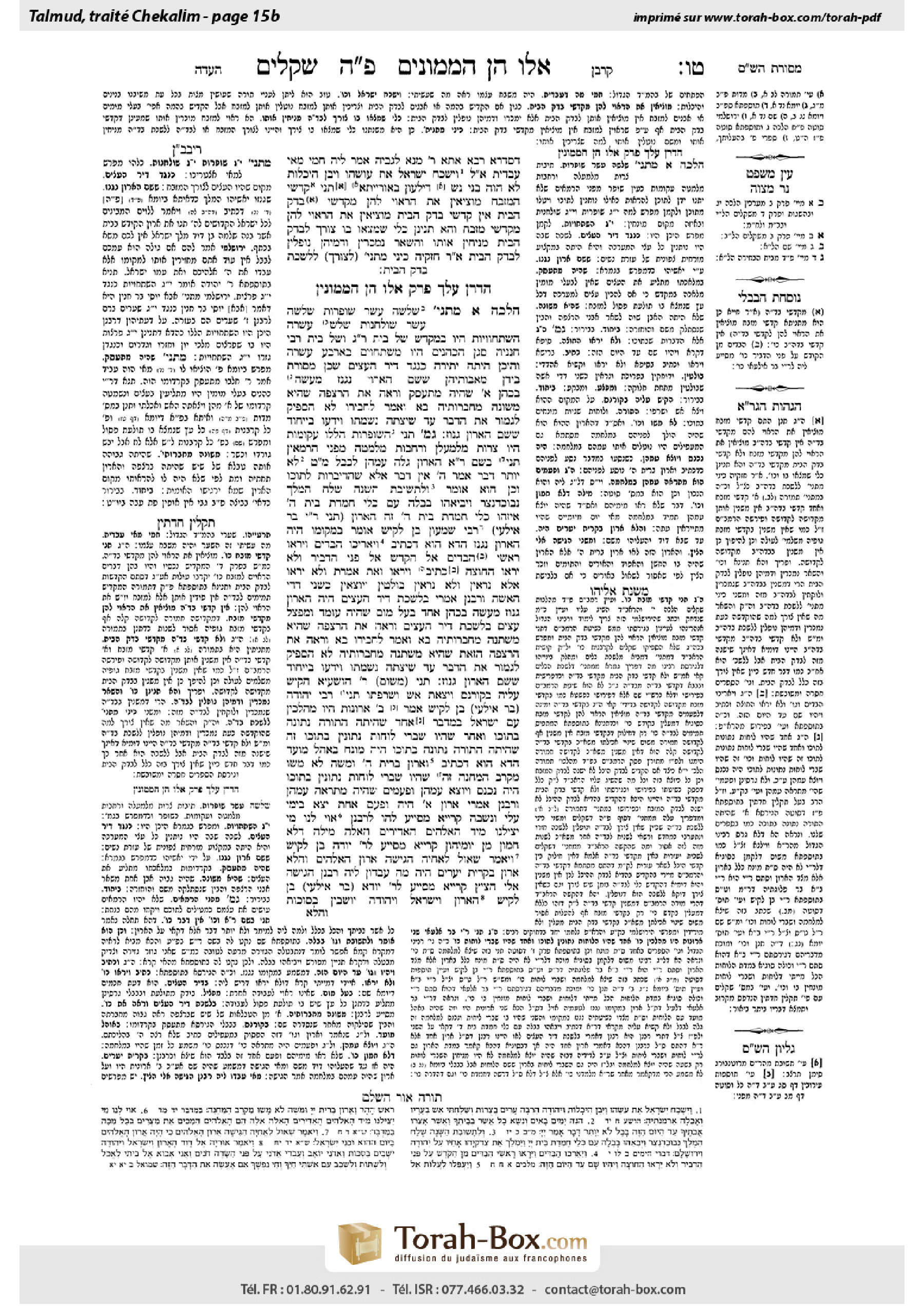
Shekalim 15b: Talmud study for Daf Yomi
Study the Talmud for Daf Yomi with scanned pages, Hebrew text, English translations from Sefaria and AI-generated French translations.
Passage selection and English or AI-generated French translation are available where the scan has annotations. Daf Study is independent of Torah-Box and Sefaria.
Browse Shekalim · שקלים · All tractatesShekalim 15b text and translations
This page of Shekalim includes the Aramaic text and an English translation, alongside the scan above.
שקלים י״ה ב · Aramaic and Hebrew text
רִבִּי אָבוּן עֲבַד אִילֵּין תַּרְעַיָיה דְּסִדְרָא רַבָּא. אֲתָא רִבִּי מָנָא לְגַבֵּיהּ. אַמַר לֵיהּ. חֲמִי מָה עַבְדִּית. אַמַר לֵיהּ. וַיִּשְׁכַּח יִשְׂרָאֵל אֶת עוֹשֵׂהוּ וַיִּבֶן הֵיכָלוֹת. לָא הֲוָה בְּנֵי נַשׁ דְּיִלְעוּן בְּאוֹרַיְתָא.
תַּנֵּי. קָדְשֵׁי הַמִּזְבֵּחַ מוֹצִיאִין אֶת הָרָאוּי לָהֶן מִקָּדְשֵׁי בֶדֶק הַבַּיִת. אֵין קָדְשֵׁי בֶדֶק הַבַּיִת מוֹצִיאִין אֶת הָרָאוּי לָהֶן מִקָּדְשֵׁי הַמִּזְבֵּחַ. וְהָא תַנִּינָן כְּלִי שֶׁמָּצְאוּ בּוֹ צוֹרֶךְ לְבֶדֶק הַבַּיִת מַנִּיחִין אוֹתוֹ. וְהַשְּׁאָר נִמְכָּרִין וּדְמִיהֶן נוֹפְלִין לְלִשְׁכַּת בֶּדֶק הַבַּיִת. אָמַר רִבִּי חִזְקִיָּה. כֵּינִי מַתְנִיתָא. לְצוֹרֶךְ לִשְׁכַּת בֶּדֶק הַבַּיִת.
משנה: שְׁלֹשָׁה עָשָׂר שׁוֹפָרוֹת שְׁלֹשָׁה עָשָׂר שֻׁלְחָנוֹת שְׁלֹשׁ עֶשְׂרֵה הִשְׁתַּחֲוָיוֹת הָיוּ בַּמִּקְדָּשׁ. שֶׁל בֵּית רַבָּן גַּמְלִיאֵל וְשֶׁל בֵּית רַבִּי חֲנַנְיָה סְגַן הַכֹּהֲנִים הָיוּ מִשְׁתַּחֲוִים בְּאַרְבַּע עֶשְׂרֵה. וְהֵיכָן הָיְתָה יְתֵרָה כְּנֶגֶד דִּיר הָעֵצִים שֶׁכֵּן מָסוֹרֶת בְּיָדָן מֵאֲבוֹתֵיהֶן שֶׁשָּׁם הָאָרוֹן גָּנוּז: מַעֲשֶׂה בְּכֹהֵן אֶחָד שֶׁהָיָה מִתְעַסֵּק וְרָאָה הָרִיצְפָּה שֶׁהִיא מְשׁוּנָּה מֵחֲבֵרוֹתֶיהָ. בָּא וְאָמַר לַחֲבֵרוֹ. לֹא הִסְפִּיק לִגְמֹר אֶת הַדָּבָר עַד שֶׁיָּצְתָה נִשְׁמָתוֹ. וְיָדְעוּ בְיִיחוּד שֶׁשָּׁם הָאָרוֹן גָּנוּז:
הלכה: שְׁלֹשָׁה עָשָׂר שׁוֹפָרוֹת כול׳. תַּנֵּי. הַשּׁוֹפָרוֹת הַלָּלוּ עֲקוּמוֹת הָיוּ. צָרוֹת מִלְּמַעֲלָן וּרְחָבוֹת מִלְמַטָּן מִפְּנֵי הָרַמָּאִין.
תַּנֵּי בְשֵׁם רִבִּי אֱלִיעֶזֶר. הָאָרוֹן גָּלָה עִמָּהֶן לְבָבֶל. מָה טַעַם. לֹא יִוָותֵר דָּבָר אָמַר יְי. אֵין דָּבָר אֶלָּא שֶׁהַדִּיבְּרוֹת לְתוֹכוֹ. וְכֵן הוּא אוֹמֵר. וְלִתְשׁוּבַת הַשָּׁנָה שָׁלַח הַמֶּלֶךְ נְבוּכַדְנֶצַּר וַיְבִיאֵהוּ בָבֶלָה עִם כְּלֵי חֶמְדַּת בֵּית יְי. אֵי זֶהוּ חֶמְדַּת בֵּית יְי. זֶה הָאָרוֹן. רִבִּי שִׁמְעוֹן בֶּן לָקִישׁ אָמַר. בִּמְקוֹמוֹ הָיָה הָאָרוֹן גָּנוּז. הָדָא הוּא דִכְתִיב וַיַּאֲרִיכוּ הַבַּדִּים וַיֵּרָאוּ רָאשֵׁי הַבַּדִּים אֶל הַקֹּדֶשׁ אֶל פְּנֵי הַדְּבִיר וְלֹא יֵרָאוּ הַחוּצָה. כְּתִיב וַיֵּרָאוּ וְאַתְּ אָמַר וְלֹא יֵרָאוּ. אֶלָּא נִרְאִין וְלֹא נִרְאִין. בּוֹלְטִין וְיוֹצְאִין כִּשְׁנֵי דַדֵּי הָאִשָּׁה.
וְרַבָּנִן אָמְרִין. בְּלִישְׁכַּת דִּיר הָעֵצִים הָיָה הָאָרוֹן גָּנוּז. מַעֲשֶׂה בְכֹהֵן אֶחָד בַּעַל מוּם שֶׁהָיָה עוֹמֵד וּמַפְצִיעַ עֵצִים בְּלִישְׁכַּת דִּיר הָעֵצִים וְרָאָה אֶת הָרִצְפָּה שֶׁהִיא מְשׁוּנָּה מֵחֲבֵרוֹתֶיהָ. בָּא וְאָמַר לַחֲבֵירוֹ. בּוֹא וּרְאֵה אֶת הָרִצְפָּה הַזֹּאת שֶׁהִיא מְשׁוּנָּה מֵחֲבֵרוֹתֶיהָ. לֹא הִסְפִּיקוּ לִגְמוֹר אֶת הַדָּבָר עַד שֶׁיָּצְתָה נִשְׁמְתוֹ. וְיָדְעוּ בְיִיחוּד שֶׁשָּׁם הָאָרוֹן גָּנוּז. תַּנֵּי רִבִּי הוֹשַׁעְיָה. הִקִּישׁ עָלֶיהָ בְקוּרְנָס וְיָצָאת אֵשׁ וּשְׂרָפָתוֹ.
תַּנֵּי. רִבִּי יוּדָה בֶּן לָקִישׁ אָמַר. שְׁנֵי אֲרוֹנוֹת הָיוּ מְהַלְּכִין עִם יִשְׂרָאֵל בַּמִּדְבָּר. אֶחָד שֶׁהָיְתָה הַתּוֹרָה נְתוּנָה בְתוֹכוֹ. וְאֶחָד שֶׁהָיוּ שִׁבְרֵי הַלּוּחוֹת נְתוּנִין בְתוֹכוֹ. זֶה שֶׁהָיְתָה הַתּוֹרָה נְתוּנָה בְתוֹכוֹ הָיָה מוּנַח בְּאֹהֵל מוֹעֵד. הָדָא הִיא דִכְתִיב וַאֲרוֹן בְּרִית יְי וּמֹשֶׁה לֹא מָשׁוּ מִקֶּרֶב הַמַּחֲנֶה. זֶה שֶׁהָיוּ שִׁבְרֵי הַלּוּחוֹת בְתוֹכוֹ הָיָה נִכְנַס וְיוֹצֵא עִמָּהֶן וּפְעָמִים הוּא מַתְרֶה עִמָּהֶן. וְרַבָּנִן אָמְרֵי. אָרוֹן אֶחָד הָיָה וּפַעַם אַחַת יָצָא בִימֵי עֵלִי וְנִשְׁבָּה. קִרְיָיה מְסַיֵיעַ לְהוֹן לְרַבָּנִן. אוֹי לָנוּ מִי יַצִּילֵנוּ מִיַּד הָאֱלֹהִים הָאַדִּירִים הָאֵלֶּה. מִילָּה דְלָא חֲמוּן מִן יוֹמֵיהוֹן. קִרְיָיה מְסַיֵיעַ לְרִבִּי יוּדָה בֶּן לָקִישׁ. וַיֹּאמֶר שָׁאוּל לַאֲחִיָּה הַגִּישָׁה אֲרוֹן הָאֱלֹהִים. וַהֲלֹא אָרוֹן בְּקִרְיַת יְעָרִים הָיָה. מָה עָבְדוּן לֵיהּ רַבָּנִן. הַגִּישָׁה אֵלַי הַצִּיץ. קִרְיָיא מְסַיֵיעַ לְרִבִּי יוּדָה בֶּן לָקִישׁ. הָאָרוֹן וְיִשְׂרָאֵל וִיהוּדָה יֹשְׁבִים בַּסּוּכּוֹת. וַהֲלֹא אָרוֹן בְּצִיּוֹן הָיָה. מָה עָבְדוּן לֵיהּ רַבָּנִן. סְכָךְ שֶׁהוּא כְקִירוּי. שֶׁאַדַּיִין לֹא נִבְנֶה בֵית הַבְּחִירָה.
Shekalim 15b · English translation
Rebbi Abun made doors for the main house of study. Rebbi Mana came to him; he said to him, look what I did. He told him, Israel forgot its Creator and built palaces8:14.. Were there no people who study Torah?
It was stated: Altar sancta take what is appropriate for them from sancta of upkeep of the Temple. Sancta of upkeep of the Temple do not take what is appropriate for them from altar sancta. But did we not state, “any vessel which they deem is needed for the upkeep of the Temple they keep, but the remainder is sold and their proceeds fall into the lodge of upkeep of the Temple”? Rebbi Ḥizqiah said, so is the Mishnah: in case of need from the lodge of upkeep of the Temple.
MISHNAH: Thirteen horns, thirteen tables, and thirteen prostrations were in the Temple. The family of Rabban Gamliel and of Rebbi Ḥanania the Second in Command of the priests were prostrating themselves fourteen times. And where was the additional one? In front of the storage room of the wood since they had a tradition from their forefathers that there the Ark was hidden.
It happened that a Cohen was occupied when he saw that a floor tile was different from the others. He went to tell it to a comrade but could not finish speaking before his soul left him; then they knew with certainty the the Ark was hidden there.
HALAKHAH: “Thirteen horns,” etc. It was stated: these horns were curved; narrow on top and wide on the bottom because of the tricksters.
It was stated in the name of Rebbi Eliezer: 53b..“The Ark was deported with them to Babylon. What is the reason? There will not remain a word20:17.. Word refers only to what contains the Words. And so it says, at the turn of the year king Nebuchadnezzar sent and brought him to Babylon with the desirable vessels of the Eternal’s House36:10. In the Tosephta this is the reason given by R. Simeon (ben Yoḥay) in support of R. Eliezer.. What are the desirables of the Eternal’s House? This is the Ark. Rebbi Simeon ben Laqish p. 92a. said, at its place it was hidden. That is what is written. 8:8., the poles were long; the tips of the poles were seen in the Sanctuary, in front of the Hall, but were not seen outside,<and were there until this day.> It is written, were seen, and you are saying, but were not seen. They protrude and stick out like a woman’s breasts54a in the name of Rav Jehudah..
But the rabbis say, the Ark was hidden in the storage room of the wood. It happened that a blemished Cohen was splitting wood in the storage room of the wood and saw a floor plate different from the others. (p. קיג); a slightly different full version is in Babli Yoma54a. He came and said to a colleague, come and see this floor plate which is different from the others. They did not finish the matter before his soul left him; then they knew that there the Ark was hidden. Rebbi Hoshaia stated: He hit on it with a sledgehammer; fire erupted and burned him.
8:3 (Notes 43–130,ס), where all references to the Babli are given. It was stated: “Rebbi Jehudah ben Laqish says, two arks were travelling with Israel in the desert; one in which the Torah was deposited and one in which the broken pieces of the tablets were deposited. The one in which the Torah was deposited was put into the Tent of Meeting; that is what is written. 14:44.: Moses and the Ark of the Eternal’s covenant did not move from the camp. The one in which the broken pieces of the tablets were deposited was going out and coming in with them. #82, referring to Num. 10.33.. But the Rabbis say, it was only one, and once it went out in the days of Eli and was taken prisoner. A verse supports the Rabbis: Woe to us, who will save us from this mighty god5:8.? A word which shows that they never had seen it before. A verse supports Rebbi Jehudah ben Laqish. Saul said to Aḥiya: present God’s Ark14:18.. But was the Ark not at Qiryat Ye`arim? What do the rabbis do with it? ‘Present to me the High Priest’s diadem Chapter 7, not “ephod” following LXX and many moderns.’ Another verse supports Rebbi Jehudah ben Laqish: The Ark, Israel, and Jehudah, dwell in huts 11:11.. Was the Ark not in Zion? What do the rabbis with it? The straw roof cover that was in the walls, since the Temple was not yet built.
Text from Sefaria: The Jerusalem Talmud, edition by Heinrich W. Guggenheimer. Berlin, De Gruyter, 1999-2015 (CC BY); The Jerusalem Talmud, translation and commentary by Heinrich W. Guggenheimer. Berlin, De Gruyter, 1999-2015 (CC BY).