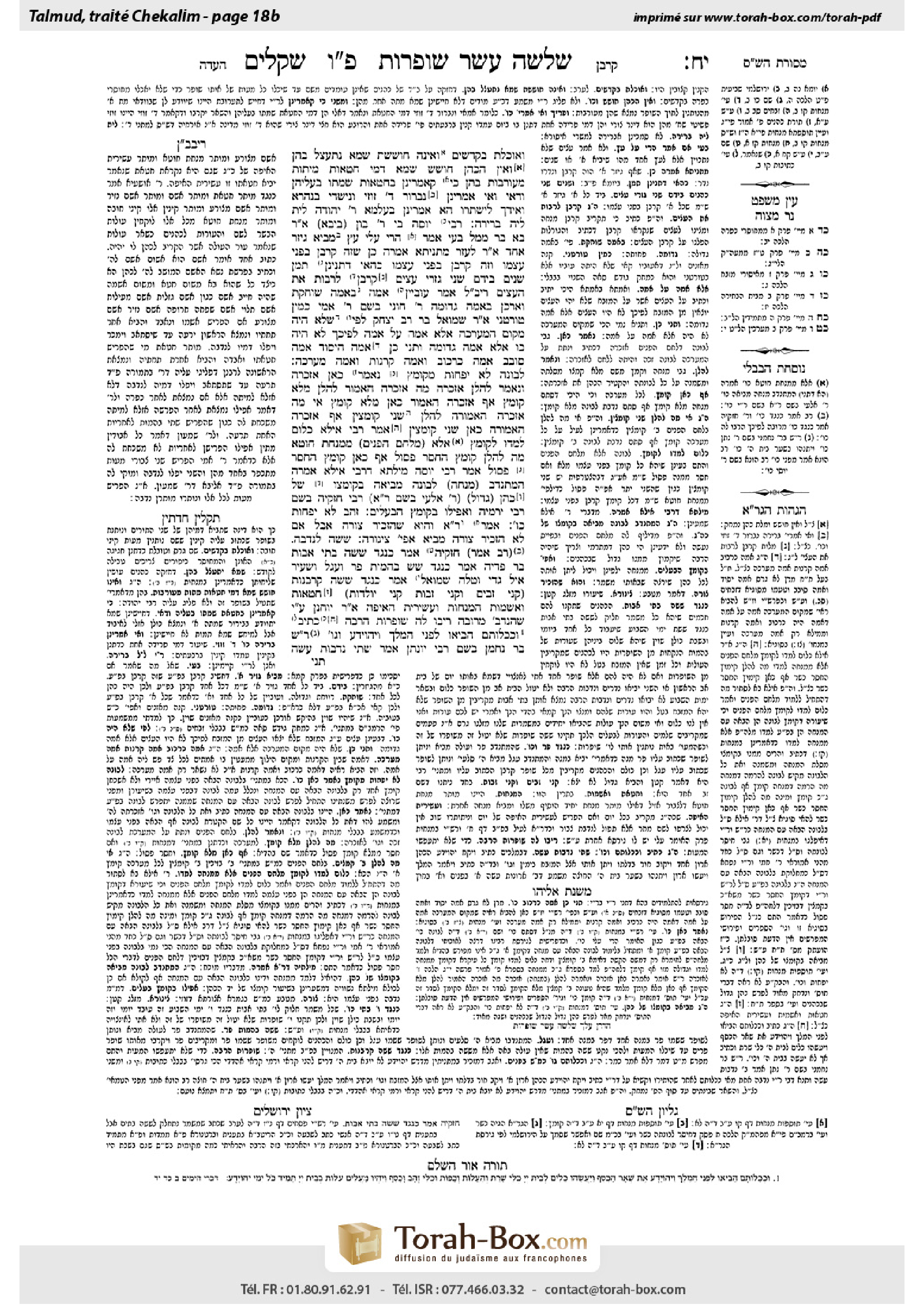
Shekalim 18b: Talmud study for Daf Yomi
Study the Talmud for Daf Yomi with scanned pages, Hebrew text, English translations from Sefaria and AI-generated French translations.
Passage selection and English or AI-generated French translation are available where the scan has annotations. Daf Study is independent of Torah-Box and Sefaria.
Browse Shekalim · שקלים · All tractatesShekalim 18b text and translations
This page of Shekalim includes the Aramaic text and an English translation, alongside the scan above.
שקלים י״ח ב · Aramaic and Hebrew text
הלכה: תַּנֵּי. אָמַר רִבִּי יְהוּדָה. וְלֹא הָיָה שׁוֹפָר שֶׁלְקִינִּים בִּירוּשָׁלַיִם מִפְּנֵי הַתַּעֲרוֹבֶת. שֶׁמָּא תָמוּת אַחַת מֵהֶן וְנִמְצְאוּ דְמֵי חַטָּאוֹת מֵיתוֹת מְעוּרָבוֹת בָּהֶן. [וְהָ]תַנֵּי. הָאִשָּׁה שֶׁאָמְרָה. הֲרֵי עָלַי קַן. מֵבִיאָה דְמֵי קַן וְנוֹתְנָתוֹ בַשּׁוֹפָר וְאוֹכֶלֶת בַקֳּדָשִׁים וְאֵינָהּ חוֹשֶׁשֶׁת שֶׁמָּא נִתְעַצֵּל כֹּהֵן. וְאֵין הַכֹּהֵן חוֹשֵׁשׁ שֶׁמָּא דְמֵי חַטָּאוֹת מֵיתוֹת מְעוּרָבוֹת בָּהֶן. [כִּי קָאָמְרִינָן. בְּחַטָּאת שֶׁמֵּתוּ בַעֲלֵיהֶן וַדַּאִי. וְאִי אָמְרִינָן. נִבְרוֹר ד׳ זוּזֵי וְנַשְׁדֵּי בִּנְהָרָא וְאִידָּךְ לִישְׁתְּרוּ. הָא אָמְרִינָן בָעָלְמָא. רִבִּי יְהוּדָה לֵית לֵיהּ בְּרֵירָה.]
רִבִּי יוֹסֵה בֵּירִבִּי בּוּן אָמַר. רִבִּי בָּא בַּר מָמָל בָּעֵי. אָמַר הֲרֵי עָלַי עֵץ. מְבִיא גֵּיזָר אֶחָד. אָמַר רִבִּי לָעְזָר. מַתְנִיתָא אָמְרָה כֵן. שֶׁזֶּה קָרְבָּן בִּפְנֵי עַצְמוֹ וְזֶה קָרְבָּן בִּפְנֵי עַצְמוֹ. כָּהִיא דְתַנִּינָן תַּמָּן. שְׁנַיִם בְּיָדָם שְׁנֵי גְיזִירֵי עֵצִים. לְרַבּוֹת אֶת הָעֵצִים.
רִבִּי יְהוֹשֻׁעַ בֶּן לֵוִי אָמַר. עוֹבְיָין (כַּמָּה חוֹקוֹת) [בָּאַמָּה שׁוֹחֲקוֹת]. וְאָרְכָּן (אַמָּה גַמּוּדָה) [כְּאַמָּה גְּרוֹמָה]. רִבִּי חוֹנִי בְשֵׁם רִבִּי אִמִּי. כְּמִין טוֹרְטָנִי. אָמַר רִבִּי שְׁמוּאֵל בַּר רַב יִצְחָק. לְפִי שֶׁלֹּא הָיָה מְקוֹם הַמַּעֲרָכָה אֶלָּא אַמָּה עַל אַמָּה לְפִיכָךְ לֹא הָיָה בוֹ אֶלָּא אַמָּה (גַמּוּדָה) [גְּרוֹמָה]. וְתַנֵּי כֵן. אַמָּה הַיְּסוֹד אַמָּה סוֹבֵב אַמָּה כַּרְכּוֹב וְאַמָּה קְרָנוֹת וְאַמָּה מַעֲרָכָה.
לְבוֹנָה לֹא יִפְחוֹת מִקּוֹמֶץ. נֶאֱמַר כָּאן אַזְכָּרָה וְנֶאֱמַר לְהַלָּן אַזְכָּרָה. מַה אַזְכָּרָה הָאֲמוּרָה לְהַלָּן מְלֹא קוֹמֶץ אַף כָּאן מְלֹא קוֹמֶץ. אִי מַה אַזְכָּרָה הָאֲמוּרָה לְהַלָּן שְׁנֵי קְמָצֵים אַף כָּאן שְׁנֵי קְמָצֵים. אָמַר רִבִּי לָא. כְּלוּם לָמְדוּ לְקוֹמֶץ אֶלָּא מִלֶּחֶם הַפָּנִים. מַה לְהַלָּן קוֹמֶץ הֶחָסֵר פָּסוּל אַף כָּאן קוֹמֶץ הֶחָסֵר פָּסוּל. אָמַר רִבִּי יוֹסֵה. מִילְּתֵיהּ דְּרִבִּי אִילָא אָמְרָה. הַמִּתְנַדֵּב מִנְחָה מֵבִיאָהּ בְקוּמְצוֹ שֶׁלְכֹּהֵן גָּדוֹל. רִבִּי חִזְקִיָּה בְשֵׁם רִבִּי יִרְמְיָה. וַאֲפִילוּ בְּקוֹמֶץ הַבְּעָלִים.
זָהָב לֹא יִפְחוֹת מִדִּינַר זָהָב. אָמַר רִבִּי לָעְזָר. וְהוּא שֶׁהִזְכִּיר צוּרָה. אֲבָל אִם לֹא הִזְכִּיר צוּרָה מֵבִיא אֲפִילוּ צִינּוֹרָה.
שִׁשָּׁה לִנְדָבָה. חִזְקִיָּה אָמַר. כְּנֶגֶד שִׁשָּׁה בָתֵּי אָבוֹת. בַּר פְּדָיָה אָמַר. כְּנֶגֶד שֵׁשׁ בְּהֵמוֹת. פָּר וְעֶגֶל וְשָׂעִיר אֵיִל וּגְדִי וּטְלֵה. שְׁמוּאֵל אָמַר. כְּנֶגֶד שֵׁשׁ קָרְבָּנוֹת. קִינֵּי זָבִים קִינֵּי זָבוֹת קִינֵּי יּוֹלְדוֹת חַטָּאוֹת וָאֲשָּׁמוֹת הַמְּנָחוֹת וָעֲשִׂירִית הָאֵיפָה. אָמַר רִבִּי יוֹחָנָן. עַל יְדֵי שֶׁהַנְּדָבָה מְרוּבָּה רִיבוּ לָהּ שׁוֹפָרוֹת הַרְבֶּה. [שֶׁנֶּאֱמַר] וּכְכַלּוֹתָם הֵבִיאוּ לִפְנֵי הַמֶּלֶךְ וִיהוֹיָדָע וגו׳. רִבִּי שְׁמוּאֵל בַּר נַחְמָן בְּשֵׁם רִבִּי יוֹנָתָן [אָמַר]. שְׁתֵּי נְדָבוֹת [עָשָׂה]. תַּנֵּי רִבִּי יִשְׁמָעֵאל. נְדָבָה אַחַת. וְהָא כְתִיב וַיֹּאמֶר הַמֶּלֶךְ וַיַּעֲשׂוּ אֲרוֹן אֶחָד וַיִּתְּנֻהוּ בְּשַׁעַר בֵּית יְי חוּצָה. אָמַר רַב חונָה. מִפְּנֵי הָטְּמֵאִים. רִבִּי חוּנָה בְשֵׁם רַב יוֹסֵף. עַל שֵׁם אַךְ לֹא יֵעָשֶׂה בֵּית יְי סִפּוֹת כֶּסֶף. מִין סִפּוֹת כֶּסֶף לֹא יֵעָשֶׂה בֵית יי.
Shekalim 18b · English translation
HALAKHAH: It was stated55a. This paragraph is two texts in one. The Yerushalmi text is that of the scribe of the Leiden manuscript; the Babli text (Yoma55b) is reproduced in Babylonian Aramaic in B and the corrector’s text given in brackets here.: “Rebbi Jehudah said, there was no horn for nests in Jerusalem because of mix-up.” Maybe one of them would die and it turn out that moneys of dying purification sacrifices were mixed up in them55b. An animal dedicated as a purification sacrifice whose owner died between dedication and sacrifice cannot be used for anything, but it has to be let to die (Mishnah Temurah4:1). Moneys dedicated for a purification sacrifice under the same circumstances have to be destroyed; in Israel this means to be thrown into the Dead Sea. R. Jehudah holds that such money mixed up with other moneys makes everything unusable and worthless.. [But did we not state] (It was stated): A woman who said, I have to bring a nest, brings the money for the nest and puts it in the horn, and eats from sancta without worry. And the Cohen does not worry that maybe moneys of dying purification sacrifices are mixed up in them unless a sundown was preceded by her sacrifice. (Therefore ג reads “gets up in the morning and eats.”) The statement implies that the horn for nests was emptied several times every hour and any money deposited there immediately used for the required sacrifice. This makes R. Jehudah’s objection moot; practice follows the Mishnah.
In Babylonia, the Galilean explanation was rejected (Yoma55b); therefore, the baraita is read as a question, and an objection to R. Jehudah.
Babli Eruvin32a, Menaḥot27a.. [For what we are saying is about purification sacrifices whose owner certainly died. We could say, let us choose two zuz and throw them into the River, then the remainder should be permitted, but do we not say in general that Rebbi Jehudah does not accept retroactive choices?]
9:7, Notes 95–97. Rebbi Yose ben Rebbi Abun said, Rebbi Abba bar Mamal asked: If he said, I am obligated [to offer] a log, does he bring one log? Rebbi Eleazar said, a Mishnah says that each one is a separate sacrifice, as we have stated, “two, holding in their hands two wooden logs.” This adds single logs.
62a/b, which, however, can better be read as supporting the readings of the scribe of the Leiden ms. Rebbi Joshua ben Levi said, their width was (like an engraver’s cubit) [in an expansive cubit quoted at the end.], and its width (a dwarf) [an excessive] cubit. Rebbi Onias in the name of Rebbi Immi: Like scales, Greek τρυτάνη. Since it is specified later that the fire place on Moses’s altar was only one cubit square, the two logs put on the altar at the beginning of each day’s service had to be half a regular cubit’s height and lying strictly parallel, as are the scales on a balance.. Rebbi Samuel bar Rav Isaac said, because the place of the fire was only one cubit square, therefore they only could be a (dwarf) [excessive] cubit. It was stated thus62a. The altar was five-by-five cubits (Ex. 27:1). This included the basis where most of the blood had to be spilled onto, a walkway at half height for the Cohen to sprinkle blood on the horns, the copper enclosure delineating the upper part. In the description given here, the place of the fire is given a full cubit; all the other items are half a cubit since there is one of them on each side. This is too much for the copper enclosure and too little for the walkway, but is possible if both together are taken to be 2 cubits. In these enumerations, very frequently “hand-breadth” means “not more than a hand-breadth” and “cubit” “more than a hand-breadth but not more than a cubit”.: One cubit the basis, one cubit the walkway, one cubit the enclosure, and one cubit the horns, and one cubit the fire place.
“Incense”, he may not give less than for a fistful. It is said here “remembrance” and it is said there, “remembrance” Chapter 2. “There” means either the rules of the shew bread, Lev. 24:7 or that of the obligatory flour offering of the poor sinner, Lev. 5:12. In the first case, there are two rows of bread, each one with a portion of incense which at the end has to be entirely burned on the altar. In the second case, it is stressed that the entire fistful has to be burned. In both cases it can be inferred that for voluntary flour offerings, where “entire” is not mentioned, only an entire fistful is qualified.. Since “remembrance” there means a full fistful, so “remembrance” here must mean a full fistful. Since “remembrance” there means two fistfuls, does “remembrance” here mean two fistfuls? Rebbi La said, they inferred fistfuls only from the shew bread. Since there a deficient fistful is disqualified, also here a deficient fistful is disqualified. Rebbi Yose said, the word of Rebbi Ila implies that one who volunteers a flour offering brings it according to the High Priest’s fistful. Rebbi Ḥizqiah in the name of Rebbi Jeremiah: even according to the owner’s fistful.
“Gold”, he may not give less than for a gold denar. Rebbi Eleazar said, only if he mentioned minting107a.. But if he did not mention a coin he even may bring a hook.
“Six for voluntary gifts.” Ḥizqiah said, corresponding to the six clans. Bar Pedaiah said, corresponding to seven animals: bull, and calf, and he-goat, ram, and lamb, and kid goat. Samuel said, corresponding to six sacrifices: the nests of the sufferer from gonorrhea, the nests of the sufferer from flux, the nests of the new mother, purification sacrifices, and reparation sacrifices, flour offerings, and the Tenth of an Ephah, 6) of a healed sufferer from skin disease.. Rebbi Joḥanan said, because the gifts were many, they added many horns for it. [As it is said], when they were finished they brought before the king and Jehoyada24:14. The problem is that the remaining part of the verse, quoted in full in ג nd B, notes that the excess money donated for the renovation of the Temple under King Joash was used to make silver and gold vessels for the Temple, while the corresponding verse in 2K. 12:14 declares the opposite. etc. Rebbi Samuel ben Naḥman in the name of Rebbi Jonathan [said], two voluntary gifts. Rebbi Ismael stated, one gift. But is it not written24:8, while in 2K. 12:10 it is reported that the chest was deposited in the priests’ courtyard, to the right (East) of the altar., the king commanded and they made a chest and put it at the outside of the gate of the Eternal’s House. Rav Ḥuna said, because of those impure. Rebbi Ḥuna in the name of Rav Joseph: Because of but silver cups would not be made in the Eternal’s House 12:14.. Things similar to silver cups would not be made in the Eternal’s House.
Text from Sefaria: The Jerusalem Talmud, edition by Heinrich W. Guggenheimer. Berlin, De Gruyter, 1999-2015 (CC BY); The Jerusalem Talmud, translation and commentary by Heinrich W. Guggenheimer. Berlin, De Gruyter, 1999-2015 (CC BY).