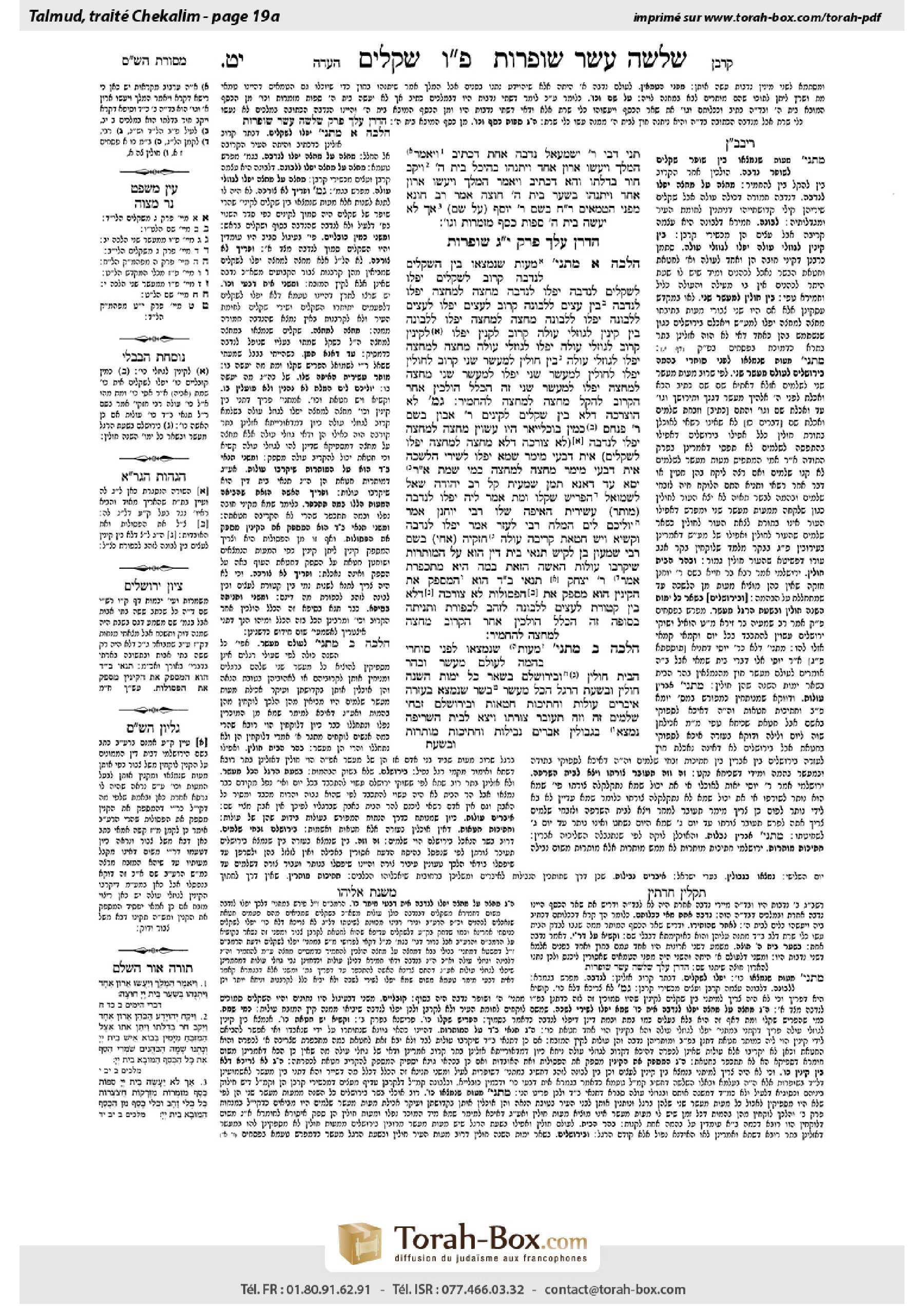
Shekalim 19a: Talmud study for Daf Yomi
Study the Talmud for Daf Yomi with scanned pages, Hebrew text, English translations from Sefaria and AI-generated French translations.
Passage selection and English or AI-generated French translation are available where the scan has annotations. Daf Study is independent of Torah-Box and Sefaria.
Browse Shekalim · שקלים · All tractatesShekalim 19a text and translations
This page of Shekalim includes the Aramaic text and an English translation, alongside the scan above.
שקלים י״ט א · Aramaic and Hebrew text
שִׁשָּׁה לִנְדָבָה. חִזְקִיָּה אָמַר. כְּנֶגֶד שִׁשָּׁה בָתֵּי אָבוֹת. בַּר פְּדָיָה אָמַר. כְּנֶגֶד שֵׁשׁ בְּהֵמוֹת. פָּר וְעֶגֶל וְשָׂעִיר אֵיִל וּגְדִי וּטְלֵה. שְׁמוּאֵל אָמַר. כְּנֶגֶד שֵׁשׁ קָרְבָּנוֹת. קִינֵּי זָבִים קִינֵּי זָבוֹת קִינֵּי יּוֹלְדוֹת חַטָּאוֹת וָאֲשָּׁמוֹת הַמְּנָחוֹת וָעֲשִׂירִית הָאֵיפָה. אָמַר רִבִּי יוֹחָנָן. עַל יְדֵי שֶׁהַנְּדָבָה מְרוּבָּה רִיבוּ לָהּ שׁוֹפָרוֹת הַרְבֶּה. [שֶׁנֶּאֱמַר] וּכְכַלּוֹתָם הֵבִיאוּ לִפְנֵי הַמֶּלֶךְ וִיהוֹיָדָע וגו׳. רִבִּי שְׁמוּאֵל בַּר נַחְמָן בְּשֵׁם רִבִּי יוֹנָתָן [אָמַר]. שְׁתֵּי נְדָבוֹת [עָשָׂה]. תַּנֵּי רִבִּי יִשְׁמָעֵאל. נְדָבָה אַחַת. וְהָא כְתִיב וַיֹּאמֶר הַמֶּלֶךְ וַיַּעֲשׂוּ אֲרוֹן אֶחָד וַיִּתְּנֻהוּ בְּשַׁעַר בֵּית יְי חוּצָה. אָמַר רַב חונָה. מִפְּנֵי הָטְּמֵאִים. רִבִּי חוּנָה בְשֵׁם רַב יוֹסֵף. עַל שֵׁם אַךְ לֹא יֵעָשֶׂה בֵּית יְי סִפּוֹת כֶּסֶף. מִין סִפּוֹת כֶּסֶף לֹא יֵעָשֶׂה בֵית יי.
משנה: מָעוֹת שֶׁנִּמְצְאוּ בֵּין שְׁקָלִים לִנְדָבָה קָרוֹב לַשְּׁקָלִים יִפָּלוּ לַשְּׁקָלִים לַנְּדָבָה יִפְּלוּ לַנְּדָבָה מֶחֱצָה לְמֶחֱצָה יִפְּלוּ לַנְּדָבָה. בֵּין עֵצִים לִלְבוֹנָה קָרוֹב לָעֵצִים יִפְּלוּ לָעֵצִים לַלְּבוֹנָה יִפְּלוּ לַלְּבוֹנָה מֶחֱצָה לְמֶחֱצָה יִפְּלוּ לַלְּבוֹנָה. בֵּין קִנִּים לְגוֹזְלֵי עוֹלָה קָרוֹב לַקִּנִּים יִפְּלוּ לַקִּינִּים לְגוֹזְלֵי עוֹלָה יִפְּלוּ לְגוֹזְלֵי עוֹלָה. מֶחֱצָה לְמֶחֱצָה יִפְּלוּ לְגוֹזְלֵי עוֹלָה. בֵּין חוּלִּין לְמַעֲשֵׂר שֵׁנִי קָרוֹב לַחוּלִּין יִפְּלוּ לַחוּלִּין לְמַעֲשֵׂר שֵׁנִי יִפְּלוּ לְמַעֲשֵׂר שֵׁנִי מֶחֱצָה לְמֶחֱצָה יִפְּלוּ לְמָעֲשֵׂר שֵׁנִי. זֶה הַכְּלָל הוֹלְכִין אַחַר הַקָּרוֹב מֶחֱצָה לְמֶחֱצָה לְהַחְמִיר:
הלכה: מָעוֹת שֶׁנִּמְצְאוּ בֵּין שְׁקָלִים לִנְדָבָה כול׳. לָא צוֹרְכָה דְלָא בֵין שְׁקָלִים לִקִינִּים. רִבִּי אָבוּן בְשֵׁם רִבִּי פִינְחָס. כְּמִין כּוֹכְלִיַים הָיוּ עֲשׂוּיִין. לָא צוֹרְכָה דְלָא מֶחֱצָה לְמֶחֱצָה יִפְּלוּ לִשְׁקָלִים. אִית דְּבָעֵי מֵימַר. שֶׁמָּא יִפְּלוּ לְשִׂיֵּרֵי הַלִּשְׁכָּה. אִית דְּבָעֵי מֵימַר. מֶחֱצָה לְמֶחֱצָה כְּמִי שֶׁמֵּת. אָמַר רִבִּי יָסָא. עַד דַּאֲנָא תַמָּן שְׁמָעִית קָל רַב יְהוּדָה שְׁאַל לִשְׁמוּאֵל. הִפְרִישׁ שִׁקְלוֹ וָמֵת. אֲמַר לֵיהּ. יִפְּלוּ לִנְדָבָה. עֲשִׂירִית הָאֵיפָה שֶׁלּוֹ. רִבִּי יוֹחָנָן אָמַר. יוֹלִיכֵם לְיַם הַמֶּלַח. רִבִּי לָעְזָר אָמַר. יִפְּלוּ לִנְדָבָה.
וְקַשְׁיָא. וְיֵשׁ חַטָּאת קְרֵיבָה עוֹלָה. רִבִּי חִזְקִיָּה אֲחִי בְשֵׁם רִבִּי שִׁמְעוֹן בֶּן לָקִישׁ. תְּנַיי בֵית דִּין הוּא עַל הַמּוֹתָרוֹת שֶׁיִּקְרְבוּ עוֹלוֹת. הָאִשָּׁה הַזֹּאת בַּמֶּה הִיא מִתְכַּפֶּרֶת. אָמַר רִבִּי יִצְחָק. תְּנַיי בֵית דִּין הוּא. הַמְסַפֵּק אֶת הַקִּינִּים הוּא מְסַפְּק אֶת הַפְּסוּלוֹת. לָא צוֹרְכָא דְלָא בֵין קְטוֹרֶת לָעֵצִים לִלְבוֹנָה לְזָהָב לַכַּפּוֹרֶת. וְתַנִּיתָהּ בְּסוֹפָהּ. הוֹלְכִין אַחַר הַקָּרוֹב מֶחֱצָה לְמֶחֱצָה לְהַחְמִיר.
משנה: מָעוֹת שֶׁנִּמְצְאוּ לִפְנֵי סוֹחֲרֵי בְּהֵמָה לְעוֹלָם מַעֲשֵׂר. וּבְהַר הַבַּיִת חוּלִּין. וּבִירוּשָׁלִַם בִשְׁאָר יְמוֹת הַשָּׁנָה חוּלִּין וּבִשְׁעַת הָרֶגֶל הַכֹּל מַעֲשֵׂר. בָּשָׂר שֶׁנִּמְצָא בָּעֲזָרָה אֵיבָרִים עוֹלוֹת. וַחֲתִיכוֹת חַטָּאוֹת. וּבִירוּשָׁלַיִם זִבְחֵי שְׁלָמִים. זֶה וָזֶה תְּעוּבַּר צוּרָתוֹ וְיֵצֵא לְבֵית הַשְּרֵפָה. נִמְצָא בַּגְּבוּלִין אֵיבָרִים נְבֵילוֹת וַחֲתִיכוֹת מוּתָּרוֹת. וּבִשְׁעַת הָרֶגֶל שֶׁהַבָּשָׂר מְרוּבֶּה אַף אֵיבָרִין מוּתָּרוֹת:
Shekalim 19a · English translation
“Six for voluntary gifts.” Ḥizqiah said, corresponding to the six clans. Bar Pedaiah said, corresponding to seven animals: bull, and calf, and he-goat, ram, and lamb, and kid goat. Samuel said, corresponding to six sacrifices: the nests of the sufferer from gonorrhea, the nests of the sufferer from flux, the nests of the new mother, purification sacrifices, and reparation sacrifices, flour offerings, and the Tenth of an Ephah, 6) of a healed sufferer from skin disease.. Rebbi Joḥanan said, because the gifts were many, they added many horns for it. [As it is said], when they were finished they brought before the king and Jehoyada24:14. The problem is that the remaining part of the verse, quoted in full in ג nd B, notes that the excess money donated for the renovation of the Temple under King Joash was used to make silver and gold vessels for the Temple, while the corresponding verse in 2K. 12:14 declares the opposite. etc. Rebbi Samuel ben Naḥman in the name of Rebbi Jonathan [said], two voluntary gifts. Rebbi Ismael stated, one gift. But is it not written24:8, while in 2K. 12:10 it is reported that the chest was deposited in the priests’ courtyard, to the right (East) of the altar., the king commanded and they made a chest and put it at the outside of the gate of the Eternal’s House. Rav Ḥuna said, because of those impure. Rebbi Ḥuna in the name of Rav Joseph: Because of but silver cups would not be made in the Eternal’s House 12:14.. Things similar to silver cups would not be made in the Eternal’s House.
MISHNAH: Coins which are found between the sheqalim and the voluntary gifts, if closer to sheqalim they have to be given to sheqalim, closer to voluntary gifts to voluntary gifts; in the middle they have to be given to voluntary gifts are used for all needs of the Temple, voluntary gifts represent the more holy use.. Between wood and incense, if closer to wood they have to be given to wood, closer to incense to incense; in the middle they have to be given to incense. Between nests and young birds for elevation sacrifices, if closer to nests they have to be given to nests, closer to young birds for elevation sacrifices to young birds for elevation sacrifices; in the middle they have to be given to young birds for elevation sacrifices. Between profane money and Second Tithe, if closer to profane money they have to be given to profane money, closer to Second Tithe to Second Tithe; in the middle they have to be given to Second Tithe. This is the principle: one follows proximity; in the middle one is stringent.
HALAKHAH: “Coins which are found between the sheqalim and the voluntary gifts,” etc. It would only be necessary between sheqalim and nests, how can coins be found between sheqalim and gifts?! They were arranged like a snail is next to the last box for gifts. If they would be in a straight line then the box near to “nests” is that for “old sheqalim”, which are never used for sacrifices and therefore the coins found halfway should be given to “nests”.. Would it not be necessary that it be given to sheqalim public ones, the sanctity of sheqalim should be greater than that of “gifts”.? Some want to say, maybe they would remain with the excess of the lodge. Some want to say, in the middle it is as if he died. Rebbi Yasa said, when I still was there, I heard the voice of Rav Jehudah asking Samuel, if somebody had set his sheqel apart and died? He told him, they shall fall to the gift account. The excess of his tenth of an ephah, Rebbi Joḥanan said, one shall bring them to the Dead Sea. Rebbi Eleazar said, it shall fall to the gift account.
And it is difficult. May purification offering be brought as elevation offering? Rebbi Ḥizqiah (brother) in the name of Rebbi Simeon ben Laqish: It is a stipulation of the Court that the excesses be brought as elevation sacrifices. By what is that woman atoned for? The sentence and the next are reproduced at the end of the Chapter (7).? Rebbi Isaac said, it is a stipulation of the Court that the providers of nests also provide the disqualified ones. Would it not also be necessary between incense and wood, and frankincense, and gold for the cover? As it is stated at the end, “one follows nearness; in the middle one is stringent.”
MISHNAH: Coins found near vendors of animals always are Tithe money. On the Temple Mount, profane. In Jerusalem, during the remainder of the year they are profane, during the holidays everything is Second Tithe.
Of meat found in the Temple courtyard, limbs are elevation sacrifices and cuts purification sacrifices 1:6,12) before being brought to the altar, but purification sacrifices have to be eaten by the Cohanim in the holy precinct and for this purpose have to be cut into portions.; in Jerusalem well-being sacrifices. In either case it has to lose its shape and be taken out to be disposed of by burning.
If it was found in the countryside, limbs are carrion, cuts are permitted. On holidays, when meat is abundant, even limbs are permitted.
Text from Sefaria: The Jerusalem Talmud, edition by Heinrich W. Guggenheimer. Berlin, De Gruyter, 1999-2015 (CC BY); The Jerusalem Talmud, translation and commentary by Heinrich W. Guggenheimer. Berlin, De Gruyter, 1999-2015 (CC BY).