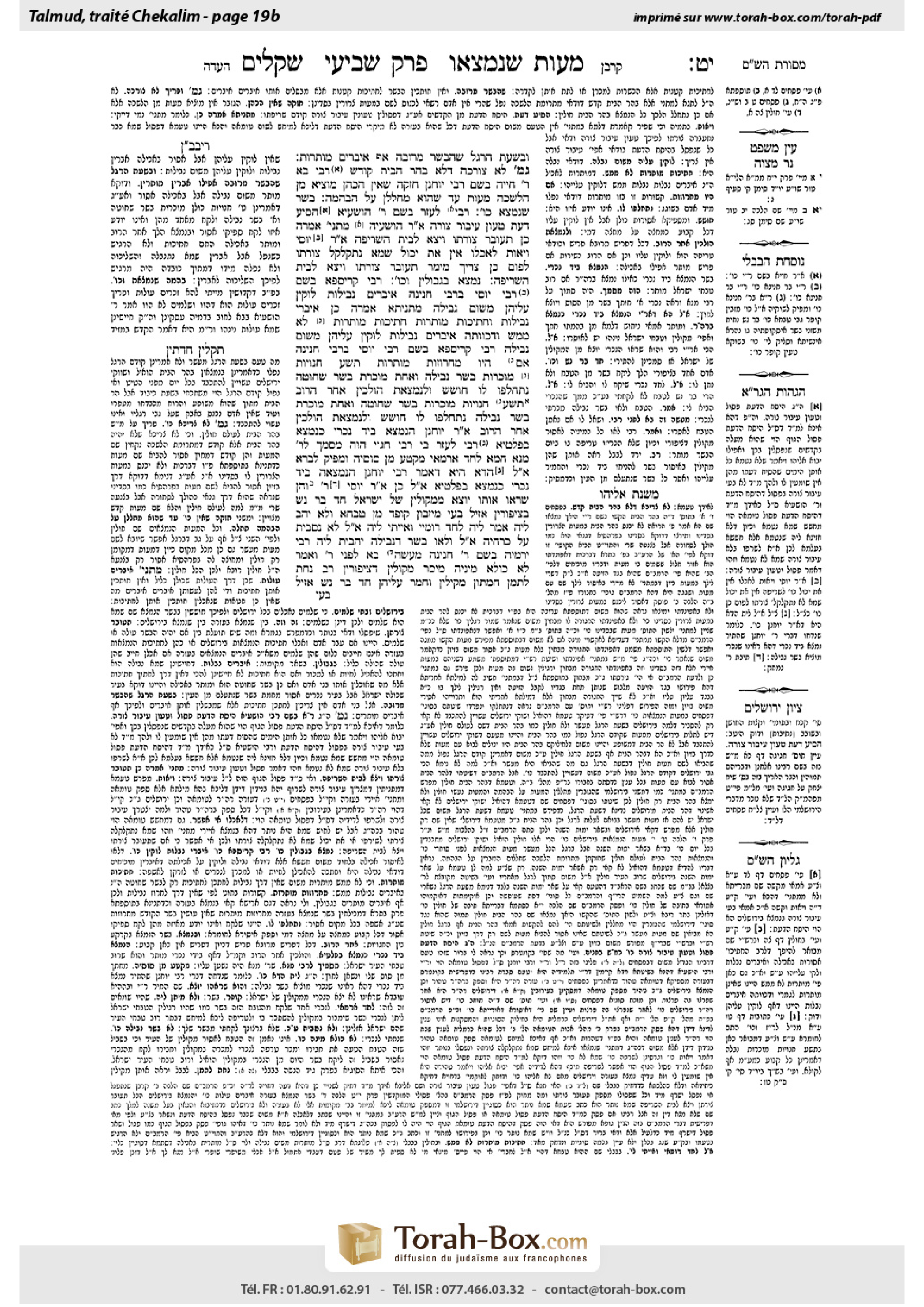
Shekalim 19b: Talmud study for Daf Yomi
Study the Talmud for Daf Yomi with scanned pages, Hebrew text, English translations from Sefaria and AI-generated French translations.
Passage selection and English or AI-generated French translation are available where the scan has annotations. Daf Study is independent of Torah-Box and Sefaria.
Browse Shekalim · שקלים · All tractatesShekalim 19b text and translations
This page of Shekalim includes the Aramaic text and an English translation, alongside the scan above.
שקלים י״ט ב · Aramaic and Hebrew text
משנה: מָעוֹת שֶׁנִּמְצְאוּ לִפְנֵי סוֹחֲרֵי בְּהֵמָה לְעוֹלָם מַעֲשֵׂר. וּבְהַר הַבַּיִת חוּלִּין. וּבִירוּשָׁלִַם בִשְׁאָר יְמוֹת הַשָּׁנָה חוּלִּין וּבִשְׁעַת הָרֶגֶל הַכֹּל מַעֲשֵׂר. בָּשָׂר שֶׁנִּמְצָא בָּעֲזָרָה אֵיבָרִים עוֹלוֹת. וַחֲתִיכוֹת חַטָּאוֹת. וּבִירוּשָׁלַיִם זִבְחֵי שְׁלָמִים. זֶה וָזֶה תְּעוּבַּר צוּרָתוֹ וְיֵצֵא לְבֵית הַשְּרֵפָה. נִמְצָא בַּגְּבוּלִין אֵיבָרִים נְבֵילוֹת וַחֲתִיכוֹת מוּתָּרוֹת. וּבִשְׁעַת הָרֶגֶל שֶׁהַבָּשָׂר מְרוּבֶּה אַף אֵיבָרִין מוּתָּרוֹת:
הלכה: לָא צוֹרְכָה דְלָא בְּהַר הַבַּיַת קוֹדֶשׁ. רִבִּי בָּא רִבִּי חִיָיה בְשֵׁם רִבִּי יוֹחָנָן. חַזָּקָה שֶׁאֵין הַכֹּהֵן מוֹצִיא מִן הִַלִּישְׁכָּה מָעוֹת עַד שֶׁהוּא מְחַלְלָן עַל הַבְּהֵמָה.
רִבִּי לָעְזָר בְשֵׁם רִבִּי הוֹשַׁעְיָה. הִסִּיעַ דַּעַת טָעוֹן צוּרָה. אָמַר רַב הוֹשַׁעְיָה. מַתְנִיתָה אָמְרָה כֵן. תְּעוּבַּר צוּרָתוֹ וְיֵצֵא לְבֵית הַשְּרֵפָה. אָמַר רִבִּי יוֹסֵי וְיֵאוּת. לְאוֹכְלוֹ אֵין אַתְּ יָכוֹל שֶׁמָּא נִתְקַלקְלָה צוּרָתוֹ. לְפוּם כֵן צָרַךְ מֵימַר. תְּעוּבַּר צוּרָתוֹ וְיֵצֵא לְבֵית הַשְּרֵפָה.
רִבִּי קְרִיסְפָּא בְשֵׁם רִבִּי יוֹסֵי בֵּרִבִּי חֲנֵיִנָה. אֵיבָרִים נְבֵילוֹת לוֹקִין עֲלֵיהֵן מִשֵּׁם נְבֵילָה. מַתְנִיתָא אָמְרָה כֵן. אֵיבָרִים נְבֵלוֹת וַחֲתִיכוֹת מוּתָּרוֹת. חֲתִיכוֹת מוּתָּרוֹת לֹא מַמָּשׁ. וְדִכְוָותָהּ אֵיבָרִים נְבֵילוֹת לוֹקִין עֲלֵיהֵן מִשֵּׁם נְבֵילָה.
רִבִּי קְרִיסְפָּא בְשֵׁם רִבִּי יוֹסֵי בֶּן חֲנִינָה. אִם הָיוּ מְחָרוֹזוֹת מוּתָּרוֹת. תַּשַׁע חֲנוּיוֹת מוֹכְרוֹת בְּשַׂר נְבֵילָה וְאַחַת מוֹכֶרֶת בְּשַׂר שְׁחוּטָה נִתְחַלְּפוּ לוֹ. חוֹשֵׁשׁ. וְלַנִּמְצֵאת הוֹלְכִין אַחַר הָרוֹב. תַּשַׁע חֲנוּיוֹת מוֹכְרוֹת בְּשַׂר שְׁחוּטָה וְאַחַת מוֹכֶרֶת בְּשַׂר נְבֵילָה נִתְחַלְּפוּ לוֹ. חוֹשֵׁשׁ. וְלַנִּמְצֵאת הוֹלְכִין אַחַר הָרוֹב.
אָמַר רִבִּי יוֹחָנָן. הַנִּמְצָא בְיַד גּוֹי כְּנִמְצָא בַפַּלַּטְיָא. רִבִּי לָעְזָר בֵּירִבִּי חַגַּיי הֲוָה מְסַמֵּךְ לְרִבִּי מָנָא. חֲמָא לְחַד אֲרָמַאי מְקַטֵּעַ מִן סוּסֵיהּ וּמַפִּיק לִבְרָא. אֲמַר לֵיהּ. הָדָא הִיא דְאָמַר רִבִּי יוֹחָנָן. הַנִּמְצָא בְיַד גּוֹי כְּנִמְצָא בַפַּלַּטְיָא. אָמַר לֵיהּ. כֵּן אָמַר רִבִּי יוֹסֵי רִבִּי. וְהֵן שֶׂרָאוּ אוֹתוֹ יוֹצֵא מִמַּקֻּילִין שֶׁל יִשְׂרָאֵל. חַד בַּר נַשׁ בְּצִיפּוֹרִין אֲזַל בָּעֵי מִיזְבוֹן קוּפָּד מִן טַבְּחָא וְלָא יְהַב לֵיהּ. אֲמַר לֵיהּ לְחַד רוֹמַיי וְאַיְיתִי לֵיהּ. אֲמַר לֵיהּ. לָא נָסְבִּית עַל כָּרְחֵיהּ. אֲמַר. וְלָאו בְּשַׂר דִּנְבֵילָה יְהָבִית לֵיהּ. רִבִּי יִרְמְיָה בְשֵׁם רִבִּי חֲנִינָה. מַעֲשֶׂה בָא לִפְנֵי רִבִּי וְאָמַר. לָא כוּלָּא מִינֵּיהּ מֵיסּוֹר מַקֻּילִין דְּצִיפּוֹרִין.
רַב נְחַת לְתַמָּן. חַמְתּוֹן מֵקִילוֹן וַחֲמַר עֲלֵיהוֹן. חַד בַּר נַשׁ אֲזַל בָּעֵי מְשִׁיגָּה אֵסְקוֹפְתֵּיהּ בְּגַו נַהֲרָא וְאִינְשִׁתָהּ וַאֲזַל לֵיהּ. חֲזַר בָּעֵי מִיסְבִינֵהּ. אֲמַר לֵיהּ רַב. אָסִוּר לָךְ. דָּנָא אֲמַר. הַהִיא שְׁטַף נַהֲרָא וְאַיְיתִי חוּרִי דִנְבֵילָה תוֹחְתּוֹי. חַד בַּר נַשׁ הֲוָה מְהַלֵּךְ בְּשׁוּקָא טָעִין קוּפָּד. אֲתַא דַיְיתָא וַחֲטַפְתֵּיהּ מִינֵיהּ וּטְלַקְתֵּיהּ. חֲזַר בָּעֵי מִיסְבִינֵהּ. אֲמַר לֵיהּ רַב. אֲסִיר לָךְ. דָּנָא אֲמַר. בָּשָׂר דִּנְבֵילָה הֲוָות טְעִינָה וּטְלַקְתֵּיהּ וְנָסְבָת הַהוּא אוֹחְרָנָא.
Shekalim 19b · English translation
MISHNAH: Coins found near vendors of animals always are Tithe money. On the Temple Mount, profane. In Jerusalem, during the remainder of the year they are profane, during the holidays everything is Second Tithe.
Of meat found in the Temple courtyard, limbs are elevation sacrifices and cuts purification sacrifices 1:6,12) before being brought to the altar, but purification sacrifices have to be eaten by the Cohanim in the holy precinct and for this purpose have to be cut into portions.; in Jerusalem well-being sacrifices. In either case it has to lose its shape and be taken out to be disposed of by burning.
If it was found in the countryside, limbs are carrion, cuts are permitted. On holidays, when meat is abundant, even limbs are permitted.
HALAKHAH: Would it not be necessarily holy on the Temple Mount9:8), how can there be a presumption that monies lost there are profane?? Rebbi Abba, Rebbi Ḥiyya in the name of Rebbi Joḥanan: There is a presumption that no Cohen will remove money from the lodge unless it is redeemed by an animal.
Rebbi Eleazar in the name of Rebbi Hoshaia: Diversion of attention requires {loss of} shape34a.. Rav Hoshaia said, the Mishnah says so, “it has to lose its shape and be taken out to be disposed of by burning.” Rebbi Yose says, this is correct. You may not eat it for maybe its shape already is lost. <you may not burn it for maybe its shape is not lost> Therefore it had to say, “it has to lose its shape and be taken out to be disposed of by burning”.
Rebbi Crispus in the name of Rebbi Yose ben Rebbi Ḥanina: One flogs for carrion limbs because of carrion31; and the Mishnah says so: “limbs are carrion, cuts are permitted.” Are cuts not really permitted? And similarly, one flogs for carrion limbs because of carrion.
Rebbi Crispus in the name of Rebbi Yose ben Rebbi Ḥanina: If they were strung they are permitted. Ten stores, nine sell carrion and one sells kosher slaughtered meat, if it was switched, he worries. For what is found, one follows the majority. Ten stores, nine sell kosher slaughtered meat and one sells carrion, if it was switched, he worries15a), “anything whose provenience is fromknown fixed sources is considered as 50–50”, and therefore one has to consider the switched package as coming from the store which sells carrion, whether this is one in ten or nine in ten.. For what is found, one follows the majority.
Rebbi Joḥanan said, what is in the hand of a Gentile is as found on a thoroughfare. Rebbi Eleazar ben Rebbi Ḥaggai was supporting Rebbi Mana. He saw an Aramean cutting from his horse and feeding his son. He said to him, that is what Rebbi Joḥanan said, what is in the hand of a Gentile is as found on a thoroughfare. He answered him, so said the great Rebbi Yose: Only if they saw him leaving a Jewish butcher shop.. A man in Sepphoris went and wanted to buy red meat from a butcher, but he did not give to him. He told a Roman, who brought him. He said to him, did I not buy against your will? He retorted, did I not give carrion to him? Rebbi Jeremiah in the name of Rebbi Ḥanina: A case came before Rebbi who said, it is not believable to forbid the butcher shop of Sepphoris.
2:9, Notes 393-395. The Genizah text here follows the arrangement of Avodah zarah. Rav returned there and saw them taking things lightly and was restrictive with them. A man went to wash a piece of meat in the river. He forgot it and left. Then he went and wanted to sell it. Rav told him, it is forbidden to you, for I am saying the other one was carried away by the river and it brought another piece of carcass meat in its place. A man was carrying meat while walking on the market. There came a vulture, seized it from his hand, and dropped it off. He came back and wanted to sell it. Rav told him, it is forbidden to you, for I am saying that it was carrying carcass meat, dropped it and took the other instead.
Text from Sefaria: The Jerusalem Talmud, edition by Heinrich W. Guggenheimer. Berlin, De Gruyter, 1999-2015 (CC BY); The Jerusalem Talmud, translation and commentary by Heinrich W. Guggenheimer. Berlin, De Gruyter, 1999-2015 (CC BY).