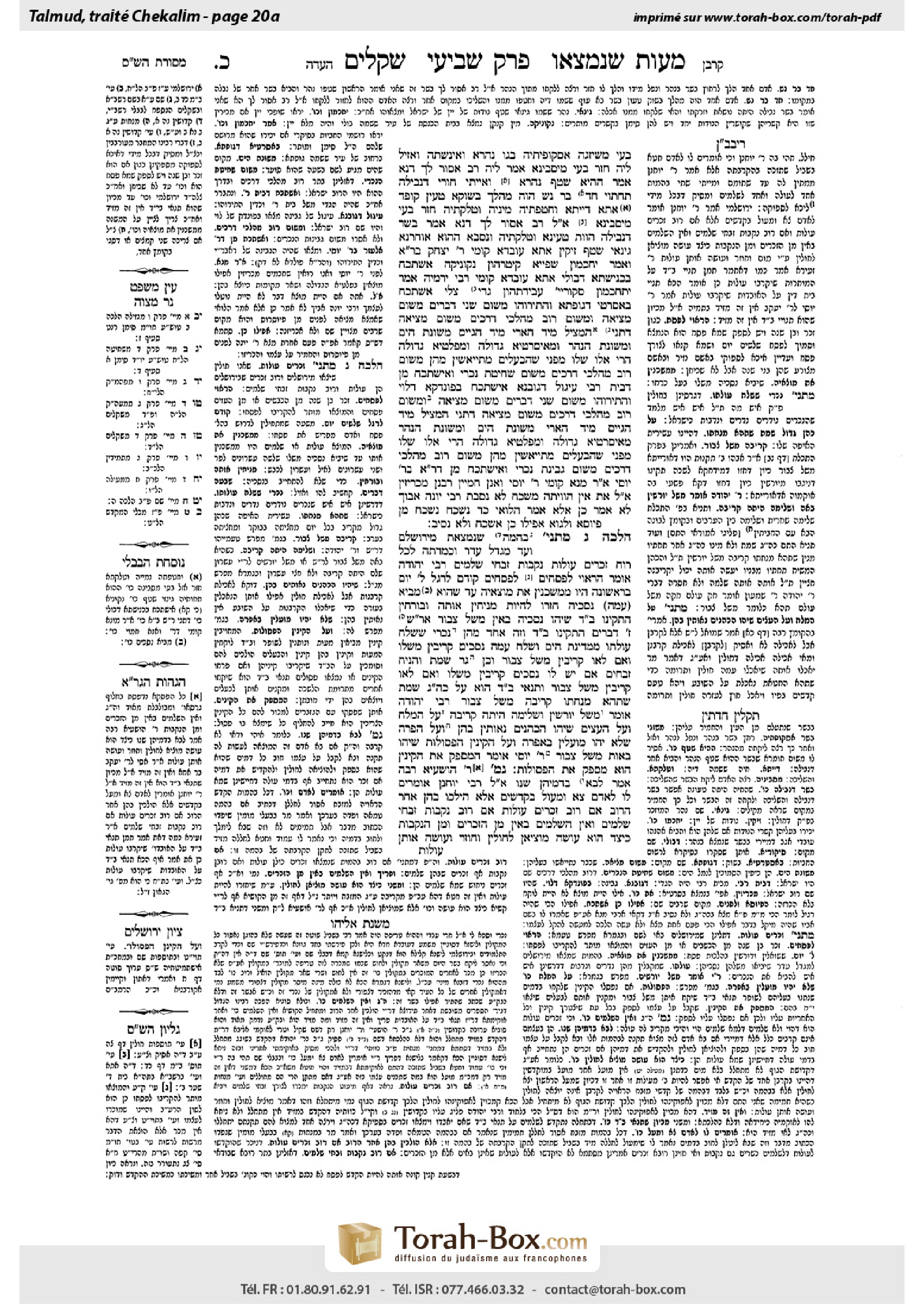
Shekalim 20a: Talmud study for Daf Yomi
Study the Talmud for Daf Yomi with scanned pages, Hebrew text, English translations from Sefaria and AI-generated French translations.
Passage selection and English or AI-generated French translation are available where the scan has annotations. Daf Study is independent of Torah-Box and Sefaria.
Browse Shekalim · שקלים · All tractatesShekalim 20a text and translations
This page of Shekalim includes the Aramaic text and an English translation, alongside the scan above.
שקלים כ׳ א · Aramaic and Hebrew text
רַב נְחַת לְתַמָּן. חַמְתּוֹן מֵקִילוֹן וַחֲמַר עֲלֵיהוֹן. חַד בַּר נַשׁ אֲזַל בָּעֵי מְשִׁיגָּה אֵסְקוֹפְתֵּיהּ בְּגַו נַהֲרָא וְאִינְשִׁתָהּ וַאֲזַל לֵיהּ. חֲזַר בָּעֵי מִיסְבִינֵהּ. אֲמַר לֵיהּ רַב. אָסִוּר לָךְ. דָּנָא אֲמַר. הַהִיא שְׁטַף נַהֲרָא וְאַיְיתִי חוּרִי דִנְבֵילָה תוֹחְתּוֹי. חַד בַּר נַשׁ הֲוָה מְהַלֵּךְ בְּשׁוּקָא טָעִין קוּפָּד. אֲתַא דַיְיתָא וַחֲטַפְתֵּיהּ מִינֵיהּ וּטְלַקְתֵּיהּ. חֲזַר בָּעֵי מִיסְבִינֵהּ. אֲמַר לֵיהּ רַב. אֲסִיר לָךְ. דָּנָא אֲמַר. בָּשָׂר דִּנְבֵילָה הֲוָות טְעִינָה וּטְלַקְתֵּיהּ וְנָסְבָת הַהוּא אוֹחְרָנָא.
גִּינַאי שְׁטַף זִיקִין. אֲתַא עוֹבְדָא קוֹמֵי רִבִּי יִצְחָק בַּר אֶלְעָזָר וְאָמַר. יַחְכְּמוֹן שְׁפַיָיא קִיטְרֵיהוֹן.
נוּקְנִיקָה אִישְׁתַּכַּח בִּכְנִישְׁתָּא דְבוּלֵי. אֲתַא עוֹבְדָא קוֹמֵי רִבִּי יִרְמְיָה. אָמַר. יַחְכְּמוֹן סִיקִיָירִיָּא עֲבִידְתֵּהוֹן.
גְּדִי צְלִי אִישְׁתַּכַּח בְּאִיסְרָטָא דְגוּפְתָּא. וְהִתִּירוּהוּ מִשֵּׁם שְׁנֵי דְבָרִים. מִשֵּׁם מְצִיאָה וּמִשֵּׁם רוֹב מְהַלְּכֵי דְרָכִים. מִשֵּׁם מְצִיאָה. דְּתַנֵּי. הַמַּצִּיל מִיַּד הָאֲרִי מִיַּד הַגַּיִיס מִשּׁוּנַת הַיָּם וּמִשּׁוּנַת הַנָּהָר וּמֵאיסְרַטְיָא גְדוֹלָה וּמִפַּלַּטְיָא גְדוֹלָה הֲרֵי אֵילּוּ שֶׁלּוֹ. מִפְּנֵי שֶׁהַבְּעָלִים מִתְיַיאֲשִׁין מֵהֶן. מִשֵּׁם רוֹב מְהַלְּכֵי דְרָכִים. מִשֵׁם שְׁחִיטַת הַגּוֹי. וְאִישְּׁתַּכַּח מִן דְּבֵית רִבִּי.
עִיגוּל דְּגוּבְנָא אִישְׁתַּכַּח בְּפוּנְדָּקָא דְּלֵוִי. וְהִתִּירוּהוּ מִשֵּׁם שְׁנֵי דְבָרִים. מִשֵּׁם מְצִיאָה וּמִשֵּׁם רוֹב מְהַלְּכֵי דְרָכִים. מִשֵּׁם מְצִיאָה. דְּתַנֵּי. הַמַּצִּיל מִיַּד הַגַּיִיס מִיַּד הָאֲרִי מִשּׁוּנַת הַיָּם מִשּׁוּנַת הַנָּהָר מֵאִיסְטְרַטְיָה גְדוֹלָה וּמִפַּלַּטְיָא גְדוֹלָה הֲרֵי אֵילּוּ שֶׁלּוֹ. מִפְּנֵי שֶׁהַבְּעָלִים מִתְיַיאֲשִׁין מֵהֶן. מִשּׁוּם רוֹב מְהַלְּכֵי דְרָכִים. מִשּׁוּם גְּבִינַת גּוֹי. וְאִישְּׁתַּכַּח מִן דְּרִבִּי אֶלְעָזָר בֵּירִבִּי יוֹסֵי.
אָמַר רִבִּי מָנָא קוֹמֵי רִבִּי יוֹסֵי. וַאֲנָן חָמְיָין רַבָּנִן מַכְרִזִין. אֲמַר לֵיהּ. [אִין אַתְּ] הֲוִויתָה מַשְׁכַּח לָא נָסְבָת. רִבִּי יוֹנָה אָבוּךְ לֹֹא אָמַר כֵּן אֶלָּא אָמַר. הַלְּוַאי כַּד נַשְׁכַּח נַשְׁכַּח מִן פִיּוֹסְרוֹס וּלְגֵיו. אֲפִילוּ כֵן אַשְׁכַּח וְלָא נְסַב.
משנה: בְּהֵמָה שֶׁנִּמְצֵאת מִירוּשָׁלַיִם וְעַד מִגְדַּל עֵדֶר וּכְמִידָּתָהּ לְכָל רוּחַ זְכָרִים עוֹלוֹת. נְקֵבוֹת זִבְחֵי שְׁלָמִים. רִבִּי יְהוּדָה אוֹמֵר הָרָאוּי לִפְסָחִים לִפְסָחִים קוֹדֶם לָרֶגֶל שְׁלֹשִׁים יוֹם: בָּרִאשׁוֹנָה הָיוּ מְמַשְׁכְּנִין אֶת מוֹצְאֶיהָ עַד שֶׁהוּא מֵבִיא נְסָכֶיהָ. חָזְרוּ לִהְיוֹת מַנִּיחִין אוֹתָהּ וּבוֹרְחִין. הִתְקִינוּ בֵּית דִּין שֶׁיְּהוּ נְסָכֶיהָ בָּאִין מִשֶּׁל צִבּוּר: אָמַר רִבִּי שִׁמְעוֹן שִׁבְעָה דְּבָרִים הִתְקִינוּ בֵּית דִּין וְזֶה אֶחָד מֵהֶן. גּוֹי שֶׁשִּׁילַּח עוֹלָתוֹ מִמְּדִינַת הַיָּם וְשִׁילַּח עִמָּהּ נְסָכֶיהָ קְרֵיבִין מִשֶׁלּוֹ וְאִם לָאו קְרֵיבִין משֶּׁל צִיבּוּר. וְכֵן גֵּר שֶׁמֵּת וְהִנִּיחַ זְבָחִים אִם יֵשׁ לוֹ נְסָכִים קְרֵיבִין מִשֶּׁלוֹ וְאִם לָאו קְרֵיבִין מִשֶּׁל צִבּוּר. תְּנַיי בֵּית דִּין הוּא עַל כֹּהֵן גָּדוֹל שֶׁמֵּת שֶׁתְּהֵא מִנְחָתוֹ קְרֵיבָה מִשֶּׁל צִבּוּר. רִבִּי יְהוּדָה אוֹמֵר מִשֶּׁל יוֹרְשִׁין. וּשְׁלֵימָה הָיְתָה קְרֵבָה: עַל הַמֶּלַח וְעַל הָעֵצִים שֶׁיְּהוּ הַכֹּהֲנִים נֵיאוֹתִין בָּהֶן וְעַל הַפָּרָה שֶׁלֹּא יְהוּ מוֹעֲלִין בְּאֶפְרָהּ. עַל הַקִּינִּין הַפְּסוּלוֹת שֶׁיְּהוּ בָאוֹת מִשֶּׁל צִיבּוּר רִבִּי יוֹסֵי אוֹמֵר הַמְסַפֵּק אֶת הַקִּינִּין הוא מְסַפֵּק אֶת הַפְּסוּלוֹת:
הלכה: רִבִּי הוֹשַׁעְיָה רַבָּא אָמַר. רבא בִּדְמֵיהֶן שָׁנוּ. אָמַר לֵיהּ רִבִּי יוֹחָנָן. אוֹמְרִים לוֹ לְאָדָם. צֵא וּמְעוֹל בַקֳּדָשִׁים. אֶלָּא הִילְּכוּ בָהֶן אַחַר הָרוֹב. אִם רוֹב זְכָרִים. עוֹלוֹת. אִם רוֹב נְקֵיבוֹת. זִבְחֵי שְׁלָמִים. וְאֵין הַשְּׁלָמִים בָּאִין מִן הַזְּכָרִים וּמִן הַנְּקֵיבוֹת. כֵּיצַד הוּא עוֹשֶׂה. מוֹצִיאָן לַחוּלִין וְחוֹזֵר וְעוֹשֶׂה אוֹתַן עוֹלוֹת. אָמַר רִבִּי זְעוּרָה. כְּמַה דְאַתְּ אָמַר תַּמָּן. תְּנַיי בֵית דִּין הוּא עַל הַמּוֹתָרוֹת שֶׁיִּקָּרְבוּ עוֹלוֹת. כֵּן אַתְּ אָמַר אוֹף הָכָא. תְּנַיי בֵית דִּין הוּא עַל הָאוֹבְדוֹת שֶׁיִּקָּרְבוּ עוֹלוֹת. אָמַר רִבִּי יוֹסֵה לְרִבִּי יַעֲקֹב בַּר אָחָא. אֵין זֶה מֵזִיד. אֲמַר לֵיהּ. מִכֵּיוָן שֶׁהוּא תְּנַיי בֵית דִּין אֵין זֶה מֵזִיד.
Shekalim 20a · English translation
2:9, Notes 393-395. The Genizah text here follows the arrangement of Avodah zarah. Rav returned there and saw them taking things lightly and was restrictive with them. A man went to wash a piece of meat in the river. He forgot it and left. Then he went and wanted to sell it. Rav told him, it is forbidden to you, for I am saying the other one was carried away by the river and it brought another piece of carcass meat in its place. A man was carrying meat while walking on the market. There came a vulture, seized it from his hand, and dropped it off. He came back and wanted to sell it. Rav told him, it is forbidden to you, for I am saying that it was carrying carcass meat, dropped it and took the other instead.
Ginai1:3 (Note 144), Babli Ḥulin 7a. Since both known authorities called R. Isaac ben Eleazar were Galilean, the river must be a Galilean brook. The statement made here is that even though wineskins may have been used for non-kosher wine, if they were swept away by a brook but then recovered, identification confirms not only ownership but also possibility of use for kosher wine. swept away wineskins. The case came before Rebbi Isaac ben Eleazar who said, may the vintners recognize their knots.
A sausage was found in the meeting room of the town council. The case came before Rebbi Jeremiah who said, may the butchers recognize their handiwork.
A roast kid goat was found in the main street of Gufta. They permitted it because of two things, as a find, and because of the majority of passers-by. As a find, as it was stated: If one saves from before a lion, from before an army, from a surge of the sea, or the surge of a river, from a wide road, or a wide plaza, it belongs to him, since the owners give up on them. Because of the majority of passers-by, because of a Gentile’s slaughter. It turned out that it was from the House of Rebbi.
A wheel of cheese was found in the hostelry of Levi. They permitted it because of two things, as a find, and because of the majority of passers-by. As a find, as it was stated: If one saves from before a lion, from before an army, from a surge of the sea, or the surge of a river, from a wide road, or a wide plaza, it belongs to him, since the owners give up on them. Because of the majority of passers-by, because of Gentile’s cheese. It turned out that it was from Rebbi Eleazar ben Rebbi Yose.
Rebbi Mana said before Rebbi Yose, but do we not see that the rabbis publicize? He told him, if you had been there, you would not have taken it. Your father, Rebbi Jonah, did not say so, but he said, if only I would find it inside from the circular road Chaptrer 8, Note 102; the access road to and from a town along a long-distance road. “Inside” is the major road in the town, where many people are passing by at all times.. Even so, he found and did not take.
MISHNAH: If it was found in the countryside, limbs are carrion, cuts are permitted. On holidays, when meat is abundant, even limbs are permitted.
Rebbi Simeon said, the Court stipulated seven things, and this tax. was one of them: If a Gentile sent his elevation offering from overseas also sent its libations, they are brought from his property; otherwise they are brought from public money. Similarly, if a proselyte died and the estate includes well-being offerings; if he also has flour offerings they are brought from his property; otherwise they are brought from public money. It is a stipulation of the Court that the flour offering of a deceased High Priest be brought from public money; Rebbi Jehudah says, from his heirs, and it was brought whole6:13); the offering in the interim is brought whole according to everybody..
About salt and wood that the Cohanim may use them to cook the meat and bake maṣsot., and about the Cow that one does not commit larceny with its ashes money, the ashes are no sancta.. And about disqualified nests after sundown. Since her identity is unknown, she cannot be asked to pay a second time; therefore her nest has to be paid by the public. R. Yose disagrees and holds that the contract with the supplier of birds stipulates that the birds supplied must be qualified. Therefore disqualified birds have to be replaced by the supplier at no cost to the Temple. that they be charged to the public; Rebbi Yose says, he who provides the nests provides the disqualified ones.
HALAKHAH: 2:8 (Notes 202–210) of which, however, it is not a direct copy. The elder Rebbi Hoshaia said (more)<to his son>` and making sense. In the translation, the texts in parentheses should be disregarded. this was taught for their monetary value55a.. Rebbi Joḥanan said to him, does one say to a person, go and commit larceny with sacrifices? But they followed the majority of cases: If most are male, they are elevation offerings, if most are female, well-being offerings. But do not well-being offerings come from males and females? What does he do? He redeems them as profane and then turns them into elevation offerings55b, R. Joḥanan holds that the redemption of unblemished animals is never possible. He requires that the animal be put out to graze until it develops a blemish; then it can be redeemed and the proceeds used for another sacrifice. In any case, the answer is unsatisfactory. Since the Mishnah states that people were refraining from picking up stray animals because they did not want to pay for its flour offerings, they certainly do not want to take upon themselves the much greater expense of redemption.. Rebbi Ze`ira said, it is a stipulation by the court that all redundant animals should be brought as elevation offerings, so it is a stipulation by the court that lost animals should be brought as elevation offerings. Rebbi Yose said to Rebbi Jacob bar Aḥa, is that not intentional misuse? He said to him, since it is a stipulation by the court, it is not intentional misuse.
Text from Sefaria: The Jerusalem Talmud, edition by Heinrich W. Guggenheimer. Berlin, De Gruyter, 1999-2015 (CC BY); The Jerusalem Talmud, translation and commentary by Heinrich W. Guggenheimer. Berlin, De Gruyter, 1999-2015 (CC BY).