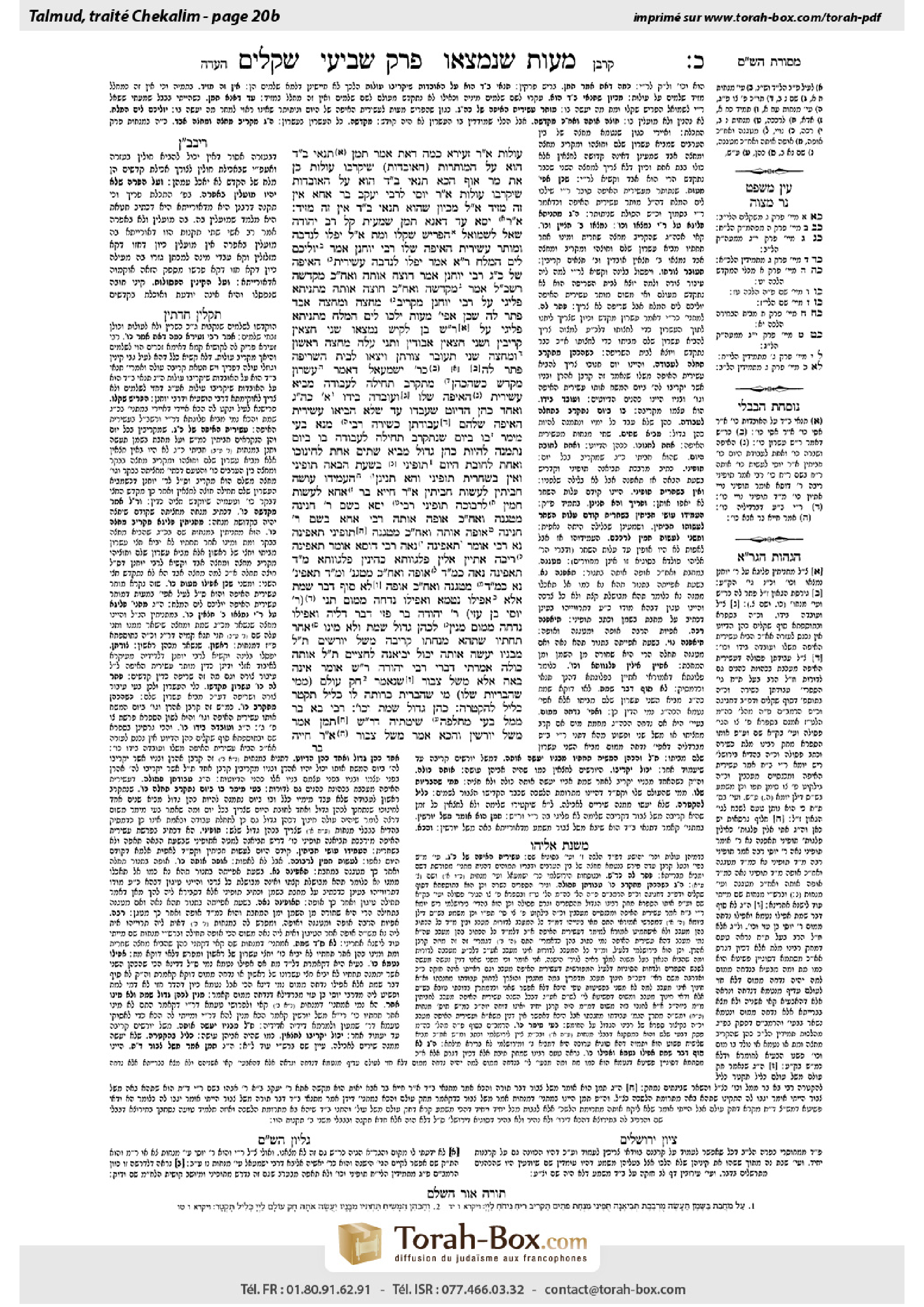
Shekalim 20b: Talmud study for Daf Yomi
Study the Talmud for Daf Yomi with scanned pages, Hebrew text, English translations from Sefaria and AI-generated French translations.
Passage selection and English or AI-generated French translation are available where the scan has annotations. Daf Study is independent of Torah-Box and Sefaria.
Browse Shekalim · שקלים · All tractatesShekalim 20b text and translations
This page of Shekalim includes the Aramaic text and an English translation, alongside the scan above.
שקלים כ׳ ב · Aramaic and Hebrew text
הלכה: רִבִּי הוֹשַׁעְיָה רַבָּא אָמַר. רבא בִּדְמֵיהֶן שָׁנוּ. אָמַר לֵיהּ רִבִּי יוֹחָנָן. אוֹמְרִים לוֹ לְאָדָם. צֵא וּמְעוֹל בַקֳּדָשִׁים. אֶלָּא הִילְּכוּ בָהֶן אַחַר הָרוֹב. אִם רוֹב זְכָרִים. עוֹלוֹת. אִם רוֹב נְקֵיבוֹת. זִבְחֵי שְׁלָמִים. וְאֵין הַשְּׁלָמִים בָּאִין מִן הַזְּכָרִים וּמִן הַנְּקֵיבוֹת. כֵּיצַד הוּא עוֹשֶׂה. מוֹצִיאָן לַחוּלִין וְחוֹזֵר וְעוֹשֶׂה אוֹתַן עוֹלוֹת. אָמַר רִבִּי זְעוּרָה. כְּמַה דְאַתְּ אָמַר תַּמָּן. תְּנַיי בֵית דִּין הוּא עַל הַמּוֹתָרוֹת שֶׁיִּקָּרְבוּ עוֹלוֹת. כֵּן אַתְּ אָמַר אוֹף הָכָא. תְּנַיי בֵית דִּין הוּא עַל הָאוֹבְדוֹת שֶׁיִּקָּרְבוּ עוֹלוֹת. אָמַר רִבִּי יוֹסֵה לְרִבִּי יַעֲקֹב בַּר אָחָא. אֵין זֶה מֵזִיד. אֲמַר לֵיהּ. מִכֵּיוָן שֶׁהוּא תְּנַיי בֵית דִּין אֵין זֶה מֵזִיד.
אָמַר רִבִּי יָסָא. עַד דַּאֲנָא תַמָּן שְׁמָעִית קָל רַב יְהוּדָה שְׁאַל שְׁמוּאֵל. הִפְרִישׁ שִׁקְלוֹ [וָמֵת]. אֲמַר לֵיהּ. יִפְּלוּ לִנְדָבָה. מוֹתַר עֲשִׂירִית הָאֵיפָה שֶׁלּוֹ. רִבִּי יוֹחָנָן אָמַר. יוֹלִיכֵם לְיַם הַמֶּלַח. רִבִּי אֶלְעָזָר אָמַר. יִפְּלוּ לִנְדָבָה.
עֲשִׂירִית הָאֵיפָה שֶׁלְכֹּהֵן גָּדוֹל. [רִבִּי יוֹחָנָן אוֹמֵר.] חוֹצֶה אוֹתָהּ וְאַחַרְכָּךְ מְקַדְּשָׁהּ. רִבִּי שִׁמְעוֹן בֶּן לָקִישׁ אָמַר. מְקַדְּשָׁהּ וְאַחַר כָּךְ חוֹצֶה אוֹתָהּ. מַתְנִיתא פְלִיגָא עַל רִבִּי יוֹחָנָן. מַקְרִיב מֶחֱצָה וּמֶחֱצָה אָבֵד. פָּתַר לָהּ. שֶׁכֵּן אֲפִילוּ מָעוֹת יֵלְכוּ לְיַם הַמֶּלַח. מַתְנִיתָא פְלִיגָא עַל רִבִּי שִׁמְעוֹן בֶּן לָקִישׁ. נִמְצְאוּ שְׁנֵי חֲצָיִין קְרֵיבִין וּשְׁנֵי חֲצָיִין אֲבֵידִין. וְתַנֵּי עֲלָהּ. מֶחֱצָה זֶה רִאשׁוֹן מֶחֱצָה שֵׁינִי תְּעוּבַּר צוּרָתוֹ וְיֵצֵא לְבֵית הַשְּׂרֵיפַה. פָּתַר לָהּ כְּרִבִּי יִשְׁמָעֵאל. דְּרִבִּי יִשְׁמָעֵאל אָמַר. עִשָּׁרוֹן מְקַדֵּשׁ. כְּשֶׁהַכֹּהֵן מִתְקָּרֵב תְּחִילָּה לָעֲבוֹדָה מֵבִיא עֲשִׁירִית שֶׁלּוֹ וְעוֹבְדָהּ בְיָדוֹ. אֶחָד כֹּהֵן גָּדוֹל וְאָחָד כֹּהֵן הֵדְיוֹט שֶׁעָבְדוּ עַד שֶׁלֹּא הֵבִיאוּ עֲשִׂירִית הָאֵיפָה שֶׁלָּהֶם עֲבוֹדָתָם כְּשֵׁירָה. רִבִּי מָנָא בָעֵי מֵימַר. בּוֹ בַיּוֹם נִתְקָרֵב כַּתְּחִילָּה לָעֲבוֹדָה. בּוֹ בַיּוֹם נִתְמַנֶּה לִהְיוֹת כֹּהֵן גָּדוֹל. מֵבִיא שְׁתַּיִם. אַחַת לְחִינּוּכוֹ וְאָחַת לְחוֹבַת הַיּוֹם.
תּוּפִינֵי. בִּשְׁעַת הֲבָאָה תוּפִינֵי וְאֵין בַּשַּׁחֲרִית תּוּפִינֵי. וְהָא תַנִּינָן. הֶעֱמִידוּ עוֹשֵׂה חֲבִיתִּין לַעֲשׂוֹת חֲבִיתִּן. אָמַר רִבִּי חִיָיה בַּר אָדָא. לַעֲשׂוֹת חַמִּין לְרַכְּכָם. תּוּפִינֵי. רִבִּי יָסָא בְשֵׁם רִבִּי חֲנִינָה. מְטַגְּנָהּ וְאַחַר כָּךְ אוֹפֶה אוֹתָהּ. רִבִּי אָחָא בְשֵׁם רִבִּי חֲנִינָה. אוֹפֶה אוֹתָהּ וְאַחַר כָּךְ מְטַגְּנָהּ. תּוּפִינֵי. תּוּאֲפִינָה נָא. רִבִּי אָמַר. תּוֹפְנָהּ רַכָּה. רִבִּי דוֹסָא אָמַר. תּוֹפְנָהּ נוֹיי. אַתְיָין אֵילֵּין פְּלֻגְוָותָה כְּהִינֵּין פְּלֻגְוָותָה. מָאן דְּאָמַר. תּוֹפְנָהּ נוֹי. כְּמָאן דְּאָמַר. מְטַגְּנָהּ וְאַחַר כָּךְ אוֹפֶה. מָאן דְּאָמַר. תּוֹפְנָהּ רַכָּה. כְּמָאן דְּאָמַר. אוֹפֶה אוֹתָהּ וְאַחַר כָּךְ מְטַגְּנָהּ.
לֹא סוֹף דָּבָר שֶׁמֵּת אֶלָּא אֲפִילוּ נִיטְמָא. וַאֲפִילוּ נִדְחֶה מִמּוּם. תַּנָּה רִבִּי יוּדָה בַּר פָּזִי דְּבַר דָּלָיָה. וַאֲפִילוּ נִדְחֶה מִמּוּם. מְנַיִין לְכֹהֵן גָּדוֹל שֶׁמֵּת וְלֹא מִינוּ כֹהֵן אַחֵר תַּחְתָּיו תְּהֵא מִנְחָתוֹ קְרֵיבָה מִשֶּׁלְיוֹרְשִׁין. תַּלְמוּד לוֹמַר מִבָּנָיו יַעֲשֶׂה. יָכוֹל יְבִיאֶנָּהּ לַחַצָּיִים. תַּלְמוּד לוֹמַר אוֹתָהּ. כּוּלָּהּ אָמַרְתִּי דִּבְרֵי רִבִּי יוּדָה. רִבִּי שִׁמְעוֹן אוֹמֵר. אֵינָהּ בָאָה אֶלָּא מִשֶּׁלְצִיבּוּר. שֶׁנֶּאֱמַר חוֹק עוֹלָם. מִמִּי שֶׁהַבִּרְיוֹת שֶׁלּוֹ. כָּלִיל תָּקְטָר. כָּלִיל לְהַקְטָרָה.
רִבִּי בָּא בַּר מָמָל בָּעֵי . מִחְלְפָא שִׁיטָּתֵיהּ דְּרִבִּי שִׁמְעוֹן. תַּמָּן הוּא אָמַר. מִשֶּׁלְיוֹרְשִׁין. וְהָכָא הוּא אָמַר מִשֶּׁלְצִיבּוּר. אָמַר רִבִּי חִיָיה בַּר בָּא. וְלֹא יְאוּת הוּא מַקְשֵׁי. אֲתַא רִבִּי יַעֲקֹב בַּר אָחָא רִבִּי אַבָּהוּ בְשֵׁם רִבִּי יוֹחָנָן. דְּבַר תוֹרָה הוּא שֶׁתְּהֵא בָאָה מִן הַצִּיבּוּר. הָיִיתִי אוֹמֵר. יִגְבּוּ לָהּ. הִתְקִינוּ שֶׁתְּהֵא בָאָה מִתְּרוּמַת הַלִּשְׁכָּה.
Shekalim 20b · English translation
HALAKHAH: 2:8 (Notes 202–210) of which, however, it is not a direct copy. The elder Rebbi Hoshaia said (more)<to his son>` and making sense. In the translation, the texts in parentheses should be disregarded. this was taught for their monetary value55a.. Rebbi Joḥanan said to him, does one say to a person, go and commit larceny with sacrifices? But they followed the majority of cases: If most are male, they are elevation offerings, if most are female, well-being offerings. But do not well-being offerings come from males and females? What does he do? He redeems them as profane and then turns them into elevation offerings55b, R. Joḥanan holds that the redemption of unblemished animals is never possible. He requires that the animal be put out to graze until it develops a blemish; then it can be redeemed and the proceeds used for another sacrifice. In any case, the answer is unsatisfactory. Since the Mishnah states that people were refraining from picking up stray animals because they did not want to pay for its flour offerings, they certainly do not want to take upon themselves the much greater expense of redemption.. Rebbi Ze`ira said, it is a stipulation by the court that all redundant animals should be brought as elevation offerings, so it is a stipulation by the court that lost animals should be brought as elevation offerings. Rebbi Yose said to Rebbi Jacob bar Aḥa, is that not intentional misuse? He said to him, since it is a stipulation by the court, it is not intentional misuse.
Rebbi Yasa said, when I still was there, I heard the voice of Rav Jehudah asking Samuel, if somebody had set his sheqel apart and died? He told him, they shall fall to gift. The excess of his tenth of an ephah, Rebbi Joḥanan said, one shall bring them to the Dead Sea. Rebbi Eleazar said, it shall fall to gift.
The tenth of an ephah from the High Priest 6:12–16.. [Rebbi Joḥanan said,] he splits it and then dedicates daily, half in the morning and half in the evening. Since the volume of the flour is prescribed, it must be measured. R. Joḥanan must hold that the measuring vessel is not a Temple vessel which automatically dedicates anything poured into it; otherwise there would be no possibility of dedicating the two parts separately.. Rebbi Simeon ben Laqish said, he dedicates and afterwards splits it. A Mishnah4:5. disagrees with Rebbi Joḥanan: “He brings half of it; the other half is lost., but only the second half may be used.” He explains it, because even the money has to be brought to the Dead Sea. A Mishnah4:5. disagrees with Rebbi Simeon ben Laqish: “It turns out that two halves are brought and two halves are lost.” And it was stated on this7:10.: “If the first one’s, the second half should lose its shape and be brought to the place of burning.” He explains it following Rebbi Ismael, for Rebbi Ismael said, the issaron dedicates. “If a Cohen comes first to serve, he brings his Tenth and officiates himself.3(3). He has to bring the tenth of an ephah once in his lifetime, when he officiates in the Temple the first time. Lev. 6:13.” The officiating of both a High Priest and a common priest who officiated before they brought their tenth of an ephah is valid. Rebbi Mana wanted to say, if on that very day78a. he was appointed High Priest he brings two, one for his initiation and one as daily obligation.
תּוּפִינֵי 6:14, a word of unknown etymology.. It has to be תּוּפִינֵי when it is brought, it does not have to be תּוּפִינֵי early in the morning. But did we not state, “they place those who bake the baked goods to make the baked goods”? Rebbi Ḥiyya bar Ada said, to make the hot water to soften them. תּוּפִינֵי, Rebbi Yasa in the name of Rebbi Ḥanina, he fries them and after that bakes them. Rebbi Aḥa in the name of Rebbi Ḥanina, he bakes them and after that fries them. תּוּפִינֵי, they shall be baked cooked50b.. Rebbi said, they shall be baked softly; Rebbi Dosa said, they shall be baked beautifully. This disagreement is parallel to the other disagreement. He who says, they shall be baked beautifully, is like him who says, he fries them and after that bakes them. He who says, they shall be baked softly is like him who says, he bakes them and after that fries them.
Not only if he died, but even if he became impure; and even if he became disabled by a defect 6:13 reads: this is the offering of Aaron and his sons which they have to offer to the Eternal, the daily flour sacrifice should be offered by the High Priest himself. While the service can be delegated to a common priest, the High Priest must be able to do it himself. If somehow he is disabled, it is as if there were no High Priest.. Rebbi Jehudah bar Pazi stated from Bar Delaia: Even if he became disabled by a defect. 51b; Sifra Ṣaw Pereq5(3).“From where that if a High Priest dies and no other was appointed in his stead that his flour offering is brought from the heirs? The verse says 6:15., from his sons he shall make. I could think that he should bring it in halves, the verse says, it, entire I said, the words of Rebbi Jehudah. Rebbi Simeon says, it only comes from the public, for it says, an eternal law, (to whom the creatures belong.), בְּרִית “covenant”, instead of “creatures”. Then, Ravad explains, the expression חָק־עוֹלָ֕ם is compared to the same expression used for the shew-bread (Lev. 24:9) where in v. 8 בְּרִ֥ית עוֹלָֽם is used. The translation then is: “who are in the covenant.” The Babli (loc. cit.) simply reads עוֹלָם as in rabbinic Hebrew “public”. Totally it shall be burned, all is for burning.
Rebbi Abba bar Mamal asked, the system of Rebbi Simeon seems inverted. There he says, from the heirs, but here he says, from the public he deduces the rule from a biblical verse.. Rebbi Ḥiyya bar Abba said, is that not a pertinent question? There came Rebbi Jacob bar Aḥa, Rebbi Abbahu in the name of Rebbi Joḥanan: It is a word from the Torah that it should be brought from the public. I could say, one should tax for it he deduces the rule from a biblical verse.; they instituted that it should come from what is taken from the lodge.
Text from Sefaria: The Jerusalem Talmud, edition by Heinrich W. Guggenheimer. Berlin, De Gruyter, 1999-2015 (CC BY); The Jerusalem Talmud, translation and commentary by Heinrich W. Guggenheimer. Berlin, De Gruyter, 1999-2015 (CC BY).