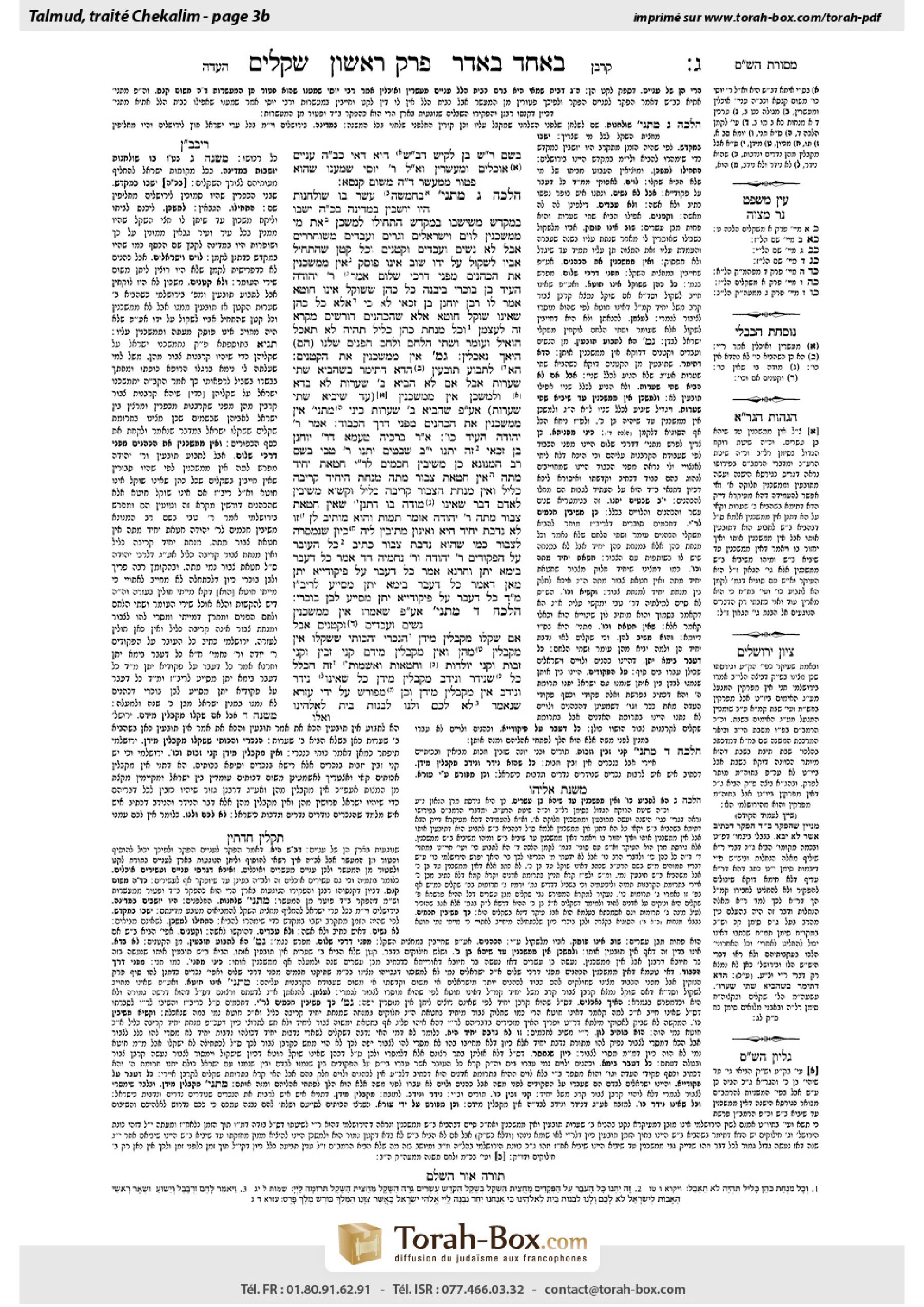
Shekalim 3b: Talmud study for Daf Yomi
Study the Talmud for Daf Yomi with scanned pages, Hebrew text, English translations from Sefaria and AI-generated French translations.
Passage selection and English or AI-generated French translation are available where the scan has annotations. Daf Study is independent of Torah-Box and Sefaria.
Browse Shekalim · שקלים · All tractatesShekalim 3b text and translations
This page of Shekalim includes the Aramaic text and an English translation, alongside the scan above.
שקלים ג׳ ב · Aramaic and Hebrew text
וְהֵיי דָא אָמְרָה דָא. גָּדִישׁ שֶׁלֹּא לוּקַּט תַּחְתָּיו כָּל הַנּוֹגְעוֹת בָּאָרֶץ הֲרֵי הֵן שֶׁלְעֲנִיִּים. וְאָמַר רִבִּי אִמִּי בְשֵׁם רִבִּי שׁמְעוֹן בֵּן לָקִישׁ. דְּבֵית שַׂמַּי הִיא. וְאָמַר לֵיהּ רִבִּי יוֹסֵי. שָׁמַעְנוּ שֶׁהוּא פָטוּר מִמַּעְשְׂרוֹת דִּבְרֵי הַכֹּל מִשּׁוּם קְנָס. וּכְבֵית הִלֵּל עֲנִיִים מְעַשְּׂרִין וְאוֹכְלִין.
משנה: בַּחֲמִשָּׁה עָשָׁר בּוֹ שׁוּלְחָנוֹת יוֹשְׁבִין בַּמְּדִינָה. בְּעֶשְׁרִים וַחֲמִשָּׁה בוֹ יָשְׁבוּ בַּמִּקְדָּשׁ. מִשֶּׁיָּשְׁבוּ בַּמִּקְְדָּשׁ הִתְחִילוּ לְמַשְׁכֵּן. אֶת מִי מְמַשְְׁכְּנִין לְוִיִים וְיִשְׂרְאֵלִים וְגֵרִים וַעֲבָדִים מְשֻׁחְרָרִין אֲבָל לֹא נָשִׁים וְלֹא עֲבָדִים וְלֹא קְטַנִּים. וְכָל קָטָן שֶׁהִתְחִיל אָבִיו לִשְׁקוֹל עַל יָדוֹ אֵינוֹ פּוֹסֵק. אֵין מְמַשְׁכְּנִין אֶת הַכֹּהֲנִים מִפְּנֵי דַּרְכֵּי שָׁלוֹם: אָמַר רִבִּי יְהוּדָה הֵעִיד בֶּן כּוּבָרִי בְּיַבְנֶה שֶׁכָּל כֹּהֵן שֶׁהוּא שׁוֹקֵל אֵינוֹ חוֹטֵא. אָמַר לוֹ רַבָּן יוֹחָנָן בֶּן זַכַּאי לֹא כִּי אֶלָּא כָּל כֹּהֵן שֶׁאֵינוֹ שׁוֹקֵל חוֹטֵא. אֶלָּא שֶׁהַכֹּהֲנִים דּוֹרְשִׁין מִקְרָא זֶה לְעַצְמָן וְכָל מִנְחַת כֹּהֵן כָּלִיל תִּהְיֶה לֹא תֵאָכֵל הוֹאִיל וְהָעוֹמֶר וּשְׁתֵּי הַלֶּחֶם וְלֶחֶם הַפָּנִים שֶׁלָּנוּ הֵיאָךְ הֵם נֶאֱכָלִין:
הלכה: בַּחֲמִשָּׁה עָשָׂר בּוֹ כול׳. הָא לִתְבּוֹעַ תּוֹבְעִין. הָדָא דְתֵימַר בְּשֶׁהֵבִיא שְׁתֵּי שְׂעָרוֹת. אֲבָל אִם לֹא הֵבִיא שְׁתֵּי שְׂעָרוֹת לְֹא בְדָא. וּלְמַשְׁכֵּן אֵין מְמַשְׁכְּנִין עַד שֶׁיָּבִיא שְׁתֵּי שְׂעָרוֹת.
כֵּינִי מַתְנִיתָא. אֵין מְמַשְׁכְּנִין אֶת הַכֹּהֲנִים מִפְּנֵי דֶּרֶךְ הַכָּבוֹד.
אָמַר רִבִּי יְהוּדָה הֵעִיד כול׳. אָמַר רִבִּי בֶּרֶכְיָה. טַעֲמֵיהּ דְּרַבָּן יוֹחָנָן בֶּן זַכַּאי. זֶה יִתְּנוּ. שְׁנֵים עָשָׂר שְׁבָטִים יִתְּנוּ. רִבִּי טָבִי בְשֵׁם רַב הַמְנוּנָא. כֵּן מֵשִׁיבִין חֲכָמִים לְרִבִּי יְהוּדָה. חַטָּאת יָחִיד מֵתָה. אֵין חַטָּאת הַצִּיבּוּר מֵתָה. מִנְחַת הַיָּחִיד קְרֵיבָה כָלִיל וְאֵין מִנְחַת צִיבּוּר קְרֵיבָה כָלִיל. וְקַשְׁיָא. מֵשִׁיבִין לָאָדָם דָּבָר שֶׁאֵינוֹ מוֹדֶה בוֹ. שֶׁאֵין חַטָּאת צִיבּוּר מֵתָה. רִבִּי יְהוּדָה אוֹמֵר תָּמוּת. וְהוּא מוֹתִיב לוֹן תוּ. לֹא נִדְבַת יָחִיד הִיא. וְאִינּוּן מֵתִיבִין לֵיהּ. מִכֵּיוָן שֶׁנִּמְסְרָה לַצִּיבּוּר כְּמִי שֶׁהִיא נִדְבַת צִיבּוּר. כְּתִיב כֹּל הָעוֹבֵר עַל הַפְּקוּדִים. רִבִּי יוּדָה וְרִבִּי נְחֶמְיָה. חַד אָמַר. כָּל דַּעֲבַר בָּיַּמָּה יִתֵּן. וְחֳרָנָה אָמַר. כָּל דַּעֲבַר עַל פִּקּוּדַיָיא יִתֵּן. מָאן דַאֲמַר כָּל דַּעֲבַר בָּיַּמָּא יִתֵּן. מְסַיֵיעַ לְרַבָּן יוֹחָנָן בֶּן זַכַּאי. מָאן. כֹּל דַּעֲבַר עַל פִקוּדַיָיא יִתֵּן. מְסַיֵיעַ לְבֶן כּובְרִי.
משנה: אַף עַל פִּי שֶׁאָמְרוּ אֵין מְמַשְׁכְּנִין נָשִׁים וַעֲבָדִים וּקְטַנִּים אֲבָל אִם שָׁקְלוּ מְקַבְּלִין מִיָּדָם. הַנָּכְרִי וְהַכּוּתִי שֶׁשָּׁקְלוּ אֵין מְקַבְּלִין מִיָּדָן. וְאֵין מְקַבְּלִין מִיָּדָן קִינֵּי זָבִין וְקִינֵּי זָבוֹת וְקִינֵּי יוֹלְדוֹת וְחַטָּאוֹת וַאֲשָׁמוֹת. זֶה הַכְּלָל כָּל שֶׁהוּא נִידָּר וְנִידָּב מְקַבְּלִין מִיָּדָן. כָּל שֶׁאֵין לֹא נִידָּר וְלֹא נִידָּב אֵין מְקַבְּלִין מִיָּדָן. וְכֵן מְפוֹרָשׁ עַל יְדֵי עֶזְרָא לֹא לָכֶם וְלָנוּ לִבְנוֹת בַּיִת לֵאלֹהֵינוּ: וְאֵילּוּ חַיָיבִין בַּקּוֹלָּבּוֹן לְוִיִים וְיִשְׂרְאֵלִים וְגֵרִים וַעֲבָדִים מְשׁוּחְרָרִין. אֲבָל לֹא כֹּהֲנִים וְלֹא נָשִׁים וְלֹא עֲבָדִים וְלֹא קְטַנִּים. הַשּׁוֹקֵל עַל יַד הָעֶבֶד עַל יַד הָאִשָּׁה עַל יַד הַכֹּהֵן עַל יַד הַקָטָן פָּטוּר. עַל יָדוֹ וְעַל יַד חֲבֵרוֹ חַיָיב בְּקוֹלָּבּוֹן אֶחָד. רִבִּי מֵאִיר אוֹמֵר שְׁנֵי קוֹלָּבּוֹנוֹת. נָתַן סֶלַע לִיטּוֹל שֶׁקֶל חַיָיב שְׁנֵי קוֹלָּבּוֹנוֹת: הַשּׁוֹקֵל עַל יַד עָנִי ועַל יַד שְׁכֵינוֹ עַל יַד בֶּן עִירוֹ פָּטוּר אִם הִלְוָום חַיָיב. הָאַחִין הַשּׁוּתָפִין שֶׁחַיָיבִין בַּקּוֹלָּבּוֹן פְּטוּרִין מִמַּעֲשֵׂר בְּהֵמָה וְשֶׁחַיָיבִין בְּמַעְשַׂר בְּהֵמָה פְּטוּרִין מִן הַקּוֹלָּבּוֹן. כַּמָּה הוּא קוֹלָּבּוֹן מָעָה כֶּסֶף דִּבְרֵי רִבִּי מֵאִיר וַחֲכָמִים אוֹמְרִים חֲצִי מָעָה.
Shekalim 3b · English translation
What text implies this? “For a grain stack under which gleanings were not collected, all ears that touch the ground are for the poor.”5:1. Rebbi Immi in the name of Rebbi Simeon ben Laqish: This is from the House of Shammai. Rebbi Yose one has to read R. Yasa, contemporary of R. Immi, not R. Yose who has to be dated 2 generations later. said to him: We understand that according to everybody, this is a fine5:1, Note 4. There is no biblical reason why the ears touching the ground should be given to the poor; the farmer is fined since he put his sheaf on a place where the poor could not yet have taken the gleanings. The disagreement between the Houses of Shammai and Hillel is explained in ג: The House of Shammai hold that things abandoned exclusively for the use of the poor are legally abandoned whereas the House of Hillel hold that only things unconditionally abandoned are legally abandoned and therefore exempt from heave and tithes (Mishnah Peah6:1).. Following the House of Hillel, the poor give tithes and eat.
MISHNAH: On the Fifteenth, money changers, half a Roman tetradrachma, which are collected for the Temple. were sitting in the country side; on the Twenty Fifth they were sitting in the Temple. From the date they were sitting in the Temple one started to take pledges. From whom does one take pledges? From Levites, Israel, proselytes, and freed slaves, but not from women, slaves being a positive commandment due at a fixed time, slaves cannot be obligated., and minors. Any minor for whom his father started to give the sheqel does not stop any more. However one does not take pledges from Cohanim because of communal peace.
Rebbi Jehudah said: “Ben Kukhri testified at Jabneh that any Cohen who pays the sheqel does not sin. Rabban Joḥanan ben Zakkai told him, on the contrary, any Cohen who does not pay the sheqel does sin 30:11–16 as not stating any exemption for Cohanim., only the Cohanim explain the following verse for their benefit: Any flour offering of a Cohen shall be totalled, it may not be eatenl 6:16.. If the `omer, the two breads, and the shew bread are ours, how may they be eaten?l, they would be part owners of these offerings, but the consumption of all these offerings is explicitly commanded.”
HALAKHAH: “On the Fifteenth,” etc. But one requests for their minor sons, an informal request may be made earlier, a formal one only if the son reaches the age of adulthood for religious obligations, the onset of puberty indicated by the growth of at least two pubic hairs.? This is if he grew two pubic hairs, but it does not apply if he did not grow two pubic hairs. In matters of pledges, one never takes pledges if he did not grow two pubic hairs.
So is the Mishnah: One does not take pledges from Cohanim because one honors their status.
“Rebbi Jehudah said:, testified” etc. Rebbi Berekhiah said, the reason of Rabban Joḥanan ben Zakkai is 30:12., this they shall give, twelve tribes shall give. Rebbi Tabi in the name of Rav Hamnuna: So answer the Sages to Rebbi Jehudah. A private purification sacrifice is let to die; a public purification sacrifice is not left to die. A private flour offering is brought totally, but no public flour offering is brought totally. This is difficult, how can one argue with a person about something with which he does not agree? “For no public purification sacrifice is left to die; Rebbi Jehudah says, it shall be left to die.6:2; see there Halakhah 1, Note 33.” And he objects to them, are these not private flour offerings is not given as a tax but to acquire a minute part of the public sacrifices, which imply that there are no public offerings at all, only those of a private partnership.? They answer him, from the moment when it is delivered to the public, it is treated as a public offering. It is written, everybody being counted 30:13., Rebbi Jehudah and Rebbi Neḥemiah. One said, everyone who crossed the Sea shall give, the other one said, everyone being counted where it is made explicit that the tribe of Levi was not counted with the remainder of the tribes. Rabban Joḥanan ben Zakkai cannot explain this verse, unless he explains that Ex. 30:11–16 is not the basis of the duty to pay the sheqel, but Ben Kovri (Kokhri, Bukhri, Bikhri) cannot explain the inclusion in Mishnah 4. shall give. He who said, everyone who crossed the Sea shall give, supports Rabban Joḥanan ben Zakkai; he who said, everyone being counted shall give, supports Ben Kovri.
MISHNAH: Even though they said that one does not take pledges from women, slaves, and minors, but if they gave the sheqel one accepts it from them. One does not accept from the Non-Jew and the Samaritan, and from them one does not accept nests of male sufferers from gonorrhea, nests of female sufferers from flux, nests of women having given birth, and purification and reparation sacrifices. This is the principle: Anything which can be given as a vow or a gift one does accept from them; anything which\can be given neither as a vow nor a gift one does not accept from them. So it is spelled out by Ezra, it is not upon you and us to build our God’s House 4:3. This refers only to the sheqel..
The following are liable for agio, Greek κόλλυβος “exchange of coins, rate of exchange”, here used for the money changer’s fee.: Levites, Israelites, proselytes, and freedmen, but not priests, women, slaves, and minors, they have to give exactly one didrachma piece. If they have other coins, they have to pay the fee for exchange in correct coins. But contributions of priests, women, slaves, and minors, are voluntary and not bound by the exact amount or exact coins and, therefore, do not have to be exchanged.. He who pays the sheqel for a slave, a woman, a priest, or a minor, is not liable. He who paid the sheqel for himself and another person is liable for one agio; Rebbi Meïr says, two agios. He who gives a tetradrachma to receive back a sheqel is liable for two agios minus the agio, set in Mishnah 7 either as an obolos (1/6 denar) or a semi-obolos. If he pays the money-changer’s fee separately, he has to pay for changing the common 2 denar into the less common didrachma..
A person who pays the sheqel for a poor person. a neighbor, or a dweller in his town is not liable for the agio, unless it is as a loan, then he is liable. Brothers who are partners it is one transaction and incurs one fee. Calves born to the estate are considered property of one person and the tenth calf automatically becomes a sacrifice. If they distributed the estate but then decided to continue jointly to pursue the agricultural affairs of their father, they form a new partnership and follow the rules of partnerships. They are independent persons, each of whom has to pay his own fee, but all calves born are property of joint owners, not a single person, therefore the tenth calf or lamb (Lev. 27:32) is not sanctified. who are liable for the agio are not liable for animal tithe; if they are liable for animal tithe they are not liable for the agio. How much is the agio? A silver obolos, the words of Rebbi Meïr; but the Sages say, half an obolos.
Text from Sefaria: The Jerusalem Talmud, edition by Heinrich W. Guggenheimer. Berlin, De Gruyter, 1999-2015 (CC BY); The Jerusalem Talmud, translation and commentary by Heinrich W. Guggenheimer. Berlin, De Gruyter, 1999-2015 (CC BY).