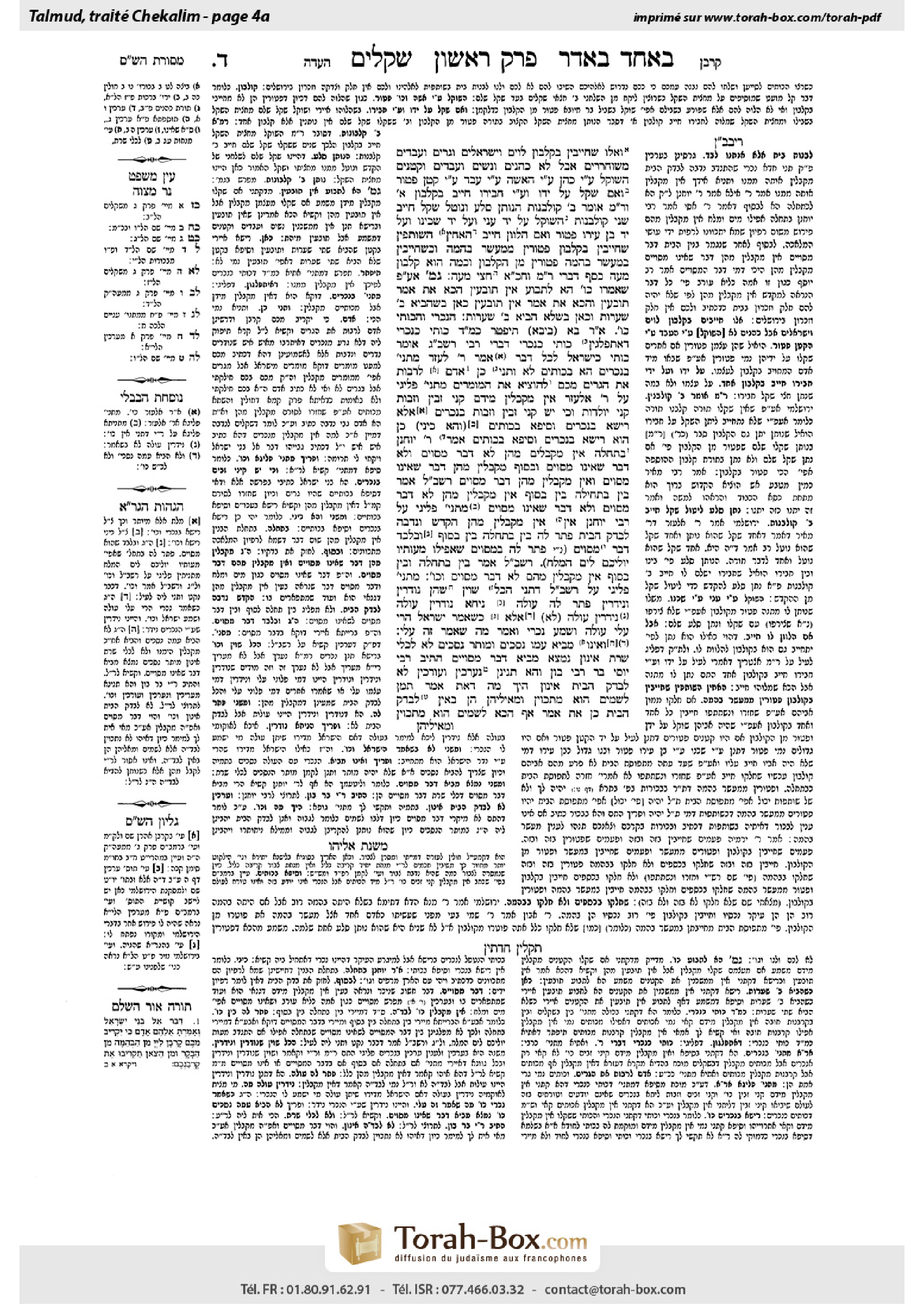
Shekalim 4a: Talmud study for Daf Yomi
Study the Talmud for Daf Yomi with scanned pages, Hebrew text, English translations from Sefaria and AI-generated French translations.
Passage selection and English or AI-generated French translation are available where the scan has annotations. Daf Study is independent of Torah-Box and Sefaria.
Browse Shekalim · שקלים · All tractatesShekalim 4a text and translations
This page of Shekalim includes the Aramaic text and an English translation, alongside the scan above.
שקלים ד׳ א · Aramaic and Hebrew text
משנה: אַף עַל פִּי שֶׁאָמְרוּ אֵין מְמַשְׁכְּנִין נָשִׁים וַעֲבָדִים וּקְטַנִּים אֲבָל אִם שָׁקְלוּ מְקַבְּלִין מִיָּדָם. הַנָּכְרִי וְהַכּוּתִי שֶׁשָּׁקְלוּ אֵין מְקַבְּלִין מִיָּדָן. וְאֵין מְקַבְּלִין מִיָּדָן קִינֵּי זָבִין וְקִינֵּי זָבוֹת וְקִינֵּי יוֹלְדוֹת וְחַטָּאוֹת וַאֲשָׁמוֹת. זֶה הַכְּלָל כָּל שֶׁהוּא נִידָּר וְנִידָּב מְקַבְּלִין מִיָּדָן. כָּל שֶׁאֵין לֹא נִידָּר וְלֹא נִידָּב אֵין מְקַבְּלִין מִיָּדָן. וְכֵן מְפוֹרָשׁ עַל יְדֵי עֶזְרָא לֹא לָכֶם וְלָנוּ לִבְנוֹת בַּיִת לֵאלֹהֵינוּ: וְאֵילּוּ חַיָיבִין בַּקּוֹלָּבּוֹן לְוִיִים וְיִשְׂרְאֵלִים וְגֵרִים וַעֲבָדִים מְשׁוּחְרָרִין. אֲבָל לֹא כֹּהֲנִים וְלֹא נָשִׁים וְלֹא עֲבָדִים וְלֹא קְטַנִּים. הַשּׁוֹקֵל עַל יַד הָעֶבֶד עַל יַד הָאִשָּׁה עַל יַד הַכֹּהֵן עַל יַד הַקָטָן פָּטוּר. עַל יָדוֹ וְעַל יַד חֲבֵרוֹ חַיָיב בְּקוֹלָּבּוֹן אֶחָד. רִבִּי מֵאִיר אוֹמֵר שְׁנֵי קוֹלָּבּוֹנוֹת. נָתַן סֶלַע לִיטּוֹל שֶׁקֶל חַיָיב שְׁנֵי קוֹלָּבּוֹנוֹת: הַשּׁוֹקֵל עַל יַד עָנִי ועַל יַד שְׁכֵינוֹ עַל יַד בֶּן עִירוֹ פָּטוּר אִם הִלְוָום חַיָיב. הָאַחִין הַשּׁוּתָפִין שֶׁחַיָיבִין בַּקּוֹלָּבּוֹן פְּטוּרִין מִמַּעֲשֵׂר בְּהֵמָה וְשֶׁחַיָיבִין בְּמַעְשַׂר בְּהֵמָה פְּטוּרִין מִן הַקּוֹלָּבּוֹן. כַּמָּה הוּא קוֹלָּבּוֹן מָעָה כֶּסֶף דִּבְרֵי רִבִּי מֵאִיר וַחֲכָמִים אוֹמְרִים חֲצִי מָעָה.
הלכה: אַף עַל פִּי שֶׁאָמְרוּ כול׳. הָא לִתְבּוֹעַ אֵינָן תּוֹבְעִין. הָכָא אַתְּ אָמַר. תּוֹבְעִין. וְהָכָא אַתְּ אָמַר. אֵין תּוֹבְעִין כָּאן בְּשֶׁהֵבִיא שְׁתֵּי שְׂעָרוֹת וְכָאן בְּשֶׁלֹּא הֵבִיא שְׁתֵּי שְׂעָרוֹת.
הַנָּכְרִי וְהַכּוּתִי שֶׁשָּׁקְלוּ אֵין מְקַבְּלִין מִיָּדָן. אָמַר רִבִּי בָּא. תִּיפְתָּר כְּמָאן דְּאָמַר. כּוּתִי כְגוֹי. דְּאִיתפַּלְּגוֹן. כּוּתִי כְגוֹי. דִּבְרֵי רִבִּי. רַבָּן שִׁמְעוֹן בֶּן גַּמְלִיאֵל אוֹמֵר. כּוּתִי כְיִשְׂרָאֵל לְכָל דָּבָר.
אָמַר רִבִּי לָעְזָר. מַתְנִיתָא בַגּוֹיִם. הָא בַכּוּתִים לֹא. וְתַנֵּי כֵן. אָדָם. לְרַבּוֹת אֶת הַגֵּרִים. מִכֶּם. לְהוֹצִיא אֶת הַמְשׁוּמָּדִים. מַתְנִיתָא פְלִיגָא עַל רִבִּי אֶלְעָזָר. אֵין מְקַבְּלִין מִיָּדָם קִינֵּי זָבִין קִינֵּי זָבוֹת וְקִינֵּי יוֹלְדוֹת. וְכִי יֵשׁ קִינֵּי זָבִין וְזָבוֹת בַגּוֹיִם. אֶלָּא רֵישָׁא בַגּוֹיִם וְסֵיפָא בַכּוּתִים. וְהָא כֵינִי. רֵישָׁא בַגּוֹיִם וְסֵיפָא בַכּוּתִים.
אָמַר רִבִּי יוֹחָנָן. כַּתְּחִילָּה אֵין מְקַבְּלִין מֵהֶן לֹא דָבָר מְסוּיָים וְלֹא דָבָר שֶׁאֵינוֹ מְסוּיָים. וּבַסּוֹף מְקַבְּלִין מֵהֶן דָּבָר מְסוּיָים וְאֵין מְקַבְּלִין מֵהֶן דָּבָר שֶׁאֵינוֹ מְסוּיָים. רִבִּי שִׁמְעוֹן בֶּן לָקִישׁ אָמַר. בֵּין בַתְּחִילָּה בֵין בַּסּוֹף אֵין מְקַבְּלִין מֵהֶן לֹא דָבָר מְסוּיָים וְלֹא דָבָר שֶׁאֵינוֹ מְסוּיָים. מַתְנִיתָא פְלִיגָא עַל רִבִּי יוֹחָנָן. אֵין מְקַבְּלִין מֵהֶן הֶקְדֵּשׁ נְדָבָה לְבֶדֶק הַבַּיִת. פָּתַר לָהּ בֵּין בַתְּחִילָּה בֵין בַּסּוֹף וּבִלְבַד דָּבָר שֶׁאֵינוֹ מְסוּיָים. מַתְנִיתָא פְלִיגָא עַל רִבִּי שִׁמְעוֹן בֶּן לָקִישׁ. הַכֹּל שָׁוִין שֶׁהֵן נוֹדְרִין וְנִידָּרִין. פָּתַר לָהּ עוֹלָה. נִיחָא נוֹדְרִים עוֹלָה. נִידָּרִים עוֹלָה. לֹא. בְּשֶׁאָמַר יִשְׂרָאֵל הֲרֵי עָלַי עוֹלָה. וּשְׂמָעוֹ גוֹי וְאָמַר. מַה שֶׁאָמַר זֶה עָלַי. וְאֵינוֹ מֵבִיא עִמָּהּ נְסָכִים. וּמוֹתַר נְסָכִים לֹא לִכְלֵי שָׁרֵת אִינּוּן. נִמְצָא מֵבִיא דָבָר מְסוּיָים. הָתִיב רִבִּי יוֹסֵי בֵּירִבִּי בּוּן. וְהָא תַנִּינָן נֶעֱרָכִין. וָעֲרָכִין לֹא לְבֶדֶק הַבַּיִת אִינּוּן. הֵיךְ מַה דְאַתְּ אָמַר תַּמָּן. לַשָׁמַיִם הוא מִתְכַּוֵּין וּמֵאֵילֵיהֶן הֵן בָּאִין לְבֶדֶק הַבַּיִת. כֵּן אַתְּ אָמַר אַף הָכָא. לַשָׁמַיִם הוא מִתְכַּוֵּין וּמֵאֵילֵיהֶן הֵן בָּאִין לִכְלֵי שָׁרֵת. מַה עֲבַד לָהּ רִבִּי שִׁמְעוֹן בֶּן לָקִישׁ. פָּתַר לָהּ לֹא לָכֶם וְלָנוּ לִבְנוֹת בַּיִת לֵאלֹהֵינוּ. רִבִּי חִלְקִיָּה אָמַר. רִבִּי סִימוֹן שָׁאַל. מֵעַתָּה אֵין מְקַבְּלִין מֵהֶן [לָ]אַמַּת הַמָּיִם וּ[לְ]חוֹמַת הָעִיר וּמִגְדְּלוֹתֶיהָ. עַל שֵׁם וְלְכֶם אֵין חֵלֶק וּצְדָקָה וְזִכָּרוֹן בִּירוּשָׁלָ͏ִם.
Shekalim 4a · English translation
MISHNAH: Even though they said that one does not take pledges from women, slaves, and minors, but if they gave the sheqel one accepts it from them. One does not accept from the Non-Jew and the Samaritan, and from them one does not accept nests of male sufferers from gonorrhea, nests of female sufferers from flux, nests of women having given birth, and purification and reparation sacrifices. This is the principle: Anything which can be given as a vow or a gift one does accept from them; anything which\can be given neither as a vow nor a gift one does not accept from them. So it is spelled out by Ezra, it is not upon you and us to build our God’s House 4:3. This refers only to the sheqel..
The following are liable for agio, Greek κόλλυβος “exchange of coins, rate of exchange”, here used for the money changer’s fee.: Levites, Israelites, proselytes, and freedmen, but not priests, women, slaves, and minors, they have to give exactly one didrachma piece. If they have other coins, they have to pay the fee for exchange in correct coins. But contributions of priests, women, slaves, and minors, are voluntary and not bound by the exact amount or exact coins and, therefore, do not have to be exchanged.. He who pays the sheqel for a slave, a woman, a priest, or a minor, is not liable. He who paid the sheqel for himself and another person is liable for one agio; Rebbi Meïr says, two agios. He who gives a tetradrachma to receive back a sheqel is liable for two agios minus the agio, set in Mishnah 7 either as an obolos (1/6 denar) or a semi-obolos. If he pays the money-changer’s fee separately, he has to pay for changing the common 2 denar into the less common didrachma..
A person who pays the sheqel for a poor person. a neighbor, or a dweller in his town is not liable for the agio, unless it is as a loan, then he is liable. Brothers who are partners it is one transaction and incurs one fee. Calves born to the estate are considered property of one person and the tenth calf automatically becomes a sacrifice. If they distributed the estate but then decided to continue jointly to pursue the agricultural affairs of their father, they form a new partnership and follow the rules of partnerships. They are independent persons, each of whom has to pay his own fee, but all calves born are property of joint owners, not a single person, therefore the tenth calf or lamb (Lev. 27:32) is not sanctified. who are liable for the agio are not liable for animal tithe; if they are liable for animal tithe they are not liable for the agio. How much is the agio? A silver obolos, the words of Rebbi Meïr; but the Sages say, half an obolos.
HALAKHAH: “Even though they said,” etc. Therefore one does not request? Here you are saying, one requests, but there for their minor sons, an informal request may be made earlier, a formal one only if the son reaches the age of adulthood for religious obligations, the onset of puberty indicated by the growth of at least two pubic hairs. you are saying, one does not request. There if he grew two pubic hairs, and here if he did not grow two pubic hairs.
“One does not accept from the Non-Jew and the Samaritan.” Rebbi Abba said, explain it shows that up to the time of Rabban Simeon ben Gamliel, Rebbi’s father, the Samaritans were simply Sadducee Jews, the only Sadducee sect to survive after the destruction of the Temple. The Mishnah here reproduces Rebbi’s opinion. The paragraph also is in Berakhot7:1 (Note 59, ב). following him who said, a Samaritan is like a Gentile, as they disagreed: A Samaritan is like a Gentile, the words of Rebbi; Rabban Simeon ben Gamliel says, a Samaritan is like a Jew in all respects.
Rebbi Eleazar said, the Mishnah is about Gentiles, therefore not about Samaritans. It was stated so2(3).: “A human 1:2. This use of human follows R.. Simeon’s interpretation of Ez. 34:30, where he reads אָדָ֣ם אַתֶּ֑ם as “you are noblemen” (Accadic awēlum), a title reserved for members of the Covenant. Since the Samaritans are descendants of proselytes, they are included in all obligations and privileges of the covenant and cannot be excluded from any of these., to include the proselytes. From among you as privative; excluding people who removed themselves from the Covenant. It seems that ג reads “removed from discipline”., to exclude the apostates.” The Mishnah disagrees with Rebbi Eleazar: “One does not accept nests of male sufferers from gonorrhea, nests of female sufferers from flux, nests of women having given birth.” Do there exist nests of sufferers from gonorrhea and flux among Gentiles? But the beginning is about Gentiles, the end about Samaritans from them (but also that one accepts their voluntary sacrifices.) The rest is Rebbi’s formulation to exclude Samaritans from Jewish worship.. So it is, the beginning is about Gentiles, the end about Samaritans.
Rebbi Joḥanan said, at the start. While the verse refers to Samaritans, the discussion here is about Gentile offerings. one accepts from them neither definite objects nor non-definite objects, and at the end one accepts from them definite objects but not non-definite objects 22:25, one also has to accept vessels or other objects inscribed with the Gentile donor’s name. But unspecified moneys for the continual upkeep of the Temple are reserved for and are a duty upon Jews.. Rebbi Simeon ben Laqish said, both at the beginning and at the end one accepts from them neither definite objects nor non-definite objects. A baraita7(2), Babli Menaḥot73b; cf. Nazir9:1 Note 8. disagrees with Rebbi Joḥanan: “One does not accept from them voluntary gifts for Temple property for the upkeep of the Temple.” He explains it, both at the start and at the end, if it is for non-definite objects. A Mishnah1:3, where R. Meïr and R. Jehudah disagree about the status of a Gentile with respect to the rules detailed in Lev. 27:2–8. disagrees with Rebbi Simeon ben Laqish: Everybody agrees that they make vows and are objects of vows 22:25 clearly implies that a Gentile’s vows are valid in a Jewish setting. It is stated that a Jew may make a vow whose object is a Gentile or which is conditioned on the actions of a Gentile.. He explains it for elevation offerings. One understands that he makes a vow to bring an elevation offering. Can he be the object of a vow for an elevation offering? No, if an Israel says, I undertake to bring an elevation offering, when a Gentile hears him and says, I am undertaking what he says. Does he not bring libations with it. 15:1–15.? Is not the excess money given for libations used for vessels of Service? Then it turns out that he brought {money for} a definite object! Rebbi Yose ben Rebbi Abun objected, did we not state that they may offer their value 27:2–8, in fact this is what money donations to the Temple are used for.? Are offerings of one’s value not for the upkeep of the Temple? It is as you are saying there, his intent was for Heaven; automatically it will be used for the upkeep of the Temple; so here you are saying, his intent was for Heaven; automatically it will be used for vessels of Service. How does Rebbi Simeon ben Laqish treat this? He explains, it is not upon you and us to build our God’s House. Rebbi Ḥilkiah said, Rebbi Simon asked: Does this imply that one does not accept from them for an aqueduct, or the city walls, or its towers, because of you have no part, nor rightful claim, nor memorial, in Jerusalem. 2:20..
Text from Sefaria: The Jerusalem Talmud, edition by Heinrich W. Guggenheimer. Berlin, De Gruyter, 1999-2015 (CC BY); The Jerusalem Talmud, translation and commentary by Heinrich W. Guggenheimer. Berlin, De Gruyter, 1999-2015 (CC BY).