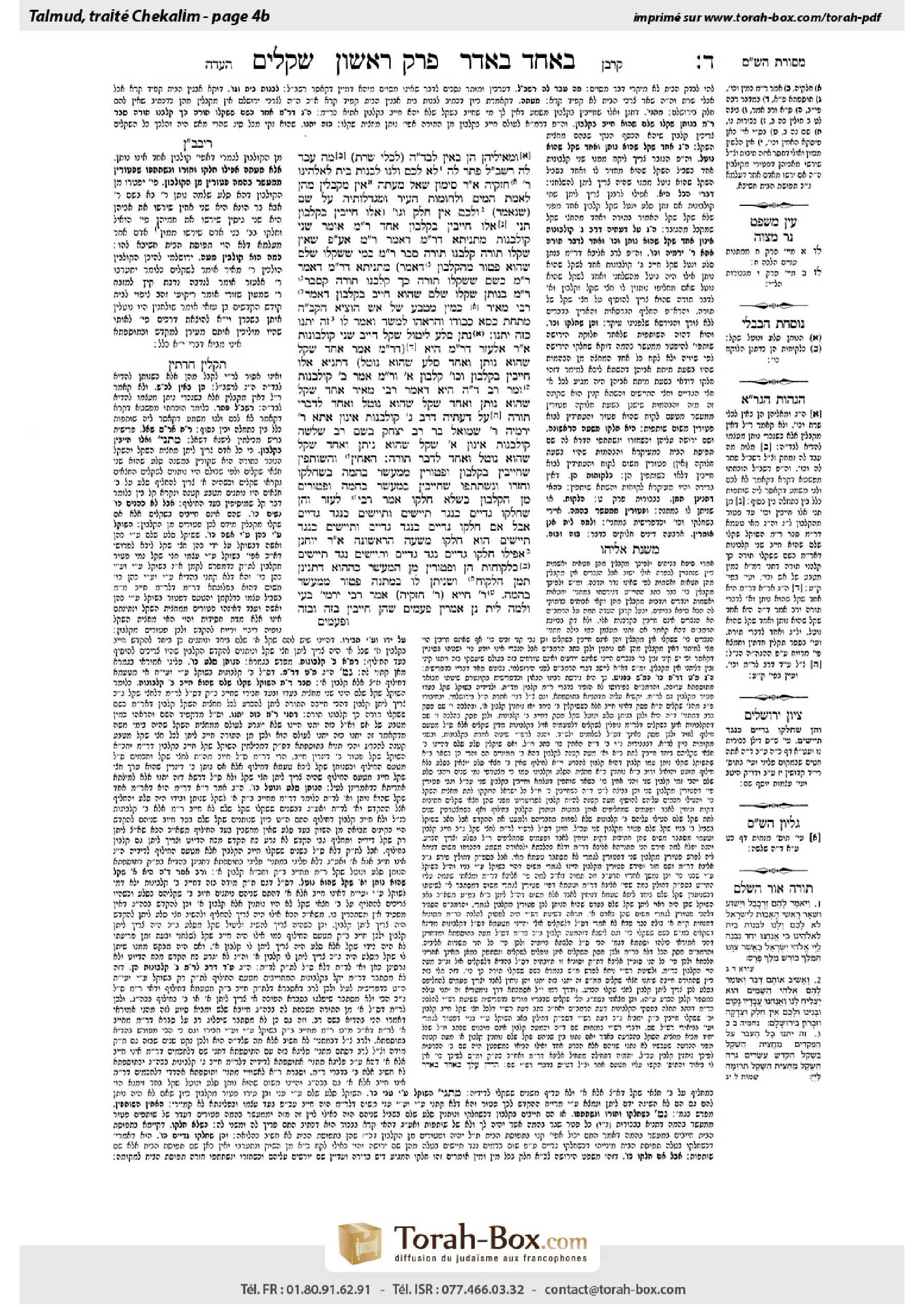
Shekalim 4b: Talmud study for Daf Yomi
Study the Talmud for Daf Yomi with scanned pages, Hebrew text, English translations from Sefaria and AI-generated French translations.
Passage selection and English or AI-generated French translation are available where the scan has annotations. Daf Study is independent of Torah-Box and Sefaria.
Browse Shekalim · שקלים · All tractatesShekalim 4b text and translations
This page of Shekalim includes the Aramaic text and an English translation, alongside the scan above.
שקלים ד׳ ב · Aramaic and Hebrew text
אָמַר רִבִּי יוֹחָנָן. כַּתְּחִילָּה אֵין מְקַבְּלִין מֵהֶן לֹא דָבָר מְסוּיָים וְלֹא דָבָר שֶׁאֵינוֹ מְסוּיָים. וּבַסּוֹף מְקַבְּלִין מֵהֶן דָּבָר מְסוּיָים וְאֵין מְקַבְּלִין מֵהֶן דָּבָר שֶׁאֵינוֹ מְסוּיָים. רִבִּי שִׁמְעוֹן בֶּן לָקִישׁ אָמַר. בֵּין בַתְּחִילָּה בֵין בַּסּוֹף אֵין מְקַבְּלִין מֵהֶן לֹא דָבָר מְסוּיָים וְלֹא דָבָר שֶׁאֵינוֹ מְסוּיָים. מַתְנִיתָא פְלִיגָא עַל רִבִּי יוֹחָנָן. אֵין מְקַבְּלִין מֵהֶן הֶקְדֵּשׁ נְדָבָה לְבֶדֶק הַבַּיִת. פָּתַר לָהּ בֵּין בַתְּחִילָּה בֵין בַּסּוֹף וּבִלְבַד דָּבָר שֶׁאֵינוֹ מְסוּיָים. מַתְנִיתָא פְלִיגָא עַל רִבִּי שִׁמְעוֹן בֶּן לָקִישׁ. הַכֹּל שָׁוִין שֶׁהֵן נוֹדְרִין וְנִידָּרִין. פָּתַר לָהּ עוֹלָה. נִיחָא נוֹדְרִים עוֹלָה. נִידָּרִים עוֹלָה. לֹא. בְּשֶׁאָמַר יִשְׂרָאֵל הֲרֵי עָלַי עוֹלָה. וּשְׂמָעוֹ גוֹי וְאָמַר. מַה שֶׁאָמַר זֶה עָלַי. וְאֵינוֹ מֵבִיא עִמָּהּ נְסָכִים. וּמוֹתַר נְסָכִים לֹא לִכְלֵי שָׁרֵת אִינּוּן. נִמְצָא מֵבִיא דָבָר מְסוּיָים. הָתִיב רִבִּי יוֹסֵי בֵּירִבִּי בּוּן. וְהָא תַנִּינָן נֶעֱרָכִין. וָעֲרָכִין לֹא לְבֶדֶק הַבַּיִת אִינּוּן. הֵיךְ מַה דְאַתְּ אָמַר תַּמָּן. לַשָׁמַיִם הוא מִתְכַּוֵּין וּמֵאֵילֵיהֶן הֵן בָּאִין לְבֶדֶק הַבַּיִת. כֵּן אַתְּ אָמַר אַף הָכָא. לַשָׁמַיִם הוא מִתְכַּוֵּין וּמֵאֵילֵיהֶן הֵן בָּאִין לִכְלֵי שָׁרֵת. מַה עֲבַד לָהּ רִבִּי שִׁמְעוֹן בֶּן לָקִישׁ. פָּתַר לָהּ לֹא לָכֶם וְלָנוּ לִבְנוֹת בַּיִת לֵאלֹהֵינוּ. רִבִּי חִלְקִיָּה אָמַר. רִבִּי סִימוֹן שָׁאַל. מֵעַתָּה אֵין מְקַבְּלִין מֵהֶן [לָ]אַמַּת הַמָּיִם וּ[לְ]חוֹמַת הָעִיר וּמִגְדְּלוֹתֶיהָ. עַל שֵׁם וְלְכֶם אֵין חֵלֶק וּצְדָקָה וְזִכָּרוֹן בִּירוּשָׁלָ͏ִם.
אֵילּוּ חַיָיבִין בַּקּוֹלָּבּוֹן כול׳. מַתְנִיתָא דְרִבִּי מֵאִיר. דְּרִבִּי מֵאִיר אָמַר. אַף עַל פִּי שֶׁאֵין שִׁקְלוֹ תוֹרָה קוֹלָּבּוֹנוֹ תוֹרָה. סָבַר רִבִּי מֵאִיר בְּנוֹתֵן שִׁקְלוֹ שָׁלֵם שֶׁהוּא פָטוּר מִן הַקּוֹלָּבּוֹן. אָמַר רִבִּי מֵאִיר. כְּמִין מַטְבֵּעַ שֶׁלְאֵשׁ הוֹצִיא הַקָּדוֹשׁ בָּרוּךְ הוּא מִתַּחַת כִּסֵּא כְבוֹדוֹ וְהַרְאֲהוּ לְמֹשֶׁה. אְמַר לוֹ. זֶה יִתְּנוּ. כָּזֶה יִתְּנוּ.
נָתַן סֶלַע לִיטּוֹל שֶׁקֶל חַיָיב שְׁנֵי קוֹלָּבּוֹנוֹת. אָמַר רִבִּי לָעְזָר. דְרִבִּי מֵאִיר הִיא. דְרִבִּי מֵאִיר אָמַר. אֶחָד שֶׁקֶל שֶׁהוּא נוֹתֵן וְאֶחָד סֶלַע שֶׁהוּא נוֹטֵל. רַב אָמַר. דִּבְרֵי הַכֹּל הִיא. אֶחָד שֶׁקֶל שֶׁהוּא [נוֹתֵן וְאֶחָד שֶׁקֶל שֶׁהוּא] נוֹטֵל וְאֶחָד לִדְבַר תּוֹרָה. עַל דַּעְתֵּיהּ דְּרַב שְׁלֹשָׁה קוֹלָּבּוֹנוֹת אִינּוּן. אֲתַא רִבִּי יִרְמְיָה רִבִּי שְׁמוּאֵל בַּר רַב יִצְחָק בְּשֵׁם רַב. שְׁלֹשָׁה קוֹלָּבּוֹנוֹת אִינּוּן. אֶחָד שֶׁקֶל שֶׁהוּא נוֹתֵן וְאֶחָד שֶׁקֶל שֶׁהוּא נוֹטֵל וְאֶחָד לִדְבַר תּוֹרָה.
הָאַחִין וְהַשֻּׁתָּפִין שֶׁחַיָיבִין בַּקּוֹלָּבּוֹן וּפְטוּרִין בְּמַּעְשַׂר בְּהֵמָה. בְּשֶׁחִלְקוּ וְחָזְרוּ וְנִשְׁתַּתְּפוּ. שֶׁחַיָיבִין בְּמַעְשַׂר בְּהֵמָה וּפְטוּרִין מִן הַקּוֹלָּבּוֹן. בְּשֶׁלֹּא חִלְּקוּ.
הַשּׁוֹקֵל עַל יְדֵי עָנִי כול׳. אָמַר רִבִּי לָעְזָר. וְהֵן שֶׁחִלְקוּ גְדָיִים כְּנֶגֶד תְּיָישִׁים וּתְיָישִׁים כְּנֶגֶד גְּדָיִים. אֲבָל אִם חִלְקוּ גְדָיִים כְּנֶגֶד גְּדָיִים וּתְיָישִׁים כְּנֶגֶד תְּיָישִׁים הוּא חֶלְקוֹ מִשָּׁעָה הָרִאשׁוֹנָה. אָמַר רִבִּי יוֹחָנָן. וַאֲפִילוּ חִלְקוּ גְדָיִים כְּנֶגֶד גְדָיִים וּתְיָישׁים כְּנֶגֶד תְּיישִׁים כִּלְקוּחוֹת הֵן. כַּהִיא דְתַנִּינָן תַּמָּן. הַלָּקוּחַ וּשֶׁנִּיתַּן לוֹ מַתָּנָה פָּטוּר מִמַּעְשַׂר בְּהֵמָה. רִבִּי חִזְקִיָּה אָמַר. רִבִּי יִרְמְיָה בָעֵי. וְלָמָּה לֵי נָן אָמְרִין. פְּעָמִים שֶׁחַיָיבִין בָּזֶה וּבָזֶה וּפְעָמִים שֶׁהֵן פְטוּרִין מִזֶּה וּמִזֶּה. הֵיךְ עֲבִידָא. חִלְקוּ אֶת הַנְּכָסִים וְאַחָר כָּךְ חִלְקוּ אֶת הַבְּהֵמָה. חַיָיבִין בָּזֶה וּבָזֶה. חִלְקוּ אֶת הַבְּהֵמָה וְאַחָר כָּךְ חִלְקוּ אֶת הַנְּכָסִים. פְטוּרִין מִזֶּה וּמִזֶּה. אָמַר רִבִּי מָנָא. הָדָא דְאַתּ אָמַר. בְּשֶׁלֹּא הָיְתָה הַבְּהֵמָה רוֹב. אֲבָל אִם הָיְתָה הַבְּהֵמָה רוֹב הֵן הֵן עִיקַּר נְכָסָיו. רִבִּי אָבּוּן אָמַר. רִבִּי שַׁמַּי בָעֵי. מִפְּנֵי שֶׁעֲשִׂיתָן [כְּאָדָם אֶחָד] (כְּאֶחָד אָדָם) אֶצֶל מַעֲשֵׂר בְהֵמָה אַתְּ פוֹטְרוֹ מִן הַקּוֹלָּבוֹן. אָמַר לֵיהּ לֹא. שַׁנְיָיה הִיא שֶׁהוּא נוֹתֵן סֶלַע אַחַת שְׁלֵימָה. מֵעַתָּה אֲפִילוּ חִלְּקוּ וְחָזְרוּ וְנִשְׁתַּתְּפוּ חַיָיבִין בְּמַעֲשַׂר בְּהֵמָה וּפְטוּרִין מִן הַקּוֹלָבּוֹן. וְתַנִּינָן. חַיָיבִין בַּקּוֹלָּבּוֹן וּפְטוּרִין מִמַּעֲשַׂר בְּהֵמָה. רִבִּי בָּא בְשֵׁם אַבָּא בַּר רַב הוּנָא. הִיא שְׁנֵי אַחִין שֶׁיָּרְשׁוּ אֶת אֲבִיהֶן הִיא שְׁנֵי גִיסִין שֶׁיָּרְשׁוּ אֶת חֲמֵיהֶן.
Shekalim 4b · English translation
Rebbi Joḥanan said, at the start. While the verse refers to Samaritans, the discussion here is about Gentile offerings. one accepts from them neither definite objects nor non-definite objects, and at the end one accepts from them definite objects but not non-definite objects 22:25, one also has to accept vessels or other objects inscribed with the Gentile donor’s name. But unspecified moneys for the continual upkeep of the Temple are reserved for and are a duty upon Jews.. Rebbi Simeon ben Laqish said, both at the beginning and at the end one accepts from them neither definite objects nor non-definite objects. A baraita7(2), Babli Menaḥot73b; cf. Nazir9:1 Note 8. disagrees with Rebbi Joḥanan: “One does not accept from them voluntary gifts for Temple property for the upkeep of the Temple.” He explains it, both at the start and at the end, if it is for non-definite objects. A Mishnah1:3, where R. Meïr and R. Jehudah disagree about the status of a Gentile with respect to the rules detailed in Lev. 27:2–8. disagrees with Rebbi Simeon ben Laqish: Everybody agrees that they make vows and are objects of vows 22:25 clearly implies that a Gentile’s vows are valid in a Jewish setting. It is stated that a Jew may make a vow whose object is a Gentile or which is conditioned on the actions of a Gentile.. He explains it for elevation offerings. One understands that he makes a vow to bring an elevation offering. Can he be the object of a vow for an elevation offering? No, if an Israel says, I undertake to bring an elevation offering, when a Gentile hears him and says, I am undertaking what he says. Does he not bring libations with it. 15:1–15.? Is not the excess money given for libations used for vessels of Service? Then it turns out that he brought {money for} a definite object! Rebbi Yose ben Rebbi Abun objected, did we not state that they may offer their value 27:2–8, in fact this is what money donations to the Temple are used for.? Are offerings of one’s value not for the upkeep of the Temple? It is as you are saying there, his intent was for Heaven; automatically it will be used for the upkeep of the Temple; so here you are saying, his intent was for Heaven; automatically it will be used for vessels of Service. How does Rebbi Simeon ben Laqish treat this? He explains, it is not upon you and us to build our God’s House. Rebbi Ḥilkiah said, Rebbi Simon asked: Does this imply that one does not accept from them for an aqueduct, or the city walls, or its towers, because of you have no part, nor rightful claim, nor memorial, in Jerusalem. 2:20..
“The following are liable for agio,” etc. The Mishnah is Rebbi Meïr’s, since Rebbi Meïr said, even though his sheqel is not from the Torah, his agio is from the Torah is from the Torah” (Ex. 30:11–16). The argument of the concluding aggadah is that the obligation is not to give the value of a half-sheqel of silver (5.7 g), but the exact coin which at this moment is called “sheqel” having approximately the historical weight. Then naturally anybody who pays with other coins automatically is required to pay the statutory fee for exchange into the correct coin.. Rebbi Meir is of the opinion that one who gives his sheqel as a piece is not liable for the agio, Rebbi Meïr said, like a kind of coin made of fire did the Holy One, praise to Him, bring out from under the Throne of Glory and showed it to Moses. He said to him, this they shall give 30:13., like this they shall give.
“He who gives a tetradrachma to receive back a sheqel is liable for two agios.” Rebbi Eleazar said, it is Rebbi Meïr’s, as Rebbi Meïr said, one for the sheqel which he gives and one for the tetradrachma. which he takes. Rav said, it is everybody’s opinion, one for the sheqel which he [gives, one for the sheqel which he] takes, and one for the words of the Torah. 21:12) collected the agio for the Temple treasury and with good reason is not called τραπεζίτης “money changer”.. In Rav’s opinion, are there three agios? There came Rebbi Jeremiah, Rebbi Samuel bar Rav Isaac in the name of Rav: There are three agios, one for the sheqel which he gives, one for the sheqel which he takes, and one for the words of the Torah.
Brothers or partners who are liable for the agio and not liable for animal tithe,” if they distributed and then formed a partnership; “if they are liable for animal tithe and not liable for the agio,” if they never distributed.
“A person who pays the sheqel for a poor person,” etc. Rebbi Eleazar said, only if they counted lambs against rams and rams against lambs, but if they counted lambs against lambs and rams against rams, it was his part from the first hour. Rebbi Joḥanan said, even if they counted lambs against lambs and rams against rams, they are like buyers56b., as we have stated there9:3.: “The buyer or recipient of a gift is not liable for animal tithe. Rebbi Ḥizkiah said that Rebbi Jeremiah asked: And why are we not saying that sometimes they are liable for both and sometimes they are not liable for either. How is this done? If they distributed the properties and afterwards distributed the animals they are liable for both with agio, while the undistributed livestock remains subject to animal tithe even under the new arrangement.. If they distributed the animals and afterwards distributed the properties they are not liable for either. together with one agio while the livestock is under the rules of partnership. Babli Bekhorot56b. Rebbi Mana said, this holds only if the animals were not a majority, but if the animals were a majority they form the main property. Rebbi Abun said that Rebbi Shammai asked: Because you made them like one person for animal tithe, you made them not liable for agios? He said to him, no. There is a difference because he is giving a complete tetradrachma. Then even if they distributed and then formed a partnership, they should be liable for animal tithe and not liable for the agio. But we have stated, “they are liable for the agio, not liable for animal tithe.” Rebbi Abba in the name of Abba bar Rav Huna it is the same for two brothers inheriting from their father or two brothers-in-law inheriting from their father-in-law.
Text from Sefaria: The Jerusalem Talmud, edition by Heinrich W. Guggenheimer. Berlin, De Gruyter, 1999-2015 (CC BY); The Jerusalem Talmud, translation and commentary by Heinrich W. Guggenheimer. Berlin, De Gruyter, 1999-2015 (CC BY).