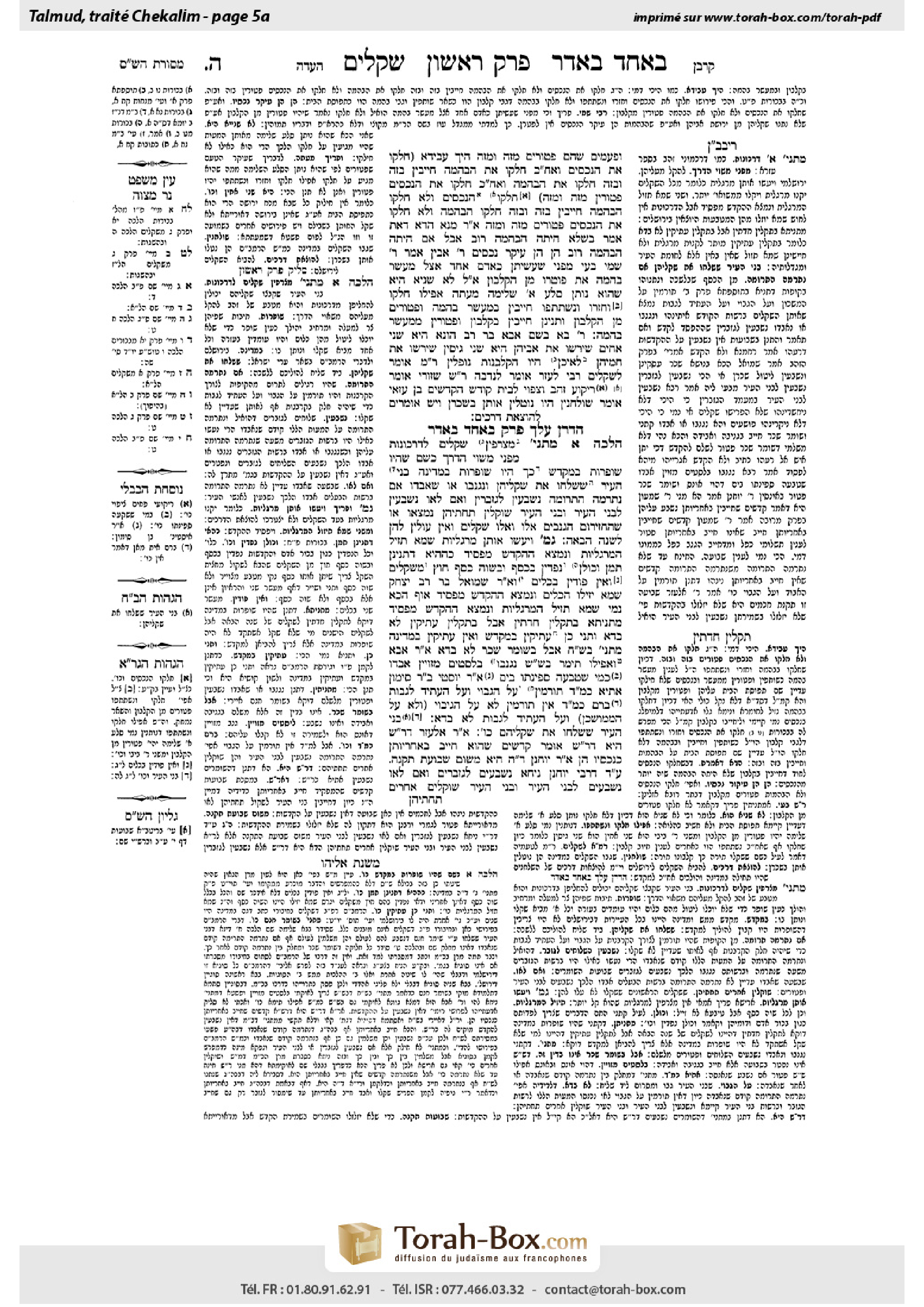
Shekalim 5a: Talmud study for Daf Yomi
Study the Talmud for Daf Yomi with scanned pages, Hebrew text, English translations from Sefaria and AI-generated French translations.
Passage selection and English or AI-generated French translation are available where the scan has annotations. Daf Study is independent of Torah-Box and Sefaria.
Browse Shekalim · שקלים · All tractatesShekalim 5a text and translations
This page of Shekalim includes the Aramaic text and an English translation, alongside the scan above.
שקלים ה׳ א · Aramaic and Hebrew text
הַשּׁוֹקֵל עַל יְדֵי עָנִי כול׳. אָמַר רִבִּי לָעְזָר. וְהֵן שֶׁחִלְקוּ גְדָיִים כְּנֶגֶד תְּיָישִׁים וּתְיָישִׁים כְּנֶגֶד גְּדָיִים. אֲבָל אִם חִלְקוּ גְדָיִים כְּנֶגֶד גְּדָיִים וּתְיָישִׁים כְּנֶגֶד תְּיָישִׁים הוּא חֶלְקוֹ מִשָּׁעָה הָרִאשׁוֹנָה. אָמַר רִבִּי יוֹחָנָן. וַאֲפִילוּ חִלְקוּ גְדָיִים כְּנֶגֶד גְדָיִים וּתְיָישׁים כְּנֶגֶד תְּיישִׁים כִּלְקוּחוֹת הֵן. כַּהִיא דְתַנִּינָן תַּמָּן. הַלָּקוּחַ וּשֶׁנִּיתַּן לוֹ מַתָּנָה פָּטוּר מִמַּעְשַׂר בְּהֵמָה. רִבִּי חִזְקִיָּה אָמַר. רִבִּי יִרְמְיָה בָעֵי. וְלָמָּה לֵי נָן אָמְרִין. פְּעָמִים שֶׁחַיָיבִין בָּזֶה וּבָזֶה וּפְעָמִים שֶׁהֵן פְטוּרִין מִזֶּה וּמִזֶּה. הֵיךְ עֲבִידָא. חִלְקוּ אֶת הַנְּכָסִים וְאַחָר כָּךְ חִלְקוּ אֶת הַבְּהֵמָה. חַיָיבִין בָּזֶה וּבָזֶה. חִלְקוּ אֶת הַבְּהֵמָה וְאַחָר כָּךְ חִלְקוּ אֶת הַנְּכָסִים. פְטוּרִין מִזֶּה וּמִזֶּה. אָמַר רִבִּי מָנָא. הָדָא דְאַתּ אָמַר. בְּשֶׁלֹּא הָיְתָה הַבְּהֵמָה רוֹב. אֲבָל אִם הָיְתָה הַבְּהֵמָה רוֹב הֵן הֵן עִיקַּר נְכָסָיו. רִבִּי אָבּוּן אָמַר. רִבִּי שַׁמַּי בָעֵי. מִפְּנֵי שֶׁעֲשִׂיתָן [כְּאָדָם אֶחָד] (כְּאֶחָד אָדָם) אֶצֶל מַעֲשֵׂר בְהֵמָה אַתְּ פוֹטְרוֹ מִן הַקּוֹלָּבוֹן. אָמַר לֵיהּ לֹא. שַׁנְיָיה הִיא שֶׁהוּא נוֹתֵן סֶלַע אַחַת שְׁלֵימָה. מֵעַתָּה אֲפִילוּ חִלְּקוּ וְחָזְרוּ וְנִשְׁתַּתְּפוּ חַיָיבִין בְּמַעֲשַׂר בְּהֵמָה וּפְטוּרִין מִן הַקּוֹלָבּוֹן. וְתַנִּינָן. חַיָיבִין בַּקּוֹלָּבּוֹן וּפְטוּרִין מִמַּעֲשַׂר בְּהֵמָה. רִבִּי בָּא בְשֵׁם אַבָּא בַּר רַב הוּנָא. הִיא שְׁנֵי אַחִין שֶׁיָּרְשׁוּ אֶת אֲבִיהֶן הִיא שְׁנֵי גִיסִין שֶׁיָּרְשׁוּ אֶת חֲמֵיהֶן.
לְאֵיכָן הָיוּ הַקּוֹלָּבּוֹנוֹת נוֹפְלִין. רִבִּי מֵאִיר אוֹמֵר. לַשְּׁקָלִים. רִבִּי לָעְזָר אוֹמֵר. לִנְדָבָה. רִבִּי שִׁמְעוֹן הַשְּׁזוּרִי אוֹמֵר. רִיקּוּעֵי זָהָב וְצִיפּוּי לְבֵית קוֹדֶשׁ הַקָּדָשִׁים. בֶּן עַזַּאי אוֹמֵר. שׁולְחָנִין הָיוּ נוֹטְלִין אוֹתָן בִּשְׂכָרָן. וְיֵשׁ אוֹמְרִים. לְהוֹצָאַת דְּרָכִים.
משנה: מְצָרְפִין שְׁקָלִים דַּרְכּוֹנוֹת מִפְּנֵי מַשּׂוֹי הַדֶּרֶךְ. כְּשֵׁם שֶׁהָיוּ שׁוֹפָרוֹת בַּמִּקְדָּשׁ כָּךּ הָיוּ בַּמְּדִינָה. בְּנֵי הָעִיר שֶׁשִּׁילְחוּ אֶת שִׁקְלֵיהֶן וְנִגְנְבוּ אוֹ שֶׁאָבְדוּ אִם נִתְרְמָה הַתְּרוּמָה נִשְׁבָּעִין לַגִּזְבָּרִים וְאִם לָאו נִשְׁבָּעִין לִבְנֵי הָעִיר וּבְנֵי הָעִיר שׁוֹקְלִין תַּחְתֵּיהֶן. נִמְצָאוּ אוֹ שֶׁהֶחֱזִירוּם הַגַּנָּבִים אֵילּוּ וָאֵילּוּ שְׁקָלִים וְאֵין עוֹלִין לָהֶן לְשָׁנָה הַבָּאָה:
הלכה: מְצָרְפִין שְׁקָלִים דַּרְכּוֹנוֹת כול׳. וְיַעֲשׂוּ אוֹתָן מַרְגָּלִית. שֶׁמְּא תָזִיל הַמַּרְגָלִית וְנִמְצָא הַהֶקְדֵּשׁ מַפְסִיד. כַּהִיא דְתַנִּינָן תַּמָּן. וְכוּלָּן נִפְדִּין בְּכֶסֶף וּבְשָׁוֶה כֶסֶף חוּץ מִן הַשְּׁקָלִים. [וְאֵין פּוֹדִין בְּכֵלִים]. אָמַר רִבִּי שְׁמוּאֵל בַּר רַב יִצְחָק. שֶׁמָּא יָזִילוּ הַכֵּלִים וְנִמְצָא הַהֶקְדֵּשׁ מַפְסִיד. וְהָכָא שֶׁמָּא תָזִיל הַמַּרְגָלִית וְנִמְצָא הַהֶקְדֵּשׁ מַפְסִיד.
מַתְנִיתָא בִתְקֵלִין חַדְּתִין. אֲבָל בִּתְקֵלִין עַתִּיקִין לָא בְדָא. וְתַנֵּי כֵן. עַתִּיקִין בַּמִּקְדָּשׁ. אֵין עַתִּיקִין בַּמְּדִינָה. מַתְנִיתָא בִשׁוֹמֵר חִנָּם. אֲבָל בְּשׁוֹמֵר שָׂכָר לֹא בְדָא. אָמַר רַב אַבָּא. וַאֲפִילוּ תֵימַר בְּשׁוֹמֵר שָׂכָר. נִגְנְבוּ. בְּלֵיסְטֵיס מְזוּיָין. אָבְדוּ. כְּמִי שֶׁטָּבְעָה סְפִינָּתוֹ בַיָּם. אָמַר רִבִּי יוּסְטָא בֵּירִבִּי סִימוֹן. אַתְיָיא כְּמָאן דְּאָמַר. תּוֹרְמִין עַל הַגָּבוּי וְעַל הֶעָתִיד לְהִיגָּבוֹת. בְּרַם כְּמָאן דְּאָמַר. אֵין תּוֹרְמִין לֹא עַל הַגָּבוּי וְלֹא עַל הַמְמוּשְׁכָּן. לֹא בְדָא.
בְּנֵי הָעִיר שֶׁשִּׁילְחוּ אֶת שִׁקְלֵיהֶן. נִגְנְבוּ אוֹ שֶׁאָבְדוּ. אָמַר רִבִּי אֶלְעָזָר. דְּרִבִּי שִׁמְעוֹן הִיא. דְּרִבִּי שִׁמְעוֹן אָמַר. קֳדָשִׁים שֶׁהוּא חַיָיב בַּאֲחֵרִיּוּתָן כִּנְכָסָיו הֵן. אָמַר רִבִּי יוֹחָנָן. דִּבְרֵי הַכֹּל הִיא. מִשּׁוּם שְׁבוּעַת תַּקָּנָה. עַל דַּעְתֵּיהּ דְּרִבִּי יוֹחָנָן נִיחָא. נִשְׁבָּעִין לִבְנֵי הָעִיר וּבְנֵי הָעִיר שׁוֹקְלִין תַּחְתֵּיהֶן. הָדָא הִיא דְרִבִּי שִׁמְעוֹן. מִשֵּׁם שְׁבוּעַת תַּקָּנָה. אַף עַל פִּי שֶׁקִּיבְּלוּ בְנֵי הָעִיר לְשַׁלֵּם אֵין הַהֶקְדֵּשׁ יוֹצֵא בְלֹא שְׁבוּעָה.
Shekalim 5a · English translation
“A person who pays the sheqel for a poor person,” etc. Rebbi Eleazar said, only if they counted lambs against rams and rams against lambs, but if they counted lambs against lambs and rams against rams, it was his part from the first hour. Rebbi Joḥanan said, even if they counted lambs against lambs and rams against rams, they are like buyers56b., as we have stated there9:3.: “The buyer or recipient of a gift is not liable for animal tithe. Rebbi Ḥizkiah said that Rebbi Jeremiah asked: And why are we not saying that sometimes they are liable for both and sometimes they are not liable for either. How is this done? If they distributed the properties and afterwards distributed the animals they are liable for both with agio, while the undistributed livestock remains subject to animal tithe even under the new arrangement.. If they distributed the animals and afterwards distributed the properties they are not liable for either. together with one agio while the livestock is under the rules of partnership. Babli Bekhorot56b. Rebbi Mana said, this holds only if the animals were not a majority, but if the animals were a majority they form the main property. Rebbi Abun said that Rebbi Shammai asked: Because you made them like one person for animal tithe, you made them not liable for agios? He said to him, no. There is a difference because he is giving a complete tetradrachma. Then even if they distributed and then formed a partnership, they should be liable for animal tithe and not liable for the agio. But we have stated, “they are liable for the agio, not liable for animal tithe.” Rebbi Abba in the name of Abba bar Rav Huna it is the same for two brothers inheriting from their father or two brothers-in-law inheriting from their father-in-law.
“Where were the agios credited to? Rebbi Meïr says, to the sheqalim. Rebbi Eleazar says, for voluntary offerings. Rebbi Simeon from Shezur says, gold sheeting, cover for the Holiest of Holies. Ben Azzai says, the money changers were taking them as their fees; but some say, for travel expenses.”
MISHNAH: One consolidates sheqalim to darics, commonly worth 25 full weight silver denarii. because of the difficulty of transport. Just as there were horns in the Temple, so were in the countryside. If the people of a city sent their sheqalim and these were stolen or lost, if the sums were disbursed were taken from the treasury to be disbursed for the service of the new year, in the computation of the monies available in Nisan the collected but not received sums are taken into account for disbursing on the next two occasions (Chapter 1, Note 26). Therefore the money was stolen from the Temple; the oath which is required either by biblical law or by rabbinic institution from the carrier to be sworn in presence of the owner or his representative, has to be sworn in presence of the Temple treasurers. If the theft or loss was detected earlier, the oath is due to the representatives of the taxpayers. The oaths are different for salaried or unpaid carriers. they will have to swear to the Temple custodians, otherwise they will have to swear to the city dwellers who have to replace them by new sheqalim. If they were found or the thieves returned them already were Temple property (as explained in the preceding sentence), they would have committed not only larceny but also sacrilege., both are sheqalim and cannot be credited for the coming year.
HALAKHAH: “One consolidates sheqalim to darics,” etc. Should one exchange them for a pearl? Perhaps the pearl would lose in value and the Temple treasury would suffer damage. As we have stated there8:7., “All which may be redeemed at all may be redeemed for money’s worth except sheqalim. can be redeemed by money or monies-worth except for sheqalim” [and one does not redeem by implements;] and Rebbi Samuel bar Rav Isaac said, perhaps the implements would lose in value and the Temple treasury would suffer damage. Also here, perhaps the pearl would lose in value and the Temple treasury would suffer damage.
The Mishnah is about new sheqalim, but not about old sheqalim. And it was stated so: Old ones in the Temple, no old ones in the countryside. The Mishnah is about an unpaid trustee, but not about a paid keeper 8:1. The unpaid trustee has to swear that he did not take the valuables for himself and that he was not grossly negligent. The paid keeper has to pay for what is lost or stolen; there is no reason he should swear in these circumstances.. Rav Abba said, even if you say about a paid keeper, if they were stolen, by an armed robber58a., if the were lost, as when his ship sank at sea. Rebbi Justus ben Rebbi Simon said, it follows him who said, one disburses on the account of what was collected and what was to be collected108a, Bava Meṣi`a58a., but not following him who said one does not disburse on basis of what was collected nor what was secured by pledges.
“If the people of a city sent their sheqalim and these were stolen or lost.” Rebbi Eleazar said, this is Rebbi Simeon’s, since Rebbi Simeon said, sancta for whose alienation he is responsible are like his own property6:7 (Note 97). The majority opinion is that there can be no (biblical) oath for sancta; so it seems that for them the carriers of the sheqalim could not swear.. Rebbi Joḥanan said, it is everybody’s opinion, because of an instituted oath is irrelevant here. The oath is not biblical, and it is not a question whether the sheqalim are sancta or not; the oath is the general rabbinic oath imposed on all persons who cannot be forced to pay damages and on whom no biblical oath can be imposed.. Rebbi Joḥanan’s opinion is understandable; “they have to swear to the city dwellers who have to replace them by new sheqalim.” Is that Rebbi Simeon’s? Even though the city dwellers agreed to pay, Temple property cannot be released without an oath.
Text from Sefaria: The Jerusalem Talmud, edition by Heinrich W. Guggenheimer. Berlin, De Gruyter, 1999-2015 (CC BY); The Jerusalem Talmud, translation and commentary by Heinrich W. Guggenheimer. Berlin, De Gruyter, 1999-2015 (CC BY).