Shekalim 5b: Talmud study for Daf Yomi
Study the Talmud for Daf Yomi with scanned pages, Hebrew text, English translations from Sefaria and AI-generated French translations.
Passage selection and English or AI-generated French translation are available where the scan has annotations. Daf Study is independent of Torah-Box and Sefaria.
Browse Shekalim · שקלים · All tractatesShekalim 5b text and translations
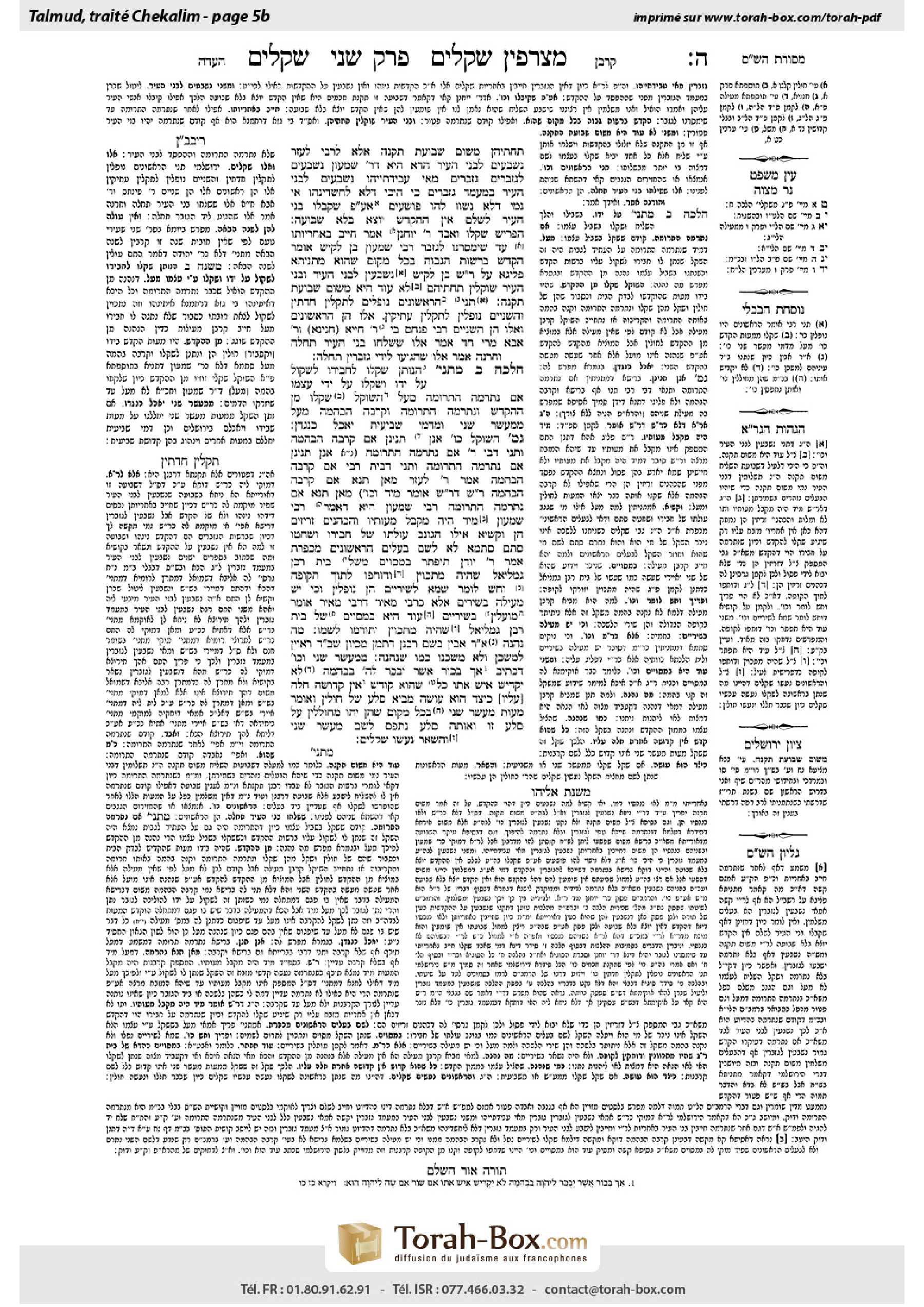
This page of Shekalim includes the Aramaic text and an English translation, alongside the scan above.
שקלים ה׳ ב · Aramaic and Hebrew text
בְּנֵי הָעִיר שֶׁשִּׁילְחוּ אֶת שִׁקְלֵיהֶן. נִגְנְבוּ אוֹ שֶׁאָבְדוּ. אָמַר רִבִּי אֶלְעָזָר. דְּרִבִּי שִׁמְעוֹן הִיא. דְּרִבִּי שִׁמְעוֹן אָמַר. קֳדָשִׁים שֶׁהוּא חַיָיב בַּאֲחֵרִיּוּתָן כִּנְכָסָיו הֵן. אָמַר רִבִּי יוֹחָנָן. דִּבְרֵי הַכֹּל הִיא. מִשּׁוּם שְׁבוּעַת תַּקָּנָה. עַל דַּעְתֵּיהּ דְּרִבִּי יוֹחָנָן נִיחָא. נִשְׁבָּעִין לִבְנֵי הָעִיר וּבְנֵי הָעִיר שׁוֹקְלִין תַּחְתֵּיהֶן. הָדָא הִיא דְרִבִּי שִׁמְעוֹן. מִשֵּׁם שְׁבוּעַת תַּקָּנָה. אַף עַל פִּי שֶׁקִּיבְּלוּ בְנֵי הָעִיר לְשַׁלֵּם אֵין הַהֶקְדֵּשׁ יוֹצֵא בְלֹא שְׁבוּעָה.
הִפְרִישׁ שִׁקְלוֹ וְאָבַד. רִבִּי יוֹחָנָן אָמַר. חַיּיָּב בָּאַחֵרָיוּתוֹ עַד שֶׁיִּמְסוֹר לַגִּיזְבָּר. רִבִּי שִׁמְעוֹן בֶּן לָקִישׁ אָמַר. הֶקְדֵּשׁ בִּרְשׁוּת הַגָּבוֹהַּ בְּכָל מָקוֹם שֶׁהוּא. מַתְנִיתָא פְלִיגָא עַל רִבִּי שִׁמְעוֹן בֶּן לָקִישׁ. נִשְׁבָּעִין לִבְנֵי הָעִיר וּבְנֵי הָעִיר שׁוֹקְלִין תַּחְתֵּיהֶן. [עוֹד] הִיא מִשֵּׁם שְׁבוּעַת תַּקָּנָה.
תַּנֵּי הָרִאשׁוֹנִים נוֹפְלִין לְתְקְלִין חַדְּתִין וְהַשְּׁנִיִים נוֹפְלִים לְתִקְלִין עֲתִיקִין. אֵילּוּ הֵן הָרִאשׁוֹנִים וְאֵילּוּ הֵן הַשְּׁנִיִים. רִבִּי פִּינְחָס בֵּירִבִּי חֲנַנְיָה וְרִבִּי אַבָּא מָרִי. חַד אָמַר. אֵילּוּ שֶׁשִּׁילְחוּ בְנֵי הָעִיר תְּחִילָּה. וְחוֹרָנָה אָמַר. אֵילּוּ שֶׁהִגִּיעוּ לִידֵי גִיזְבָּרִין תְּחִילָּה.
משנה: הַנּוֹתֵן שִׁקְלוֹ לַחֲבֵירוֹ לִשְׁקוֹל עַל יָדוֹ וּשְׁקָלוֹ עַל יְדֵי עַצְמוֹ אִם נִתְרְמָה הַתְּרוּמָה מָעַל. הַשּׁוֹקֵל שִׁקְלוֹ מִן הַהֶקְדֵּשׁ וְנִתְרְמָה הַתְּרוּמָה וְקָרְבָה הַבְּהֵמָה מָעַל. מִמַּעֲשֵׁר שֵׁנִי וּמִדְּמֵי שְׁבִיעִית יֹאכַל כְּנֶגְדָּן:
הלכה: הַשּׁוֹקֵל כול׳. אֲנָן תַּנִּינָן. אִם נִתְרְמָה הַתְּרוּמָה. וְתַנֵּיי דְבֵית רִבִּי אִם קָרְבָה הַבְּהֵמָה. אָמַר רִבִּי לָעְזָר. מָאן תַּנָּא. אִם קָרְבָה הַבְּהֵמָה. רִבִּי שִׁמְעוֹן. דְּרִבִּי שִׁמְעוֹן אוֹמֵר. מִיַּד הָיָה מְקַבֵּל מָעוֹתָיו. הַכֹּהֲנִים זְרִיזִין הֵן. וְקַשְׁיָא. אִילּוּ הַגּוֹנֵב עוֹלָתוֹ שֶׁלְחֲבֵירוֹ וּשְׁחָטָהּ סְתָם. סְתַמָּהּ לֹא לְשֵׁם הַבְּעָלִים הָרִאשׁוֹנִים מְכַפֶּרֶת. אָמַר רִבִּי יוּדָן. תִּיפְתָּר בִּמְסוּיָים. מִשֶּׁלְבֵּית רַבָּן גַּמְלִיאֵל שֶׁהָיָה מִתְכַּוֵּין וּדְחָפוֹ לַקּוּפָּה. וְחָשׁ לוֹמַר. שֶׁמָּא לַשִׁירַיִים הֵן נוֹפְלִין. וְכִי יְשׁ מְעִילָה בְּשִׁירַיִים. אֶלָּא כְרִבִּי מֵאִיר. דְּרִבִּי מֵאִיר אָמַר. מוֹעֲלִין בְּשִׁירַיִים. עוֹד הִיא בִּמְסוּיָים. מִשֶּׁלְבֵּית רַבָּן גַּמְלִיאֵל שֶׁהָיָה מִתְכַּוֵּין וְתוֹרְמוֹ לִשְׁמוֹ.
מַה נֶהֱנֶה. אָמַר רִבִּי אַבִּין בְּשֵׁם רַבָּנִן דְּתַמָּן. מִכֵּיוָן שֶׁבֵּית דִּין רְאוּיִין לְמַשְׁכֵּן וְלֹא מִישְׁכֵּינוֹ כְּמִי שֶׁנֶּהֱנֶה.
כָּתוּב אַךְ בְּכוֹר אֲשֶׁר יְבֻכַּר לַיי בִּבְהֵמָה לֹא יַקְדִּישׁ אִישׁ אוֹתוֹ. כָּל שֶׁהוּא קוֹדֶשׁ אֵין קְדושָּׁה חָלָה עָלָיו. כֵּיצַד הוּא עוֹשֶׂה. מֵבִיא סֶלַע שֶׁלְחוּלִין וְאוֹמֵר. מָעוֹת מַעֲשֵׂר שֵׁינִי בְּכָל מָקוֹם שֶׁהֵן מְחוּלָלִין עַל סֶלַע זוֹ וְאוֹתָן נִתְפַּסִּין לְשֵׁם שֵׁינִי וְהַשְּׁאָר נַעֲשִׂין שְׁקָלִים.
משנה: הַמְכַנֵּס מָעוֹת וְאָמַר הֲרֵי אֵילּוּ לְשִׁקְלִי בֵּית שַׁמַּאי אוֹמְרִים מוֹתָרָן נְדָבָה. וּבֵית הִלֵּל אוֹמְרִים מוֹתָרָן חוּלִין. שֶׁאָבִיא מֵהֶן שִׁקְלִי שָׁוִין שֶׁמּוֹתָרָן חוּלִין. אֵילּוּ לְחַטָּאת שָׁוִין שֶׁהַמּוֹתָר נְדָבָה. שֶׁאָבִיא מֵהֶן חַטָּאתִי שָׁוִין שֶׁהַמּוֹתָר חוּלִין: אָמַר רִבִּי שִׁמְעוֹן מַה בֵּין שְׁקָלִים לְחַטָּאת. אֶלָּא שֶׁל שְׁקָלִים יֵשׁ לָהֶן קִיצְבָה וּלְחַטָּאת אֵין לָהּ קִצְבָה. רִבִּי יְהוּדָה אוֹמֵר אַף לִשְׁקָלִים אֵין לָהֶן קִיצְבָה שֶׁכְּשֶׁעָלוּ יִשְׂרָאֵל מִן הַגּוֹלָה הָיוּ שׁוֹקְלִין דַּרְכּוֹנוֹת חָזְרוּ לִשְׁקוֹל סְלָעִים חָזְרוּ לִשְׁקוֹל טִבְעִים בִּקְּשׁוּ לִשְׁקוֹל דִּינָרִין. אָמַר רַבִּי שִׁמְעוֹן אַף עַל פִּי כֵן יַד כּוּלָּם שָׁוָוה. אֲבָל חַטָּאת זֶה מֵבִיא בְּסֶלַע וְזֶה מֵבִיא בִּשְׁתַּיִם וְזֶה מֵבִיא בְּשָׁלֹשׁ:
Shekalim 5b · English translation
“If the people of a city sent their sheqalim and these were stolen or lost.” Rebbi Eleazar said, this is Rebbi Simeon’s, since Rebbi Simeon said, sancta for whose alienation he is responsible are like his own property6:7 (Note 97). The majority opinion is that there can be no (biblical) oath for sancta; so it seems that for them the carriers of the sheqalim could not swear.. Rebbi Joḥanan said, it is everybody’s opinion, because of an instituted oath is irrelevant here. The oath is not biblical, and it is not a question whether the sheqalim are sancta or not; the oath is the general rabbinic oath imposed on all persons who cannot be forced to pay damages and on whom no biblical oath can be imposed.. Rebbi Joḥanan’s opinion is understandable; “they have to swear to the city dwellers who have to replace them by new sheqalim.” Is that Rebbi Simeon’s? Even though the city dwellers agreed to pay, Temple property cannot be released without an oath.
Somebody put aside his sheqel and it was lost. Rebbi Joḥanan said, he is responsible for its alienation. Babli Ḥulin 139a. until he delivers to the Temple trustee. Rebbi Simeon ben Laqish said, Temple property is Heaven’s at any place where it may be1:6: “A promise to Heaven is like delivery to an individual.”. A Mishnah disagrees with Rebbi Simeon ben Laqish: “they have to swear to the city dwellers who have to replace them by new sheqalim..” Still this is because of a regulation oath.
It was stated: The first ones fall to the new sheqalim, the second ones to the old sheqalim are the leftover from the previous year, given to the gift fund for supplementary sacrifices (Chapter 1, Note 171.). Which ones are first and which ones are second? Rebbi Phineas ben Rebbi Ḥananiah and Rebbi Abba Mari. One said, those that the city dwellers sent first contributed first are the last to be delivered. This seems to be a gloss incorporated into the text., but the other one said, those which came in to the hands of the Temple trustees first.
MISHNAH: If one gives his sheqel to another person to deliver it for him but that one uses it for himself, if the sums were disbursed he committed me`ilah from Heaven’s property.. If somebody pays his sheqel from Temple money, if the sums were disbursed and the animal sacrificed he committed me`ilah are mainly used to buy sacrifices. Using one for the other is alienation from the original intent but not me`ilah, which is committed only if sancta are used for profane purposes. If the money which he took from Temple money is actually used to buy a sacrifice, he does not have to take from his profane money to pay the sheqel; using the corresponding profane money makes the act larceny.. From Second Tithe or Sabbatical money, he shall eat correspondingly. 14:22–27). Similarly, Sabbatical produce has to be eaten, not used in industry. If such produce was sold, the proceeds are to be used to buy produce of the Land to be consumed in the Land. If such money was alienated from its original use, the situation can be repaired in replacing it with new money to be used for the original purpose..
HALAKHAH: “He who pays the sheqel,” etc. We have stated, “if the sums were disbursed.” In the House of Rebbi it was stated, “if the animal was sacrificed.” Rebbi Eleazar said, who is the Tanna of “if the animal was sacrificed”? Rebbi Simeon, since Rebbi Simeon said, he receives his money immediately, the priests are quick1:21).. It is difficult. If somebody stole another’s elevation offering and slaughtered it without special mention, is it not without special mention atoning for the original owner become part of a large sum, it is impossible to know whose sheqel pays for what and when his particular sheqel is disbursed.? Rebbi Yudan said, explain it if it was a definite object, like that of the House of Rabban Gamliel who was taking aim throwing it into the chest and threw it into the box from which sacrifices were bought; they had control over the time when their sheqel was used.. But should one not worry that maybe it will become part of the remainder; is there me`ilah for the remainder which required a special sacrifice; R. Meïr disagrees and seems to restrict the uses of the money to sacrificial objects enumerated in Mishnah 4:3. Babli Qiddušin54a.? But it must follow Rebbi Meïr, since Rebbi Meïr said, there is me`ilah for the remainder. Still if it was a definite object, like that of the House of Rabban Gamliel who was taking aim and disbursed it in his name only if the misappropriated sheqel can be traced to the moment of its actual use for sacrifices..
How does he profit, one not only must use a sacred object illegally but also profit from the action (Mishnah Me`ilah5:1).? Rebbi Abbin said in the name of the rabbis there, since the court could take a pledge from but did not take any pledge he is like one who profited.
It is written 27:26., but a firstling which is born first to the Eternal by a domestic animal no person can declare holy. No holiness can fall on anything holy; cf. Mishnah Arakhin8:7. The problem addressed is how to rectify the situation that tithe or sabbatical money was taken for the sheqel. Not only is there an obligation to make up for the value taken but the coin given as sheqel, being already holy (of a minor degree) cannot possibly acquire the holiness of monies dedicated to the Temple. Without rectification, the use of the coin by the Temple authorities would be sinful.. What does he do? He brings a profane tetradrachma and says, the monies of Second Tithe wherever they be. are redeemed by this tetradrachma; this is designated as Second Tithe and the others. are declared sheqalim.
MISHNAH: If somebody collects coins and says, “these are for my sheqel,” the House of Shammai say, the excess is gift, but the House of Hillel say, the excess is profane is a fixed sum and it is reasonable to assume that only the amount necessary was dedicated. The price of an animal for a sacrifice is variable; since the person is ready to spend the entire amount, the entire amount is dedicated.. “That I shall take from these for my sheqel,” they agree that the excess is profane. “These are for a purification offering,” they agree that the excess is gift, “that I shall take from these for a purification offering,” they agree that the excess is profane.
Rebbi Simeon said, what is the difference between sheqalim and a purification offering? It is that sheqalim have a fixed value and a purification offering has no fixed value. Rebbi Jehudah said, sheqalim also have no fixed value. When Israel returned from the Babylonian exile they gave as Temple tax darics, they continued to give sela`im is the standard (Sumerian) unit of volume. In the Talmudim, it is the standard expression for the silver tetradrachma (approximately 14g), roughly corresponding to the old Phoenician sheqel. In the context here, a similar Persian coin must be intended. The vocalization סֶלַע is customary (from the Hebrew word “rock”); probably סִלַע historically would be more correct., they continued to give minted coins, they wanted to give denars. Rebbi Simeon said, anyhow everybody gave the same was not constant in time, at any given time everybody knew exactly what was required., but for a purification offering, one brings for a tetradrachma, another for two, and still another for three.
Text from Sefaria: The Jerusalem Talmud, edition by Heinrich W. Guggenheimer. Berlin, De Gruyter, 1999-2015 (CC BY); The Jerusalem Talmud, translation and commentary by Heinrich W. Guggenheimer. Berlin, De Gruyter, 1999-2015 (CC BY).