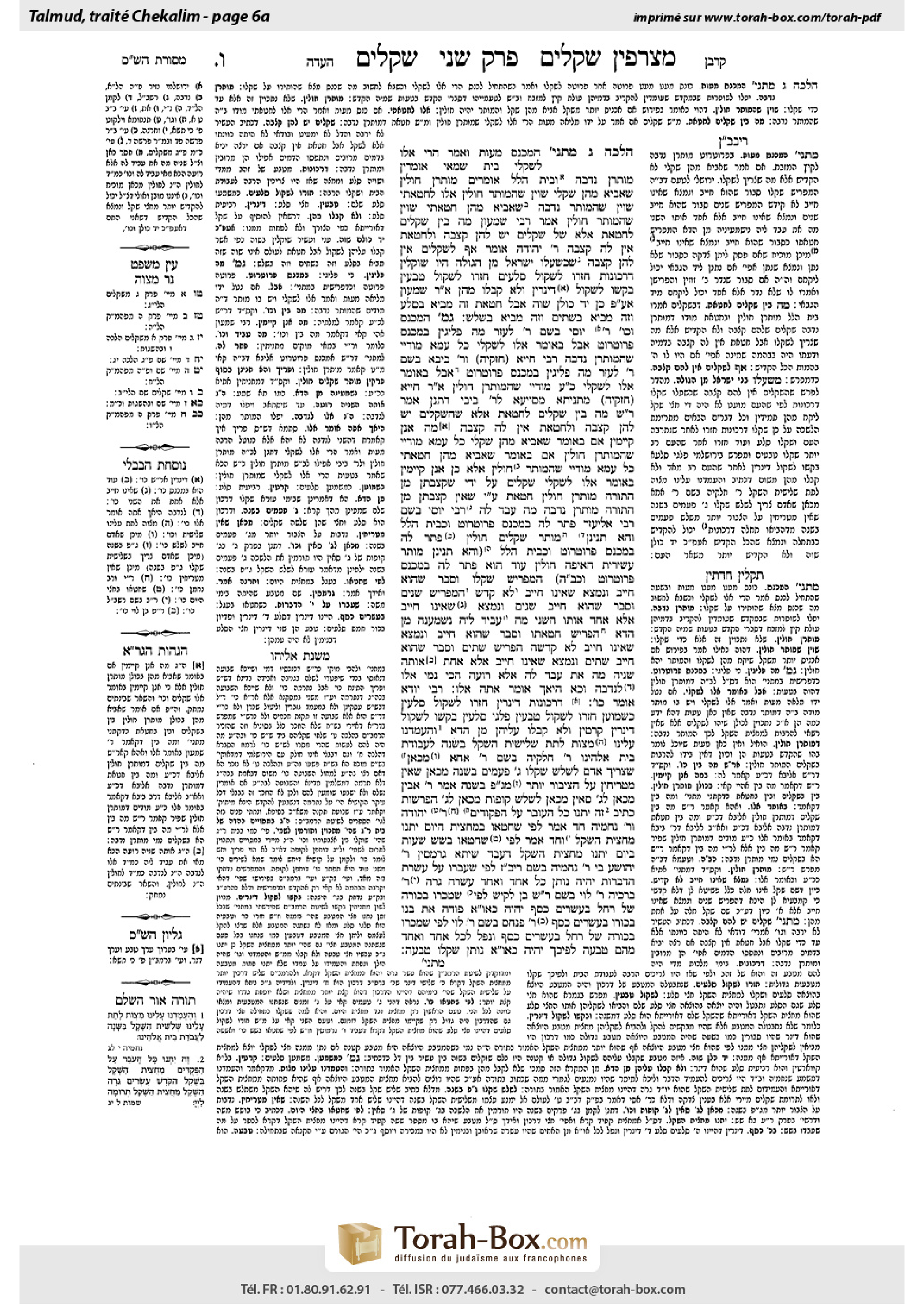
Shekalim 6a: Talmud study for Daf Yomi
Study the Talmud for Daf Yomi with scanned pages, Hebrew text, English translations from Sefaria and AI-generated French translations.
Passage selection and English or AI-generated French translation are available where the scan has annotations. Daf Study is independent of Torah-Box and Sefaria.
Browse Shekalim · שקלים · All tractatesShekalim 6a text and translations
This page of Shekalim includes the Aramaic text and an English translation, alongside the scan above.
שקלים ו׳ א · Aramaic and Hebrew text
משנה: הַמְכַנֵּס מָעוֹת וְאָמַר הֲרֵי אֵילּוּ לְשִׁקְלִי בֵּית שַׁמַּאי אוֹמְרִים מוֹתָרָן נְדָבָה. וּבֵית הִלֵּל אוֹמְרִים מוֹתָרָן חוּלִין. שֶׁאָבִיא מֵהֶן שִׁקְלִי שָׁוִין שֶׁמּוֹתָרָן חוּלִין. אֵילּוּ לְחַטָּאת שָׁוִין שֶׁהַמּוֹתָר נְדָבָה. שֶׁאָבִיא מֵהֶן חַטָּאתִי שָׁוִין שֶׁהַמּוֹתָר חוּלִין: אָמַר רִבִּי שִׁמְעוֹן מַה בֵּין שְׁקָלִים לְחַטָּאת. אֶלָּא שֶׁל שְׁקָלִים יֵשׁ לָהֶן קִיצְבָה וּלְחַטָּאת אֵין לָהּ קִצְבָה. רִבִּי יְהוּדָה אוֹמֵר אַף לִשְׁקָלִים אֵין לָהֶן קִיצְבָה שֶׁכְּשֶׁעָלוּ יִשְׂרָאֵל מִן הַגּוֹלָה הָיוּ שׁוֹקְלִין דַּרְכּוֹנוֹת חָזְרוּ לִשְׁקוֹל סְלָעִים חָזְרוּ לִשְׁקוֹל טִבְעִים בִּקְּשׁוּ לִשְׁקוֹל דִּינָרִין. אָמַר רַבִּי שִׁמְעוֹן אַף עַל פִּי כֵן יַד כּוּלָּם שָׁוָוה. אֲבָל חַטָּאת זֶה מֵבִיא בְּסֶלַע וְזֶה מֵבִיא בִּשְׁתַּיִם וְזֶה מֵבִיא בְּשָׁלֹשׁ:
הלכה: הַמְכַנֵּס מָעוֹת כול׳. רִבִּי יוֹסֵה בְשֵׁם רִבִּי לָעְזָר. מַה פְליגִין. בִּמְכַנֵּס פְּרוֹטְרוֹט. אֲבָל בָּאוֹמֵר. אֵילּוּ [לְשִׁקְלִי]. כָּל עַמָּא מוֹדֵיי שֶׁהַמּוֹתָר נְדָבָה. רִבִּי חִזְקִיָּה רִבִּי בֵּיבַי בְּשֵׁם רִבִּי לָעְזָר. מַה פְלִיגִין. בִּמְכַנֵּס פְּרוֹטְרוֹט. אֲבָל בָּאוֹמֵר. אֵילּוּ. כָּל עַמָּא מוֹדֵיי שֶׁהַמּוֹתָר חוּלִין. אָמַר רִבִּי חִזְקִיָּה. מַתְנִיתָא מְסַיְיעָא לְרִבִּי בֵּיבַי. [דִּתְנָן.] אָמַר רַבִּי שִׁמְעוֹן. מַה בֵּין שְׁקָלִים לְחַטָּאת. אֶלָּא שֶׁהַשְּׁקָלִים יֵשׁ לָהֶן קִצְבָה וּלְחַטָּאת אֵין לָהּ קִיצְבָה. מַה אֲנָן קַיָימִין. אִם בָּאוֹמֵר. שֶׁאָבִיא מֵהֶן שִׁקְלִי. כָּל עַמָּא מוֹדֵיי שֶׁהַמּוֹתָר חוּלִין. אִם בָּאוֹמֵר. שֶׁאָבִיא מֵהֶם חַטָּאתִי כָּל עַמָּא מוֹדֵיי שֶׁהַמּוֹתָר נְדָבָה. אֶלָּא כֵן אֲנָן קַיָימִין. בָּאוֹמֵר. אֵילּוּ שְׁקָלִים. עַל יְדֵי שֶׁקִצְוָותָן מִן הַתּוֹרָה. מוֹתָרָן חוּלִין. חַטָּאת עַל יְדֵי שֶׁאין קִצְבָתָהּ מִן הַתּוֹרָה. מוֹתָרָהּ נְדָבָה. מַה עֲבַד לָהּ רִבִּי שִׁמְעוֹן בֵּן לָקִישׁ. פָּתַר לָהּ בִּמְכַנֵּס פְּרוֹטְרוֹט כְּבֵית הִלֵּל. וְהָא תַנִּינָן. מוֹתַר שְׁקָלִים חוּלִּין. פָּתַר לָהּ בִּמְכַנֵּס פְּרוֹטְרוֹט וּכְבֵית הִלֵּל. וְהָא תַנִּינָן. עֲשִׂירִית הָאֵיפָה [חוּלִין]. עוֹד הוּא פָּתַר לָהּ בִּמְכַנֵּס פְּרוֹטְרוֹט וּכְבֵית הִלֵּל.
הַמַּפְרִישׁ שִׁקְלוֹ וְסָבוּר שֶׁהוּא חַיָיב וְנִמְצָא שֶׁאֵינוֹ חַיָיב. לֹא קָדַשׁ. הַמַּפְרִישׁ שְׁנַיִם וְסָבוּר שֶׁהוּא חַיָיב שְׁנַיִם וְנִמְצָא שֶׁאֵינוֹ חַיָיב אֶלָּא אֶחָד. אוֹתוֹ הַשֵּׁינִי מָה אַתְּ עֲבַד לֵיהּ. [נִשְׁמְעִינָהּ מִן הָדָא. הִפְרִישׁ חַטָּאתוֹ] סָבוּר שֶׁהוּא חַיָיב וְנִמְצָא שֶׁאֵינוֹ חַיָיב. לֹא קָדְשָׁה. הִפְרִישׁ שְׁתַּיִם וְסָבוּר שֶׁהוּא חַיָיב שְׁתַּיִם וְנִמְצָא שֶׁאֵינוֹ חַיָיב אֶלָּא אַחַת. אוֹתָהּ הַשְּׁנִיָיה מָה אַתְּ עֲבַד לָהּ. (בָּאוֹמֵר) [אֶלָּא רוֹעָה. הָכָא נַמֵּי אֵלּוּ לִנְדָבָה. הֵיאַךְ אַתָּה אוֹמֵר] אֵילּוּ.
שֶׁכְּשֶׁעָלוּ יִשְׂרָאֵל מִן הַגּוֹלָה הָיוּ שׁוֹקְלִין דַּרְכּוֹנוֹת. דֵּינָרִין. חָזְרוּ לְשְׁקוֹל סְלָעִים. כִּשְׁמוּעָן. חָזְרוּ לִשְׁקוֹל טִיבְעִין. פַּלְגֵי סִילְעִין. בִּיקְּשׁוּ לִשְׁקוֹל דִּינָרִין. קָרָטִין. וְלֹא קִיבְּלוּ עֲלֵיהֶן. מִן הָדָא. וְהֶעֱמַדְנוּ עָלֵינוּ מִצְוֹת לָתֵת שְׁלִשִׁית הַשֶּׁקֶל בַּשָּׁנָה לַעֲבוֹדַת בֵּית אֱלֹהֵינוּ. רִבִּי חִלְקִיָּה בְשֵׁם רִבִּי אָחָא. מִיכָּן שֶׁאָדָם צָרִיךְ לְשַׁלֵּשׁ שִׁקְלוֹ שְׁלֹשָׁה פְעָמִים בַַּשָּׁנָה. מִיכָּן שֶׁאֵין מַטְרִיחִין עַל הַצִּיבּוּר יוֹתֵר מִשְּׁלֹשָׁה פְעָמִים בַּשָּׁנָה. אָמַר רִבִּי אַבִּין. מִיכָּן לְשָׁלֹשׁ סְאִין. מִיכָּן לְשָׁלֹשׁ קוּפּוֹת. מִיכָּן לְשָׁלֹשׁ אַפְרָשׁוֹת.
כְּתִיב זֶה יִתְּנוּ כָּל הָעוֹבֵר עַל הַפְּקוּדִים וגו׳. רִבִּי יוּדָה וְרִבִּי נְחֶמְיָה. חַד אָמַר. לְפִי שֶׁחָטְאוּ בְמַחֲצִית הַיּוֹם יִתְנוּ מַחֲצִית הַשֶּׁקֶל. וְחָרָנָה אָמַר. לְפִי שֶׁחָטְאוּ בְשֵׁשׁ שָׁעוֹת יִתְנוּ מַחֲצִית הַשֶּׁקֶל דַּעֲבַד שִׁיתָּא גְרַמָּסִין. רִבִּי יְהוֹשֻׁעַ בֵּירִבִּי נְחֶמְיָה בְשֵׁם רַבָּן יוֹחָנָן בֶּן זַכַּיי. לְפִי שֶׁעִיבְּרוּ עַל עֲשֶׂרֶת הַדִּיבְּרוֹת יְהֵא נוֹתֵן כָּל אֶחָד וְאֶחָד עֲשֶׂרֶת גֵּרָה. רִבִּי בֶּרֶכְיָה רִבִּי לֵוִי בְשֵׁם רִבִּי שִׁמְעוֹן בֶּן לָקִישׁ. לְפִי שֶׁמָּכְרוּ בְכוֹרָהּ שֶׁל רָחֵל בְּעֶשְׂרִים כֶּסֶף יְהֵא כָל אֶחָד וְאֶחָד [פוֹדֶה אֶת] בְּנוֹ בְכוֹרוֹ בּעֶשְׂרִים כֶּסֶף. רִבִּי פִּינְחָס בְּשֵׁם רִבִּי לֵוִי. לְפִי שֶׁמָּכְרוּ בְכוֹרָהּ שֶׁל רָחֵל בְּעֶשְׂרִים כֶּסֶף וְנָפַל לְכָל אֶחָד וְאֶחָד מֵהֶן טִבַּע לְפִיכַךְ יְהֵא כָל אֶחָד וְאֶחָד נוֹתֵן שִׁקְלוֹ טִבַּע.
משנה: מוֹתַר שְׁקָלִים חוּלִין. מוֹתַר עֲשִׂירִית הָאֵיפָה מוֹתַר קִינֵּי זָבִים קִינֵּי זָבוֹת קִינֵּי יוֹלְדוֹת חַטָּאוֹת וַאֲשָׁמוֹת מוֹתָרָן נְדָבָה. זֶה הַכְּלָל כָּל שֶׁהוּא בָּא לְשֵׁם חֵטּ ומִשֵּׁם אַשְׁמָה מוֹתָרָן נְדָבָה. מוֹתַר עוֹלָה לָעוֹלָה. מוֹתַר מִנְחָה לַמִּנְחָה. מוֹתַר שְׁלָמִים לַשְּׁלָמִים. מוֹתַר פֶּסַח לַשְּׁלָמִים. מוֹתַר נְזִירִים לַנְּזִירִים. מוֹתַר נָזִיר לַנְּדָבָה.
Shekalim 6a · English translation
MISHNAH: If somebody collects coins and says, “these are for my sheqel,” the House of Shammai say, the excess is gift, but the House of Hillel say, the excess is profane is a fixed sum and it is reasonable to assume that only the amount necessary was dedicated. The price of an animal for a sacrifice is variable; since the person is ready to spend the entire amount, the entire amount is dedicated.. “That I shall take from these for my sheqel,” they agree that the excess is profane. “These are for a purification offering,” they agree that the excess is gift, “that I shall take from these for a purification offering,” they agree that the excess is profane.
Rebbi Simeon said, what is the difference between sheqalim and a purification offering? It is that sheqalim have a fixed value and a purification offering has no fixed value. Rebbi Jehudah said, sheqalim also have no fixed value. When Israel returned from the Babylonian exile they gave as Temple tax darics, they continued to give sela`im is the standard (Sumerian) unit of volume. In the Talmudim, it is the standard expression for the silver tetradrachma (approximately 14g), roughly corresponding to the old Phoenician sheqel. In the context here, a similar Persian coin must be intended. The vocalization סֶלַע is customary (from the Hebrew word “rock”); probably סִלַע historically would be more correct., they continued to give minted coins, they wanted to give denars. Rebbi Simeon said, anyhow everybody gave the same was not constant in time, at any given time everybody knew exactly what was required., but for a purification offering, one brings for a tetradrachma, another for two, and still another for three.
HALAKHAH: “If somebody collects coins,” etc. is a fixed sum and it is reasonable to assume that only the amount necessary was dedicated. The price of an animal for a sacrifice is variable; since the person is ready to spend the entire amount, the entire amount is dedicated. Rebbi Yose in the name of Rebbi Eleazar, where do they disagree? If he collects small change, all of them are dedicated according to everybody.. But if he says, these [are for my sheqel ], everybody agrees that the excess is gift. Rebbi Ḥizqiah, Rebbi Bevai in the name of Rebbi Eleazar, where do they disagree? If he collects small change. But if he says, these, everybody agrees that the excess is profane. Rebbi Ḥizqiah said, a Mishnah supports Rebbi Bevai, [as we have stated]: “Rebbi Simeon says, what is the difference between sheqalim and purification offerings? It is that sheqalim are a fixed sum but purification offerings have no fixed price.” Where do we hold? If about one who says, “that I shall bring my sheqel from these,” everybody agrees that the excess is profane. If about one who says, “that I shall bring my purification offering from these,” everybody agrees that the excess is gift. But we must deal with the case of one who says “these sheqalim”, since from the Torah they are a fixed amount the excess is profane, “purification offerings”, since their value is not a fixed amount from the Torah the excess is gift. How does Rebbi Simeon ben Laqish, “R. Yose” also is possible; in that case he states that the argument of R. Simeon applies only if the stated intent is to collect monies for the Temple tax, not if the declaration is made on monies already available. In the latter case, R. Simeon may agree that the excess is earmarked for the Temple gift account. treat this? He explains it, if he collects small change following the House of Hillel. But did we not state, “the excess of sheqalim is profane”? He explains it, if he collects small change following the House of Hillel. But did we not state, “the excess of the tenth of an ephah” [is profane], probably not the daily offering of the rich High Priest (Lev. 6:12–16) but the purification offering of the very poor (Lev. 5:11–13), are dedicated for the gift account. The entire sentence is missing in B. In ג the reading is “the excess of a tenth of an ephah are sheqalim”. This is acceptable; the excess of coins collected for a sanctum may be used for another sacred purpose. While the sanctity of sheqalim is less than that of a flour offering, the switch will be permitted to the poor following the House of Hillel.? Still he explains it if he collects small change following the House of Hillel.
If somebody put aside his sheqel in the belief that he owed it and it turned out that he did not owe, it was not dedicated5:1 stated that dedication in error is void, against the opinion of the House of Shammai.. If he put aside two in the belief that he owed twice and it turned out that he owed only once, how do you treat the second? As one who believed that he owed it and it turned out that he did not owe, or as one who said “these”.?
“When Israel returned from the Babylonian exile they gave as Temple tax darics,” denars, Roman gold denarii. The numismatic evidence shows that the Dareikos was worth about twice the aureus., “they continued to give sela`im,” as their meaning used in both Talmudim to designate the Roman tetradrachma., “they continued to give minted coins,” half tetradrachmas, they wanted to give denars,” quarters., but these were not accepted by the following: and we accepted for us as commandment to give a sheqel three times. 10:33, following the changed wording in B which is understood also in S. The usual translation is “a third of a sheqel.” The verse declares the collection of sheqalim a post-exilic institution. Babli Bava batra9a. in the year for the service in our God’s House. Rebbi Ḥilkiah in the name of Rebbi Aḥa: From here that a person has to give his sheqel three times a year; <from here that a person is responsible for the alienation of his sheqel three times a year;> from here that one does not importune people more than three times a year. Rebbi Abbin said, from here the three se`ah, from here the three boxes, from here the three collection times3 times a year; each disbursement yielded three boxes of sheqalim, three se`ah each..
It is written 30:13, reading הַפְּקוּדִים “the census” as Mishnaic Hebrew הַפִּקּוּדִים “the Commandments”.: This they shall give, everybody who violated the Commandments. Rebbi Jehudah and Rebbi Neḥemiah. One said, because they sinned89a, summarized by Rashi, Ex. 32:1. in the middle of the day they shall give half a sheqel; but the other said, because they sinned in the sixth hour they shall give half a sheqel; which is worth six grams, a third of a denar, approximately 1.2 metric grams, used here as name of a silver coin.. Rebbi Joshua the son of Rebbi Neḥemiah in the name of Rebbi Joḥanan ben Zakkai: Because they transgressed the Ten Commandments, each of them shall give ten gerah 30:13, reading הַפְּקוּדִים “the census” as Mishnaic Hebrew הַפִּקּוּדִים “the Commandments”.. Rebbi Berekhiah, Rebbi Levi in the name of Rebbi Simeon ben Laqish: Because they sold Rachel’s firstborn for twenty pieces of silver; each of them shall redeem his firstborn with twenty pieces of silver. 3:47. The firstborn is redeemed by 5 sheqalim. Since it is held that the sheqel in the Torah is equal to a Roman tetradrachma, Qiddušin1:3 Note 339, 5 sheqalim are 20 denarii. The generic expression “pieces of silver” is taken to mean the most common silver coin, the denar.
The homily is mentioned as introduction to the following one.. Rebbi Phineas in the name of Rebbi Levi: Because they sold Rachel’s firstborn for twenty pieces of silver and each of them received a minted coin had lost its meaning denoting either a standard weight or a standard coin but became the label of a religious obligation., each of them shall give a minted coin as his sheqel.
MISHNAH: The excess of sheqalim is profane. The excess of a tenth of an ephah 5:11., the excess of nests. of male sufferers from gonorrhea 15:14., the nests of female sufferers from flux 15:29., the nests of women after childbirth 12:8., or purification offerings, or reparation offerings, their excesses are gift.. This is the principle: of anything brought for a sin or as reparation the excess is gift.
The excess of elevation sacrifices is for elevation sacrifices, the excess of flour offerings is for flour offerings, the excess of well-being sacrifices is for well-being sacrifices, the excess of Pesaḥ is for well-being sacrifices. The excess of nezirim is for nezirim, the excess of a nazir who might apply for a subsidy for the cost of his sacrifices, the money remain in its status even if not used in the time frame originally envisaged. But if money either was set aside by a nazir himself or it was given to him personally for his sacrifices and not completely used, the excess goes to the Temple’s gift account. is for gift.
Text from Sefaria: The Jerusalem Talmud, edition by Heinrich W. Guggenheimer. Berlin, De Gruyter, 1999-2015 (CC BY); The Jerusalem Talmud, translation and commentary by Heinrich W. Guggenheimer. Berlin, De Gruyter, 1999-2015 (CC BY).