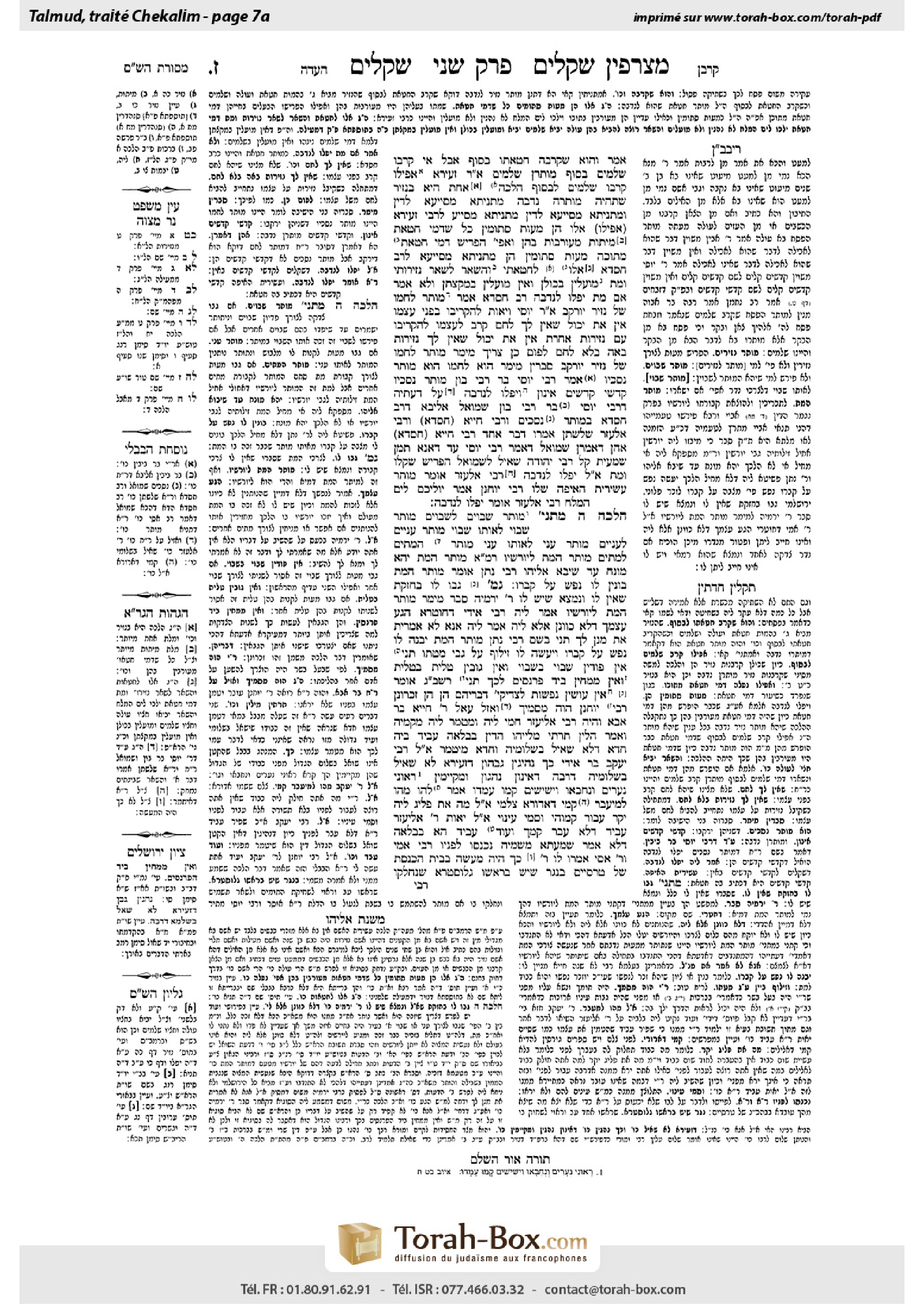
Shekalim 7a: Talmud study for Daf Yomi
Study the Talmud for Daf Yomi with scanned pages, Hebrew text, English translations from Sefaria and AI-generated French translations.
Passage selection and English or AI-generated French translation are available where the scan has annotations. Daf Study is independent of Torah-Box and Sefaria.
Browse Shekalim · שקלים · All tractatesShekalim 7a text and translations
This page of Shekalim includes the Aramaic text and an English translation, alongside the scan above.
שקלים ז׳ א · Aramaic and Hebrew text
רַב חִסְדָּא אָמַר. וְהוּא שֶׁקָּרְבָה חַטָּאתוֹ בַסּוֹף. אֲבָל אִם קָרְבוּ שְׁלָמִים בַּסּוֹף מוֹתָרָן שְׁלָמִים. אָמַר רִבִּי זְעוּרָה. וַאֲפִילוּ קָרְבוּ שְׁלָמִים בַּסּוֹף הֲלָכָה אַחַת הִיא בְנָזִיר שֶׁתְּהֵא מוֹתָרָהּ נְדָבָה. מַתְנִיתָא מְסַיְיעָה לְדֵין וּמַתְנִיתָא מְסַיְיעָא לְדֵין. מַתְנִיתָא מְסַיְיעָה לְרִבִּי זְעוּרָה. אֲפִילוּ הֵן מָעוֹת סְתוּמִין. כָּל שֶׁדְּמֵי חַטָּאוֹת מֵיתוֹת מְעוּרָבוֹת בָּהֵן. וַאֲפִילוּ הִפְרִישׁ דְּמֵי חַטָּאוֹת מֵיתוֹת מִתּוֹכָהּ מָעוֹת סְתוּמִין הֵן. מַתְנִיתָא מְסַיְיעָא לְרַב חִסְדָּא. אֵילּוּ לְחַטָּאתִי וְהַשְּׁאָר לִשְׁאָר נְזִירוּתִי. וָמֵת. מוֹעֲלִין בְּכוּלָּן וְאֵין מוֹעֲלִין מִקְצָתָן. וְלֹא אָמַר. אִם מַתִּי יִפְּלוּ לִנְדָבָה.
רַב חִסְדָּא אָמַר. מוֹתַר לַחְמוֹ שֶׁלְנָזִיר יִירְקָב. אָמַר רִבִּי יוֹסֵי. וְיֵאוּת. לְהַקְרִיבוֹ בִפְנֵי עַצְמוֹ אֵין יָכוֹל. שֶׁאֵין לְךָ לֶחֶם קָרֵב לְעַצְמוֹ. לְהַקְרִיבוֹ עִם נְזִירוּת אֲחֶרֶת אֵין אַתְּ יָכוֹל. שֶׁאֵין לָךְ נְזִירוּת בָּאָה בְלֹא לֶחֶם. לְפוּם כֵּן צָרִיךְ מֵימַר מוֹתַר לַחְמוֹ שֶׁלְנָזִיר יִירְקָב. סָבְרִין מֵימַר. הוּא לַחְמוֹ הוּא מוֹתַר נְסָכָיו. אָמַר רִבִּי יוֹסֵה בֵּירִבִּי בּוּן. מוֹתַר נְסָכָיו קָדְשֵׁי קָדָשֶׁים אִינּוּן וְיִפְּלוּ לִנְדְבָה. עַל דַּעְתֵּיהּ דְּרִבִּי יוֹסֵה בֵּירִבִּי בּוּן. שְׁמוּאֵל וְרַב חִסְדָּא וְרִבִּי אֶלְעָזָר שְׁלָשְׁתָּן אָמְרוּ דָבָר אֶחָד. רַב חִסְדָּא אָהֵן דְּהָכָא. שְׁמוּאֵל דְּאָמַר רִבִּי יָסָא. עַד דַּאֲנָא תַמָּן שְׁמָעִית קָל רַב יְהוּדָה שְׁאַל לִשְׁמוּאֵל. הִפְרִישׁ שִׁקְלוֹ וָמֵת. אֲמַר לֵיהּ. יִפְּלוּ לִנְדָבָה. רִבִּי לָעְזָר. מוֹתַר עֲשִׂירִית הָאֵיפָה שֶׁלּוֹ. רִבִּי יוֹחָנָן אָמַר. יוֹלִיכֵם לְיַם הַמֶּלַח. רִבִּי לָעְזָר אָמַר. יִפְּלוּ לִנְדָבָה.
משנה: מוֹתַר שְׁבוּיִים לַשְּׁבוּיִים מוֹתַר שָׁבוּי לְאוֹתוֹ שָׁבוּי. מוֹתַר עֲנִיִּים לָעֲנִיִּים מוֹתַר עָנִי לְאוֹתוֹ עָנִי. מוֹתַר הַמֵּתִים לַמֵּתִים מוֹתַר הַמֵּת לְיוֹרְשָׁיו. רִבִּי מֵאִיר אוֹמֵר מוֹתַר הַמֵּת יְהֵא מוּנָּח עַד שֶׁיָּבוֹא אֵלִיָהוּ. רִבִּי נָתָן אוֹמֵר מוֹתַר הַמֵּת בּוֹנִין לוֹ נֶפֶשׁ עַל קִבְרוֹ:
הלכה: גָּבוּ לוֹ בְּחֶזְקַת שֶׁאֵין לֹו וְנִמְצָא שֶׁיֵּשׁ לוֹ. רִבִּי יִרְמְיָה סְבַר מֵימַר. מוֹתַר הַמֵּת לְיוֹרְשָׁיו. אֲמַר לֵיהּ רִבִּי אִידִי דְחוּטְרֵיהּ. הַגַּע עַצְמָךְ דְּלָא כִוְונוּן אֶלָּא [לֵיהּ. אֲמַר] לֵיהּ. אֲנָא [לָא] אָמְרִית. אַתְּ מְנָן לָךְ.
תַּנֵּי בְשֵׁם רִבִּי נָתָן. מוֹתַר הַמֵּת יִבְנֶה לוֹ נֶפֶשׁ עַל קִבְרוֹ וְיַעֲשֶׂה לוֹ (זלח) [זִילּוּף] עַל גַּבֵּי מִיטָּתוֹ. תַּנֵּי אֵין פּוֹדִין שָׁבוּי בְשָׁבוּי וְאֵין גּוֹבִין טַלִּית בְטַלִּית. וְאֵין מַמְחִין בְּיַד פַּרְנָסִין לְכָךְ. תַּנֵּי. רַבָּן שִׁמְעוֹן בֶּן גַּמְלִיאֵל אוֹמֵר. אֵין עוֹשִׂין נְפָשׁוֹת לַצַּדִּיקִים. דִּבְרֵיהֶן הֵן זִכְרוֹנָן.
[רִבִּי יוֹחָנָן הֲוָה מַסְמִיךְ וְאָזִיל עַל רִבִּי חִיָיא בַּר אַבָּא וַהֲוָה רִבִּי אֱלִיעֶזֶר חֲמִי לֵיהּ וּמִטַּמֵּר לֵיהּ מִקַּמֵּי וַאֲמַר. הָלֵין תַּרְתֵּין מִילַּיָּא הָדֵין בַּבְלָאָה עֲבִיד בֵּיהּ. חָדָא דְלָא שְׁאִיל בִּשְׁלוֹמֵיהּ וְחָדָה מִיטָּמַר. אֲמַר לֵיהּ רִבִּי יַעֲקֹב בַּר אִידִי כָּךְ נַהֲגִין גַּבְּהוֹן. זְעִירָא לָא שְׁאִיל בִּשְׁלוּמֵיהּ דְּרַבָּה. דְּאִינּוּן נְהִגִין וּמְקַיְימִין רָאוּנִי נְעָרִים וְנֶחְבָּאוּ וִישִׁישִׁים קָמוּ עָמָדוּ. אֲמַר לֵיהּ. מָהוּ לְמֵיעֲבַד קַמֵּי דַאֲרוּרָא צִילְמָא. אֲמַר לֵיהּ. מַה אַתְּ פְּלִיג לֵיהּ יְקָר. עֲבוֹר קַמּוֹהִי וְסַמִּי עֵינוֹיי. אֲמַר לֵיהּ. יְאוּת רִבִּי אֱלִיעֶזֶר עֲבוּד דְּלָא עֲבַר קַמָּךְ. וְעוֹד עֲבִיד הָא בַּבְלָאָה דְלָא אֲמַר שְׁמַעְתָּא מִשְּׁמֵיהּ. נִכְנְסוּ לְפָנָיו רִבִּי אִמּי וְרִבִּי אַסִּי. אָמְרוּ לוֹ. רִבִּי. כָּךְ הָיָה מַעֲשֶׂה בֵּית הַכְּנֶסֶת שֶׁל טַרְסִיִּים הָיָה בְּנַגָּר שֶׁיֵּשׁ בְרֹאשׁוֹ גְלוּסְטְרָא. שֶׁנֶּחְלְקוּ רִבִּי אֶלְעָזָר וְרִבִּי יוֹסֵי עַד שֶׁקָּרְעוּ סֵפֶר תּוֹרָה בָחַמָּתָן. וְקָרְעוּ סַלְקָָא דַּעְתָּךְ. אֶלָּא שֶׁנִיקְרַע סֵפֶר תּוֹרָה. וְהָיָה שָׁם זָקֵן אֶחָד. וְרִבִּי יוֹסֵי בֶּן קִיסְמָא. אָמַר. תְּמוֹהָנִי אִם לֹא הֲוָה בֵּית הַכְּנֶסֶת זֵה עֲבוֹדָה זָרָה. וְחָזַר וְאָמַר. הָכְדֵין מֵחַבְרֵיהּ. נִיכְנַס לְפָנָיו רִבִּי יַעֲקֹב בַּר אִידִי. אָמַר לוֹ כְּתִיב כָּל אֲשֶׁר צִוָּה יְי אֶת מֹשֶׁה עַבְדּוֹ כֵּן צִוָּה יְהוֹשֻׁעַ וגו׳. וְכִי כָל דִּיבּוּר וְדִיבּוּר שֶׁהָיָה יְהוֹשֻׁעַ יוֹשֵׁב וְדוֹרֵשׁ הָיָה אוֹמֵר. כָּךְ אָמַר מֹשֶׁה. אֶלָּא יְהוֹשֻׁעַ יוֹשֵׁב וְדוֹרֵשׁ וְיוֹדְעִין שֶׁהַתּוֹרָה שֶׁל מֹשֶׁה הִיא. אַף אַתָּה אֶלְעָזָר יוֹשֵׁב וְדוֹרֵשׁ. הַכֹּל יוֹדְעִין שֶׁתּוֹרָה שֶׁלָּךְ הִיא. אָמַר לָהֶן. מִפְּנֵי מַה אֵי אַתֵּם יוֹדְעִין לָרַצּוֹת כְּבֶן אִידִי חֲבֵירֵינוּ.
Shekalim 7a · English translation
4:4 (Notes 61–72, נ) which probably was the source. Mishnah Nazir4:4 deals with the case of a married woman who made a vow of nazir and started putting aside money for her required sacrifices when her husband dissolved her vow. Then she no longer is nezirah and therefore cannot bring the sacrifices, but the monies remain dedicated. The Mishnah states: “If she had money not designated, it should be given to the gift account. If the monies were designated, the value of the purification offering shall be thrown into the Dead Sea; one may not use it but there can be no me`ilah. For the value of the elevation offering, they shall bring an elevation offering; it is subject to the law of me`ilah. For the value of the well-being offering, they shall bring a well-being offering, to be eaten on one day; it does not need bread.” Money not designated is money for which it never was decided for which kind of sacrifice it should be used. Rav Ḥisda said, only if his purification offering was presented last. But if his well-being offering was presented last, what is left over is for a well-being offering with the expenses of their sacrifices but not all was used, the remainder has to be kept in trust to be used in the future for the same purpose. But if a person dedicated his own money for his sacrifices and had money left over, if the last sacrifice bought was of the most holy kind, the leftover money is of the same kind and has to go to the account for elevation offerings. But if the leftovers are of a well-being sacrifice, a “simple sanctum” which may be consumed by lay people, the monies have to be used for a simple sanctum.. Rebbi Ze`ira said, even if his well-being offering was presented last, it is a general rule for a nazir that his leftover be for the gift account3:2, overriding the general rule of Mishnah 2:6. In the Babli, Nazir25a, the statement is attributed to R. Joḥanan.. A baraita supports one and a baraita supports the other. A baraita supports Rebbi Ze`ira: “The following are not designated monies: any which contain money for purification offerings should be left to die. Even if he designated money for purification offerings that should be left to die, it remains not designated3:2, overriding the general rule of Mishnah 2:6. In the Babli, Nazir25a, the statement is attributed to R. Joḥanan..” A baraita supports Rav Ḥisda: “This is for my purification offering and the rest for my nezirut. Then he died. One commits larceny with all of them but not with part of them.” It does not say, when he died it should be given to the gift account100.
Rav Ḥisda said, a nazir’s leftover bread shall be left to decay. Rebbi Yose said, that is correct. You cannot sacrifice it by itself since bread cannot be brought alone. You cannot sacrifice it together with another nazir’s since no nazir sacrifices without bread 2, none is authorized for bread alone. Nowhere do we find a procedure to redeem sacrificial bread.. Therefore, it was necessary to say that a nazir’s leftover bread shall be left to decay. They wanted to say, the same rule applies to his leftover bread as to his leftover wine offering. Rebbi Yose ben Rebbi Abun said, his leftover wine offering is most holy; it should be given to the gift account. In the opinion of Rebbi Yose ben Rebbi Abun, Samuel, Rav Ḥisda, and Rebbi Eleazar, all three said the same. Rav Ḥisda, as quoted here. Samuel, as Rebbi Yasa said, when I still was there, I heard the voice of Rav Jehudah asking Samuel: If he designated his sheqel and died? He said, it should be given as gift. Rebbi Eleazar: the leftover of his tenth of an ephah: Rebbi Joḥanan said, one should bring it to the Dead Sea; Rebbi Eleazar said, it should be given to the gift account..
MISHNAH: The excess of monies collected for kidnap victims is for kidnap victims; the excess of monies collected for a particular kidnap victim is for this kidnap victim. The excess of monies collected for the poor is for the poor; the excess of monies collected for a particular poor person is for this poor person. The excess of monies collected for the dead is for the dead; the excess of monies collected for a particular dead is for his heirs; Rebbi Meïr says, the excess of monies collected for a particular dead shall be left until Elijah comes; Rebbi Nathan says, from the excess of monies collected for a particular dead one builds a memorial on his grave.
HALAKHAH: If they collected for him presuming that he had nothing and it turned out that he had some. Rebbi Jeremiah wanted to say, the excess of monies collected for a particular dead is for his heirs. Rebbi Idi from Ḥutra said to him, think of it, did they intend only for [him? He said to him], I did [not] say this; what is your source?
48a.“It was stated in the name of Rebbi Nathan: From the excess of monies collected for a particular dead he builds a memorial on his grave or perfume his bier. It was stated, one does not redeem a kidnap victim for another kidnap victim and one does not collect a stole for a stole, but one does not restrict the power of the administrators of charity in this.” It was stated, Rabban Simeon ben Gamliel says, one does not build mausoleums for the just; their words are their remembrance. rabba82(11)..
2:1 (Notes 53–67) and Mo`ed Qaṭan3:7 (83c l. 40–83d l. 8). Rebbi Joḥanan was leaning on Rebbi Ḥiyya bar Abba when Rebbi Eliezer saw him and hid himself before him. He said, these two things the Babylonian does to me: First, that he does not greet me, and second, that he hides himself. Rebbi Jacob bar Idi said to him, thus they behave among themselves; Rebbi Ze`ira did not greet Rabba since they observe29:8. Boys see me and hide themselves; elders rise and stand. He asked him, may one pass by a cursed statue? He said to him, do you want to honor it? Pass it by and blind its eyes! He said to him, Rebbi Eliezer did well that he did not pass before you. The other thing the Babylonian does, that he does not mention my tradition in my name. Rebbi Immi and Rebbi Assi came to him. They said to him, Rabbi, so it happened that it was a synagogue of weavers, about a bolt topped by a lock10:9. about which Rebbi Eleazar and Rebbi Yose disagreed until they tore a Torah scroll in their rage. Would you think that they tore a Torah scroll? But that a Torah scroll was torn. There was an old man there, Rebbi Yose ben Qisma, who said, I wonder whether this synagogue will not be a place of foreign worship. He came back and asked, where is the colleague? Rebbi Jacob bar Idi came and said to him, it is written. 11:15., all that the Eternal commanded to His servant Moses so Joshua commanded. When Joshua explained, did he mention every time “so said Moses”? No, he explained and they knew that it was Moses’s teaching. So also Eleazar sits and explains and everybody knows that it is your teaching. He said to them, why do you not know to pacify like our colleague Ben Idi?
Text from Sefaria: The Jerusalem Talmud, edition by Heinrich W. Guggenheimer. Berlin, De Gruyter, 1999-2015 (CC BY); The Jerusalem Talmud, translation and commentary by Heinrich W. Guggenheimer. Berlin, De Gruyter, 1999-2015 (CC BY).