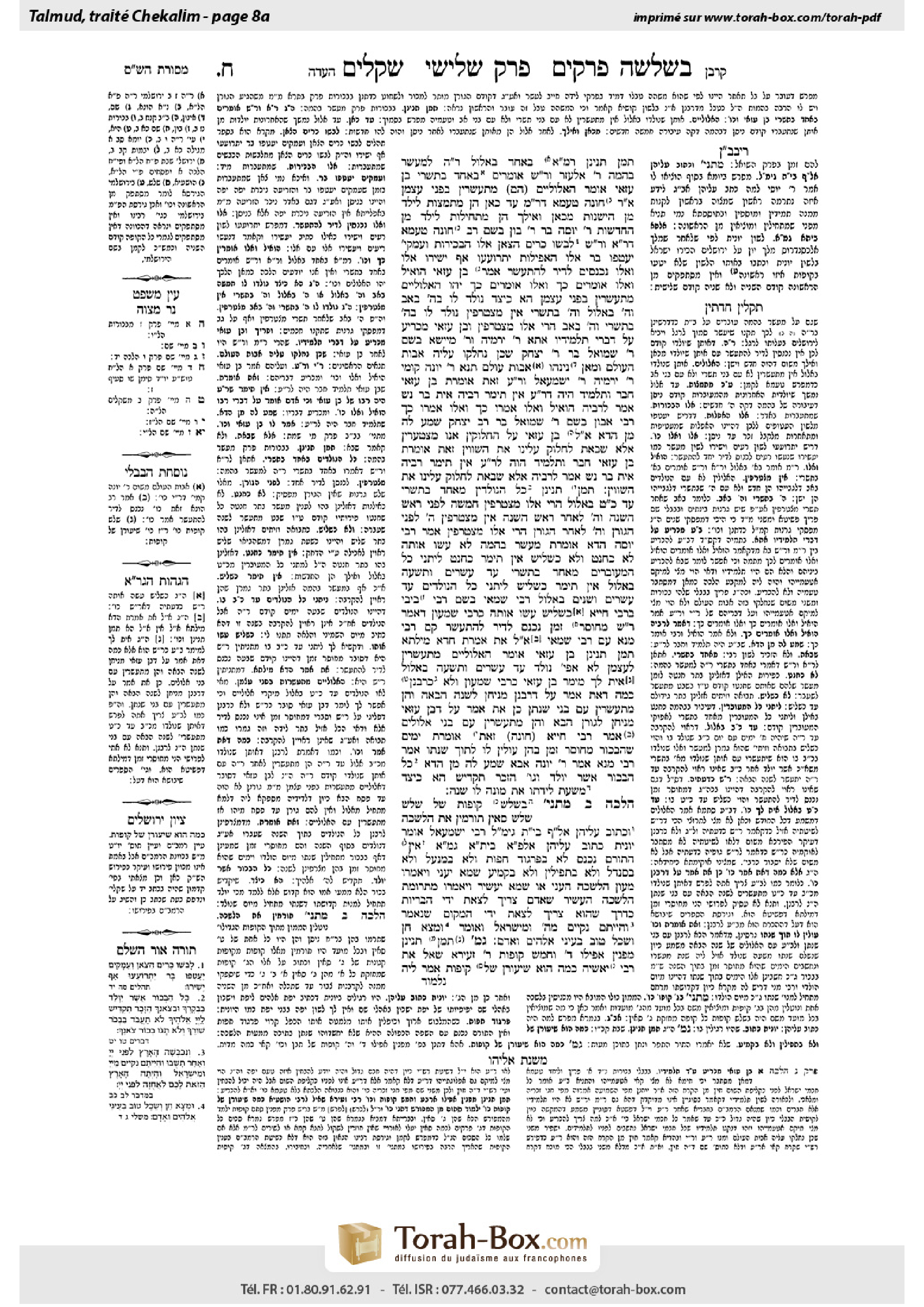
Shekalim 8a: Talmud study for Daf Yomi
Study the Talmud for Daf Yomi with scanned pages, Hebrew text, English translations from Sefaria and AI-generated French translations.
Passage selection and English or AI-generated French translation are available where the scan has annotations. Daf Study is independent of Torah-Box and Sefaria.
Browse Shekalim · שקלים · All tractatesShekalim 8a text and translations
This page of Shekalim includes the Aramaic text and an English translation, alongside the scan above.
שקלים ח׳ א · Aramaic and Hebrew text
אָמַר רִבִּי יוֹחָנָן. מִפְּנֵי שֶׁהֵן פִּירְקֵי לֵידָה. רִבִּי אָחָא רִבִּי תַנְחוּם בַּר חִיָיה בְשֵׁם רִבִּי יְהוֹשֻׁעַ בֶּן לֵוִי. כְּדֵי שֶׁתָּהֵא בְהֵמָה מְצוּיָה לְעוֹלֵי רְגָלִים. אְמַר רִבִּי יוּדָן. שֶׁלֹּא יָבוֹא לִידֵי בַּל תַּאַחֵר. אָמַר רִבִּי יוֹסֵה. כָּל הַמַּשְׁהֶא טִיבְלוֹ עוֹבֵר. תַּמָּן תַּנִּינָן. רַבִּי מֵאִיר אוֹמֵר. בְּאֶחָד בֶּאֱלוּל רֹאשׁ הַשָּׁנָה לְמַעְשַׂר בְּהֵמָה. בֶּן עַזַּיי אוֹמֵר הָאֱלוּלִיִּים מִתְעַשְּרִין בִּפְנֵי עַצְמָן. אָמַר רִבִּי חוּנָה. טַעֲמֵיהּ דְרִבִּי מֵאִיר. עַד כָּאן הֵן מִתְמַצּוֹת לֵילֵד מְן הַיְּשָׁנוֹת. מִיכָּן וְאֵילָךְ הֵן מַתְחִילוֹת לֵילֵד מִן הַחֲדָשׁוֹת. רִבִּי יוֹסֵה בֵּירִבִּי בּוּן בְּשֵׁם רַב חוּנָה. טַעֲמֵיהּ דְּרִבִּי אֶלְעָזָר וְרִבִּי שִׁמְעוֹן. לָבְשׁוּ כָרִים הַצֹּאן אֵילּוּ הַבְּכִירוֹת. וַעֲמָקִים יַעַטְפוּ בָר אֵילּוּ הָאֲפֵילוֹת. יִתְרוֹעֲעוּ אַף יָשִׁירוּ. אֵילּוּ וָאֵילּוּ נִכְנָסִין לַדִּיר לְהִתְעַשֵּׂר. אָמַר בֶּן עַזַּאי. הוֹאִיל וְאֵילּוּ אוֹמְרִים כָּךְ וְאֵילּוּ אוֹמְרִים כָּךְ יְהוּ הָאֱלוּלֵיִים מִתְעַשְּרִין בִּפְנֵי עַצְמָן. הָא כֵיצַד. נוֹלַד לוֹ בַחֲמִשָּׁה בְאַב וַחֲמִשָּׁה בְאֱלוּל וַחֲמִשָּׁה בְתִשְׁרֵי אֵין מִצְטָרְפִין. נוֹלַד לוֹ חֲמִשָּׁה בְאַב וַחֲמִשָּׁה בְתִשְׁרֵי הֲרֵי אֵילּוּ מִצְטָרְפִין. וּבֶן עַזַּאי מַכְרִיעַ עַל דִּבְרֵי תַלְמִידָיו. רִבִּי יִרְמְיָה רִבִּי מַיְישָׁא בְשֵׁם רִבִּי שְׁמוּאֵל בַּר רַב יִצְחָק. שֶׁכֵּן נֶחְלְקוּ עָלֵיהָ אָבוֹת הָעוֹלָם. מָאן אִינּוּן אָבוֹת הָעוֹלָם. תַּנָּא רִבִּי יוֹנָה קוֹמֵי רִבִּי יִרְמְיָה. רִבִּי יִשְׁמָעֵאל וְרִבִּי עֲקִיבָה. זֹאת אוֹמֶרֶת. בֶּן עַזַּאי חָבֵר וְתַלְמִיד הָיָה דְרִבִּי עֲקִיבָה. אִין תֵּימַר רַבֵּיהּ. אִית בַּר נַשׁ אֲמַר לְרַבֵּיהּ. הוֹאִיל וְאֵילּוּ אוֹמְרִים כָּךְ וְאֵילּוּ אוֹמְרִים כָּךְ. רִבִּי אָבוּן בְּשֵׁם רִבִּי שְׁמוּאֵל בַּר רַב יִצְחָק שָׁמַע לָהּ מִן הָדָא. אָמַר לוֹ בֶּן עַזַּאי. עַל חֲלוּקִין אֲנוּ מִצְטָעֲרִין אֶלָּא שֶׁבָּאתָה לַחֲלוֹק עָלֵינוּ אֶת הַשָּׁוִין. זֹאת אוֹמֶרֶת. בֶּן עַזַּאי חָבֵר וְתַלְמִיד הָוָה לְרִבִּי עֲקִיבָה. אִין תֵּימַר רַבֵּיהּ. אִית בַּר נַשׁ אֲמַר לְרַבֵּיהּ. אֶלָּא שֶׁבָּאתָ לַחֲלוֹק עָלֵינוּ.
תַּמָּן תַּנִּינָן. כָּל הַנּוֹלָדִין בְּאֶחָד בְּתִשְׁרֵי עַד עֶשְׂרִים וְתִשְׁעָה בֶּאֱלוּל הֲרֵי אֵילּוּ מִצְטָרְפִין. חֲמִשָּׁה לִפְנֵי רֹאשׁ הַשָּׁנָה וַחֲמִשָּׁה לְאַחַר רֹאשׁ הַשָּׁנָה אֵין מִצְטָרְפִין. חֲמִשָּׁה לִפְנֵי הַגּוֹרֶן וַחֲמִשָּׁה לְאַחַר הַגּוֹרֶן הֲרֵי אֵילּוּ מִצְטָרְפִין. אָמַר רִבִּי יוֹסֵה. זֹאת אוֹמֶרֶת. מַעֲשֵׂר בְּהֵמָה לֹא עָשׂוּ אוֹתוֹ לֹא כְחֶנֶט וְלֹא כִשְׁלִישׁ. אִין תֵּימַר כְּחֶנֶט. נִיתְנֵי כָּל הַמְעוּבָּרִין מֵעֶשְׂרִים וְתִשְׁעָה בָאֱלוּל. אִין תֵּימַר כִּשְׁלִישׁ. נִיתְנֵי כָּל הַנּוֹלָדִין עַד עֶשְׂרִים וּשְׁנַיִם בּוֹ. רִבִּי שַׁמַּי בְשֵׁם רִבִּי בּוּן בַּר חִיָיה. כִּשְׁלִישׁ עָשׂוּ אוֹתוֹ כְרִבִּי שִׁמְעוֹן. דְּרִבִּי שִׁמְעוֹן אָמַר. מְחוסַּר זְמַן נִכְנָס לַדִּיר לְהִתְעַשֵּׂר. קָם רִבִּי מָנָא עִם רִבִּי שַׁמַּי. אָמַר לֵיהּ. אַתָּה אָמַרְתָּ הָדָא מִילְּתָא. אָמַר לֵיהּ. אִין. אָמַר לֵיהּ. וְהָתַנִּינָן. בֶּן עַזַּאי אוֹמֵר. הָאֱלוּלִיִּים מִתְעַשְּׂרִין בִּפְנֵי עַצְמָן. לֹא אֲפִילוּ נוֹלַד עַד עֶשְׂרִים וְתִשְׁעָה בֶּאֱלוּל. אִית לָךְ מֵימַר בֶּן עַזַּאי כְרִבִּי שִׁמְעוֹן. לֹא כְרַבָּנִן הִיא. כְּמַַה דְאַתְּ אָמַר עַל דְּרַבָּנִן. מַנִּיחָן לַשָּׁנָה הַבָּאָה וְהֵן מִתְעַשְּׂרִין עִם בְּנֵי שְׁנָתָן. כֵּן אַתְּ אָמַר עַל דְּבֶן עַזַַּאי. מַנִּיחָן לַגּוֹרֶן הַבָּא וְהֵן מִתְעַשְּׂרִין עִם בְּנֵי אֱלוּל. אָמַר רִבִּי חוּנָה. זֹאת אוֹמֶרֶת. יָמִים שֶׁהַבְּכוֹר מְחוסַּר זְמַן בָּהֶן עוֹלִין לֹו מִתּוֹךְ שְׁנָתוֹ. אָמַר רִבִּי מָנָא. רִבִּי יוֹנָה אַבָּא שְׁמַע לָהּ מִן הָדָא. כָּל הַבְּכוֹר אֲשֶׁר יִוָּלֵד בִּבְקָרְךָ וּבְצֹאנְךָ הַזָּכָר וגו׳. הָא כֵיצַד. מִשְּׁעַת לֵידָתוֹ אַתְּ מוֹנֶה לוֹ שָׁנָה.
משנה: בְּשָׁלֹשׁ קוּפּוֹת שֶׁל שָׁלֹֹש שָׁלֹֹש סְאִין תּוֹרְמִין אֶת הַלִּשְׁכָּה וְכָתוּב בָּהֶן אל״ף בי״ת גימ״ל. רִבִּי יִשְׁמָעֵאל אוֹמֵר יְוָנִית כָּתוּב בָּהֶן אלפ״א בית״א גמל״א. אֵין הַתּוֹרֵם נִכְנָס לֹא בְּפַרַגּוֹד חָפוּת וְלֹא בְּמִנְעָל וְלֹא בְּסַנְדָּל וְלֹא בִּתְפִילָּה וְלֹא בְּקָמִיעַ שֶׁמָּא יַעֲנִי וִיֹאמְרוּ מֵעֲוֹן הַלִּשְׁכָּה הֶעֱנִי אוֹ שֶׁמָּא יַעֲשִׁיר וְיֹאמְרוּ מִתְּרוּמַת הַלִּשְׁכָּה הֶעֱשִׁיר. שֶׁאָדָם צָרִיךְ לָצֵאת יְדֵי הַבִּרְיּוֹת כְּדֶרֶךְ שֶׁצָּרִיךְ לָצֵאת יְדֵי הַמָּקוֹם שֶׁנֶּאֱמַר וִהְיִיתֶם נְקִיִים מֵיְיָ וּמִיִּשְׂרָאֵל וְאוֹמֵר וּמְצָא חֵן וְשֵׂכֶל טוֹב בְּעֵינֵי אֱלֹהִים וְאָדָם:
הלכה: [רִבִּי זְעוּרָא שָׁאַל רִבִּי אוֹשַׁעְיָּא. כַּמָּה הוּא שִׁיעוּרָן שֶׁלּ שָׁלֹשׁ קוּפוֹת. אָמַר לֵיהּ. נִלְמוֹד סָתוּם מִן הַמְפוֹרָשׁ. תַּנֵּי.]. בְּשָׁלֹשׁ קוּפּוֹת שֶׁל שָׁלֹשׁ שָׁלֹשׁ סְאִין שֶׁהֵן תִּשְׁעָה סְאִין שֶׁהֵן עֶשְׂרִים וְשֶׁבַע סְאִין תּוֹרְמִין אֶת הַלִֹּשְכָּה וְכָתוּב עֲלֵיהֶן אֲלֶ״ף בֵּי״ת גִּימֶ״ל. מִפְּנֵי מַה כָתוּב עֲלֵיהֶן אֲלֶ״ף בֵּי״ת גִּימֶ״ל. לוֹמַר. אֵין מִסְתַּפֵּק מִן הָרִאשׁוֹנָה קוֹדֶם לַשְּׁנִיָיה וְלֹא מִשְּׁנִיָיה קוֹדֶם לַשְּׁלִישִׁית.
Shekalim 8a · English translation
Rebbi Joḥanan said, because they are the periods of birth. Rebbi Aḥa, Rebbi Tanḥum bar Ḥiyya in the name of Rebbi Joshua ben Levi: That animals be available for the pilgrims on the holidays57b/58a. It is explained later that the main time for animal tithe is early fall. The other two times are introduced for the convenience of the farmer that he may take his tithe animal to the Temple when he makes his pilgrimage anyhow.. Rebbi Yudan said, that he should not come to do not tarry 22:28). This is interpreted to mean that one disregards a positive commandment if one does not hand over (for produce) or sacrifices (for animals) his tithes on or before the next holiday, and one transgresses the prohibition on the third holiday after the start of the obligation.. Rebbi Yose said, anybody who is late with his ṭevel transgresses is untithed produce for which heave and tithes are due.. There,8:5. The text quoted here is the Mishnah text; nevertheless it seems that the statement from Mishnah Roš Haššanah1:1, quoted in B, that R. Eleazar (ben Shamua) and R. Simeon fix the date at the first of Tishre, has to be included here. From here on the text is copied in Roš Haššanah1:1 (Note 148). we have stated: “Rebbi Meïr says, on the first of Elul is the New Year for animal tithes. Ben Azzai says, those born in Elul are to be tithed separately.” Rebbi Ḥuna said, The reason of Rebbi Meïr: Up to that point they finish to give birth from the old ones; after that they start to give birth from the new ones. Rebbi Yose ben Rebbi Abun in the name of Rav Huna: The reason of Rebbi Eleazar and Rebbi Simeon, the rams are mounting the ewes, these are the early ones, and the valleys are clothed in grain, these are the late ones, they are friends and also are tithed65:14. The last word is read as if it were יְעַשְׂרוּ. Babli Roš Haššanah8a., both enter the corral to be tithed. Ben Azzai said, since these are saying this and those are saying that, those born in Elul should be tithed by themselves. How is this? If there were born in his flock five in Av, five in Elul, and five in Tishre, they do not combine. If there were born in his flock five in Av and five in Tishre, they combine7:9, Babli Bekhorot58a.). Could Ben Azzai decide between his students? Rebbi Jeremiah, Rebbi Miasha in the name of Rebbi Samuel bar Rav Isaac: For so disagreed the fathers of the world. Who are the fathers of the world? Rebbi Jonah stated before Rebbi Jeremiah: Rebbi Ismael and Rebbi Aqiba. This implies that Ben Azzai was colleague and student of Rebbi Aqiba. If you are saying that he was his teacher, is there anybody who says to his teacher, “since these are saying this and those are saying that”? Rebbi Abun in the name of Rebbi Samuel bar Rav Isaac understood it from the following9:14. The testimony of a Mishnah is preferable to that of a baraita.: “Ben Azzai said to him, we are sorry about their disagreement, and you come to find us disagreement where they are concurring.” This implies that Ben Azzai was colleague and student of Rebbi Aqiba. If you are saying that he was his teacher, is there anybody who says to his teacher, “you come to find us disagreement”?
There, we have stated: “Any born from the first of Tishre until the 29 of Elul combine; five before New Year’s day and five after New Year’s day do not combine. Five before the threshing floor and five after the threshing floor do combine9:5. A general rule for all tithes is that they have to be given separately for each year. This is inferred from Deut. 14:22, referring to agricultural tithe, which has to be given year by year. The tax year for animal tithe is defined as from Tishre 1 to Elul 29..” Rebbi Yose said, this implies that the rules of animal tither are neither like those of germinating nor like those of a third. If you would say like germinating, it should state, all whose pregnancy starts from the 29 of Elul. If you would say like a third, it should state, up to the 22. Rebbi Shammai in the name of Rebbi Abun bar Ḥiyya: Like the third, they made it following Rebbi Simeon, since Rebbi Simeon said, {an animal} before its time enters the corral to be tithed21b.. Rebbi Mana met Rebbi Shammai; he asked him, did you say that? He told him, yes. He answered, but did we not state, “Ben Azzai says, those born in Elul are to be tithed separately.8:5. The text quoted here is the Mishnah text; nevertheless it seems that the statement from Mishnah Roš Haššanah1:1, quoted in B, that R. Eleazar (ben Shamua) and R. Simeon fix the date at the first of Tishre, has to be included here. From here on the text is copied in Roš Haššanah1:1 (Note 148).” Not even if it was born up to the 29 of Elul? Could you say that Ben Azzai follows Rebbi Simeon? You have to say, he follows the rabbis. Just as you say following the rabbis, he leaves them for the next year and they will be tithed with the others of their year, so you have to say following ben Azzai, he leaves them for the next threshing floor and they will be tithed with those from Elul. Rebbi Huna said, this implies that the days of a firstling while he still is before its time are counted for its year. Rebbi Mana said, my father Rebbi Jonah understood this from the following. 15:19. Since only its date of birth is mentioned. The firstling automatically is a dedicated sacrifice, and neither may nor can be selected.: Any male firstling which is born to your cattle and small cattle, etc. How is this? You count its year from the moment it is born.
MISHNAH: One disburses from the lodge were stored, to be disbursed as will be described in Mishnah 2. into three boxes of three seah each, on which is written ג ,ב ,א. Rebbi Ismael says, it was written in Greek, A, B, Γ. The disburser enters neither in trousers. Another interpretation: a long robe with wide cuffs (sources giben in Levy’s Dictionaty, vol. 4 col. 98b. Cf Arabic בֻּוגֻז). with pockets, nor with shoes, nor with sandals, nor with phylacteries nor with an amulet, lest he become poor and people would say, he became poor because he sinned in the lodge, or he became rich and people would say, he enriched himself from the money lifted from the lodge, for a person needs to be clean before people as he has to be clean before the Omnipresent, as it is said. 32:22., you have to be blameless before the Eternal and before Israel, and it says. 3:4., find grace and understanding in the eyes of God and men.
HALAKHAH: [Rebbi Ze`ira asked Rebbi Joshiah, what is the measure of three baskets? He told him, let us infer the hidden from the explicit. It is stated:]10, Notes 35–37. One distributes from the lodge into three boxes of three seah each, which is nine seah, which is seah38; it is written on them ג ,ב ,א. Why is ,ג ב ,א written on them? To say that one does not take from the first before one has taken from the second, and not from the second before one has taken from the third.
Text from Sefaria: The Jerusalem Talmud, edition by Heinrich W. Guggenheimer. Berlin, De Gruyter, 1999-2015 (CC BY); The Jerusalem Talmud, translation and commentary by Heinrich W. Guggenheimer. Berlin, De Gruyter, 1999-2015 (CC BY).