Shekalim 8b: Talmud study for Daf Yomi
Study the Talmud for Daf Yomi with scanned pages, Hebrew text, English translations from Sefaria and AI-generated French translations.
Passage selection and English or AI-generated French translation are available where the scan has annotations. Daf Study is independent of Torah-Box and Sefaria.
Browse Shekalim · שקלים · All tractatesShekalim 8b text and translations
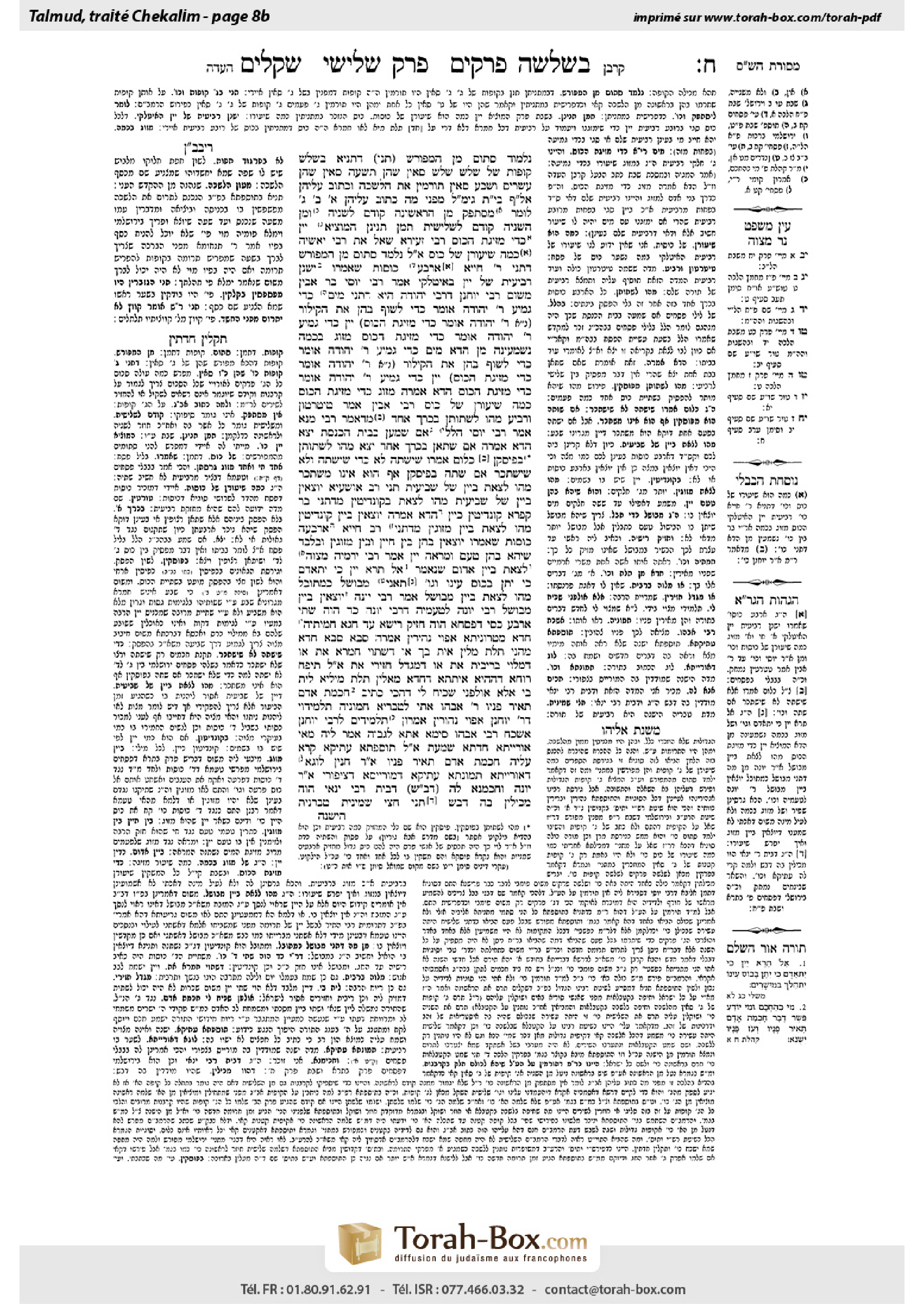
This page of Shekalim includes the Aramaic text and an English translation, alongside the scan above.
שקלים ח׳ ב · Aramaic and Hebrew text
הלכה: [רִבִּי זְעוּרָא שָׁאַל רִבִּי אוֹשַׁעְיָּא. כַּמָּה הוּא שִׁיעוּרָן שֶׁלּ שָׁלֹשׁ קוּפוֹת. אָמַר לֵיהּ. נִלְמוֹד סָתוּם מִן הַמְפוֹרָשׁ. תַּנֵּי.]. בְּשָׁלֹשׁ קוּפּוֹת שֶׁל שָׁלֹשׁ שָׁלֹשׁ סְאִין שֶׁהֵן תִּשְׁעָה סְאִין שֶׁהֵן עֶשְׂרִים וְשֶׁבַע סְאִין תּוֹרְמִין אֶת הַלִֹּשְכָּה וְכָתוּב עֲלֵיהֶן אֲלֶ״ף בֵּי״ת גִּימֶ״ל. מִפְּנֵי מַה כָתוּב עֲלֵיהֶן אֲלֶ״ף בֵּי״ת גִּימֶ״ל. לוֹמַר. אֵין מִסְתַּפֵּק מִן הָרִאשׁוֹנָה קוֹדֶם לַשְּׁנִיָיה וְלֹא מִשְּׁנִיָיה קוֹדֶם לַשְּׁלִישִׁית.
[תַּמָּן תַּנִּינָן הַמּוֹצִיא יִַין כְּדֵי מְזִיגַת הַכּוֹס. רִבִּי זְעירָא שְׁאִיל אֶת רִבִּי יֹאשִׁיָּהוּ. כַּמָּה הָא שִׁעוּרָן שֶׁל כּוֹס. אָמַר לֵיהּ. נִלְמַד סָתוּם מִן הַמְפוֹרָשׁ. דְּתַנֵּי רִבִּי חִיָיא. אַרְבָּעָה כוּסוּת שֶׁאָמְרוּ יֵשְׁנָן רְבִיעִית יַיִן הָאִיטַלְקִי.
הַכּוּס מָזוּג בְּכַמָּה. אָמַר רִבִּי יוּסֵי בַּר בֵּיבִין מִשּׁוּם רִבִּי יוֹחָנָן. נִישְׁמְעִינָן מִן הָדָא. מַּיִם כְּדֵי גְמִיעָה. רִבִּי יְהוּדָה אוֹמֵר. כְּדֵי מְזִיגַת הַכּוֹס. יִַין כְּדֵי גְמִיעָה. רִבִּי יְהוּדָה אוֹמֵר. כְּדֵי מְזִיגַת הַכּוֹס. הָדָא אָמְרָה. מָזוּג כְּדֵי מְזִיגַת הַכּוֹס. כַּמָּה שִׁיעוּרָן שֶׁל כּוֹסוֹת. רִבִּי אָבוּן אָמַר. טֶוטְרַטין וּרְבִיעַ.
מָהוּ לִשְׁתוֹתָן בְּכֶרֶךְ אֶחָד. מִדְּאָמַר רִבִּי מֵאִיר אָמַר רִבִּי יוֹחָנָן. הַלֵּל אִם שָׁמָעָן בְּבֵית הַכְּנֶסֶת יָצָא. הָדָא אָמְרָה. אִם שְׁתָאָן בְּכֶרֶךְ אֶחָד יָצָא. מָהוּ לִשְׁתוֹתָן בְּפִיסָקִין. כְּלוּם אָמְרוּ שֶׁיִּשְׁתּוּ לוֹ כְּדֵי שֶׁיִּשְׁתַּנֶּה וְלֹא יִשְׁתַּכֵּר. אִם שָׁתָה בְפִיסָקִין אַף הוּא אֵינוֹ מִשְׁתַּכֵּר. מָהוּ לָצֵאת בְּיַיִן שֶׁל שְׁבִיעִית. תָּאנָּא רַב אוֹשַׁעְיָה. יוֹצְאִין בְּיַיִן שֶׁלּ שְׁבִיעִית. מָהוּ לָצֵאת בְּקוֹנְדִּיטוֹן. מִדְתַנֵּי בַּר קַפָּרָא. קוֹנְדִּיטוֹן כְּיַיִן. הָדָא אָמְרָה. יוֹצְאִין בְּיֵין קוֹנְדִּיטוֹן. מָהוּ לְצֵאת בְּיַיִן מְזוּגִין. מִדְּתַנֵּי רִבִּי חִיָיא. אַרְבָּעָה כוּסוּת שֶׁאָמְרוּ יוֹצְאִין בָּהֶן בֵּין חַיִין וּבֵין מְזוּגִין וּבִלְּבַד שֶׁיְּהֵא בָהֶן טַעַם וּמַרְאֶה יַיִן. אָמַר רִבִּי יִרְמְיָה. מִצְוָה לָצֵאת בְּיַיִן אָדוֹם. שֶׁנֶּאֱמַר אַל תֵּרֶא יַיִן כִּי יִתְאַדָּם כִּי יִתֵּן בַּכּוֹסֵינוּ וגו׳. תַּאנֵּי. מְבוּשָּׁל כִּמְטוּבֵּל. מָהוּ לָצֵאת בְּיַיִן מְבוּשָּׁל. אָמַר רִבִּי יוֹנָה. יוֹצְאִין בְּיַיִן מְבוּשָּׁל. רִבִּי יוֹנָה לְטַעֲמֵיהּ. דְּרִבִּי יוֹנָה כַּד הֲוָה שָׁתִי אַרְבַּע כַסֵּי דְּפִסְחָא הֲוָה חַזּוּק רֵישֵׁיהּ עַד חַגָּא.
חַמִיתֵּיהּ חָדָא מַטְרוֹנִיתָא אַפּוֹי נְהוֹרִין. אָמְרָה. סַבָּא סַבָּא. חָדָא מֵהֲנֵי תְלַת מִלָּה אִית בָּךְ. אוֹ דִּשְׁתוּיֵי חֲמְרָא אַתְּ אוֹ דְמַלְוֵי בְרִבִּית אַתְּ אוֹ דִמְגַדֵּל חֲזִרֵי אַתְּ. אֲמַר לָהּ. תִּיפַּח רוּחָא דְּהַהִיא אִיתָּתָא. דְּחָדָא מֵהָלֵין תְּלַת מִלַּיָיא לֵית בָּן. אֶלָּא אוּלְפָּן דִּשְׁכִיחָא לֵיהּ. דְּהָכֵין כְּתִיב חָכְמַת אָדָם תָּאִיר פָּנָיו.
רִבִּי אַבָּהוּ אֲתִי לְטִבֵּירְיָּא. חְמוֹנֵַאי תַּלְמִידֹי דְרִבִּי יוֹחָנָן אַפּוֹי נְהִירִין. אָמְרוּן תַּלְמִודֹיי לְרִבִּי יוֹחָנָן. אַשְׁכַּח רִבִּי אַבָּהוּ סִימוֹן. אֲתָא לְגַבֵּיהּ. אֲמַר לֵיהּ. מַאי חַדְּתָא שְׁמַעְתָּ. אֲמַר לֵיהּ. תוֹסֶפְתָּא עַתִּיקָא. קְרָא עֲלֵיהּ. חָכְמַת אָדָם תָּאִיר פָּנָיו.
אָמַר רִבִּי חָנָן. לוֹגָא דְאוֹרַיְתָא תֹמַנְיָא עַתִּיקָא דְּמּוּרִיֵסָא דְצִיפּוֹרִי. אָמַר רִבִּי יוֹנָה. וַחֲכִמְנָא לֵיהּ. דְּבֵית שַׁמַּאי הֲוָה מְכִילִין בָהּ דְּבַשׁ. תַּנֵּי. חֲצִי שְׁמִינִית תִּבֶּרְנִית. אָמַר רִבִּי יוֹחָנָן. חָדָא דִידָן הֲוָה. וְלָמָּה קָרִי לָהּ עַתִּיקָה. מִן בְּגִין דַּהֲוָה בְיוֹמָא. אִית דְּאָמְרֵי. דַּהֲוָה זְעִירָא וְרָבַת. וְאִית דְּאָמְרֵי. דְאַזְעִירָא אַזְעָרַת קוֹמֵי דַהֲוָה. כַּמָּה הוּא שִׁיעוּרָן שֶׁלּ כּוֹס. רִבִּי יוֹסֵי בְשֵׁם רִבִּי יוֹסֵי בֶּן פָּזִי וְרִבִּי יוּסֵי בַּר בֵּיבִין בְּשֵׁם רִבִּי שְׁמוּאֵל. אֶצְבָּעַיִים עַל אֶצְבָּעַיִים עַל רוּם אֶצְבַּע וּמֶחֱצָה וּשְׁלִישׁ אֶצְבַּע. רַבָּנִן דְּקַיְסָרִן וְרִבִּי יוֹסֵי בַּר בֵּיבִין בְּשֵׁם שְׁמוּאֵל. אַתְיָא דְּרִבִּי נָתָן כְּרִבִּי שִׁמְעוֹן. כְּמוֹ דְרִבִּי שִׁמְעוֹן אָמַר. בָּרְבִיעָא. כֵּן אָמַר רִבִּי נָתָן. בָּרְבִיעָא. לִכְשֶׁיּקְרַשׁ וִיהֵא בוּ כְזַיִת.
Shekalim 8b · English translation
HALAKHAH: [Rebbi Ze`ira asked Rebbi Joshiah, what is the measure of three baskets? He told him, let us infer the hidden from the explicit. It is stated:]10, Notes 35–37. One distributes from the lodge into three boxes of three seah each, which is nine seah, which is seah38; it is written on them ג ,ב ,א. Why is ,ג ב ,א written on them? To say that one does not take from the first before one has taken from the second, and not from the second before one has taken from the third.
8, Notes 25–51, which should be consulted for the meaning of the text. The Notes here are mostly restricted to remarks about deviations of this copy from the original. An appropriate version is in 8:1.[There, we have stated: “One who brings out wine to mix a cup.” Rebbi Ze`ira asked Rebbi Joshiah, what is the measure of a cup? He told him, let us infer the hidden from the explicit since Rebbi Ḥiyya stated, the Four Cups which they said add up to an Italic quartarius of wine.
A cup mixed by how much? Rebbi Yose bar Bevin said in the name of Rebbi Joḥanan, let us hear from the following: “Water. a gulp; Rebbi Jehudah says, for mixing a cup. Wine. a gulp; Rebbi Jehudah says, for mixing a cup.” This implies mixed as cups are mixed. What is the measure of cups? Rebbi Abun said, τέταρτρον is a quarter.
May one drink them together? Since Rebbi Meïr said,. 8:1. Rebbi Joḥanan said, if he heard Hallel in the synagogue he has fulfilled his obligation, this implies that if he drank them together he fulfilled his obligation. May one drink them with interruptions? They said that he should drink to feel differently, not that he should get drunk. If he drinks them with interruptions, he will not become drunk. May one fulfill his obligation with Sabbatical wine? Rebbi Hoshaia stated, one may fulfill his obligation with Sabbatical wine. May one fulfill his obligation with spiced wine? Since Bar Qappara stated, spiced wine is like wine, which implies that one may fulfill his obligation with spiced wine. May one fulfill his obligation with mixed wine? Since Rebbi Ḥiyya stated: the Four Cups which they prescribed, one may fulfill his obligation either with unmixed or mixed, on condition that it have the taste and looks of wine. Rebbi Jeremiah said, it is meritorious to fulfill one’s obligation with red wine. What is the reason? Do not see wine when it shows its red color, when put in our cup 23:31. A hilarious misquote of בַּכּוֹס עֵינוֹ as בְּכוֹסֵינוּ, caused by the disappearance of ע as audible sound.. It was stated, cooked for spice. May one fulfill his obligation with cooked wine? Rebbi Jonah said, one may fulfill his obligation with cooked wine. Rebbi Jonah follows his own opinion, since Rebbi Jonah drank his four cups in the Passover night and had a headache until Tabernacles.
A lady. saw that his face was shiny. She said to him, old man, old man, one of three things applies to you. Either you are drunk from wine, or you are lending on interest, or you are raising pigs. He answered her, this woman’s spirit shall be blown away, not one of these three things applies to me, but my learning is ever present with me, as it is written. 8:1., a man’s wisdom illuminates his face.
Rebbi Abbahu descended to Tiberias. The students of Rebbi Joḥanan saw that his face was shiny. They said before Rebbi Joḥanan, Rebbi Abbahu found a treasure. He came to him. He asked him, what new teaching did you hear? He said, an old Tosephta. He recited about him, a man’s wisdom illuminates his face.
Rebbi Ḥanan said, the log of the Torah is the old Sepphorean eighth of fish sauce. Rebbi Jonah said, I know it. In the House of Shammai they were measuring honey with it. It was stated, half of the old Tiberian eighth. Rebbi Joḥanan said, this one we used. Why did he call it the old one? Because it was in his days. Some are saying, it was small, then was enlarged. But some are saying, it was diminished more than before. What is the measure of a cup? Rebbi Yose in the name of Rebbi Yose ben Pazi, Rebbi Yose ben Bevin in the name of Samuel: Two fingers by two fingers high a finger and a half and a third of a finger. The rabbis of Caesarea in the name of Rebbi Yose bar Bevin in the name of Samuel: Rebbi Nathan follows Rebbi Simeon. Just as Rebbi Simeon says, a quartarius, so Rebbi Nathan says, a quartarius, when it jells it will have the volume of an olive.
Text from Sefaria: The Jerusalem Talmud, edition by Heinrich W. Guggenheimer. Berlin, De Gruyter, 1999-2015 (CC BY); The Jerusalem Talmud, translation and commentary by Heinrich W. Guggenheimer. Berlin, De Gruyter, 1999-2015 (CC BY).