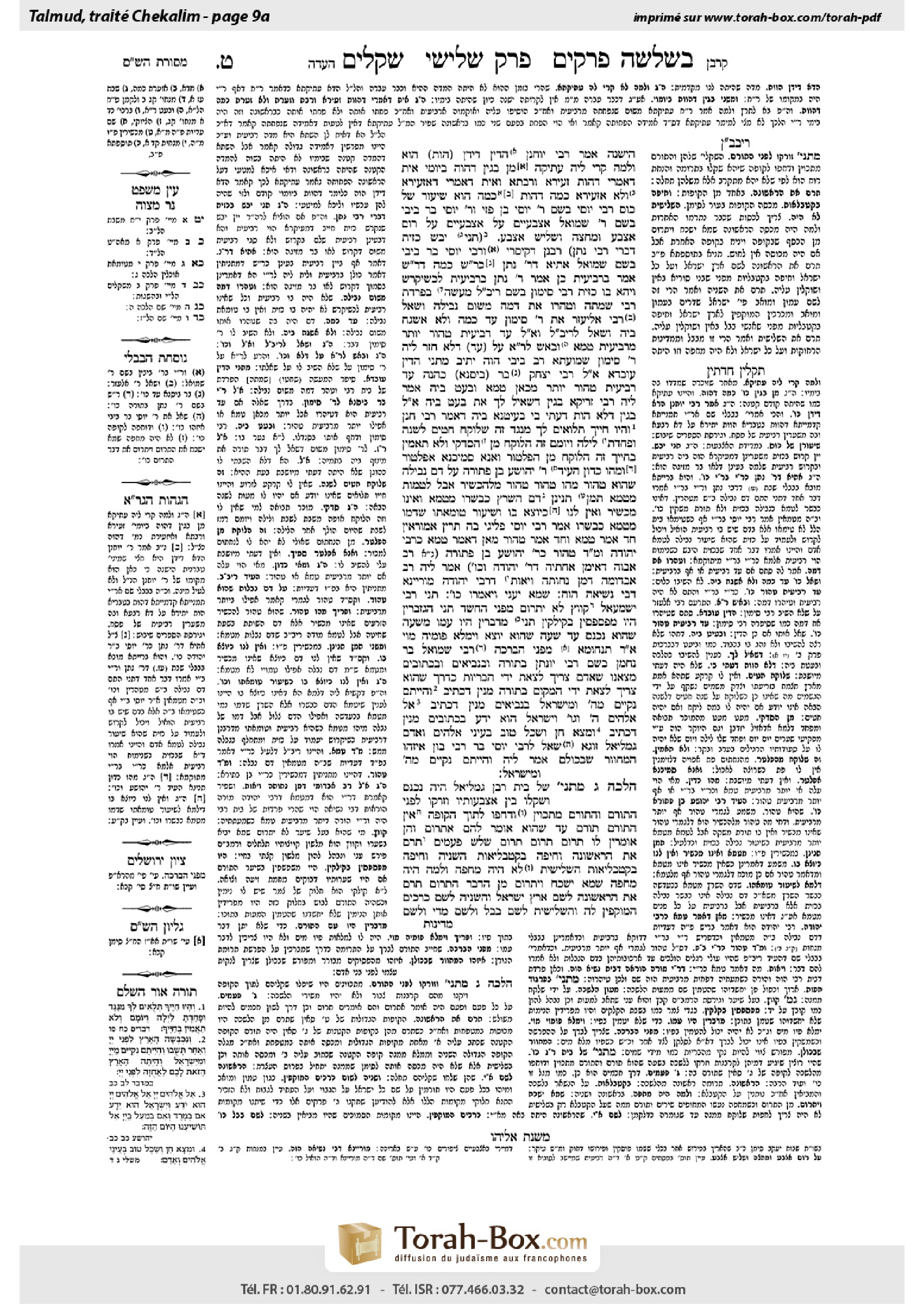
Shekalim 9a: Talmud study for Daf Yomi
Study the Talmud for Daf Yomi with scanned pages, Hebrew text, English translations from Sefaria and AI-generated French translations.
Passage selection and English or AI-generated French translation are available where the scan has annotations. Daf Study is independent of Torah-Box and Sefaria.
Browse Shekalim · שקלים · All tractatesShekalim 9a text and translations
This page of Shekalim includes the Aramaic text and an English translation, alongside the scan above.
שקלים ט׳ א · Aramaic and Hebrew text
אָמַר רִבִּי חָנָן. לוֹגָא דְאוֹרַיְתָא תֹמַנְיָא עַתִּיקָא דְּמּוּרִיֵסָא דְצִיפּוֹרִי. אָמַר רִבִּי יוֹנָה. וַחֲכִמְנָא לֵיהּ. דְּבֵית שַׁמַּאי הֲוָה מְכִילִין בָהּ דְּבַשׁ. תַּנֵּי. חֲצִי שְׁמִינִית תִּבֶּרְנִית. אָמַר רִבִּי יוֹחָנָן. חָדָא דִידָן הֲוָה. וְלָמָּה קָרִי לָהּ עַתִּיקָה. מִן בְּגִין דַּהֲוָה בְיוֹמָא. אִית דְּאָמְרֵי. דַּהֲוָה זְעִירָא וְרָבַת. וְאִית דְּאָמְרֵי. דְאַזְעִירָא אַזְעָרַת קוֹמֵי דַהֲוָה. כַּמָּה הוּא שִׁיעוּרָן שֶׁלּ כּוֹס. רִבִּי יוֹסֵי בְשֵׁם רִבִּי יוֹסֵי בֶּן פָּזִי וְרִבִּי יוּסֵי בַּר בֵּיבִין בְּשֵׁם רִבִּי שְׁמוּאֵל. אֶצְבָּעַיִים עַל אֶצְבָּעַיִים עַל רוּם אֶצְבַּע וּמֶחֱצָה וּשְׁלִישׁ אֶצְבַּע. רַבָּנִן דְּקַיְסָרִן וְרִבִּי יוֹסֵי בַּר בֵּיבִין בְּשֵׁם שְׁמוּאֵל. אַתְיָא דְּרִבִּי נָתָן כְּרִבִּי שִׁמְעוֹן. כְּמוֹ דְרִבִּי שִׁמְעוֹן אָמַר. בָּרְבִיעָא. כֵּן אָמַר רִבִּי נָתָן. בָּרְבִיעָא. לִכְשֶׁיּקְרַשׁ וִיהֵא בוּ כְזַיִת.
רִבִּי סִימוֹן בְּשֵׁם רִבִּי יְהוֹשֻׁעַ בֶּן לֵוִי. מַעֲשֶׂה בְפִירְדַת רִבִּי שֶׁמֵּתָה. וְטִהֲרוּ אֶת דָּמָהּ מִשּׁוּם נְבֵילָה. וְשָׁאַל רִבִּי אֶלְעָזָר אֶת רִבִּי סִימוֹן. עַד כַּמַּה. וְלֹא אַשְׁגַּח בֵּיהּ. וְשָׁאַל לֵיהּ רִבִּי יְהוֹשֻׁעַ בֶּן לֵוִי דְאָמַר לֵיהּ. עַד רְבִיעִית טָהוֹר. יוֹתֵר מִכֵּן טָמֵא. וּבְעַט רִבִּי אֶלְעָזָר עַד דְּלָא אַחְזַר לֵיהּ רִבִּי סִימוֹן שְׁמַעְתָּא. רַב בֵּיבָא הֲוָה יְתִיב מַתְנוּ הָדֵין עוֹבְדָא. אֲמַר לֵיהּ רִבִּי יִצְחָק בַּר בִּיסְנָא. עַד רְבִיעִית טָהוֹר. יוֹתֵר מִכֵּן טָמֵא. וּבְעִט בֵּיהּ. אֲמַר לֵיהּ רִבִּי זְרִיקָא. בְּגִין דִּשְׁאַל לָךְ אַתְּ בְּעַט בֵּיהּ. אֲמַר לֵיהּ. בְּגִין דְלָא הֲוָת דַּעְתִּי בִּי בָּעִיטְנָא בֵיהּ. דְּאָמַר רִבִּי חָנָן. וְהָיוּ חַיֶּיךָ תְּלוּאִים לְךָ מִנֶּגדֶ. זֶה שֶׁלּוֹקֵחַ חִיטִּים לַשָּׁנָה. וּפָחַדְתָּ לַיְלָה וְיוֹמָם. זֶה שֶׁלּוֹקֵחַ מִן [הַצִּידָקִי]. וְלֹא תַאֲמִין בְּחַיֶּיךָ. זֶה שֶׁלּוֹקֵחַ מִן הַפַּלְטָר. וַאֲנָא סְמִיכְנָא אֲפַּלְטָר. וּמָהוּ כְדִי. הֵעִיד רִבִּי יְהוֹשֻׁעַ בֶּן פְּתוֹרָא עַל דַּם נְבֵלָה שֶׁהוּא טָהוֹר. מַה לְטָהוֹר. לְטָהֵר מִן הַבָּשָׂר. הָא לְטַמֵּא אַתָּה מְטַמֵּא. תַּמָּן תַּנִּינָא. דַּם הַשֶּׁרֶץ כִּבְשָׂרוֹ מְטַמֵּא וְאֵין מַכְשִׁיר. וְאֵין לָנוּ כַּיּוֹצֵא בוֹ. וְשִׁיעוּר טוּמְאָתוֹ שֶׁדָּמוֹ מְטַמֵּא כִּבְשָׂרוֹ. אָמַר רַב יוֹסֵי פְּלִיגִין בָּהּ תְּרֵין אֲמוֹרָאִין חַד אָמַר. טָמֵא. וְחַד אָמַר. טָהוֹר. מָאן דְּאָמַר טָמֵא. כְּרִבִּי יְהוּדָה. וּמָאן טָהוֹר. כְּרִבִּי יְהוֹשֻׁעַ בֶּן פְּתוֹרָא. רַב אֲבוּהָ דְּאִימָן אַחְתֵּיהּ דְּרִבִּי יְהוּדָה מוֹרְיָינָא דְּנָשִׂיא הֲוָה.]
[שֶׁמָּא יַעֲנִי וְיֹאמְרוּ וכו׳.] תַּנֵּי רִבִּי יִשְׁמָעֵאל. קִיוֵוץ לֹא יִתְרוֹם מִפְּנֵי הַחֲשַׁד. תַּנֵּי. הַגִּיזְבְּרִין הָיוּ מְפַסְפְּסִין בְּקִילִּקִין. תַּנֵּי מְדַבְּרִין הָיוּ עִמּוֹ מִשָּׁעָה שֶׁהוּא נִכְנַס עַד שָׁעָה שֶׁהוּא יוֹצֵא. וִימַלֵּא פּוּמֵיהּ מוֹי. אָמַר רִבִּי תַנְחוּמָא. מִפְּנֵי הַבְּרָכָה.
רִבִּי שְׁמוּאֵל בַּר נַחְמָן בְּשֵׁם רִבִּי יוֹנָתָן. בַּתּוֹרָה וּבַנְּבִיאים וּבַכְּתובִים מָצָאנוּ שֶׁאָדָם צָרִיךְ לָצֵאת יְדֵי הַבִּרְיוֹת כְּדֶרֶךְ שֶׁהוּא צָרִיךְ לָצֵאת יְדֵי הַמָּקוֹם. בַּתּוֹרָה מְנַיִין. דִּכְתִיב וִהְיִיתֶם נְקִיִים מֵיְיָ וּמִיִּשְׂרָאֵל. בַּנְּבִיאים מְנַיִין. דִּכְתִיב אֵל אֱלֹהִים יְי אֵל אֱלֹהִים יְי הוּא יֹוֹדֵעַ וְיִשְׂרָאֵל הוּא יֵדָע. בַּכְּתובִים מְנַיִין. שֶׁנֶּאֱמַר וּמְצָא חֵן וְשֵׂכֶל טוֹב בְּעֵינֵי אֱלֹהִים וְאָדָם. גַּמְלִיאֵל זֵוּגָא שָׁאַל לְרִבִּי יוֹסֵי בֵּירִבִּי בּוּן. אֵי זֶהוּ הַמְחוּוָר שֶׁבְּכוּלָּן. אָמַר לֵיהּ. וִהְיִיתֶם נְקִיִים מֵיְיָ וּמִיִּשְׂרָאֵל.
משנה: שֶׁל בֵּית רַבָּן גַּמְלִיאֵל הָיָה נִכְנָס וְשִׁקְלוֹ בֵּין אֶצְבְּעוֹתָיו וְזוֹרְקוֹ לִפְנֵי הַתּוֹרֵם וְהַתּוֹרֵם מִתְכַּוֵּין וְדוֹחֲקוֹ לַקּוּפָּה. אֵין הַתּוֹרֵם תּוֹרֵם עַד שֶׁיֹּאמַר לָהֶן אֶתְרוֹם. וְהֵן אוֹמְרִים לוֹ תְּרוֹם, תְּרוֹם, תְּרוֹם, שָׁלֹֹֹש פְּעָמִים: תָּרַם אֶת הָרִאשׁוֹנָה וְחִיפָּה בִּקְטַבֳלִיּוֹת הַשְּׁנִיָיה וְחִיפָּה בִּקְטַבֳלִיּוֹת. הַשְּׁלִישִׁית לֹא הָיָה מְחַפֶּה. וְלָמָּה הָיָה מְחַפֶּה שֶׁמָּא יִשְׁכַּח וְיִתְרוֹם מִן הַדָּבָר הַתָּרוּם. תָּרַם אֶת הָרִאשׁוֹנָה לְשֵׁם אֶרֶץ יִשְׂרָאֵל הַשְּׁנִיָיה לְשֵׁם כְּרַכִים הַמּוּקָּפִין לָהּ וְהַשְּׁלִישִׁית לְשֵׁם בָּבֶל וּלְשֵׁם מָדַי וּלְשֵׁם מְדִינוֹת הָרְחוֹקוֹת:
Shekalim 9a · English translation
Rebbi Ḥanan said, the log of the Torah is the old Sepphorean eighth of fish sauce. Rebbi Jonah said, I know it. In the House of Shammai they were measuring honey with it. It was stated, half of the old Tiberian eighth. Rebbi Joḥanan said, this one we used. Why did he call it the old one? Because it was in his days. Some are saying, it was small, then was enlarged. But some are saying, it was diminished more than before. What is the measure of a cup? Rebbi Yose in the name of Rebbi Yose ben Pazi, Rebbi Yose ben Bevin in the name of Samuel: Two fingers by two fingers high a finger and a half and a third of a finger. The rabbis of Caesarea in the name of Rebbi Yose bar Bevin in the name of Samuel: Rebbi Nathan follows Rebbi Simeon. Just as Rebbi Simeon says, a quartarius, so Rebbi Nathan says, a quartarius, when it jells it will have the volume of an olive.
Rebbi Simon in the name of Rebbi Joshua ben Levi: It happened that a mule of Rebbi’s household died and they declared its blood pure regarding the carcass. Rebbi Eleazar asked Rebbi Simon, how much? He did not take notice of him. He asked Rebbi Joshua ben Levi who told him, it is pure up to a quartarius. More than that is impure. Rebbi Eleazar felt badly that Rebbi Simon had not repeated the tradition to him. Rav Beva was sitting stating this occurrence. Rebbi Isaac bar Bisna asked him, is it pure up to a quartarius; more than that impure? He was unfriendly to him. Rebbi Zeriqa asked him, because he asked you, you were unfriendly to him? He answered him, because my mind was not clear, I was unfriendly to him, as Rebbi Ḥanan said, . 28:66.your life will hang far from you, that is one who buys a year’s supply of wheat, you will be fearful night and day, that is one who buys from the Saracen, and you will not believe in your survival, that is one who buys from the retail store, and I am dependent on retail stores. What about it? “Rebbi Joshua ben Bathyra testified about blood of carcasses that it is pure.” What means pure? It is pure in the flesh: הבשר instead of הֶכְשֵׁר “in that it does not prepare for impurity”., but for impurity it makes impure. There, we have stated “The blood of a crawling animal is like its flesh, it makes impure but does not prepare. Nothing else is like this,” in the amount needed that its blood makes impure like its flesh. Rav Yose said, two Amoraim disagree, one says impure, and one says pure. He who says “impure” follows Rebbi Jehudah; he of “pure” follows Rebbi Joshua ben Bathyra. Rav Abuha of Iman the sister of Rebbi Jehudah was the instructor of the Patriarch.]
[“Lest he become poor and people would say,” etc.] Rebbi Ismael stated, a curly head should not disburse because of the suspicion. It was stated, “the treasurers were rubbing with Cilician cloth.” It was stated, “they were talking with him from the time he entered to the time he left.” Should he not fill his mouth with water? Rebbi Tanḥuma said, because of the benediction.
Rebbi Samuel bar Naḥman in the name of Rebbi Jonathan: In the Torah, in Prophets, and in Hagiographs we find that a person had to be innocent in the eyes of people just as he has to be innocent in the eyes of the Omnipresent. In the Torah from where? As it is written,. 32:22. you have to be blameless before the Eternal and before Israel. In Prophets from where? As it is written., The Power, God, Eternal, the Power, God, Eternal, He knows, and Israel has to know. In Hagiographs from where? As it is written. 3:4., find grace and understanding in the eyes of God and man. Gamaliel the twin asked Rebbi Yose ben Rebbi Abun, which one is the clearest of all of these? He answered him, you have to be blameless before the Eternal and before Israel.
MISHNAH: A member of the household of Rabban Gamliel was entering with his sheqel between his fingers and threw it before the disburser. The disburser was directing it and threw it into the box. The disburser only starts disbursing after he asked, “shall I disburse”? And they answer him, “disburse, disburse, disburse,” three times.
He disburses the first time and covers it with cushions, the second time and covers it with cushions. The third time he was not covering are kept. As explained in the Mishnah, the monies taken on the first of Nisan are from the contributions of the Land of Israel, those taken before Pentecost are from neighboring countries and those at the end of Elul from Babylonia, Persia, and other far countries. Monies not used for sacrifices are used for other expenses as explained in the next Chapter. In order to give due credit, the monies should not be mixed even though in an emergency one can have regress on those already labelled as surplus.. Why did he cover? That he should not forget and disburse from anything which already had been disbursed. The first time he disbursed in the name of the Land of Israel, the second time in the name of nearby walled cities, and the third time in the name of Babylonia, in the name of Media, and in the name of distant countries.
Text from Sefaria: The Jerusalem Talmud, edition by Heinrich W. Guggenheimer. Berlin, De Gruyter, 1999-2015 (CC BY); The Jerusalem Talmud, translation and commentary by Heinrich W. Guggenheimer. Berlin, De Gruyter, 1999-2015 (CC BY).